
When your pupils get smaller, it's usually your body responding to bright light—but sometimes, it's not that simple. pupil constriction, the narrowing of the black center of the eye. Also known as miosis, it's a natural reflex, but when it happens without light changes or lasts too long, it can point to something deeper. Your pupils are controlled by muscles that react to nerves, drugs, and brain signals. If they stay small even in dim rooms, or if one pupil is smaller than the other, that’s not normal. It’s not just about vision—it’s a window into your nervous system.
Many medications can cause pupil constriction, especially opioids like morphine or prescription painkillers. That’s why doctors check pupil size when someone overdoses—it’s one of the clearest signs. But it’s not just drugs. Certain glaucoma eye drops, like pilocarpine, are designed to shrink pupils to reduce pressure. Even some antidepressants and antipsychotics can do it. Then there’s the neurological side: brainstem strokes, Horner’s syndrome, or nerve damage from trauma can all lead to one-sided pupil constriction. If you notice sudden, unexplained small pupils along with drooping eyelids, facial numbness, or dizziness, don’t wait. It could be a stroke warning.
Some people confuse pupil constriction with eye strain or fatigue, but those usually cause blurry vision or dry eyes—not tiny pupils. If you’re on medication and notice your pupils are smaller than usual, check the side effects. If you’re not on anything and your pupils stay pinched, especially with headaches or vision changes, it’s time to see a doctor. This isn’t something to ignore. Your pupils are one of the fastest, most reliable indicators your body has of what’s happening inside. Below, you’ll find real cases and science-backed insights on what causes pupil constriction, how it’s linked to common drugs, and when it’s a red flag you can’t afford to miss.
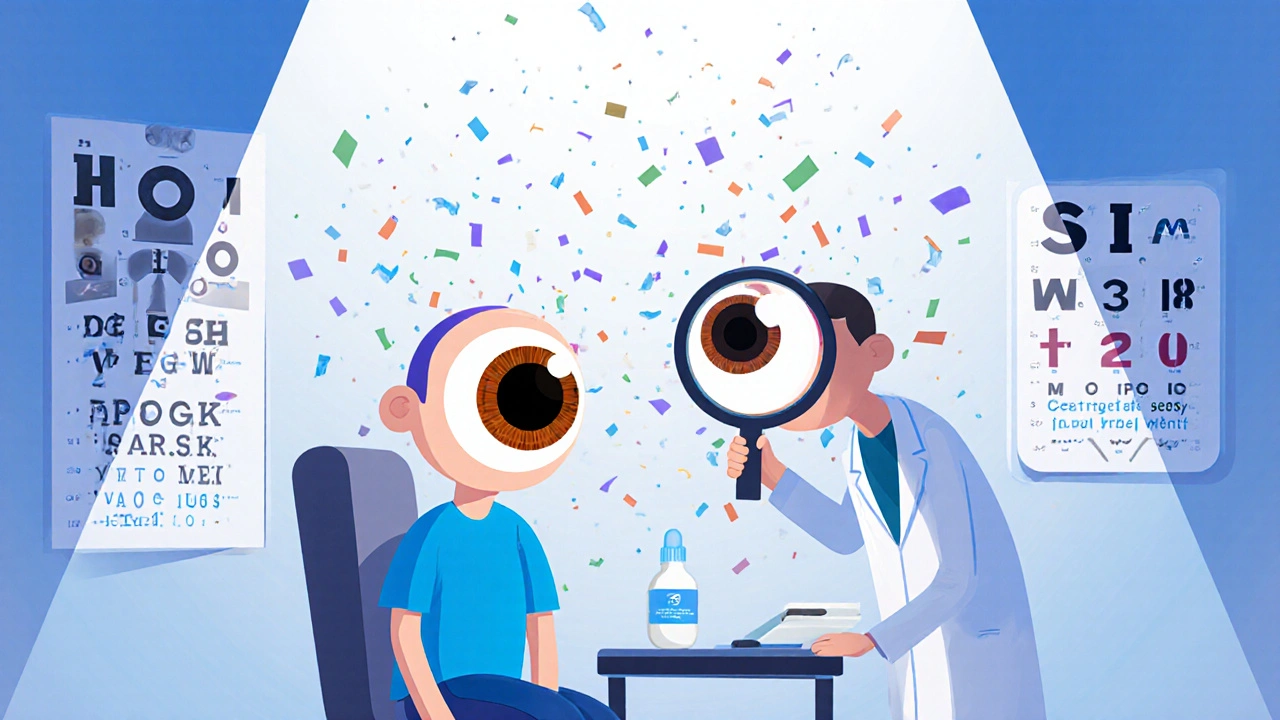
Myosis-abnormally small pupils-can interfere with eye exams, mask glaucoma, and hide serious neurological conditions. Learn how it affects diagnosis and what to do about it.
 Health and Wellness