
When you pick up a generic pill at the pharmacy, you’re benefiting from the Hatch-Waxman Act, a 1984 U.S. law that created a legal pathway for generic drugs to enter the market without repeating expensive clinical trials. Also known as the Drug Price Competition and Patent Term Restoration Act, it was designed to fix a broken system where brand-name drugs held monopolies for too long, and generics couldn’t get approved efficiently. Before this law, companies spent years and millions just to prove a generic version worked — even though the original drug’s chemistry was already known. Hatch-Waxman changed that by letting generic makers prove bioequivalence instead — meaning the generic delivers the same amount of medicine into your bloodstream as the brand-name version.
This law didn’t just help generics — it also protected innovators. It gave brand-name drug makers up to five extra years of patent protection to make up for time lost during FDA review. That’s why you sometimes see a drug come out, then wait years before a generic appears — the clock on exclusivity is still ticking. But once that window closes, generics flood in. And when they do, prices drop fast. One study found that after the first generic hits the market, prices fall by 30% on average. By the time five generics are available, the cost can be 85% lower than the original. That’s not just savings — it’s access. For people on insulin, blood pressure meds, or chemotherapy, that difference can mean taking the drug or skipping it.
The Hatch-Waxman Act also set rules for how pharmacists can substitute generics — and when they can’t. Some drugs, like those with a narrow therapeutic index (think warfarin or lithium), need extra care because even small changes in absorption can cause harm. That’s why some states require doctor approval before switching. And it’s why the FDA Orange Book, a public list of approved drug products with therapeutic equivalence evaluations exists — so pharmacists and doctors know which generics are truly interchangeable. This isn’t just paperwork. It’s safety. The same law also created the framework for patent challenges, letting generic companies file what’s called an ANDA (Abbreviated New Drug Application) and challenge weak patents. That’s how some generics hit the market years earlier than expected — and why big pharma sometimes fights hard to keep them out.
Today, nearly 9 in 10 prescriptions filled in the U.S. are for generics. That’s thanks to Hatch-Waxman. But the law wasn’t perfect. It didn’t predict the rise of "pay-for-delay" deals, where brand companies pay generics to delay entry. It didn’t foresee how complex biologics would become — drugs made from living cells, not chemicals — which led to the later Biologics Price Competition and Innovation Act. Still, the core idea holds: competition lowers prices, and patients win. What you’ll find below are real stories about what happens when this system works — and when it doesn’t. From side effects after switching generics to how pharmacists are legally required to act, these posts show the human impact of a law written in 1984 — that still shapes your medicine cabinet today.
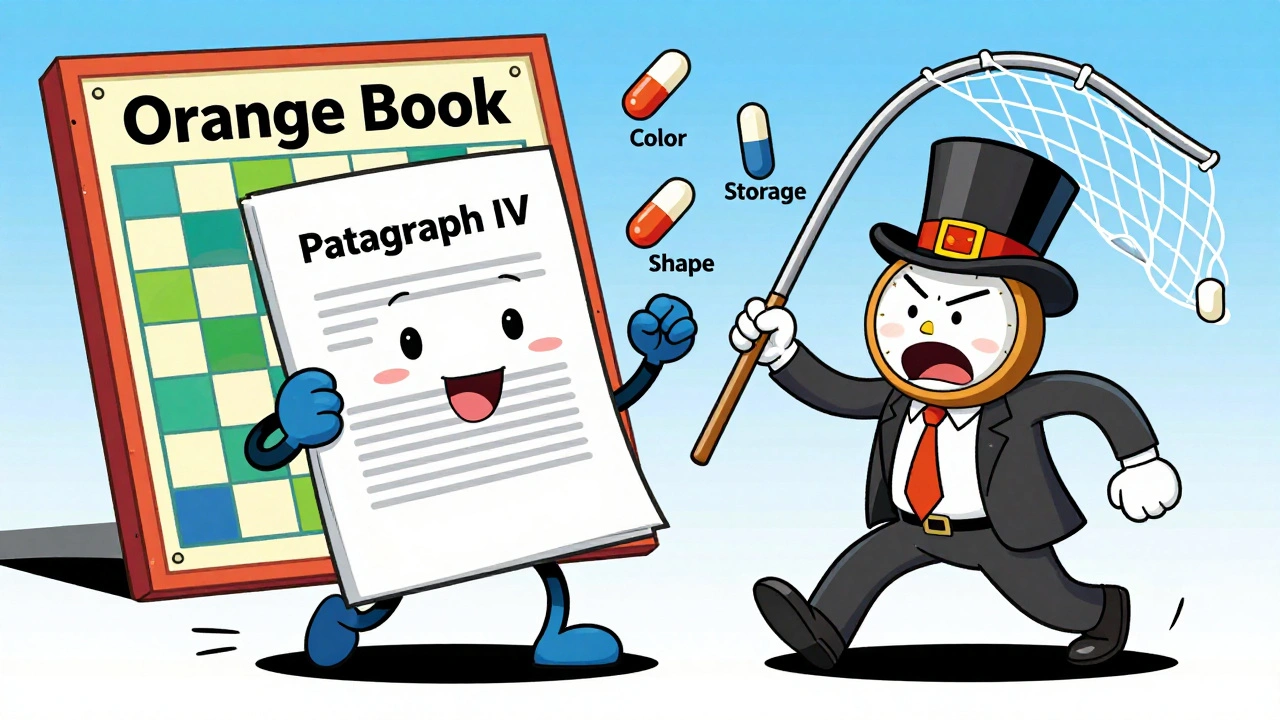
Paragraph IV patent challenges let generic drug makers legally fight brand patents to bring cheaper drugs to market. Under the Hatch-Waxman Act, these challenges have saved U.S. consumers over $1.2 trillion since 1990.
 Health and Wellness