
When you pick up a prescription, the pharmacist might hand you a different pill than what your doctor wrote on the paper. That’s not a mistake—it’s generic substitution laws, rules that allow pharmacies to replace brand-name drugs with FDA-approved generics unless the doctor blocks it. Also known as drug substitution rules, these laws are designed to cut costs without sacrificing safety or effectiveness. In the U.S., every state has its own version, but they all follow the same basic idea: if a generic version exists, it’s legal—and often required—to give you the cheaper option.
These laws don’t just help you save money—they’ve saved the whole system billions. Since the Hatch-Waxman Act, a 1984 law that made it easier for generic drug makers to enter the market, Americans have saved over $1.2 trillion on prescriptions. That’s because generics are chemically identical to brand-name drugs but cost up to 85% less. The FDA requires them to work the same way, in the same amount of time, with the same side effects. Still, many people worry: Is switching safe? Can your body react differently? The answer is usually no—but pharmacy switching, the process where a pharmacist swaps your drug without rechecking with your doctor can cause confusion if you’re not informed.
Not all drugs can be swapped. Some, like thyroid meds or blood thinners, need exact dosing. Your doctor can write "Dispense as Written" or "Do Not Substitute" on the prescription to block the switch. You can also ask your pharmacist to tell you if a generic is being used—and if you feel worse after switching, speak up. A lot of people don’t realize they can refuse a generic, even if the law allows it. Your health, your choice.
What you’ll find below are real stories and facts about how these laws play out in everyday care. From how generic drug makers challenge patents to why some patients still distrust generics, these posts break down the system without the jargon. You’ll learn how to spot when a switch happens, how to protect yourself from errors, and why doctors sometimes push back—even when the science says generics are fine. This isn’t about politics or big pharma. It’s about making sure you’re not overpaying for the same medicine.
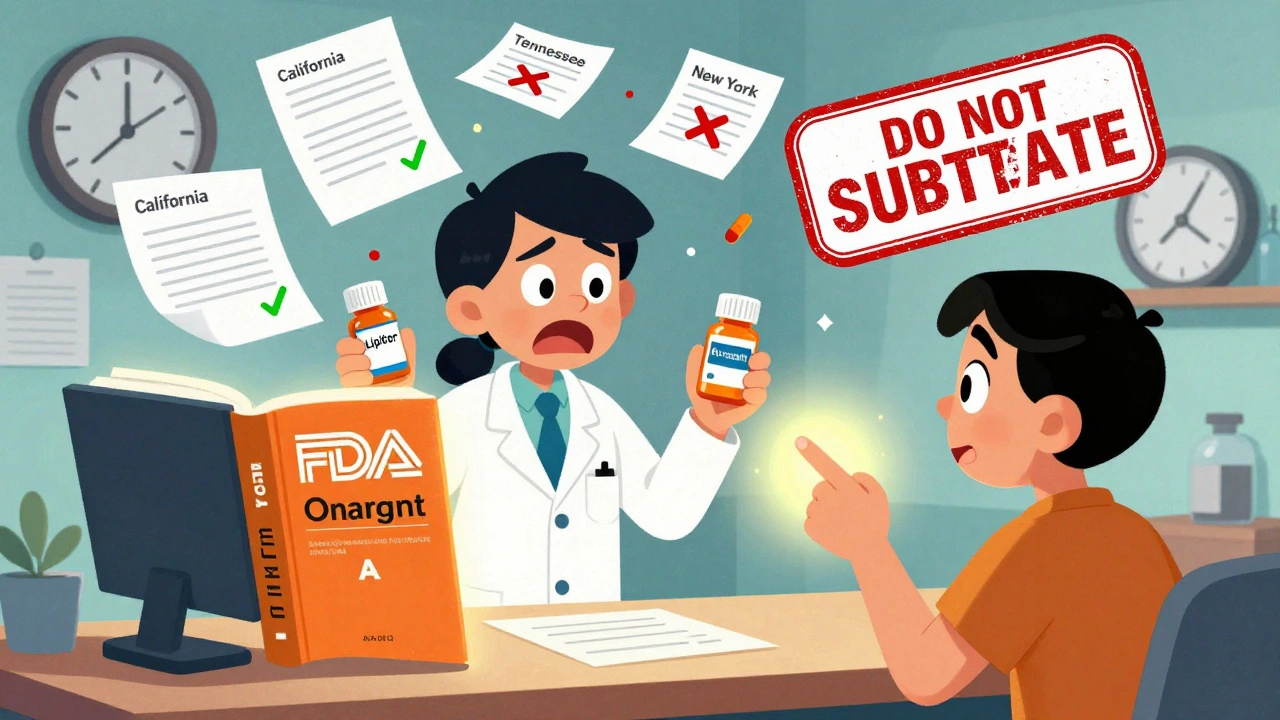
Pharmacists must follow complex state and federal laws when dispensing generic medications. Learn the legal obligations around substitution, consent rules, restricted drugs, documentation requirements, and how state laws vary across the U.S.
 Health and Wellness