
When the brain swells from infection or immune overreaction, it’s called encephalitis, inflammation of the brain tissue that can cause confusion, seizures, or loss of consciousness. Also known as brain inflammation, it’s not just a bad headache—it’s a medical emergency that needs fast, targeted care. Not all encephalitis is the same. Some cases start with a virus like herpes simplex or West Nile, while others happen when your immune system accidentally attacks your own brain tissue. That’s why treatment isn’t one-size-fits-all.
Antiviral drugs, medications that stop viruses from multiplying are the first line of defense when a virus is to blame. Acyclovir, for example, can cut recovery time in half if given within 48 hours of symptoms—especially for herpes-related encephalitis. But if it’s an autoimmune encephalitis, a condition where the body’s immune system targets brain proteins, antivirals won’t help. Instead, doctors turn to corticosteroids, powerful anti-inflammatory drugs that calm an overactive immune system, IVIG, or plasma exchange. Missing this distinction can cost time, brain function, or even life.
There’s no magic pill for encephalitis. Supportive care matters just as much: controlling seizures with anticonvulsants, reducing brain pressure, keeping hydration and nutrition stable. Many patients need ICU-level monitoring. And while vaccines for measles, mumps, or Japanese encephalitis can prevent some cases, others strike without warning. That’s why early symptoms—fever, headache, confusion, sensitivity to light—can’t be ignored. If you or someone you know shows these signs, don’t wait. Get tested. Get treated.
The posts below cover real cases, treatment mistakes, and how medications like antivirals and immunosuppressants are used—or misused—in brain inflammation. You’ll find what actually works in clinical practice, what doesn’t, and how to spot the red flags that mean you need help now.
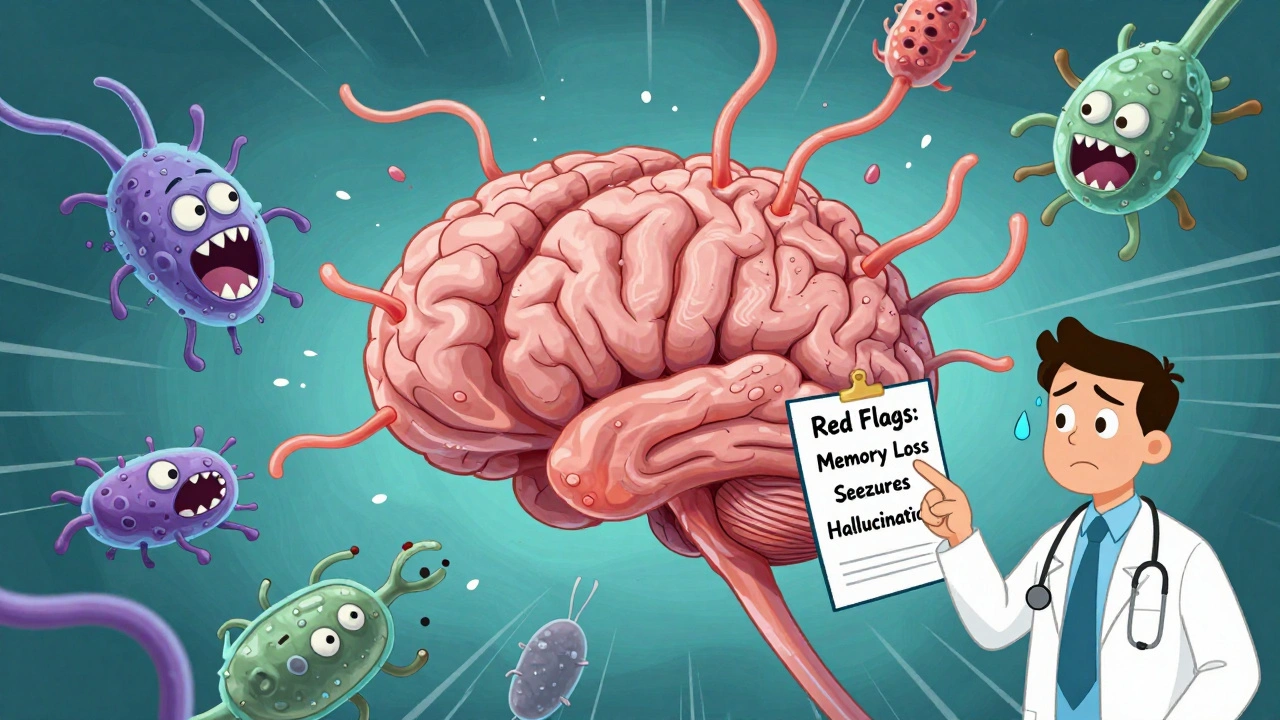
Autoimmune encephalitis is a rare but treatable brain disorder triggered by antibodies attacking nerve cells. Recognizing early signs like seizures, memory loss, and behavioral changes can save lives. Treatment works best when started quickly.
 Health and Wellness