
When you or someone you know has a bad reaction to a medicine, drug safety reporting, the process of notifying health authorities about harmful side effects from medications. It’s not just paperwork—it’s how we find out that a drug might be dangerous before it hurts more people. Many people think side effects are rare or too small to report. But the truth is, thousands of reactions go unreported every year, and that delays action. The FDA MedWatch, the U.S. system for collecting reports on adverse drug reactions and medical device problems relies on real people—patients, caregivers, pharmacists—to speak up. Without those reports, dangerous patterns stay hidden.
Not all reactions are obvious. Some show up weeks after starting a drug. Others only appear when you mix medications. That’s why serious adverse events, unexpected, life-threatening, or disabling reactions to medications that require medical intervention need immediate attention. A rash that won’t go away, sudden liver damage, or strange behavior after taking a new pill? These aren’t just bad luck—they’re signals. And they’re exactly what adverse drug reactions, harmful and unintended responses to medications taken at normal doses look like in the real world. Generic drugs aren’t safer just because they’re cheaper. The same side effects can happen with generics, and many people don’t even know which company made the pill they took. That’s why reporting includes the manufacturer name—because if 20 people get sick from the same batch, someone needs to know.
You don’t need to be a doctor to report. You don’t even need to be sure. If something felt wrong after taking a medicine, report it. The system is built for uncertainty. A patient’s note about dizziness after taking a new blood pressure pill might be the first clue that dozens of others had the same issue. Pharmacists report too—especially when they see the same drug causing problems across multiple patients. And if you’re on long-term meds, like immunosuppressants or NSAIDs, your reports help build the safety data that keeps future patients protected.
Below, you’ll find real stories and clear guides on how to report side effects correctly, why generic drugs are just as important to track as brand names, and how your report can stop a hidden danger before it spreads. This isn’t about blame. It’s about making sure no one else has to go through what you did.
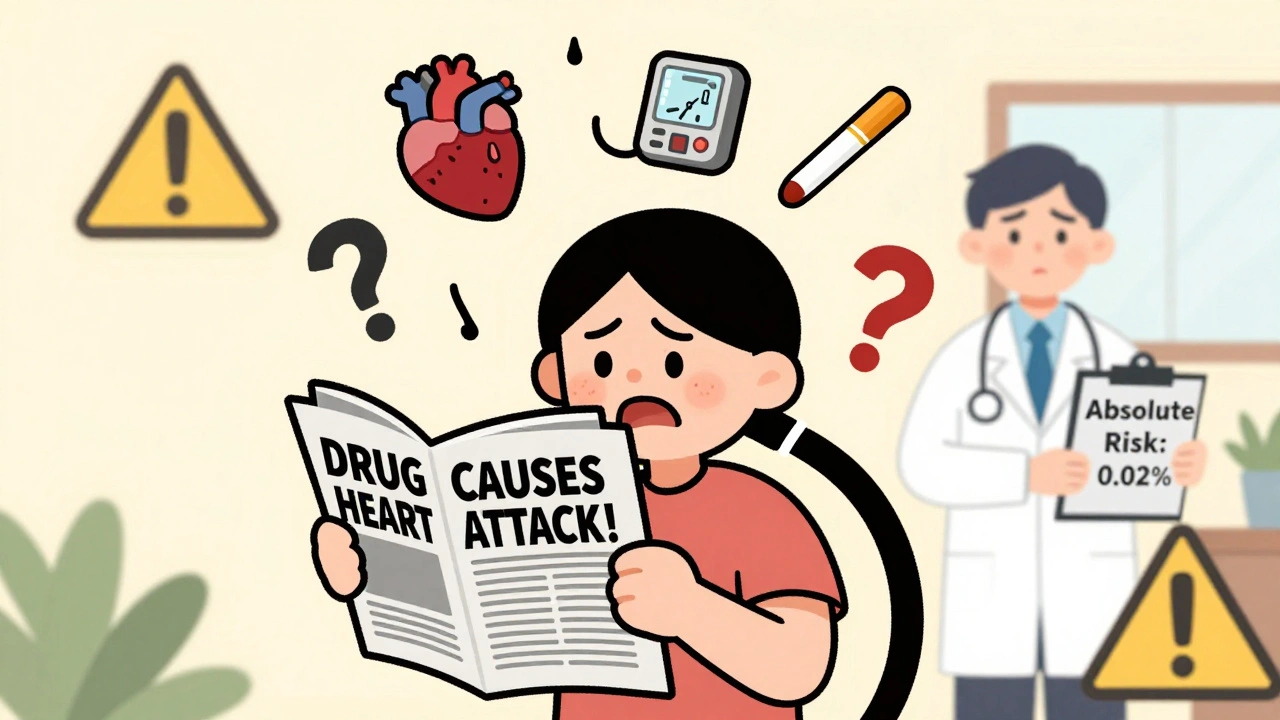
Learn how to spot misleading media reports about medication safety by checking study methods, understanding risk numbers, and verifying sources. Don't let fear drive your health choices - use facts instead.
 Health and Wellness