
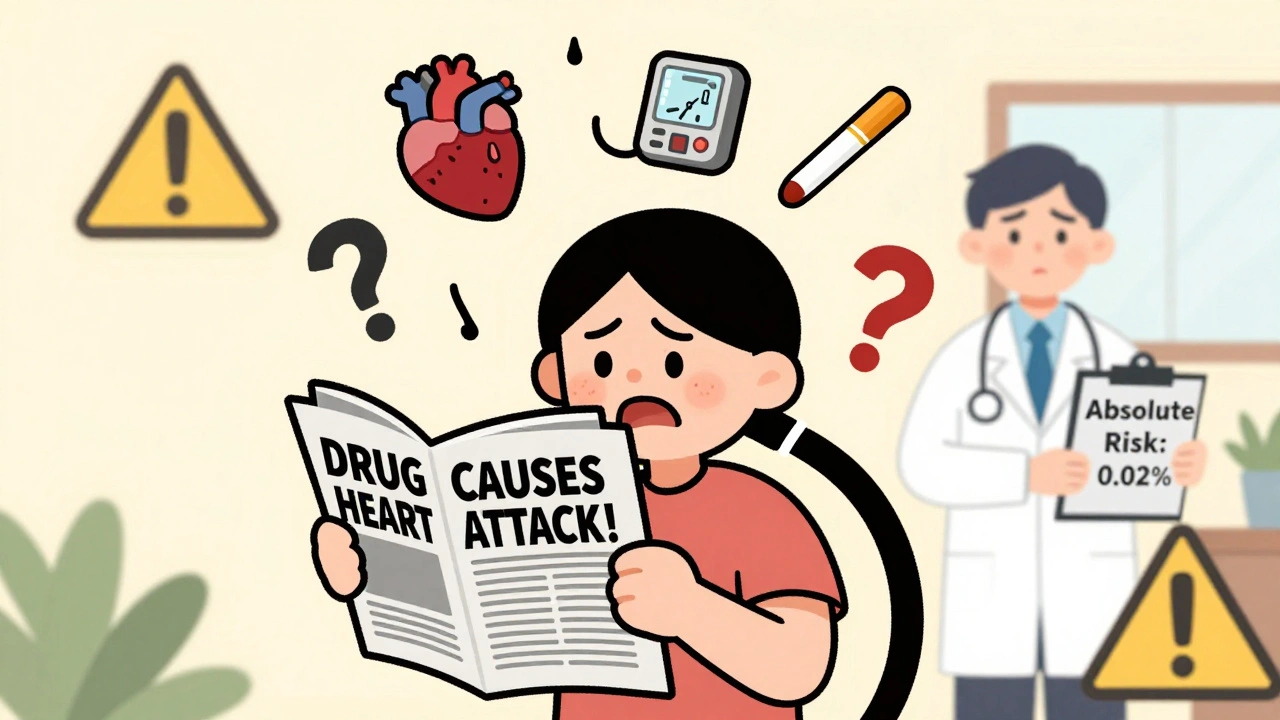
When you read a headline like "New Study Links Blood Pressure Drug to Heart Attacks", it’s natural to panic. You might stop taking your medicine. You might call your doctor. But what if the headline is misleading? What if the study didn’t even show what the article claims? Medication safety stories dominate the news, and too often, they get it wrong. The truth is, most media reports about drugs don’t explain the science behind the claims. They skip the details that matter. And that can put your health at risk.
Don’t Trust Headlines - Check the Source
The first thing you should ask is: What kind of study is this? Media reports often treat every study like it’s a definitive proof. But most aren’t. There are different ways to track medication safety, and they vary wildly in reliability.For example, some studies rely on spontaneous reports - doctors or patients voluntarily reporting side effects to systems like the FDA’s FAERS database. These reports are useful for spotting new problems, but they don’t prove the drug caused the problem. A person might have had a heart attack after taking a pill, but they also had high blood pressure, smoked, and didn’t exercise. The drug might have nothing to do with it. Yet, headlines treat these reports like facts.
More reliable methods include trigger tools and chart reviews. Trigger tools use algorithms to flag potential errors in medical records - like a patient given the wrong dose or a drug that interacts badly with another. Chart reviews dig into patient files to find patterns. These methods are harder to do, take more time, and cost more money. That’s why they’re rarely used in media reports. But if a story mentions one of these methods, it’s a good sign.
Understand the Difference Between Errors and Reactions
A medication error is something that went wrong because of a mistake - a pharmacist gave the wrong dose, a doctor prescribed the wrong drug, a nurse misread the label. These are preventable.An adverse drug reaction is a harmful side effect that happens even when the drug is used correctly. Some people just react badly to certain medications. That’s not a mistake - it’s biology.
Most media reports don’t make this distinction. They say "drug causes harm" without saying whether it was a preventable error or an unavoidable reaction. This matters because the solution is totally different. Fixing errors means better training, clearer labels, and better systems. Managing reactions means choosing a different drug.
A 2021 study in JAMA Network Open found that 68% of news articles about medication safety didn’t even say which type of event they were reporting on. That’s not just sloppy - it’s dangerous.
Look for Absolute Risk, Not Just Relative Risk
Here’s a classic trick: a headline says, "Drug X doubles your risk of stroke!" Sounds terrifying. But what if your baseline risk was 1 in 10,000? Doubling it means 2 in 10,000. That’s still extremely low.Media outlets love relative risk because it sounds dramatic. But what you need is absolute risk - the actual change in chance of harm. A 2020 study in the BMJ found that only 38% of media reports included absolute risk numbers. Cable news was even worse - only 22% got it right.
Always ask: What’s the starting risk? What’s the real increase? If the article doesn’t say, it’s probably hiding something.
Check the Study’s Limitations
Every study has limits. Maybe it only looked at older adults. Maybe it didn’t account for other medications people were taking. Maybe the sample size was too small to detect rare side effects.A 2021 audit in JAMA Internal Medicine found that 79% of media reports didn’t mention the study’s limitations. That’s not an accident. It’s how you make a small finding sound like a crisis.
Good reporting always says: "This study had a small number of patients," or "We couldn’t control for other health conditions," or "The results need to be confirmed in larger trials." If you don’t see that, the report isn’t trustworthy.
Verify the Data Against Official Sources
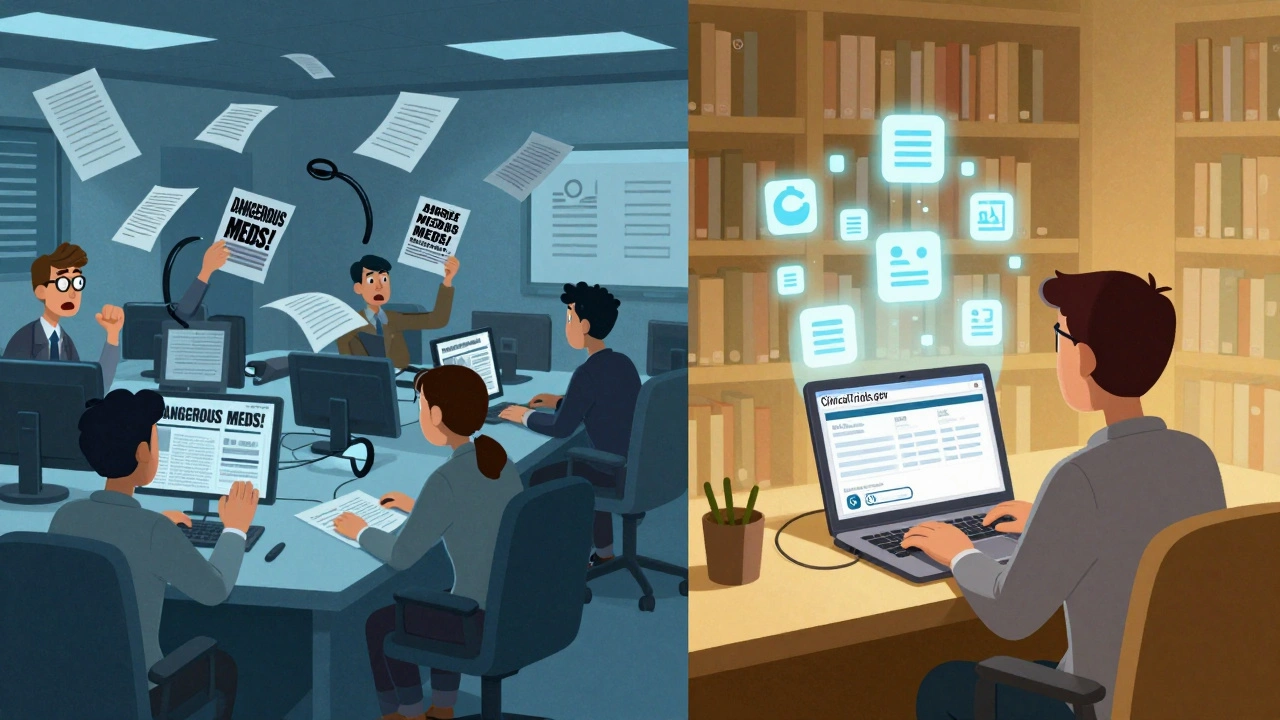
Don’t take the article’s word for it. Go to the source.If the report mentions the FDA’s FAERS database, look it up yourself. FAERS is a public system where anyone can report side effects. It’s not a list of confirmed dangers - it’s a list of possible ones. The FDA itself says: "Reports in FAERS do not necessarily indicate causation."
Another key resource is the WHO’s Uppsala Monitoring Centre. They collect global reports and use standardized methods to assess whether a drug is truly linked to an adverse event. If a media report cites FAERS or WHO but doesn’t explain the difference between reported events and proven causes, it’s misleading.
Also check ClinicalTrials.gov. If the study was part of a clinical trial, you can read the full protocol and results. Most media reports only summarize the conclusion - not the data.
Watch Out for Misclassified Drugs
Medications are grouped by type - like beta-blockers, statins, or SSRIs. But media reports often get this wrong. A 2022 analysis found that nearly half of all reports misclassified drugs by therapeutic category.Why does this matter? Because if a story says "All blood pressure meds are dangerous," but the study only looked at one class - say, ACE inhibitors - then the headline is false. You might stop taking a drug that’s perfectly safe for you just because it’s in the same broad category.
Use the WHO’s ATC (Anatomical Therapeutic Chemical) classification system as a reference. It’s the global standard. If a report doesn’t name the exact drug or class, be skeptical.
Be Wary of Social Media and AI-Generated Content
Instagram, TikTok, and YouTube are full of medication safety claims. A 2023 analysis by the National Patient Safety Foundation found that 68% of posts on these platforms contained false or misleading information. Videos showing "natural cures" for side effects, or dramatic stories about "deadly drugs," spread faster than facts.Even AI-generated articles are a growing problem. A 2023 Stanford study found that 65% of medication safety articles written by large language models contained major factual errors - especially around risk numbers and study types.
Don’t trust a post just because it has thousands of likes. Check if it cites a real study, a real database, or a real expert. If it doesn’t, treat it like gossip.
Ask Yourself: Who Benefits?
Sometimes, the story isn’t about safety - it’s about profit.Since 2015, direct-to-consumer drug advertising in the U.S. has increased by 300%. Companies spend billions on marketing. And sometimes, negative stories about a competitor’s drug are quietly promoted by those same companies.
Also, some media outlets get paid to run stories that scare people. If a report pushes you to buy a "safer" alternative - especially one that’s expensive or unproven - that’s a red flag.
Ask: Is the article trying to inform me - or sell me something?
What Should You Do When You See a Report?
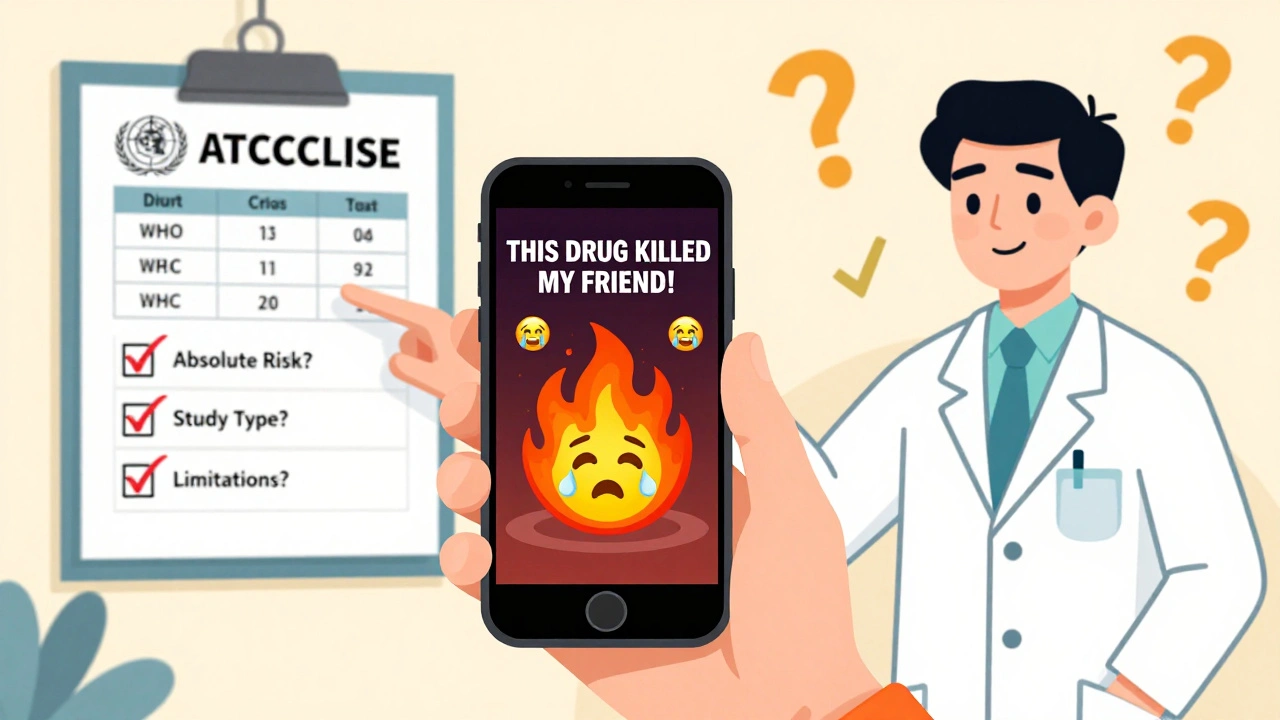
Here’s a simple checklist you can use every time:- Does the report distinguish between medication errors and adverse reactions?
- Does it give absolute risk, not just relative risk?
- Does it name the study method used - trigger tool, chart review, spontaneous report?
- Does it mention the study’s limitations?
- Does it cite the original data source - FAERS, WHO, ClinicalTrials.gov?
- Does it name the exact drug and class, not just "a blood pressure med"?
- Does it avoid alarmist language like "deadly," "toxic," or "must avoid"?
If two or more answers are "no," the report is unreliable. Don’t make a health decision based on it.
When in Doubt, Talk to Your Doctor or Pharmacist
Your doctor or pharmacist has access to the full picture - your medical history, your other medications, your risk factors. They can tell you if a reported risk applies to you.Never stop a prescribed medication because of a news story. That’s how people end up in the hospital. If you’re worried, bring the article with you. Ask: "Does this apply to me?" and "What’s the real risk?"
Pharmacists, in particular, are trained to interpret safety data. The Institute for Safe Medication Practices (ISMP) publishes a yearly list of dangerous abbreviations and dosing errors - and pharmacists use it every day. If a media report ignores ISMP’s guidelines, it’s likely outdated or inaccurate.
Final Thought: You Have More Power Than You Think
Medication safety reporting is broken. But you don’t have to be passive. You can be a critical reader. You can ask for the real numbers. You can check the sources. You can refuse to believe headlines that don’t back up their claims.Every time you question a report, you push back against misinformation. Every time you ask your doctor for the truth, you help make healthcare better. And every time you share accurate information with someone else, you help protect them too.
Don’t let fear drive your health decisions. Let facts do.
Are all adverse drug reactions reported in the media actually caused by the medication?
No. Most media reports mix up reported events with confirmed causes. Systems like the FDA’s FAERS collect any side effect someone reports - even if it’s unrelated to the drug. A person might have had a stroke after taking a pill, but they also had diabetes, high cholesterol, and smoked. The drug may have nothing to do with it. Media reports rarely explain this difference, making it seem like every reported event is a proven danger.
What’s the difference between relative risk and absolute risk in medication safety reports?
Relative risk compares the chance of harm between two groups - like "drug users are twice as likely to have a heart attack." Absolute risk tells you the actual change in risk - like "your chance goes from 0.1% to 0.2%." Relative risk sounds scary. Absolute risk tells you if it matters. Most media reports only use relative risk to create alarm. Always ask for the absolute numbers.
Can I trust medication safety stories from big news outlets like the New York Times?
Better than most, but not perfect. A 2020 BMJ study found that major newspapers correctly explained risk in 62% of cases, compared to only 22% for digital-native sites. Print media also mentioned study limitations more often. But even top outlets sometimes oversimplify, skip absolute risk, or misclassify drugs. Always check the details - don’t assume big name means accurate.
Why do some reports say a drug is "dangerous" when my doctor says it’s safe?
Because the report is talking about population-level risks, not your personal risk. A drug might slightly increase the chance of a rare side effect in a large group - but if you’re young, healthy, and have no other risk factors, your personal risk might be near zero. Doctors consider your full health picture. Media reports don’t. Never stop a medication based on a headline.
Is it safe to rely on TikTok or Instagram for medication safety advice?
No. A 2023 analysis found that 68% of medication safety claims on Instagram and TikTok were false or misleading. These platforms prioritize emotion over facts. A dramatic video about a "deadly drug" gets more views than a calm explanation of risk levels. Don’t change your treatment based on social media. Always verify with a healthcare professional.
What should I do if I see a misleading medication safety report?
Don’t share it. If you know someone who believes it, gently correct them with facts. Point them to reliable sources like the FDA’s FAERS database, ClinicalTrials.gov, or the Institute for Safe Medication Practices. If the report is from a major outlet, consider writing a polite comment or email asking for clarification. Public pressure helps improve reporting standards.
How can I find out if a drug I’m taking has been flagged for safety issues?
Check the FDA’s website for drug safety communications. You can search by drug name and see if there are any official alerts. Also, look up the drug on ClinicalTrials.gov to find published studies. Your pharmacist can help you interpret this information. Don’t rely on news headlines - go to the original source.
Are newer drugs more dangerous than older ones?
Not necessarily. Newer drugs are tested in smaller groups, so rare side effects might not show up until after approval. But older drugs have been used for decades - and their risks are better understood. A drug that’s been on the market for 20 years and still has no major safety warnings is often safer than a brand-new one with limited real-world data. Don’t assume "new" means "better" or "worse."
 Health and Wellness
Abhi Yadav
December 5, 2025 AT 07:31Julia Jakob
December 5, 2025 AT 18:19Nancy M
December 6, 2025 AT 06:23gladys morante
December 7, 2025 AT 12:09Precious Angel
December 8, 2025 AT 13:51David Ross
December 8, 2025 AT 15:30Sophia Lyateva
December 9, 2025 AT 01:10AARON HERNANDEZ ZAVALA
December 9, 2025 AT 05:26Robert Asel
December 9, 2025 AT 21:46Ben Wood
December 11, 2025 AT 09:53