
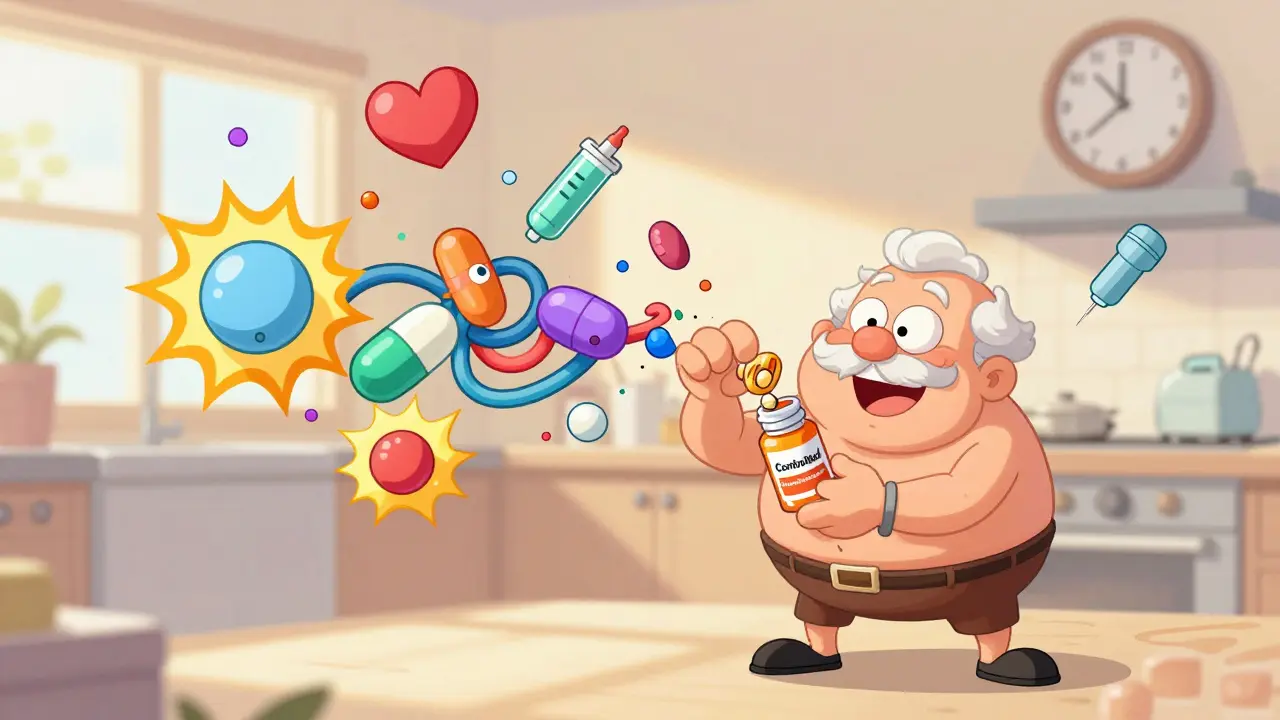
Imagine having to take five different pills every day just to manage your high blood pressure, diabetes, and cholesterol. Now imagine taking just one pill that does it all. That’s the power of combination products-and their generic versions are making this life-changing convenience affordable for millions.
Generic combination products aren’t just cheaper versions of brand-name drugs. They’re smart, integrated treatments that combine two or more active ingredients-or a drug with a delivery device-into a single unit. Think insulin pens, inhalers with built-in dose counters, or patches that slowly release medication through your skin. These aren’t new. But now, as patents expire, generic versions are flooding the market. And they’re not just saving money-they’re saving lives by helping people stick to their treatment plans.
How Combination Products Make It Easier to Take Your Medicine
One of the biggest reasons people stop taking their meds isn’t side effects-it’s complexity. A study from Drug Patent Watch found that adherence drops by 26% when you go from once-daily dosing to twice-daily. That’s huge. When you’re managing a chronic condition like diabetes or COPD, juggling multiple pills, syringes, inhalers, and devices becomes overwhelming. People forget. They get confused. They get tired.
Combination products cut through that chaos. Take prefilled insulin pens. Instead of drawing insulin from a vial, measuring the dose with a syringe, and risking contamination or error, you just click and inject. The device ensures accuracy within ±5% every time. Patients on Reddit’s r/Diabetes community reported slashing their dosing errors from 3-4 per week to almost zero after switching. That’s not luck-it’s design.
Same goes for drug-eluting stents. These tiny mesh tubes, implanted in heart arteries, release medication over 30-90 days to prevent re-blockage. They’re a combo of a medical device and a drug. Generic versions now exist, and they deliver the same clinical results: 30-40% lower risk of restenosis compared to bare-metal stents. The patient doesn’t need to do anything extra. The treatment just works.
Why Generic Versions Are a Game-Changer for Adherence
Brand-name combination products can cost $300-$800 a month. Generic versions? Often $50-$200. That’s a 30-80% drop in price. And price matters. The FDA found that 23.4% of patients skip doses because they can’t afford their meds. For seniors on fixed incomes or families juggling rent and prescriptions, that gap is life-or-death.
But here’s the twist: generic combination products don’t just save money-they improve adherence even more than brand-name versions. Studies show patients started on generic medications are 8.7 percentage points more likely to stick with their regimen than those started on brand-name drugs. Why? Because when cost is removed as a barrier, people take their meds. Period.
And it’s not just about pills. Generic transdermal patches for smoking cessation, generic auto-injectors for epinephrine, and generic inhalers for asthma are all proving that when you simplify the system, people stick with it. A survey by Oliver Healthcare Packaging found that 78% of patients using combination products said the ease of use directly improved their adherence.
What Makes a Generic Combination Product Work
Not all generics are created equal. A generic drug that’s just a cheaper version of a single ingredient? Easy to approve. But a generic combination product? It has to pass two tests: one for the drug, and one for the device.
The FDA requires that the generic version deliver the same amount of active ingredient at the same rate as the brand. That’s bioequivalence: drug levels in the blood must stay within 80-125% of the original. But the device part? That’s harder. The auto-injector must require the same force to activate-usually 5-15 Newtons. The inhaler must release the exact same particle size. The pen must dispense the same dose with the same click. Failure rates must be under 0.1% in simulated use.
Manufacturers can’t just swap out the drug and call it a day. The packaging, the needle, the spring mechanism, even the color of the casing-all these things are scrutinized. If the device changes, the FDA demands new testing. That’s why it takes 18-24 months longer to approve a generic combination product than a regular generic pill. But it’s worth it. Because if the device fails, the patient doesn’t get the medicine. And that’s not a cost issue-it’s a safety issue.
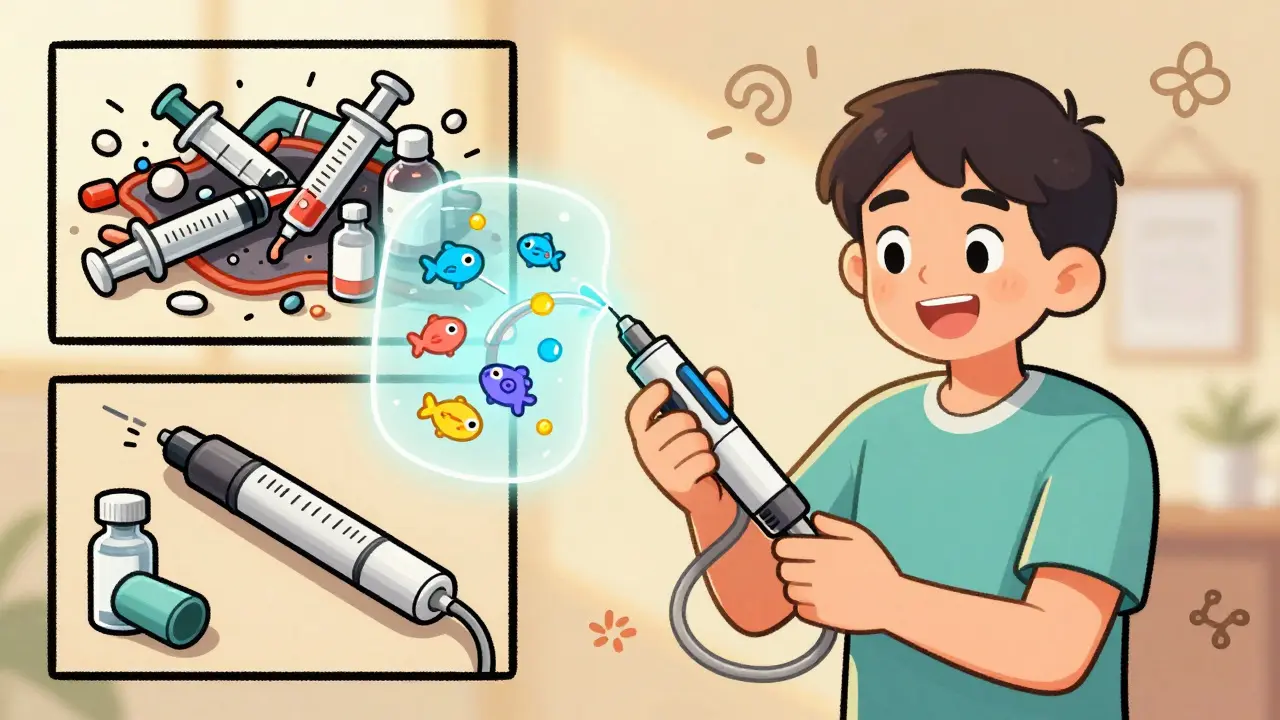
The Hidden Risk: Switching Between Generic Versions
There’s a dark side to the rise of generics: inconsistency.
Let’s say you’ve been using a generic inhaler for COPD for six months. Your lungs are stable. Then your pharmacy switches you to a different generic version-same active ingredient, same dose, same manufacturer, but a different device. Maybe the mouthpiece shape changed. Maybe the button requires a harder press. Maybe the dose counter resets differently.
That’s not rare. Avalere Health found that 32% of patients switching between generic versions of combination products reported confusion or missed doses. One COPD patient on PatientsLikeMe said: “Each generic version required slightly different breathing techniques. I missed doses until I got trained again.”
This isn’t the fault of the generics. It’s the fault of the system. Pharmacists are legally allowed to substitute generics unless the doctor says “dispense as written.” But no one tells the patient that the new version might feel different. No one checks if they still know how to use it.
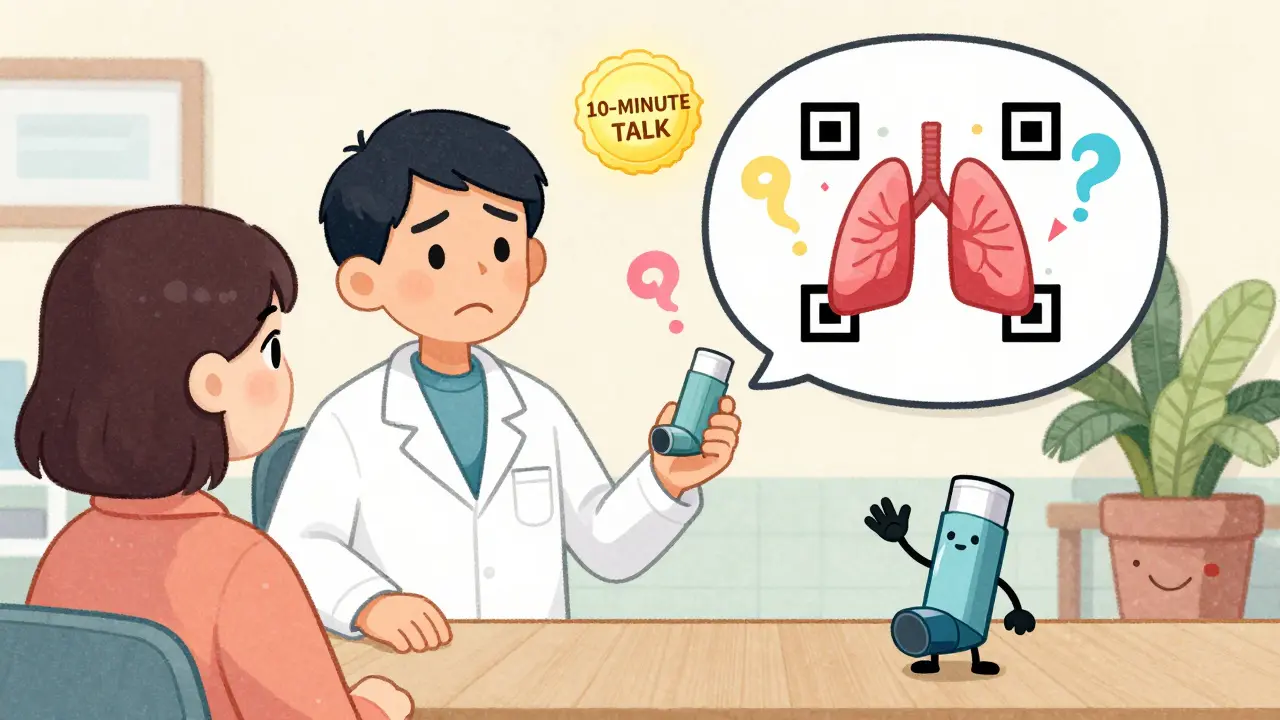
That’s why patient counseling isn’t optional-it’s essential. The FDA’s Dr. Sarah Ibrahim says: “Talking to patients about their generic drugs improves usability, compliance, and outcomes.” A 10-minute conversation before switching can prevent a week of missed doses. For complex devices like auto-injectors, 20-30 minutes of hands-on training is needed. Simple patches? Five minutes. But skipping it? That’s how adherence drops.
What’s Next for Generic Combination Products
The market is exploding. The global combination product market hit $127.5 billion in 2022 and is projected to hit $258.3 billion by 2030. Chronic disease management-diabetes, asthma, heart disease-makes up the biggest chunk. In fact, insulin pens alone account for 28% of the market.
New regulations are speeding things up. The Inflation Reduction Act of 2022 is pushing Medicare to negotiate prices on high-cost drugs, which is forcing manufacturers to compete harder. That means more generic combination products will hit the market. The FDA’s new draft guidance from June 2023 is trying to standardize how generics are approved and substituted, especially for inhalers and injectables.
And the next wave? Smart devices. Some new generic combination products are starting to include Bluetooth-enabled inhalers that track when you use them. Others have apps that remind you to take your patch. These aren’t luxury features-they’re adherence tools. And when they’re available in generic form, they’re no longer just for the wealthy.
What You Can Do to Maximize the Benefits
If you’re on a combination product-brand or generic-here’s what you should do:
- Ask your pharmacist: “Is this the same device as before?” If it looks or feels different, ask for a demo.
- Don’t assume the instructions are the same. Even small changes in button pressure or inhalation timing can affect your dose.
- Request written or video instructions. Many manufacturers now include QR codes on packaging that link to training videos.
- Keep a log: note when you take your dose and if you feel any difference in how the device works.
- Speak up if you’re confused. Your doctor or nurse can help you get the right version or retrain you.
And if you’re a caregiver or family member? Don’t assume the patient knows how to use it. Watch them use the device. Ask them to show you. It’s the simplest way to prevent a crisis.
Generic combination products are one of the most underappreciated breakthroughs in modern medicine. They take the best of innovation-precision delivery, simplified regimens-and make it accessible. But they only work if patients understand them. And that starts with a conversation.
Are generic combination products as effective as brand-name ones?
Yes, if they’re approved by the FDA. Generic combination products must prove they deliver the same amount of active drug at the same rate as the brand-name version. They also must match the original device’s performance-dose accuracy, activation force, and failure rates. Studies show they work just as well in real-world use. The only difference is cost.
Why do some patients have trouble with generic inhalers or pens?
Different manufacturers may use slightly different device designs-even if the drug is identical. A new generic inhaler might have a different mouthpiece shape, button resistance, or dose counter. That can confuse patients who’ve used the same device for years. Without proper training, they may not inhale deeply enough or press the button at the right time, leading to under-dosing.
Can I switch between generic versions without talking to my doctor?
Legally, yes-pharmacists can substitute generics unless the prescription says “dispense as written.” But medically? Not always. If you’ve been stable on one generic version and your pharmacy switches you to another, ask for a demonstration. Even small changes in device design can affect how well the medicine works. Don’t assume it’s the same.
Do generic combination products cost less because they’re lower quality?
No. The lower cost comes from not having to repeat expensive clinical trials or pay for brand marketing. The active ingredients and device performance must meet the same FDA standards. The packaging might look different, but the medicine and mechanism are held to the same safety and effectiveness benchmarks. There’s no compromise on quality-just on price.
What conditions benefit most from combination products?
Chronic conditions that require daily, long-term treatment see the biggest adherence gains. That includes high blood pressure (with pills combining ACE inhibitors and diuretics), diabetes (insulin pens), asthma and COPD (inhaled corticosteroids with bronchodilators), and cardiovascular disease (drug-eluting stents). These are conditions where missing even one dose can lead to serious complications.
Final Thought: Simplicity Saves Lives
Healthcare is getting more complex. But the best solutions are often the simplest. Generic combination products cut through the noise. They turn a confusing, expensive, multi-step routine into one simple action. And when patients can actually follow their treatment plan, hospital visits drop, complications decline, and lives improve. The technology exists. The savings are real. What’s missing is the conversation. Don’t wait for a crisis. Ask. Learn. Use. Your health depends on it.
 Health and Wellness
Bailey Adkison
December 25, 2025 AT 05:36Generic combination products aren't magic they're just cheaper. The FDA approves them based on bioequivalence but real-world use? Different story. I've seen patients miss doses because the pen clicked differently. No one trains them. No one cares. It's a cost-cutting measure dressed up as innovation.
Winni Victor
December 25, 2025 AT 09:12Oh wow so now we're celebrating corporate greed as medical progress? 🙄
Let me guess next they'll combine your chemo with your antidepressant and call it 'convenience' while you're vomiting and crying in the same pill.
People don't need fewer pills they need better care. This is capitalism pretending to be healthcare.
Katherine Blumhardt
December 26, 2025 AT 23:51i just got switched to a new generic inhaler and now i feel like i'm breathing through a straw??
the old one had a nice click the new one just kinda... sighs?
pharmacist said 'same drug same thing' but my lungs know better lol
why do they change stuff like this??
Rick Kimberly
December 27, 2025 AT 06:25While the economic and adherence benefits of generic combination products are empirically significant, the regulatory framework governing device equivalence remains inadequately standardized. The FDA's current guidance does not uniformly mandate user interface parity across manufacturers, thereby introducing clinical variability that undermines the very adherence these products aim to enhance. A mandatory, human-factor validation protocol for all combination devices is not merely advisable-it is ethically imperative.
Lindsay Hensel
December 28, 2025 AT 05:26Every time I see someone say 'just take one pill' I want to cry.
It’s not about the pill. It’s about the fear. The confusion. The shame of not knowing how to use it.
One pill doesn’t fix that. A human does.
Mussin Machhour
December 29, 2025 AT 11:22My grandma switched to a generic insulin pen last year and she hasn't missed a dose since. She used to forget half the time because she had five different vials and syringes. Now she just clicks and goes. No drama. No mess. Just life.
Stop overthinking it. This is a win.
Carlos Narvaez
December 30, 2025 AT 18:59Generic combination products are the pharmaceutical equivalent of fast food. Looks like the real thing, tastes okay, but you're missing the craftsmanship. And someone’s gotta pay for the corner-cutting eventually.
Harbans Singh
December 31, 2025 AT 14:18in India, we get these generics and people live longer because of them. No one argues about the device when their child stops having asthma attacks. The price difference? It’s not a feature. It’s a lifeline.
Don’t let your privilege blind you to what works.
Zabihullah Saleh
January 2, 2026 AT 12:18There's a quiet revolution here. We don't talk about it because it's not sexy. No breakthrough. No patent. Just a pen that clicks the same way every time. And for someone drowning in complexity? That's grace.
Maybe the future of medicine isn't in AI or gene editing. Maybe it's in a well-designed button.
Oluwatosin Ayodele
January 3, 2026 AT 18:51You think this is new? In Nigeria we’ve been using generic combination pills since 2008. No fancy FDA. No training videos. Just a bag of pills and a prayer. If you survive, good. If you don’t? The system didn’t fail you. You were never in it to begin with. So stop acting like this is some moral victory. It’s just capitalism with a Band-Aid.
Jason Jasper
January 5, 2026 AT 12:46I used to work in pharmacy. Saw patients cry because they couldn’t afford their meds. Saw them skip doses so their kids could eat.
Generic combination products? They don’t fix everything. But they fix *something*. And sometimes? That’s enough.
sagar patel
January 6, 2026 AT 11:43Device equivalence is a myth. The spring tension varies. The mouthpiece diameter differs. The dose counter resets differently. These aren't minor differences. They're clinical variables. And the FDA lets pharmacists swap them like candy. That's not regulation. That's negligence
Linda B.
January 6, 2026 AT 22:21So let me get this straight - the same people who told us glyphosate was safe now want us to trust generic inhalers? 🤔
Big Pharma invented combination products to lock us in. Now they’re letting generics in to keep the profits flowing. Same playbook. Different packaging.
Who’s really benefiting here? Not you.
Christopher King
January 7, 2026 AT 23:27They’re coming for your pills next. You think this is about adherence? Nah. It’s about control. One pill. One device. One system. Soon they’ll embed trackers. Soon they’ll sync with your insurance. Soon they’ll decide if you’re 'compliant enough' to get refills.
They’re not saving lives. They’re building a database.
Michael Dillon
January 8, 2026 AT 22:48Look I get the fear of change. But if your inhaler works better now and costs $40 instead of $350, maybe stop crying about the button click and start celebrating the fact you can afford to breathe.
Also - yes, the device might feel weird. But you’re alive. That’s the metric that matters.