
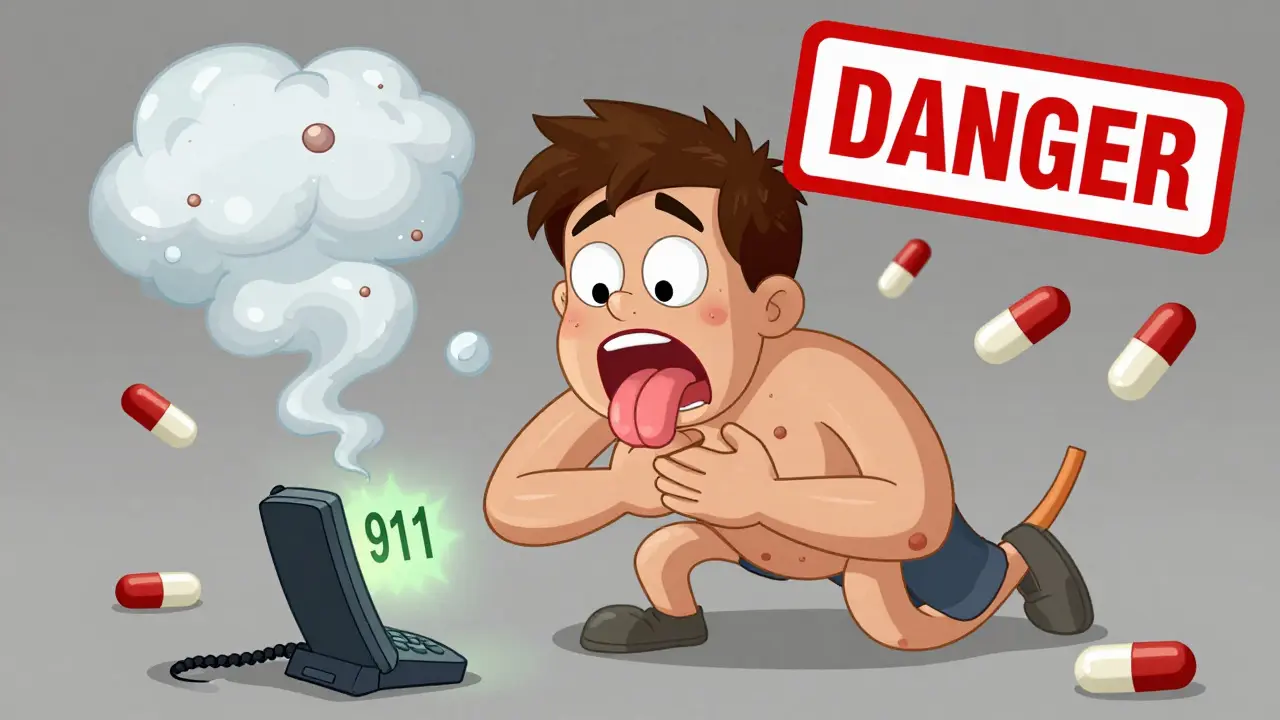
Taking medication is something most of us do without thinking - a pill for pain, an antibiotic for an infection, a pill for high blood pressure. But sometimes, your body doesn’t react the way it should. A reaction might be mild - a rash, an upset stomach, a little dizziness. Or it might be life-threatening. Knowing the difference could save your life.
Not All Reactions Are the Same
Medication reactions aren’t one-size-fits-all. Some are just annoying side effects. Others are allergic reactions, where your immune system goes into overdrive and attacks the drug like it’s a dangerous invader. The key is recognizing which is which.
Side effects are common. They happen because the drug affects more than just the target area. For example, antibiotics can cause nausea or diarrhea. Blood pressure meds might make you feel tired. These aren’t dangerous on their own - just uncomfortable. You can usually call your doctor during office hours and get advice.
But if your reaction involves more than one body system? That’s a red flag. Think of it this way: if you get a rash and you’re vomiting, or you’re itching and your throat feels tight - that’s not just a side effect. That’s your body screaming for help.
Call 911 Immediately If You Have These Symptoms
Emergency services exist for moments when every second counts. If you or someone else shows any of these signs after taking a medication, call 911 right away:
- Swelling of the tongue, lips, or throat
- Wheezing, trouble breathing, or a feeling like your airway is closing
- Stridor - that high-pitched, squeaky sound when you breathe in
- Dizziness, fainting, or feeling like you’re about to pass out
- A fast, weak, or fluttering pulse
- Low blood pressure - you might feel cold, clammy, or confused
- Vomiting or diarrhea along with hives or a rash
- Loss of consciousness
These are signs of anaphylaxis - a severe, whole-body allergic reaction. It can start within minutes and get worse fast. According to the Mayo Clinic, symptoms often appear within an hour of taking the drug. But even if it takes a few hours, don’t wait. The longer you wait, the harder it becomes to treat.
And here’s something many people get wrong: if you have an epinephrine auto-injector (like an EpiPen), use it. Then call 911 anyway. One dose isn’t always enough. You can have a second wave of symptoms hours later. Emergency responders are trained to handle this. They’ll bring more epinephrine, monitor your breathing, and get you to the hospital.
Dr. Mathai at Regional Hospital puts it bluntly: “If you have hives, wheezing, and trouble breathing after taking a medication - call 911. Don’t text your doctor. Don’t wait until morning. Call now.”
When It’s Okay to Call Your Doctor Instead
Not every reaction needs an ambulance. If you’re only dealing with one symptom - and it’s mild - you can usually wait to talk to your doctor.
Examples of reactions that can wait:
- A simple rash without swelling or breathing issues
- Itching that’s only on the skin
- Mild nausea or headache
- Feeling drowsy or tired
- Minor stomach upset
These are likely side effects, not allergies. You can call your doctor during business hours, visit an urgent care center, or even message your pharmacy. They’ll tell you whether to stop the medication, switch to something else, or monitor it.
But here’s the catch: if a mild symptom gets worse over the next 12-24 hours - or if you develop a new one - don’t wait. Go back to square one. If you now have swelling or trouble breathing? Call 911.
Why Timing Matters More Than You Think
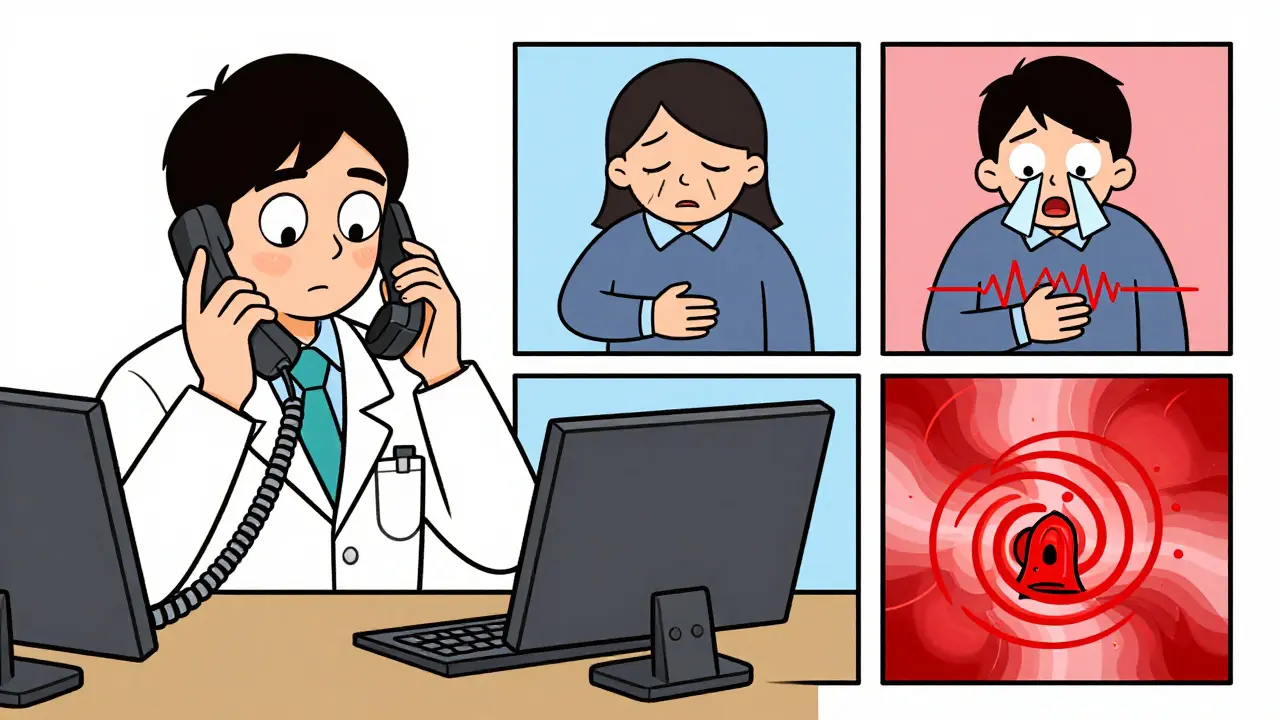
Every minute counts in a severe reaction. CPR Seattle warns that breathing problems can turn into complete airway blockage in under five minutes. By the time you get to the ER, it might be too late.
And here’s the scary part: half of all fatal anaphylaxis cases happen because epinephrine was given too late. People think, “I’ll wait and see.” Or “It’s probably just a rash.” But allergic reactions don’t wait. They don’t care if it’s 2 a.m. or if you’re “not sure.”
That’s why experts say: if you’re unsure, call 911. It’s better to have a false alarm than to lose someone because you hesitated.
What to Do While Waiting for Help
If you’re calling 911, don’t just hang up. Stay on the line. The dispatcher will guide you:
- If the person is conscious and breathing, have them lie down with their legs raised. This helps blood flow to the brain.
- If they’re having trouble breathing, let them sit up. Don’t force them to lie down.
- Don’t give them anything to eat or drink.
- Don’t try to give them other meds - especially antihistamines. They won’t stop anaphylaxis.
- If you have an epinephrine injector, use it. Inject into the outer thigh. Even if you’re nervous, use it. The risks of not using it are far greater.
And remember: even if symptoms seem to go away after using epinephrine, you still need to go to the hospital. That’s not optional. Reactions can come back. You need to be monitored for at least 4-6 hours.
Common Myths About Medication Reactions
Let’s clear up some confusion:
- Myth: “I’ve taken this drug before, so I can’t be allergic.”
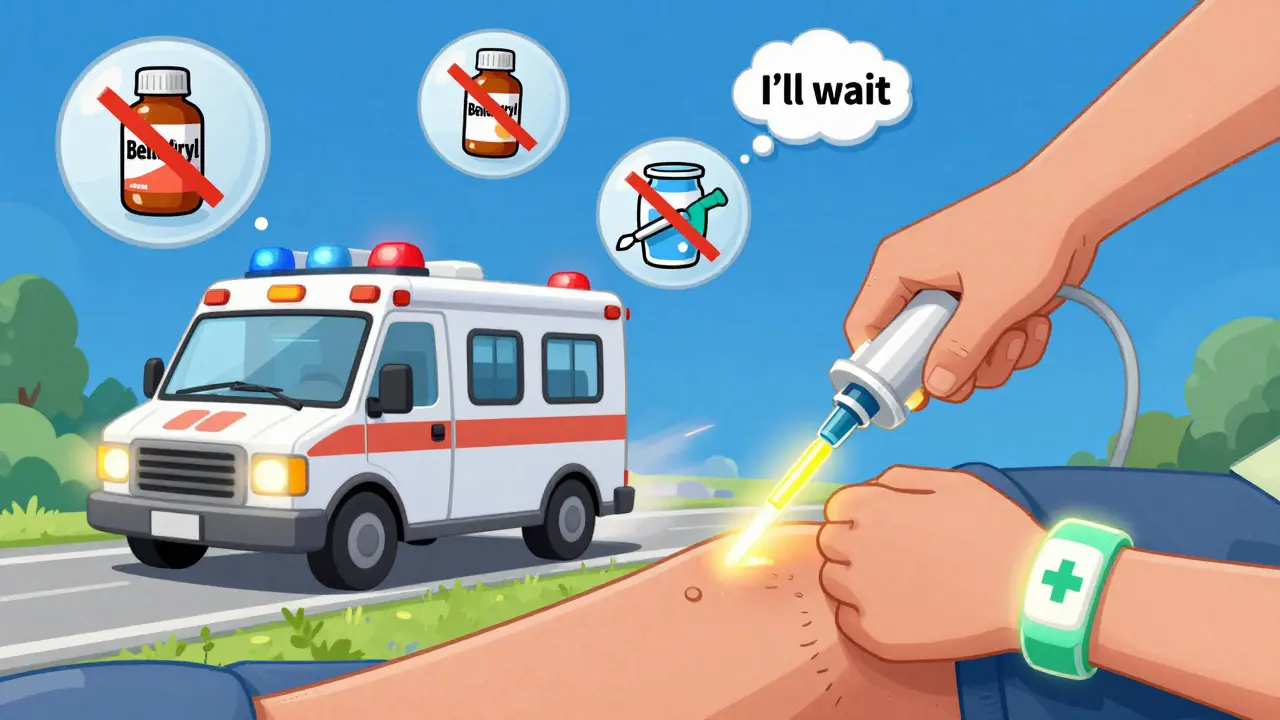
Truth: Allergies can develop anytime. You could take a drug for years and suddenly react. - Myth: “Antihistamines like Benadryl will fix this.”
Truth: They help with itching or hives, but they won’t stop anaphylaxis. Only epinephrine works in a life-threatening reaction. - Myth: “I’m too scared to use epinephrine.”
Truth: Epinephrine is safe. The risk of not using it is death. Even people with heart conditions should use it - the danger of anaphylaxis is greater than the risk of the drug. - Myth: “I’ll just drive myself to the hospital.”
Truth: You might pass out. You might stop breathing. Ambulances have oxygen, monitors, and trained staff. Don’t risk it.
How to Prepare Ahead of Time
Don’t wait for a reaction to happen to learn this stuff. If you’re on long-term medication:
- Ask your doctor: “Could this cause an allergic reaction?”
- Keep a list of all your meds and any past reactions.
- If you’ve had a serious reaction before, carry an epinephrine auto-injector. Know how to use it.
- Wear a medical alert bracelet. It tells first responders what you’re allergic to before you can speak.
- Teach a family member or roommate how to use the injector. In a crisis, you might not be able to help yourself.
Medication reactions are more common than you think. The FDA recorded over 1.8 million reports in 2022. Experts say the real number is much higher because many go unreported. Antibiotics are the most common trigger - about 15% of all drug allergies.
But here’s the good news: if you know the signs, act fast, and don’t second-guess yourself - you can survive. Your body will thank you.
What’s the difference between a side effect and an allergic reaction?
A side effect is a common, predictable reaction to a drug - like nausea from antibiotics or drowsiness from allergy pills. An allergic reaction is your immune system overreacting to the drug, treating it like a threat. Allergic reactions often involve the skin (hives, rash), breathing (wheezing), and other systems (vomiting, dizziness). Side effects are usually mild and isolated. Allergic reactions can be life-threatening.
Can I use Benadryl instead of epinephrine for a severe reaction?
No. Benadryl (diphenhydramine) helps with itching or mild hives, but it does nothing to stop the airway swelling or low blood pressure that come with anaphylaxis. Epinephrine is the only medication that can reverse these life-threatening symptoms. If you’re having trouble breathing or your throat is closing, epinephrine is your only option. Always call 911 after using it.
If I used epinephrine and feel better, do I still need to go to the hospital?
Yes. Even if you feel fine, you must go to the ER. Anaphylaxis can have a second wave of symptoms hours later - this is called a biphasic reaction. Emergency staff will monitor your breathing, blood pressure, and heart rate for at least 4-6 hours. You might need more epinephrine, oxygen, or IV fluids. Skipping the hospital puts you at serious risk.
Is it safe to use epinephrine if I have heart problems?
Yes. While epinephrine can raise your heart rate, the danger of anaphylaxis - including cardiac arrest - is far greater than the risk of the drug. The American Heart Association and Mayo Clinic both say: use epinephrine in any suspected anaphylaxis, even for people with heart disease. Not using it is the bigger danger.
Can you develop a drug allergy after taking it for years?
Absolutely. Allergies can develop at any time. You might take penicillin or ibuprofen for decades without issue, then suddenly react. Your immune system changes. That’s why it’s important to report any new reaction to your doctor - even if it seems minor. Keep track of what you take and how you feel.
What should I do if I’m not sure whether to call 911?
Call 911. If you’re unsure, assume it’s serious. Emergency dispatchers are trained to ask the right questions. They’ll help you decide if you need an ambulance. It’s better to have an ambulance come for nothing than to wait too long and lose precious minutes. CPR Seattle says: if you’re hesitating, you’re already waiting too long.
 Health and Wellness