
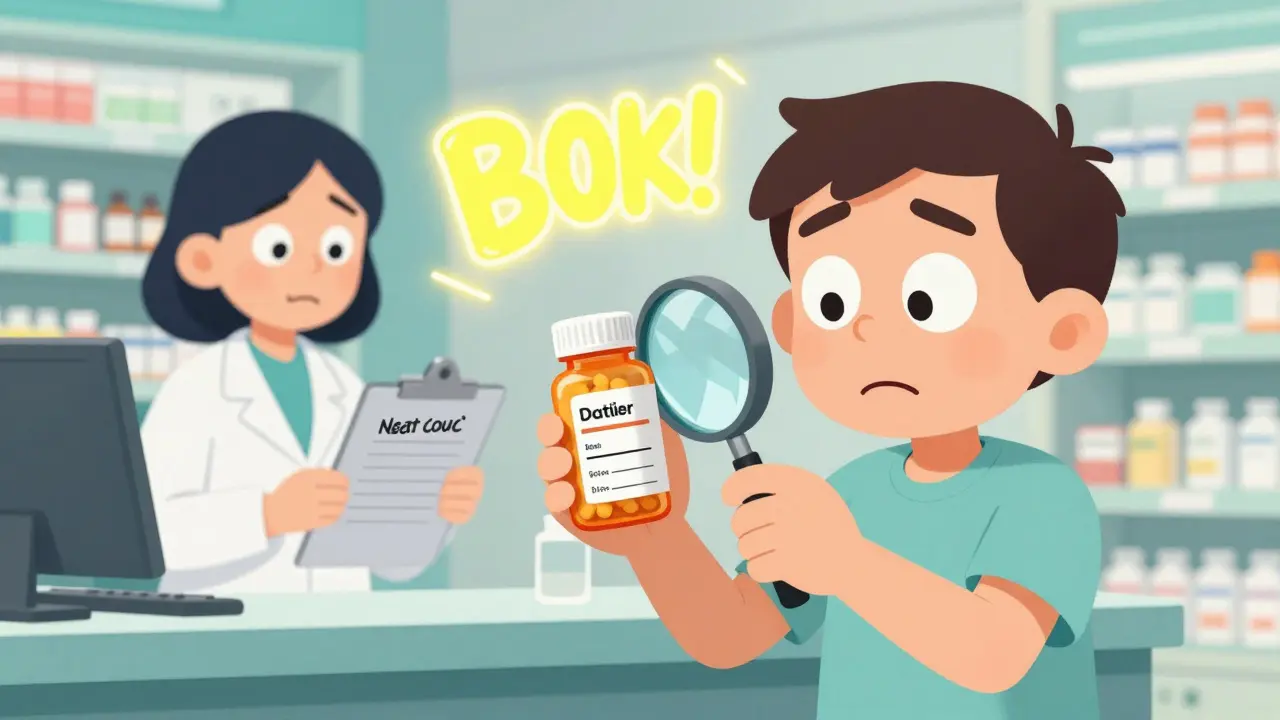
Don’t Just Take Your Prescription-Check It
You’ve waited in line, handed over your script, and now the pharmacist slides a bottle across the counter. You grab it, thank them, and walk out. But what if that pill isn’t yours? What if the dose is wrong? Or worse-what if it’s not even the right medicine?
Every year, over 1.5 million Americans are harmed by medication errors. Many of these mistakes happen at the pharmacy-not because pharmacists are careless, but because the system has gaps. And here’s the truth: you are the last line of defense. Not the barcode scanner. Not the computer. Not even the pharmacist. You.
Studies show that when patients actively verify their prescriptions, errors drop by up to 37.2%. That’s not a small number. That’s life-saving. And it doesn’t take much. Just three minutes. Here’s how to do it right.
Check Your Name and Date of Birth First
Before you even look at the medicine, check the label. Does it have your full legal name? Not “John S.” Not “J. Smith.” Not “Mr. Smith.” Your full name, exactly as it appears on your ID. And your date of birth? That’s not just a formality. It’s a required patient identifier under safety protocols like Providence Health’s Medication Safety Protocol.
One in five errors involves the wrong patient getting someone else’s meds. Sounds crazy? It happens more than you think. A pharmacist on Reddit with 12 years of experience said the most common mistake? Wrong patient. That’s right-someone else’s blood pressure pill ends up in your hands because the names looked similar.
Don’t assume it’s yours. Read it out loud. If your name is Maria Lopez and the label says “Maria L.,” ask them to fix it. If your DOB is 03/15/1978 and it says 03/15/1987, don’t walk away until it’s corrected.
Match the Drug Name and Strength Exactly
Now look at the medication name. Is it the same as what your doctor told you? And don’t get tricked by generics. If your doctor prescribed “Lisinopril 10mg,” the bottle might say “Lisinopril 10mg” or “Lisinopril HCTZ 10/12.5mg.” Those are different drugs. One is for blood pressure. The other is for blood pressure and fluid retention.
Check the strength. Dosage errors make up over a third of all prescription mistakes. You might think “5mg” and “10mg” look the same on a small label. But they’re not. One could make you dizzy. The other could send you to the ER.
Look for the National Drug Code (NDC) number. It’s a 10- or 11-digit number on the label. You can type it into the FDA’s NDC Directory online (or ask the pharmacist to show you on their screen). If the NDC doesn’t match the drug name and strength, something’s wrong.
And here’s a trick: if your doctor gave you a pill you’ve never seen before, take a photo of it with your phone. Later, search the image. You’ll find what it looks like. That way, if the color or shape is off, you’ll know.
Count Your Pills
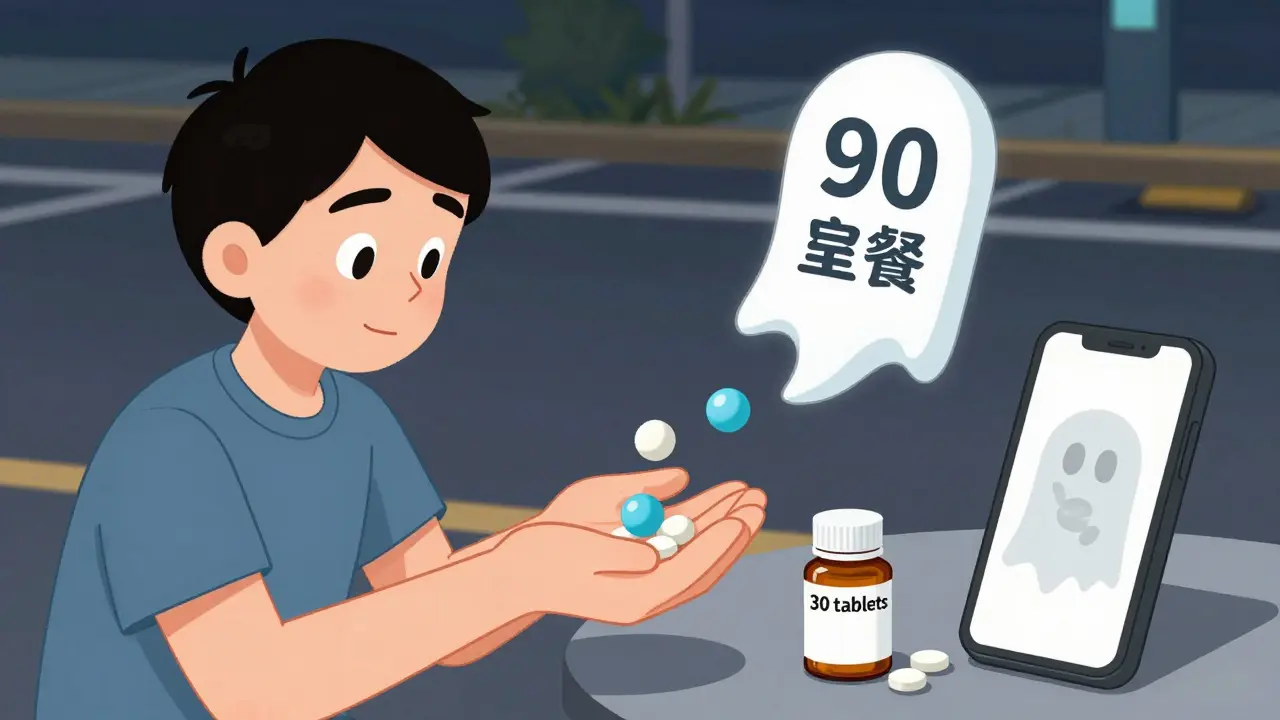
How many pills should you have? If your script says “30 tablets,” count them. Right there, in the parking lot if you have to. Don’t wait until you get home.
One in ten pharmacy errors involves the wrong quantity. Maybe you were supposed to get 60 pills but only got 30. Or worse-you got 90. That’s a big risk. Too little means your condition won’t be treated. Too much? That’s an overdose waiting to happen.
Providence Health’s data shows that 22.8% of quantity errors are caught only by counting right away. If you don’t count, you might not notice until you’re halfway through the bottle-and by then, it’s too late.
Pro tip: If the bottle has a child-resistant cap, open it and pour the pills into your palm. Count them. Then put them back. Don’t trust the pharmacy’s count. Trust your eyes.
Read the Instructions Out Loud
“Take one by mouth daily.” Sounds simple. But what does “daily” mean? Morning? Night? With food? On an empty stomach?
Eighteen percent of medication errors come from unclear or missing instructions. Pharmacists sometimes use abbreviations like “QD” or “BID.” If you don’t know what they mean, ask. Don’t pretend you do.
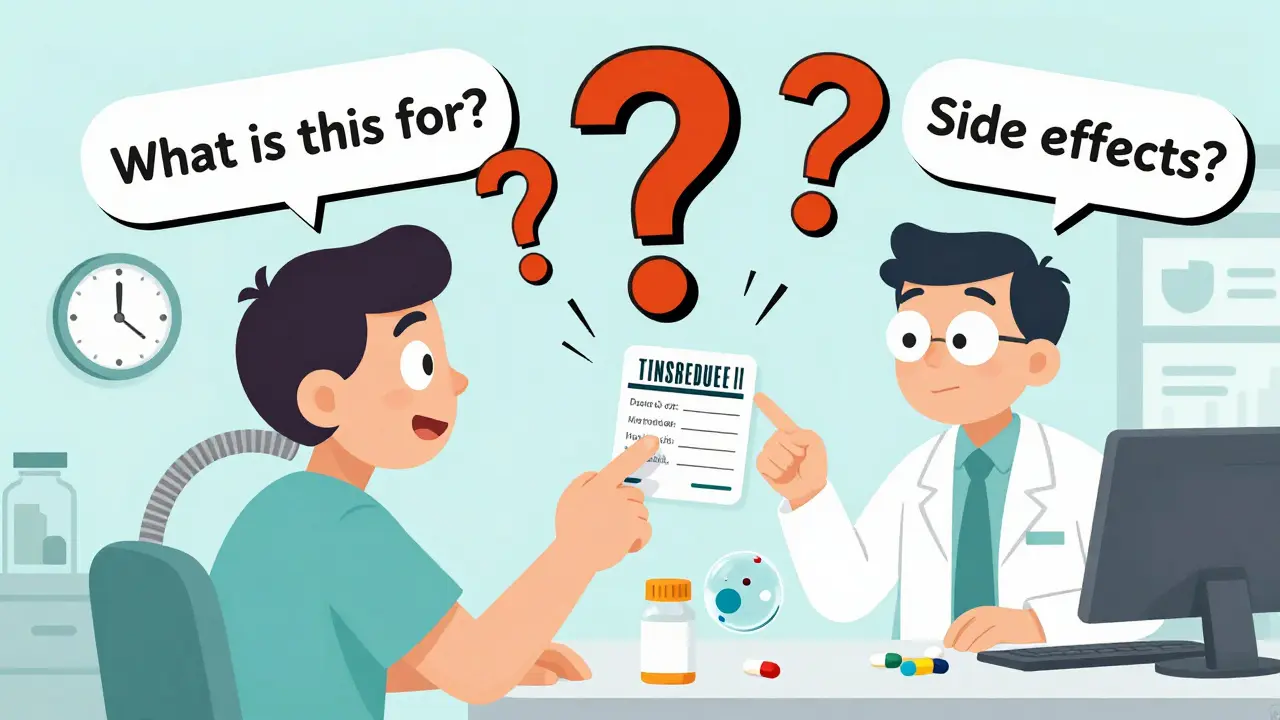
Ask these three questions, straight from the FDA’s consumer guide:
- What is this medication for?
- How and when should I take it?
- What side effects should I watch for?
If the pharmacist says, “It’s just for your blood pressure,” and you’re taking it for diabetes? That’s a red flag. If they say, “Take it once a day,” but your doctor said twice-stop. Ask again.
Also check the expiration date. Four percent of recalled meds reach patients because they’re expired. That’s not just ineffective-it’s dangerous. Especially with antibiotics or insulin.
Watch for Controlled Substances-They Have Extra Rules
If your prescription is for opioids, benzodiazepines, or any other controlled substance, there’s more to check.
By law, pharmacists must verify your address and confirm the prescription is legitimate. But you should too. Does the label say “Schedule II” or “C-II”? That means it’s tightly controlled. If you’re getting a refill before the date it’s supposed to be refilled, ask why.
And if the pill looks different than last time? Even if it’s the same drug? That’s not normal. Generic versions can look different, but if the shape, color, or imprint is totally new-ask. A 2021 DEA guideline says pharmacists must be extra careful with these meds. You should be too.
What If You Find a Mistake?
You find the wrong dose. Wrong name. Wrong pills. What now?
Don’t panic. Don’t argue. Just say: “I think there’s an error. Can we check this together?”
Here’s the hard truth: 63% of patients who reported errors said pharmacy staff were dismissive. That’s unacceptable. But you still have rights.
Ask to speak to the pharmacist on duty. If they refuse, ask for the manager. If they still brush you off, call the pharmacy’s corporate office or file a report with your state board of pharmacy. You can also report it to the FDA’s MedWatch program.
And here’s the good news: pharmacies with higher patient satisfaction scores-4.2 stars and above on Trustpilot-are nearly four times more likely to encourage verification. They pull out the bottle. They show you the label. They answer questions. Find one like that. Stick with them.
What About Mail-Order or Online Pharmacies?
Mail-order pharmacies are convenient. But they’re riskier. Studies show they make 1.7 errors per 100 prescriptions-higher than in-person pharmacies.
Why? No face-to-face check. No chance to ask questions on the spot. You get a box. You open it. And you hope.
That’s why you need to be even more careful. When your meds arrive:
- Open the box in front of a mirror or with someone else.
- Check the label against your doctor’s instructions.
- Count the pills.
- Compare the pills to photos you took of your last prescription.
If anything’s off, call the pharmacy immediately. Don’t wait. Don’t take them. And keep the box and pills-you’ll need them as proof.
Why This Matters More Than You Think
Every dollar spent on patient verification saves $8.73 in avoided hospital visits, ER trips, and long-term complications. That’s not just a statistic. That’s your life.
Pharmacies are using barcode scanners, electronic records, and AI now. But none of that replaces your eyes, your brain, and your voice. You know your body. You know your meds. You know what’s normal.
So next time you get a prescription-don’t just take it. Verify it. Ask questions. Count the pills. Read the label. If you’re not sure, say so. You’re not being difficult. You’re being smart.
And if you help someone else do it? You might save their life too.
What should I do if I don’t understand the prescription label?
If the label uses abbreviations like “QD,” “BID,” or “PRN,” ask the pharmacist to explain them in plain language. You have the right to know exactly how to take your medicine. Don’t guess. Don’t assume. Ask until it’s clear. Many pharmacies have printed guides or apps that translate medical terms-ask for one.
Can I ask to see the actual medication before it’s labeled?
Yes, absolutely. Many pharmacists will pull the bottle from the shelf and show you the medication before putting on the final label. This is especially helpful if you’ve had a mix-up before or if the drug looks different from what you’re used to. You’re not being rude-you’re being safe.
What if the pharmacy refuses to correct a mistake?
If the pharmacy refuses to fix an error, ask to speak to the manager. If that doesn’t work, call your state’s Board of Pharmacy. You can also report the issue to the FDA’s MedWatch program online. Your report helps improve safety for everyone. Never feel guilty for speaking up-your life is worth it.
Are generic medications safe to verify the same way?
Yes. Generic medications are required by law to be just as safe and effective as brand names. But they often look different-different color, shape, or imprint. That’s normal. What’s not normal is if the name or strength is wrong. Always check the drug name and dosage, not the appearance. Use the NDC number to confirm it’s the right generic version.
Should I verify my prescriptions even if I’ve taken the same medicine for years?
Yes, always. Even if you’ve taken the same pill for 10 years, mistakes can still happen. A new pharmacist might misread the script. A refill might get mixed up. Dosage changes can occur without you knowing. Never get complacent. Your body changes. Your needs change. So should your vigilance.
 Health and Wellness
Janette Martens
December 30, 2025 AT 11:33And why is my DOB wrong? 1978 not 1987. I'm not 37. I'm 46. I'm not some kid.
Canada has better pharmacies than this. What's wrong with you people?
Marie-Pierre Gonzalez
January 1, 2026 AT 08:50Always read the label aloud. Always count. Always ask. Even if you've taken the same medication for a decade.
Pharmacists are human. Systems fail. But your vigilance? That never fails.
Keep asking questions. Keep advocating. You're not being difficult-you're being courageous. 💪
Louis Paré
January 2, 2026 AT 10:52Meanwhile, the FDA approves generics with 10% variance in active ingredients and calls it 'bioequivalent.' You're supposed to trust that?
And don't get me started on mail-order pharmacies. They outsource to India. Your 'Lisinopril' might be a placebo wrapped in foil.
This isn't safety. It's performative responsibility. You're not saving lives-you're just delaying the inevitable.
Nicole Beasley
January 2, 2026 AT 12:33Got a pill that looked like a tiny blue football. Never seen it before. Took a pic. Google said it was gabapentin. My script was for metformin. 🤯
Pharmacist panicked. Called the doctor. Turned out they mixed up two patients with similar names.
So yeah. Take pics. Count. Ask. Don't be shy. Your life > their speed.
sonam gupta
January 4, 2026 AT 04:34Julius Hader
January 4, 2026 AT 17:00Turns out the pharmacy gave her 300 pills instead of 30. She took one every hour for three days.
She's fine now. But I'll never stop checking. If you don't, you're not just being lazy-you're gambling with someone's life. And that's not okay.
Vu L
January 4, 2026 AT 18:33Most folks just want their meds and go. This checklist is for people who watch too many medical dramas.
Also, NDC number? Who even knows what that is? I type 'ibuprofen 200mg' into WebMD and call it a day.
James Hilton
January 5, 2026 AT 07:36Meanwhile, here we are counting pills in parking lots like it's 1999.
Our system is a joke. But hey, at least we can blame the pharmacist while we're at it. 😏