
When you take drugs like azathioprine, an immunosuppressant used for autoimmune diseases and organ transplants or mercaptopurine, a chemotherapy agent for leukemia, your body breaks them down using an enzyme called TPMT, thiopurine S-methyltransferase, a key player in drug metabolism. But not everyone has the same level of this enzyme. Some people have very low activity — and if they take standard doses, they risk life-threatening toxicity. That’s where TPMT testing comes in. It’s not a fancy lab procedure. It’s a simple blood or saliva test that tells your doctor if your body can handle these drugs safely.
TPMT testing isn’t optional for certain treatments — it’s standard care. If your TPMT enzyme is low or absent, even a normal dose of azathioprine can destroy your bone marrow, leading to severe infections, anemia, or bleeding. The FDA and major medical groups recommend testing before starting these drugs. And it’s not just about avoiding harm — it’s about getting the right dose from day one. People with normal TPMT activity can take standard doses. Those with intermediate activity get reduced doses. Those with no activity avoid the drug entirely. This isn’t guesswork. It’s precision medicine you can actually use.
Many patients never hear about TPMT testing until they’re already on the drug — and then it’s too late. But if you’re prescribed azathioprine for Crohn’s disease, rheumatoid arthritis, or after a kidney transplant, or mercaptopurine for leukemia, ask for the test upfront. It’s quick, cheap, and could save your life. You’ll also see why some people react badly to generic versions — it’s not the brand, it’s how their body handles the active ingredient. The posts below cover real cases: from patients who avoided disaster thanks to TPMT testing, to doctors explaining why some prescriptions fail despite correct dosing. You’ll find guides on managing side effects, understanding genetic risks, and how to talk to your pharmacist about drug metabolism. This isn’t just about one test. It’s about taking control of how your body processes medicine.
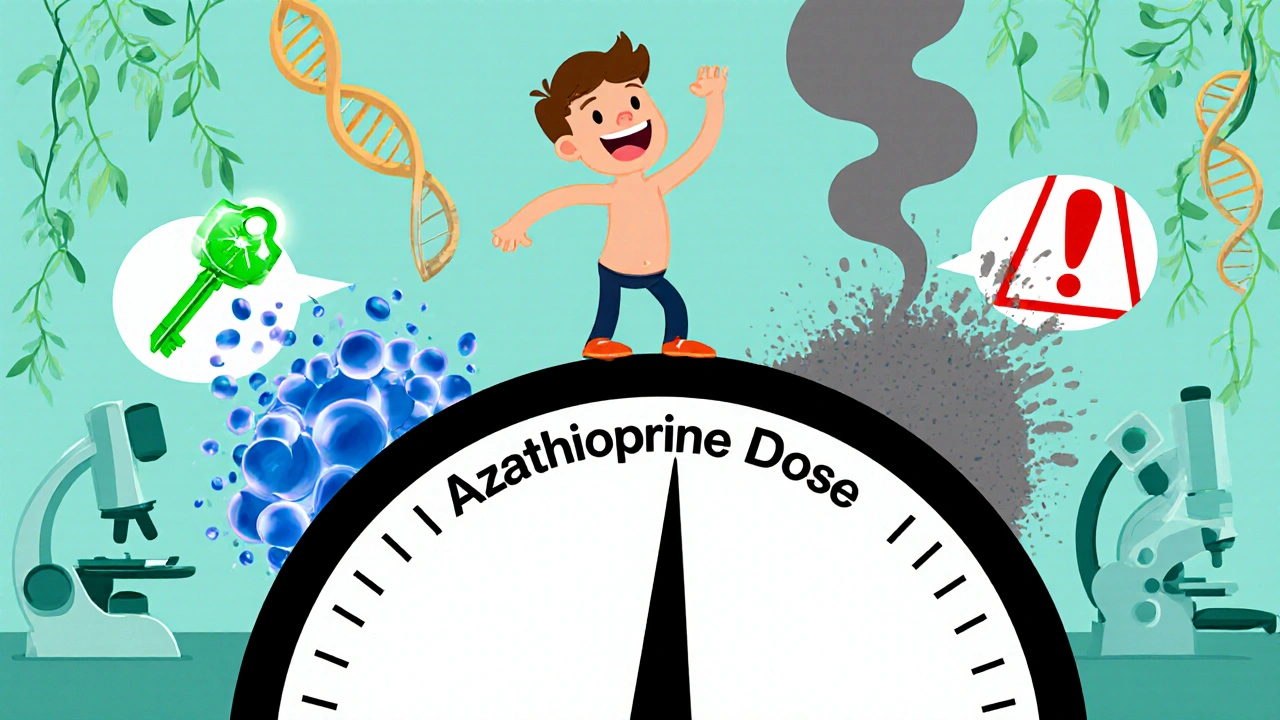
TPMT and NUDT15 genetic testing before starting azathioprine can prevent life-threatening blood cell loss. Learn how your genes affect your risk, what doses are safe, and why regular blood tests still matter.
 Health and Wellness