
When you take a pill, your body doesn’t just react the same way everyone else does. Pharmacogenomics, the study of how your genes affect how your body responds to drugs. Also known as personalized medicine, it’s why one person gets relief from a drug while another gets sick from the same dose. This isn’t science fiction—it’s happening right now in clinics, hospitals, and pharmacies. Your DNA holds clues that tell doctors whether a drug will work for you, whether it’ll cause side effects, or whether you need a higher or lower dose.
It’s not just about being sensitive to meds. Genetic testing, a key tool in pharmacogenomics can reveal if you’re a fast or slow metabolizer of certain drugs. For example, some people break down codeine too quickly and risk overdose, while others don’t convert it at all—so it does nothing. Gene-drug interaction, the core concept behind pharmacogenomics explains why two people with the same diagnosis might need completely different treatments. This isn’t about luck—it’s about biology. And it’s why generic drugs aren’t always interchangeable for everyone. Your genes might make one version work perfectly while another causes problems, even if they’re chemically identical.
Pharmacogenomics isn’t just for rare diseases. It’s already being used for antidepressants, blood thinners, cancer drugs, and pain meds. If you’ve ever been told a drug didn’t work for you—or made you feel worse—your genes might be the reason. And if you’ve had to try three different pills before finding one that fit, you’ve already experienced the need for this approach. The good news? We’re getting better at predicting these responses. Doctors are starting to test for key gene variants before prescribing, cutting down trial-and-error and reducing dangerous side effects.
You’ll find posts here that dig into real-world examples: how genetic differences affect how people respond to blood pressure meds, why some patients get severe reactions to common antibiotics, and how testing can prevent hospitalizations. You’ll see how pharmacogenomics connects to pill splitting, generic drug safety, and even how fentanyl patches can be risky for certain genetic profiles. This isn’t theory. It’s what’s happening in your body right now—and it’s changing how medicine is done.
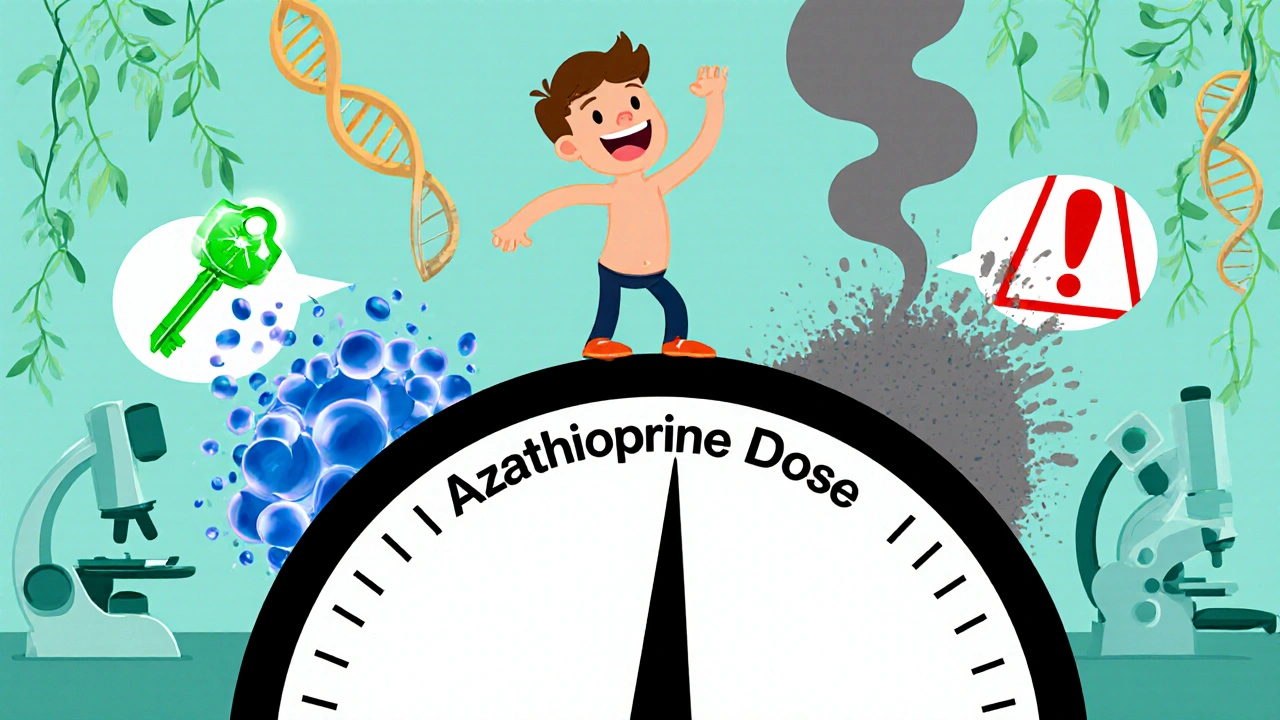
TPMT and NUDT15 genetic testing before starting azathioprine can prevent life-threatening blood cell loss. Learn how your genes affect your risk, what doses are safe, and why regular blood tests still matter.
 Health and Wellness