
When you have a migraine, even a flickering bulb or sunlight through a window can feel like a drill to the skull. This isn’t just discomfort—it’s migraine light sensitivity, a neurological reaction where light becomes a painful trigger during a migraine attack. Also known as photophobia, it’s one of the most common and disabling symptoms, affecting up to 80% of people with migraines.
Migraine light sensitivity doesn’t happen because your eyes are weak. It’s your brain. Research shows that certain light-sensitive cells in the retina connect directly to pain pathways in the brain, and during a migraine, those signals get amplified. Blue and fluorescent lights are the worst offenders—not because they’re brighter, but because they trigger specific neurons tied to headache signals. This is why tinted glasses, especially FL-41 lenses, help more than regular sunglasses. They don’t just dim light—they block the exact wavelengths that fire up your pain response.
People often confuse this with eye strain or dry eyes, but it’s different. You don’t need to be staring at a screen. A quick walk outside on a sunny day, a store with harsh LED lighting, or even a TV glow in a dark room can set it off. And it’s not just about brightness—flickering, strobing, or uneven lighting can trigger it too. That’s why many migraine sufferers avoid malls, airports, and offices with poor lighting. It’s not being picky—it’s survival.
What makes this even harder is that migraine light sensitivity often lasts even after the headache fades. Some people report sensitivity for hours or days after the attack. That’s why managing it isn’t just about avoiding light—it’s about understanding your nervous system’s reset time. Sleep in a dark room. Use blackout curtains. Switch to warm, dimmable LEDs at home. These aren’t just tips—they’re part of your treatment plan.
And here’s something most don’t tell you: light sensitivity can be a warning sign. If your sensitivity suddenly gets worse, or you start having it without a headache, it could mean your migraine pattern is changing. It might also signal something else—like a neurological issue or medication side effect. That’s why tracking your triggers matters. Keep a simple log: when the light hit, what kind, how bad it felt, and what helped. You might spot patterns no doctor would catch.
There’s no magic cure, but real relief exists. Beyond tinted glasses, some find success with magnesium supplements, riboflavin, or even neuromodulation devices worn on the forehead. Others use behavioral strategies—like wearing a wide-brimmed hat indoors or installing smart bulbs that auto-adjust color temperature. The key is matching the fix to your biology, not just the symptom.
Below, you’ll find real, practical guides from people who’ve lived with this. You’ll learn how to spot fake remedies, what medications can make it worse, how to talk to your doctor about light triggers, and what science says about the latest treatments. No fluff. Just what works—and what doesn’t—when your eyes feel like they’re on fire.
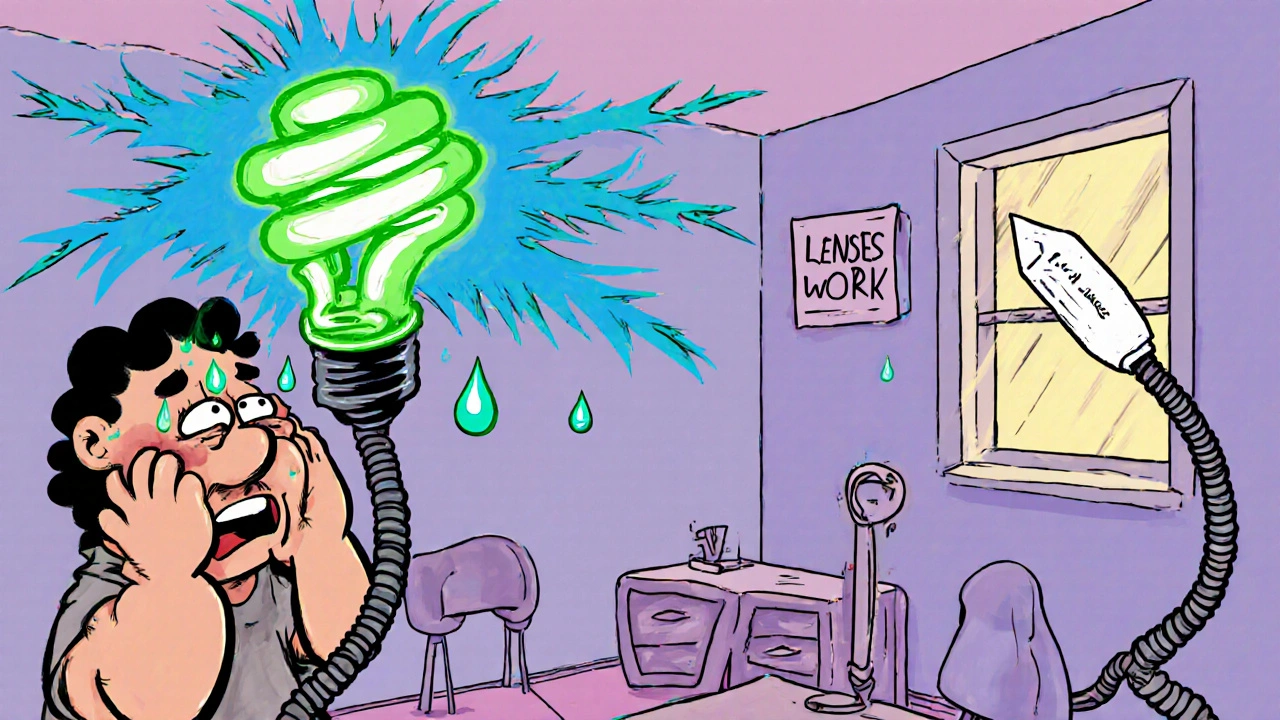
Photophobia is not just being sensitive to light - it's a warning sign of underlying eye or neurological conditions. Learn the real causes, how FL-41 lenses help, and what to do if light hurts your eyes.
 Health and Wellness