
When bright lights make your eyes hurt or force you to squint, you’re dealing with light sensitivity, an abnormal reaction to light that can range from mild annoyance to disabling pain. Also known as photophobia, it’s not a disease itself—but a symptom that often points to something deeper. This isn’t just about sunlight or fluorescent bulbs. It can flare up from computer screens, car headlights, or even indoor lighting. And if it’s new or getting worse, it’s not something to ignore.
Light sensitivity often shows up with migraines, a neurological condition where light can trigger or worsen intense headaches. But it also links to eye problems like uveitis, inflammation inside the eye that makes even dim light feel harsh, or conditions like albinism, where lack of pigment in the iris lets too much light into the eye. Even certain medications can cause it—antibiotics, antidepressants, or drugs that widen or narrow pupils. If you’re on a new prescription and suddenly can’t stand the light, it might be a side effect, not just bad luck.
It’s also tied to neurological issues like meningitis, an infection that inflames the brain and spinal cord lining, often causing extreme light sensitivity along with fever and stiff neck, or concussions, where brain trauma disrupts how the visual system processes light. Even after a head injury, if lights feel too bright, it’s a red flag that your brain hasn’t fully recovered. And in some cases, it’s connected to autoimmune diseases like lupus or chronic fatigue syndromes.
What you’ll find in the posts below isn’t just a list of articles—it’s a practical guide to understanding why this happens and how to respond. You’ll see how drugs like azathioprine or fentanyl patches can trigger light sensitivity, how pupil changes like myosis, abnormally small pupils affect how light enters the eye, and how conditions like multiple sclerosis or fungal infections might indirectly cause it. Some posts show how to spot dangerous drug reactions early, others explain how to protect your eyes without hiding in the dark. Whether you’re managing a side effect, dealing with recurring headaches, or just trying to figure out why the sun feels unbearable now, these real-world stories and medical insights will help you take control.
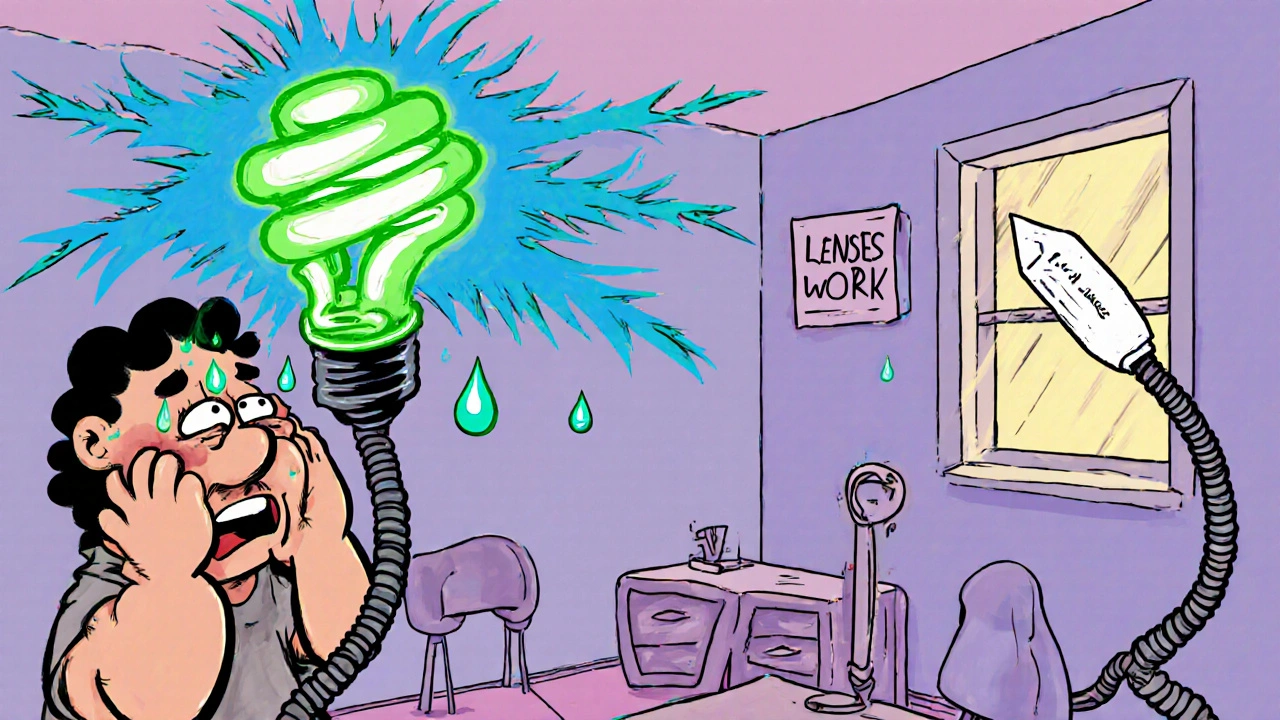
Photophobia is not just being sensitive to light - it's a warning sign of underlying eye or neurological conditions. Learn the real causes, how FL-41 lenses help, and what to do if light hurts your eyes.
 Health and Wellness