
When a child has childhood vision loss, a reduction in visual function that occurs during early development and can affect learning, behavior, and long-term eye health. Also known as pediatric visual impairment, it's not always obvious—many kids don’t say their vision is blurry because they don’t know what normal sight feels like. Unlike adult vision problems, childhood vision loss often develops slowly, and symptoms like squinting, rubbing eyes, or sitting too close to the TV are easily dismissed as tiredness or bad habits.
This isn’t just about glasses. amblyopia, a condition where one eye doesn’t develop proper vision because the brain ignores signals from it is the most common cause, affecting up to 4% of children. It can stem from strabismus, misaligned eyes that don’t work together, forcing the brain to suppress input from one eye, or uncorrected farsightedness, nearsightedness, or astigmatism. Left untreated, amblyopia can lead to permanent vision loss in the affected eye—even if the eye itself looks normal. And while some parents think vision screening at school is enough, those tests often miss subtle issues like depth perception problems or lazy eye that only a full pediatric eye exam catches.
There’s also a link between childhood vision loss and neurological conditions. Conditions like multiple sclerosis can first show up as vision problems in kids, even before other symptoms appear. Infections, trauma, or rare genetic disorders can also disrupt visual development. The good news? Most cases of childhood vision loss are treatable if found early. Patching the stronger eye, corrective lenses, vision therapy, or even surgery can restore normal sight—sometimes completely.
Parents and caregivers are the first line of defense. Watch for signs: a child who frequently bumps into things, tilts their head to see, closes one eye in bright light, or avoids activities that require hand-eye coordination like catching a ball. If a child’s eyes don’t track together or one eye turns inward or outward, don’t wait. Get them checked by a pediatric ophthalmologist—not just a general doctor or optometrist—before age three, or sooner if you notice anything unusual.
The posts below dive into real-world cases and medical insights tied to vision health in children. You’ll find how pupil response issues can mask deeper problems, how autoimmune conditions like MS impact sight, and why early detection tools matter more than ever. These aren’t abstract theories—they’re stories of kids who were misdiagnosed, delayed, or overlooked… and how timely action changed their outcome.
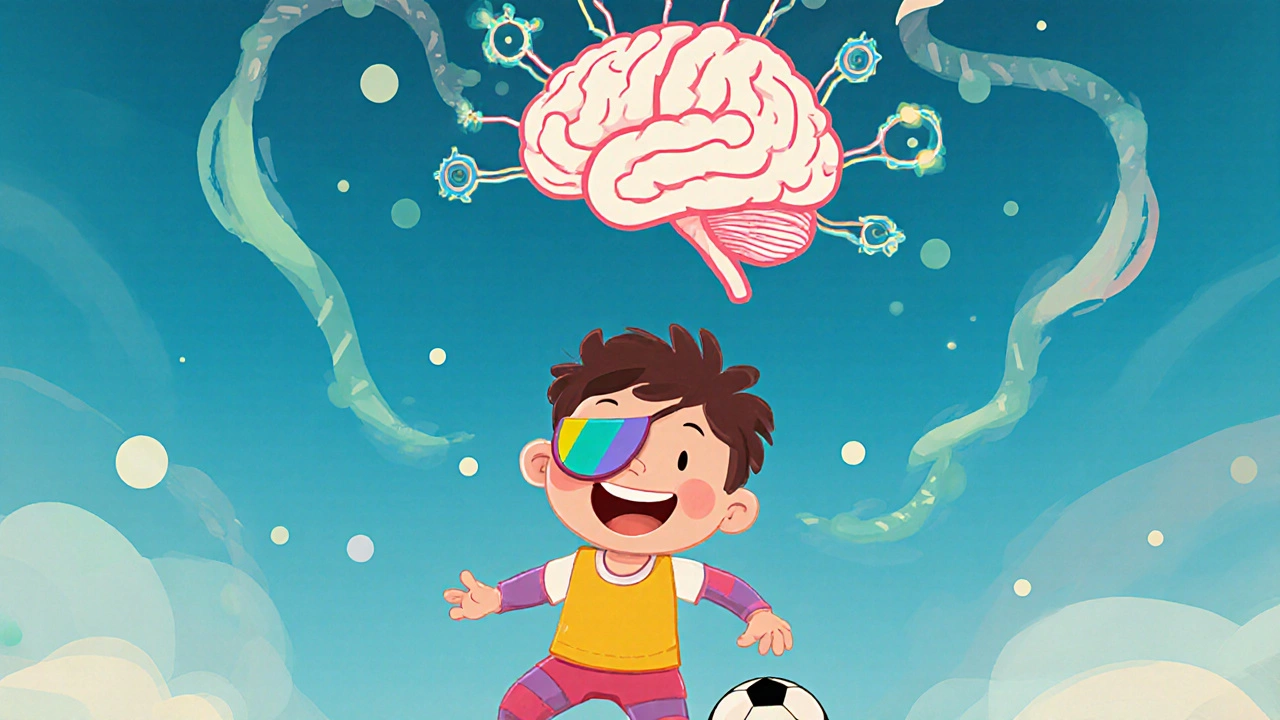
Amblyopia, or lazy eye, is the leading cause of childhood vision loss-but it's treatable. Patching therapy, atropine drops, and digital tools can restore vision if caught early. Learn how it works and why timing matters.
 Health and Wellness