
When you’re over 65, your body handles medicine differently. What worked fine at 40 might cause falls, confusion, or even hospitalization at 70. That’s where the Beers Criteria, a widely used list of medications that should be avoided or used with extreme caution in older adults. Also known as Beers List, it’s updated every few years by experts who study how aging changes drug effects. It’s not a rulebook for patients—it’s a tool doctors use to cut out drugs that do more harm than good in seniors.
The Beers Criteria isn’t just about avoiding one bad pill. It’s about stopping polypharmacy—when someone takes five, six, or more meds at once. Many of these drugs overlap in side effects: dizziness, low blood pressure, memory problems, or kidney strain. For example, benzodiazepines like diazepam (Valium) and sleep aids like diphenhydramine (Benadryl) show up on the list because they increase fall risk by 50% in older adults. Anticholinergics, used for overactive bladder or allergies, can trigger confusion that looks like dementia. And nonsteroidal anti-inflammatories (NSAIDs) like ibuprofen? They’re fine for a young athlete with a sprain, but in seniors, they can cause stomach bleeds or kidney failure. The Beers Criteria flags these risks so doctors don’t keep prescribing them out of habit.
It’s not about taking away meds—it’s about replacing them. If a senior is on a sedative for sleep, the goal isn’t just to stop it, but to find safer ways to improve rest. If someone’s on an old-school antihistamine for allergies, there are better options that don’t fog the brain. The Beers Criteria also highlights drugs that are okay for younger people but dangerous for seniors—like certain antipsychotics used off-label for agitation in dementia. These aren’t banned. They’re flagged. That means a doctor should only use them if nothing else works, and even then, with close monitoring.
What you’ll find in the posts below are real-world stories and science-backed guides on how these rules play out in practice. From why certain painkillers are risky for seniors, to how genetic testing can help avoid dangerous reactions, to how to safely reduce meds without causing withdrawal—you’ll see how the Beers Criteria connects to everyday health decisions. These aren’t abstract guidelines. They’re life-saving tools used by doctors, pharmacists, and families who want older adults to stay safe, sharp, and independent longer.
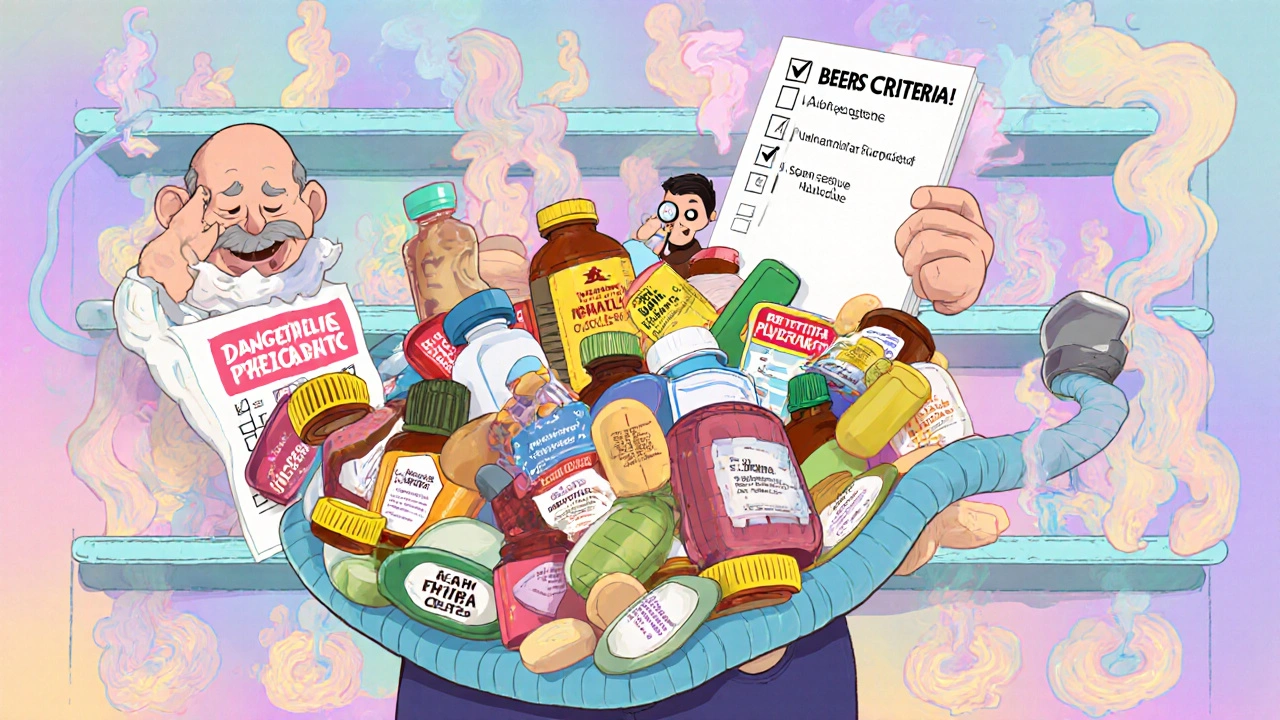
Elderly patients are at high risk for dangerous drug interactions due to polypharmacy and age-related changes. Learn how the Beers Criteria, STOPP tool, and simple medication reviews can prevent harmful side effects and hospitalizations.
 Health and Wellness