
When one eye doesn’t develop normal vision, it’s called amblyopia, a condition where the brain ignores input from one eye, leading to reduced vision even with glasses. Also known as lazy eye, it’s not a problem with the eye itself—it’s a wiring issue in the brain. This isn’t just a childhood issue. While it’s most common in kids under 8, adults can still benefit from treatment if they haven’t been properly diagnosed.
Amblyopia treatment works by forcing the brain to use the weaker eye. The most common method is patching, covering the stronger eye with a patch to make the brain rely on the weaker one. It sounds simple, but consistency matters—hours a day, every day, for weeks or months. Another option is atropine eye drops, a drop that blurs vision in the good eye temporarily, encouraging the brain to use the weaker eye. Both methods are backed by decades of clinical use and are far more effective than waiting for improvement on its own.
Some people think amblyopia treatment is only for kids. That’s a myth. While early intervention gives the best results, recent studies show adults with untreated amblyopia can still improve vision with vision therapy—especially when combined with computer-based training or even video games designed to stimulate both eyes together. It’s not magic, but it’s not impossible either.
What doesn’t work? Just wearing glasses alone. If the eyes are misaligned or one eye is significantly blurrier, glasses help but won’t fix the brain’s habit of ignoring the weaker eye. Surgery might fix a turned eye (strabismus), but it won’t cure amblyopia unless vision therapy follows. And skipping regular checkups? That’s how permanent vision loss happens.
There’s a lot of misinformation out there. Some claim eye exercises or supplements can cure lazy eye. There’s no solid proof. Real progress comes from structured, doctor-guided treatment—patching, drops, or vision therapy. The goal isn’t just to see better—it’s to train the brain to see with both eyes as a team.
What you’ll find below are real, practical guides on how amblyopia treatment works in practice. From how to make patching stick with a stubborn child, to what vision therapy actually involves, to why some adults are finally getting results after decades. These aren’t theory pieces—they’re stories from people who’ve been through it, and the science that backs their results.
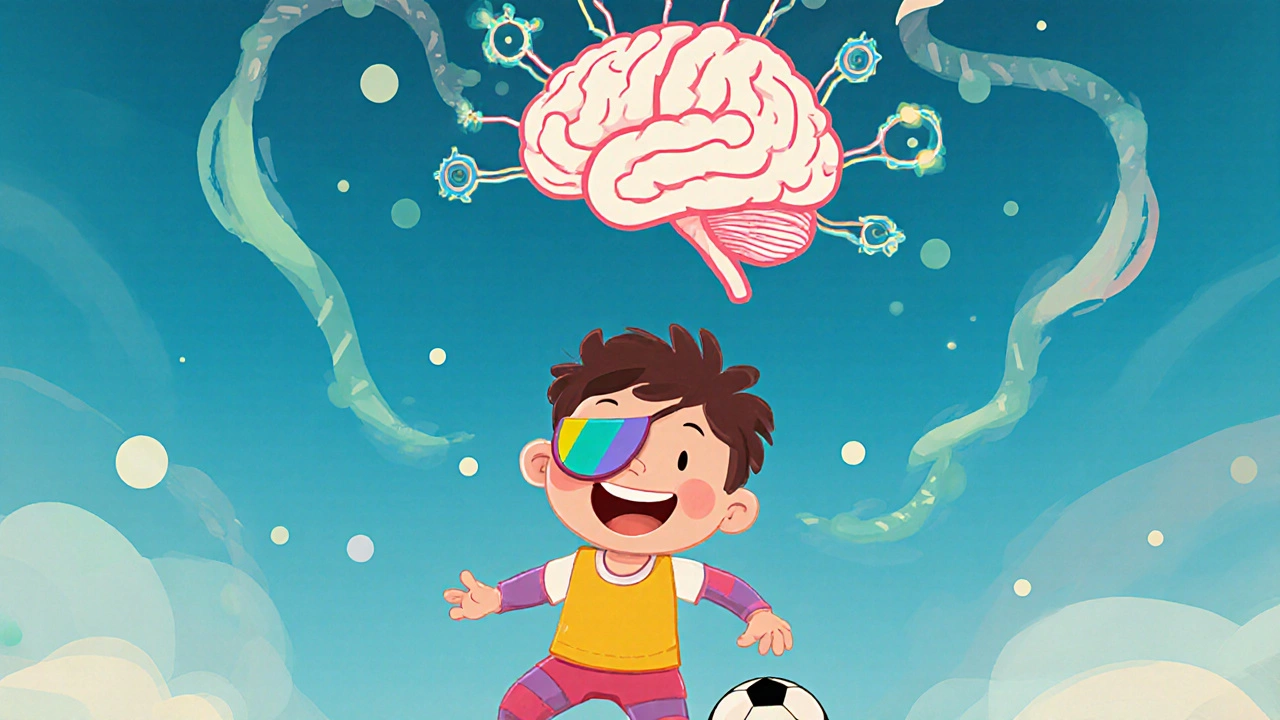
Amblyopia, or lazy eye, is the leading cause of childhood vision loss-but it's treatable. Patching therapy, atropine drops, and digital tools can restore vision if caught early. Learn how it works and why timing matters.
 Health and Wellness