
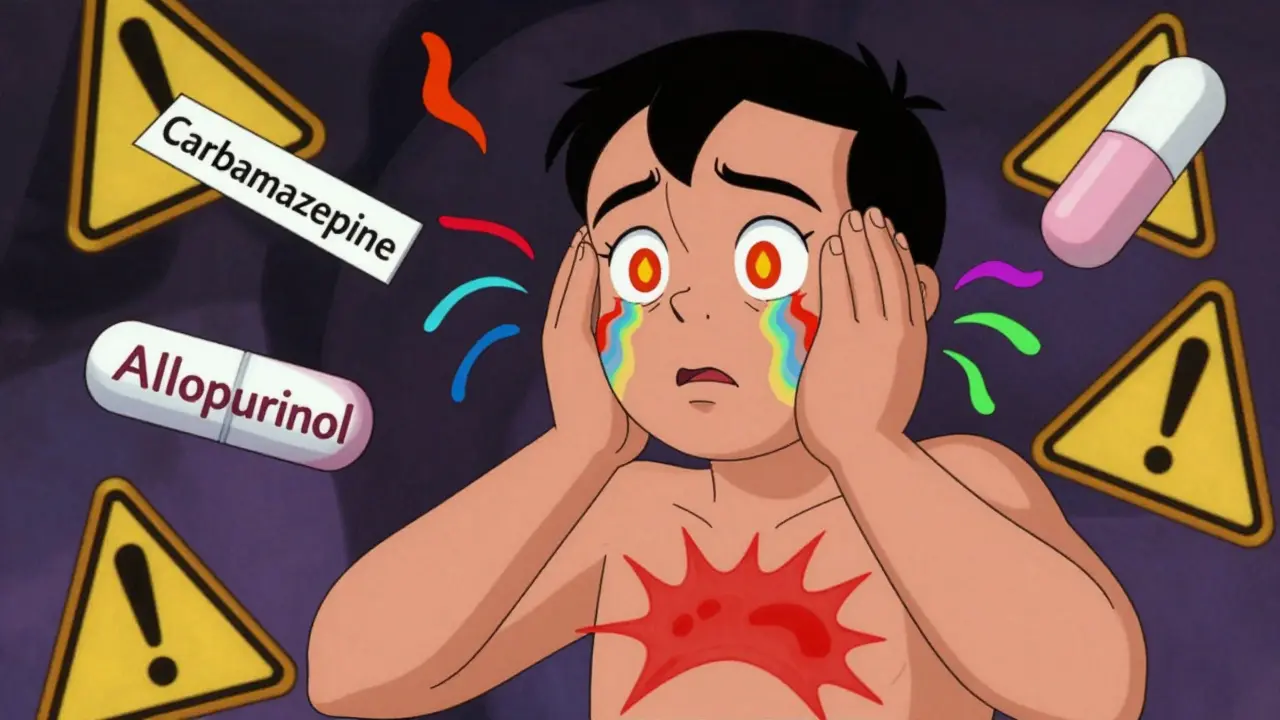
Stevens-Johnson Syndrome (SJS) and Toxic Epidermal Necrolysis (TEN) aren’t just rare skin conditions-they’re medical emergencies that can turn a routine medication into a life-threatening event. These reactions don’t start with a rash. They begin with a fever, a sore throat, or burning eyes-symptoms so common you might think it’s just the flu. But within days, your skin starts to die. Large sheets of it peel off, leaving raw, open wounds. Mucous membranes in your mouth, eyes, and genitals blister and break down. This isn’t an allergic reaction you can treat with antihistamines. It’s a full-scale immune attack on your own body.
How SJS and TEN Are Different (And Why It Matters)
For years, doctors treated SJS and TEN as separate diseases. Now we know they’re two ends of the same deadly spectrum. The difference comes down to one number: how much of your skin has detached.
If less than 10% of your body surface area is affected, it’s classified as SJS. Between 10% and 30%, it’s called SJS-TEN overlap. If more than 30% of your skin is sloughing off, it’s TEN-the most severe form. Think of it like burns: a sunburn covers a small area. A major burn covers half your body. TEN is like that, but caused by your immune system, not heat.
That distinction isn’t just academic. It predicts survival. About 5-15% of people with SJS die. For TEN, that number jumps to 25% or higher. The bigger the area of skin loss, the more your body loses fluids, fights infection, and struggles to keep organs working. That’s why time is everything.
What Triggers These Reactions?
Over 80% of cases are caused by medications. And not just any meds-specific ones carry a known, dangerous risk.
- Antiepileptics: Carbamazepine, phenytoin, lamotrigine-these are responsible for about 30% of cases.
- Sulfonamide antibiotics: Trimethoprim-sulfamethoxazole (Bactrim) accounts for 20%.
- Allopurinol: Used for gout, this drug causes 15% of cases.
- NSAIDs: Even common painkillers like ibuprofen or naproxen can trigger it in rare cases.
- Nevirapine: An HIV drug with a known link to TEN.
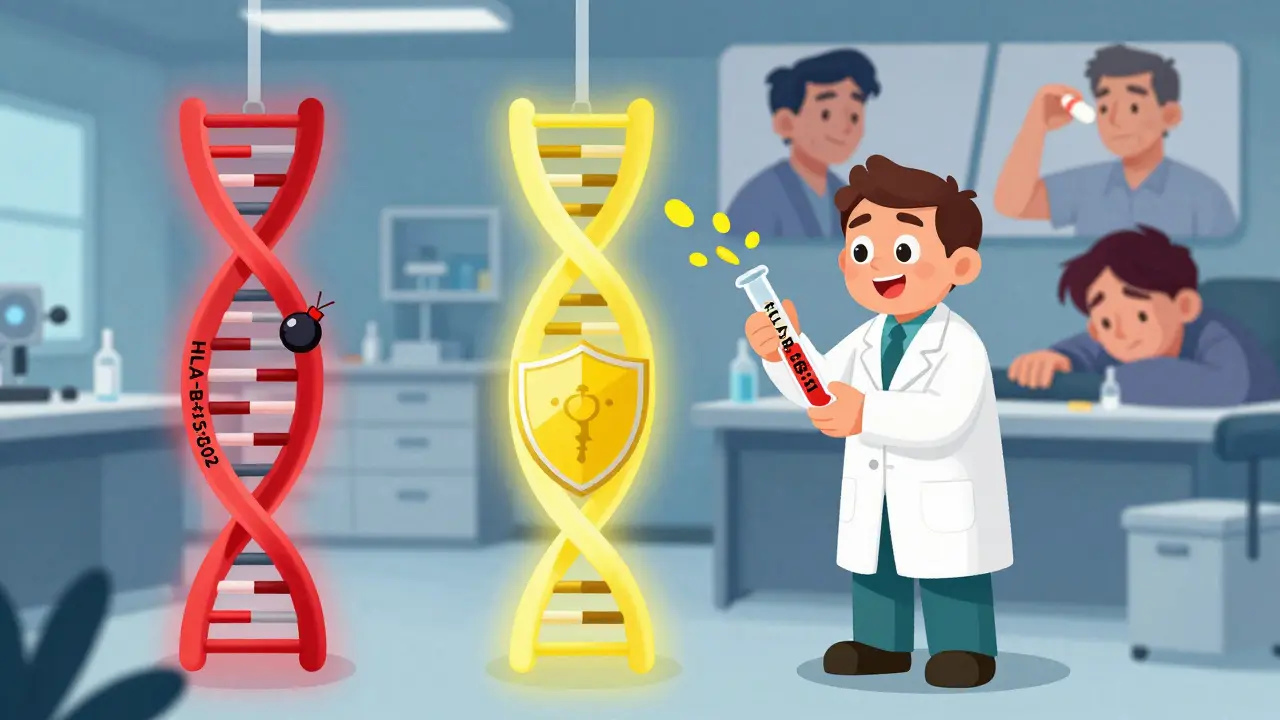
There’s also a genetic layer. Some people carry a hidden genetic marker that turns these drugs into bombs. The HLA-B*15:02 gene variant, common in people of Asian descent, makes carbamazepine 1,000 times more likely to cause SJS/TEN. HLA-B*58:01 does the same for allopurinol, increasing risk by 80 to 580 times.
That’s why, in places like Taiwan and Thailand, doctors now test patients for these genes before prescribing carbamazepine or allopurinol. In Taiwan, that simple screening cut SJS/TEN cases by 80% in just a few years. The U.S. FDA now recommends this testing too.
Less than 10% of cases are triggered by infections-most often Mycoplasma pneumoniae, which causes walking pneumonia. Kids are more likely to get it from infections than drugs.
The First Signs: Don’t Ignore the Flu-Like Symptoms
Before your skin starts peeling, you’ll feel awful. You’ll have a fever over 38.9°C (102°F), a sore throat, burning eyes, and maybe a cough or headache. This phase lasts one to three days. It’s easy to mistake for the flu-or a bad cold.
Then, the skin changes start. Flat, red or purple spots appear, usually on your chest or back. They spread fast-within 24 to 72 hours-into blisters that merge into large sheets. The skin becomes tender, then separates easily under light pressure (this is called the Nikolsky sign). Your lips crack and bleed. Your mouth fills with sores. You can’t swallow. Your eyes swell shut. Your genitals burn. You’re in excruciating pain.
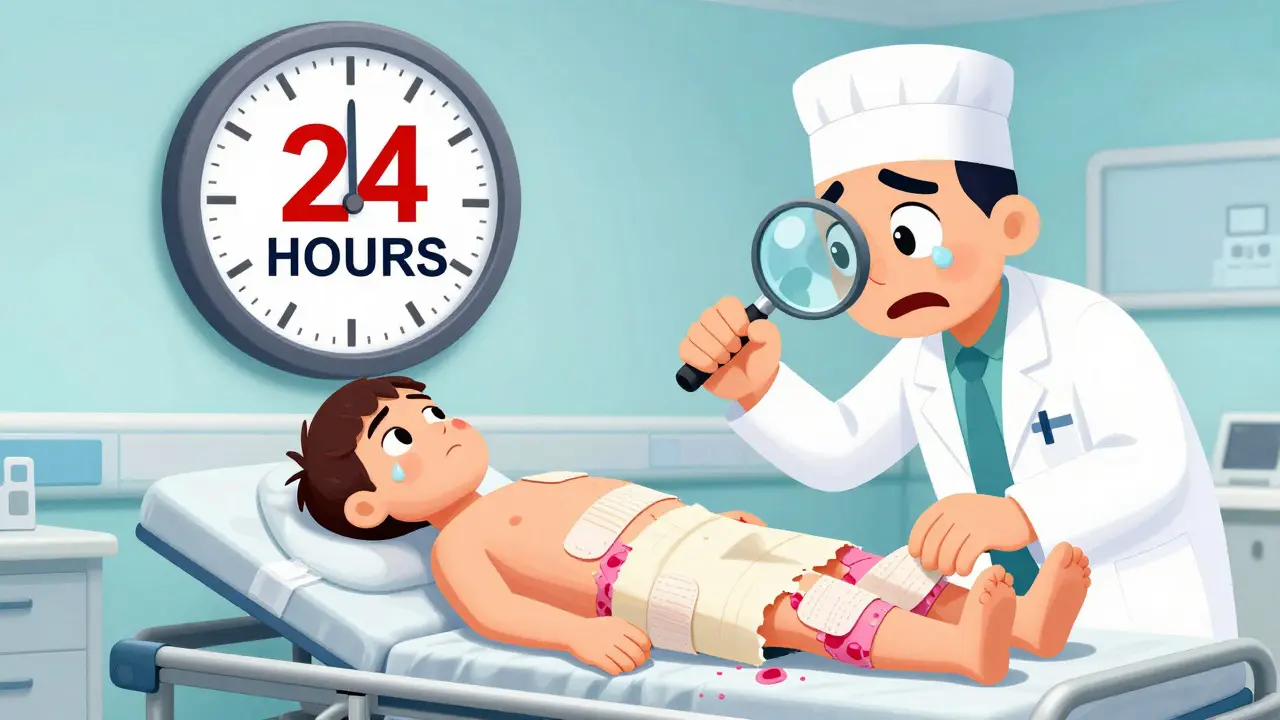
At this point, you need to get to a hospital-immediately. Delaying care by even 24 hours can mean the difference between survival and death.
How Doctors Diagnose It
There’s no single blood test for SJS/TEN. Diagnosis comes from three things: your symptoms, your medication history, and a skin biopsy.
The biopsy is the gold standard. Under the microscope, doctors see full-thickness death of the top skin layer (epidermis), with almost no inflammation underneath. That’s what sets it apart from other blistering diseases like staphylococcal scalded skin syndrome, which affects children and has a different pattern of skin separation.
Doctors also use the RegiSCAR criteria: acute onset, skin tenderness, mucosal involvement, and typical lesions. If you’ve taken one of the high-risk drugs in the last few weeks and you have two or more mucosal sites affected, SJS/TEN is the top suspicion.
What Happens in the Hospital
If you’re diagnosed, you’re not going to a regular ward. You’ll be moved to a burn unit or intensive care. Why? Because your body is losing fluids and proteins through your open skin, just like a major burn victim. You’ll need three to four times your normal fluid intake.
The first step? Stop every non-essential medication. Even if you’re not sure which one caused it, you stop them all. You might need a detailed review of every pill, supplement, or herb you’ve taken in the past month.
Wound care is critical. No sticky bandages. No ointments that trap heat. Instead, sterile, non-adherent dressings and gentle cleaning to prevent infection. Pain control is intense-you’ll likely need IV opioids.
Eye care is non-negotiable. Daily visits from an ophthalmologist are needed to prevent scarring, adhesions, and blindness. Up to 80% of survivors develop chronic dry eyes, corneal damage, or light sensitivity.
Treatment: What Works, What Doesn’t
There’s no perfect treatment. But some approaches have shown real results.
IVIG (intravenous immunoglobulin) was once thought to be a miracle cure. It’s made from donated blood antibodies. Early studies showed promise, but large randomized trials found it didn’t improve survival. It’s no longer recommended as standard care.
Corticosteroids are controversial. They suppress the immune system, but they also raise your risk of deadly infections. Some doctors use high-dose pulses early on, but there’s no consensus.
Cyclosporine has better data. A 2016 trial showed it cut mortality from 33% to 12.5%. It works by calming the overactive T-cells that are killing your skin.
Etanercept is the most exciting new option. It blocks TNF-alpha, a key inflammatory protein driving the reaction. A 2019 study of 12 TEN patients treated within 48 hours showed 0% death rate. In historical groups, that number was over 30%. It’s not FDA-approved for this use yet, but many burn centers are using it off-label with success.
Long-Term Damage: The Hidden Aftermath
Surviving SJS/TEN doesn’t mean you’re back to normal. Sixty to eighty percent of survivors face lifelong problems.
- Eye issues: Dry eyes (35%), corneal scarring (25%), and blindness (5%) are common. Many need daily eye drops for years.
- Skin changes: Dark or light patches (70%), scarring (40%), and nail loss or deformity (25%) happen often.
- Genital problems: Scar tissue can cause urethral narrowing (15%) or vaginal adhesions (10%), requiring surgery.
- Psychological trauma: Forty percent of survivors develop PTSD. The pain, isolation, and fear of dying leave deep scars.
Recovery takes months. Some people need years of follow-up with dermatologists, ophthalmologists, urologists, and mental health professionals. You can’t just go home and expect to heal on your own.
Can It Be Prevented?
Yes-more than ever before.
Genetic testing is the biggest breakthrough. If you’re of Asian descent and your doctor wants to prescribe carbamazepine, ask for the HLA-B*15:02 test. If you’re taking allopurinol for gout and have African or Asian ancestry, ask about HLA-B*58:01. These tests are now available in under four hours in many hospitals.
For anyone starting one of these high-risk drugs, watch for early warning signs in the first two weeks: fever, sore throat, eye redness, or a spreading rash. If you see them, stop the drug and call your doctor immediately. Don’t wait.
Pharmacies and clinics are starting to flag high-risk prescriptions automatically. In Australia, pharmacists now screen for HLA risk before dispensing allopurinol in certain populations. It’s not perfect, but it’s saving lives.
What to Do If You’re at Risk
If you’ve had a mild skin reaction to a drug before-like a rash or hives-tell every doctor you see. That history increases your risk of SJS/TEN.
Keep a list of every medication you’ve taken, especially if you’ve ever had a bad reaction. Bring it to every appointment.
Don’t assume "over-the-counter" means safe. NSAIDs like ibuprofen have caused SJS/TEN. Even herbal supplements can trigger it.
If you’re prescribed a high-risk drug, ask: "Is there a genetic test I should have first?" If your doctor says no, ask why. Knowledge is your best defense.
Final Thoughts
Stevens-Johnson Syndrome and Toxic Epidermal Necrolysis are terrifying. They strike fast, leave lasting damage, and kill more than one in four people with the worst form. But they’re also preventable. We now know the triggers, the genes, and the early signs. We have tools to stop them before they start.
It’s not about avoiding medicine. It’s about using it smarter. A simple genetic test, a quick conversation with your doctor, and paying attention to your body’s warning signs can mean the difference between life and death.
 Health and Wellness
Mohammed Rizvi
January 27, 2026 AT 10:28Imagine taking a pill for your nerves and waking up with your skin falling off like a bad Halloween costume. This isn't horror fiction-it's real medicine. The fact that we're still playing Russian roulette with prescriptions while people die is a national disgrace.
Simran Kaur
January 28, 2026 AT 16:28In India, we’ve seen this too-especially with carbamazepine. My cousin’s brother nearly died after a simple seizure med. The hospital had no idea what was happening until his skin started peeling. Now, my family insists on genetic testing before any new prescription. It’s not paranoia-it’s survival.
Peter Sharplin
January 29, 2026 AT 03:57Just as a footnote: etanercept isn’t just off-label-it’s becoming the new standard in burn units that treat TEN. The 2019 study had a 0% mortality rate because they acted within 48 hours. The problem isn’t the drug-it’s the delay. Most patients don’t get seen until day 5 or 6. That’s when the mortality curve spikes. Early recognition saves lives. Period.
Skye Kooyman
January 30, 2026 AT 21:39So if you’re on allopurinol and you’re South Asian, get tested. If you’re not, ask why. That’s it. No drama. No fluff. Just science.
Ryan W
February 1, 2026 AT 11:37Let’s be clear: this isn’t about "genetic testing." It’s about liability avoidance. Hospitals don’t care if you live or die-they care if they get sued. That’s why they push HLA screening. The science is real, but the motive? Corporate risk management. The patient’s life is just a footnote in the compliance checklist.
Jessica Knuteson
February 2, 2026 AT 04:17People think medicine is about healing. It’s not. It’s about controlling chaos with protocols that were written by people who’ve never seen a patient peel alive.
Renia Pyles
February 3, 2026 AT 16:07Oh please. You’re all acting like this is some new revelation. I’ve seen this in ERs since 2012. The real problem? Doctors don’t read the damn drug inserts. They just prescribe like robots. And patients? They trust them. That’s the real tragedy.
rasna saha
February 5, 2026 AT 05:00I lost my uncle to this. He took ibuprofen for a headache. Three days later, he was in ICU. No one warned him. No one asked about his history. I wish I’d known then what I know now. Please, if you’ve ever had a rash from a drug-speak up. Even if it was "just a little one."
James Nicoll
February 5, 2026 AT 18:33So we’re supposed to test everyone for HLA variants before giving them Advil? Next thing you know, we’ll need a DNA swab before buying cough syrup. This is medicalization gone wild. The real issue isn’t genetics-it’s overprescribing. Cut the pills, not the genes.
eric fert
February 6, 2026 AT 08:56Let me break this down for the people who think this is just about "meds"-it’s not. It’s about the entire American healthcare system being a profit-driven death machine. You get a prescription, you get a pamphlet, you get a bill. No one tells you that your skin might turn into a map of your own mortality. The FDA recommends testing? That’s not a recommendation-it’s a plea for help from a system that’s been screaming for years and no one’s been listening. And now we’re supposed to be grateful they finally gave us a pamphlet instead of a coffin?
Uche Okoro
February 8, 2026 AT 00:31The HLA-B*15:02 allele frequency in Southeast Asia is 12-15%. In African populations, it's <1%. The pharmacogenomic disparity is not incidental-it's structural. Yet, in the U.S., we still treat this as a "personal responsibility" issue rather than a public health equity crisis. This isn't about individual caution. It's about institutional neglect of non-white populations.
Aishah Bango
February 9, 2026 AT 05:48How is it that we can test for cancer risk before birth but we still let people die from a pill they took for a headache? This isn’t science-it’s moral failure. Every doctor who prescribes carbamazepine without testing is complicit. Every pharmacy that doesn’t flag it is an accomplice. We’re not just failing patients-we’re betraying them.
Betty Bomber
February 9, 2026 AT 14:14My sister survived TEN after being misdiagnosed for 72 hours. She lost 35% of her skin. Now she can’t cry without her eyes burning. She needs eye drops every two hours. She can’t wear contact lenses. She has scar tissue where her lips used to move. And the worst part? Her doctor said, "It’s rare. It probably won’t happen to you."
Ashley Porter
February 10, 2026 AT 11:37Etanercept’s 0% mortality in the 2019 cohort is statistically significant, but the sample size was tiny. Still, the mechanism makes sense-TNF-alpha is the main driver of keratinocyte apoptosis. Until we have Phase III trials, it’s not standard, but in practice? Many ICUs are already using it. The gap between evidence and practice is widening, and it’s costing lives.