
Every year, millions of people take statins to lower their cholesterol and azole antifungals to treat stubborn fungal infections. But what happens when you take both? For some patients, this combination can lead to serious, even life-threatening muscle damage. The risk isn’t theoretical - it’s documented, measured, and confirmed in hospitals across the world. If you’re on a statin and your doctor prescribes an antifungal, you need to know exactly what you’re dealing with.
Why This Interaction Happens
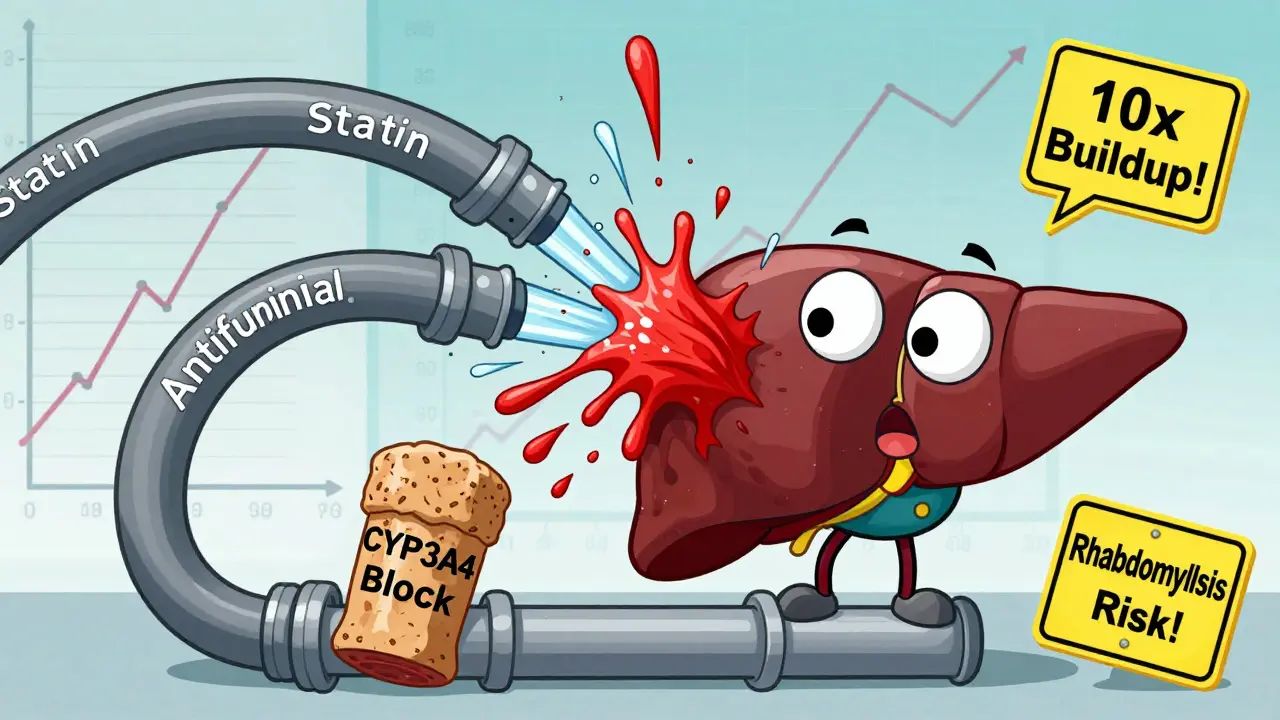
Statins like simvastatin, atorvastatin, and lovastatin don’t just lower cholesterol - they’re broken down in your liver by enzymes called CYP450, especially CYP3A4. Azole antifungals like itraconazole, ketoconazole, and voriconazole are designed to block fungal enzymes, but they accidentally block the same liver enzymes that process statins. When this happens, your body can’t clear the statin fast enough. The drug builds up in your bloodstream, sometimes to dangerous levels.Think of it like a clogged drain. The statin is the water. The CYP3A4 enzyme is the drain. The antifungal is a rubber stopper. Once the stopper’s in, water rises - fast. In some cases, simvastatin levels spike by 10 times when taken with itraconazole. That’s not a small bump. That’s a red flag.
The Real Danger: Rhabdomyolysis
The biggest risk isn’t just muscle aches. It’s rhabdomyolysis - a condition where muscle tissue breaks down and leaks into your bloodstream. This can overload your kidneys, cause kidney failure, and even lead to death. One 2016 case report in the BMJ Case Reports described a patient who developed rhabdomyolysis after starting itraconazole for a fungal nail infection while on simvastatin. His CK levels (a marker of muscle damage) soared above 15,000 U/L. Normal is under 200. He spent days in intensive care.Patients on forums like Reddit and the American Heart Association’s support network have shared similar stories. One user, 'CholesterolWarrior42', wrote: "I thought the muscle pain was just from working out. Turns out, it was the fluconazole I started for a yeast infection. ER visit. ICU. I’m lucky I didn’t lose a kidney."
Not All Statins Are Equal
This isn’t a one-size-fits-all risk. Some statins are far safer when used with antifungals.- High-risk: Simvastatin, lovastatin, atorvastatin - all processed by CYP3A4. Simvastatin is the most dangerous. Even 10 mg daily can become toxic when paired with itraconazole.
- Moderate-risk: Fluvastatin - metabolized by CYP2C9. Fluconazole can still interfere, but the risk is lower.
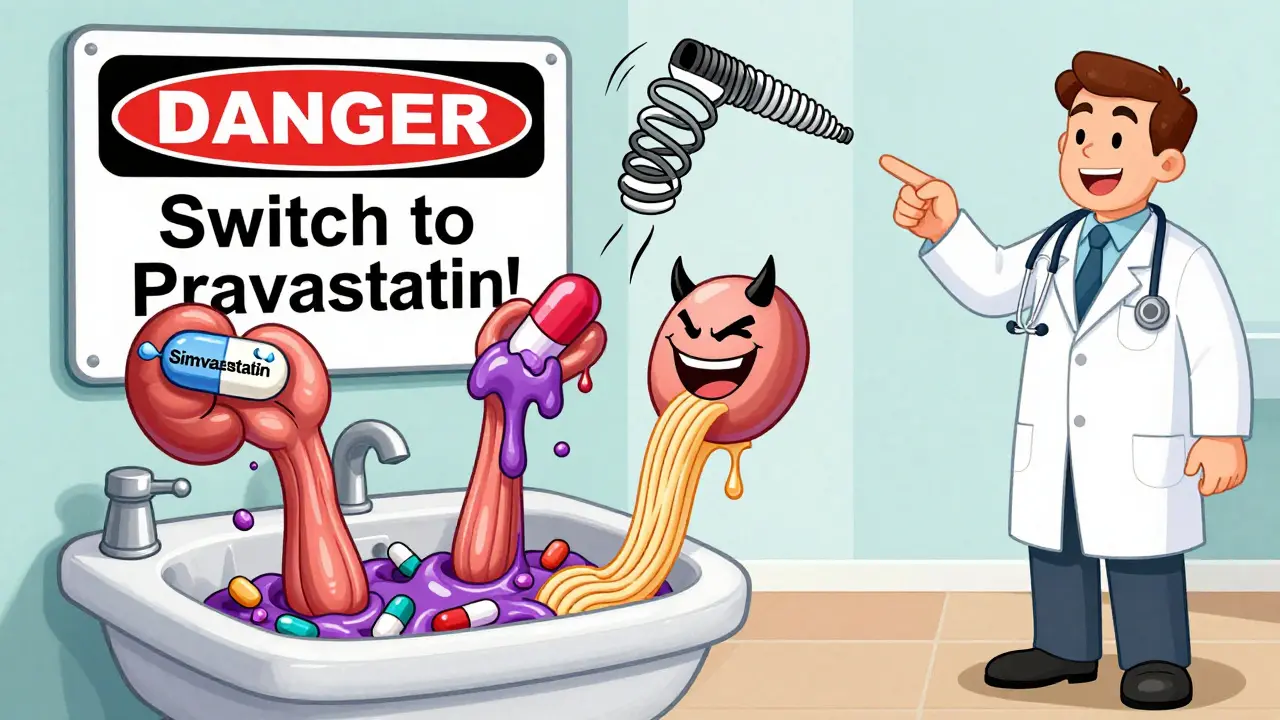
- Low-risk: Pravastatin and rosuvastatin - these barely touch the CYP system. Most are cleared by the kidneys instead. They’re the go-to alternatives when antifungals are needed.
That’s why experts like Dr. NV Sahadevan and the American College of Cardiology recommend switching to pravastatin or rosuvastatin if you need long-term antifungal treatment. It’s not about stopping cholesterol control - it’s about staying safe.
Which Antifungals Are the Worst?
Not all antifungals are created equal either. The azole class is the main problem, but some are worse than others.- Strongest CYP3A4 inhibitors: Itraconazole, ketoconazole, voriconazole - these are the biggest red flags. Avoid them with simvastatin or lovastatin entirely.
- Moderate inhibitor: Fluconazole - affects CYP2C9. Less risky with most statins, but still dangerous with fluvastatin or high-dose atorvastatin.
- Safer alternatives: Terbinafine (Lamisil) - it doesn’t block CYP enzymes. It’s often the best choice for nail or skin fungal infections.
Topical treatments - creams, sprays, nail lacquers - are another option. For mild infections, 70% of cases clear up with topical antifungals alone, according to the Infectious Diseases Society of America (IDSA) 2022 guidelines. No systemic drug means no interaction.
What You Should Do
If you’re on a statin and your doctor says you need an antifungal, here’s what to ask:- Can we confirm the infection with a culture? Not every rash or nail change is fungal. Unnecessary treatment = unnecessary risk.
- Is there a topical option? For athlete’s foot, jock itch, or mild yeast infections, creams often work just as well.
- Can we switch my statin? Pravastatin or rosuvastatin are safer. You won’t lose cholesterol control - just reduce your risk.
- If we must use a high-risk combo, can we pause the statin? Some experts recommend stopping your statin 2 days before and 2 days after antifungal treatment. This gives your liver time to recover.
And if you’re already on simvastatin or lovastatin? Don’t stop it on your own. Talk to your doctor. A sudden stop can spike your cholesterol. But a planned switch? That’s smart.
The Hidden Benefit - And Why It Matters
Here’s something most patients don’t know: statins might actually help fight fungal infections. Studies show that at low doses, statins like fluvastatin and atorvastatin can weaken Candida fungi by disrupting their cell membranes. When combined with azoles, they can boost antifungal effects by 30-50% in lab tests. A 2023 study found rosuvastatin improved outcomes against the deadly Candida auris in 60% of cases.This isn’t just a risk - it’s a potential treatment strategy. Researchers are now running clinical trials, like the NIH-funded STATIN-AF trial, to see if low-dose statins can be used alongside antifungals to beat resistant infections. But until we have clear guidelines, the priority is safety - not synergy.
What’s Changing in 2026
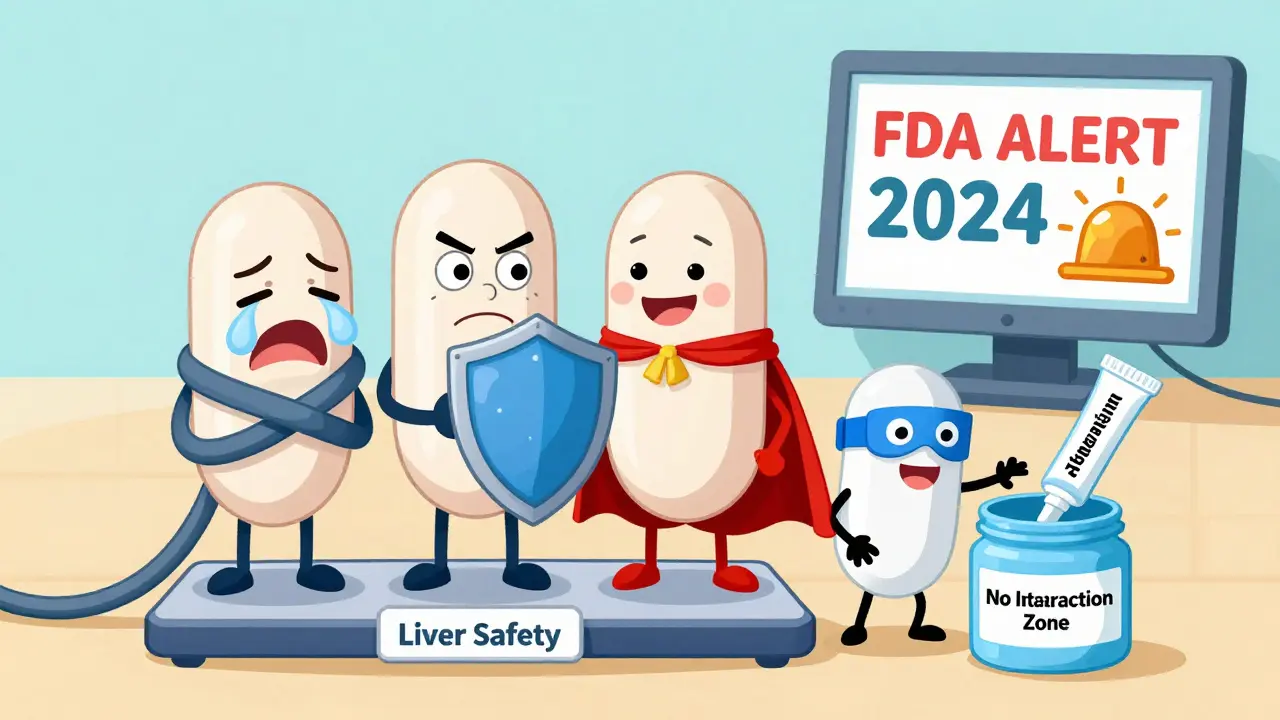
Regulators are catching up. The FDA updated simvastatin’s label in 2022 to say "Contraindicated with itraconazole." The European Medicines Agency followed in 2023. And now, major electronic health record systems like Epic are rolling out automated alerts in 2024. If you’re prescribed itraconazole while on simvastatin, your doctor’s computer will flash a warning.But alerts aren’t perfect. A 2023 JAMA Internal Medicine study found only 42% of primary care doctors could correctly identify high-risk statin-azole pairs. That’s why patients need to be informed too.
Bottom Line
You don’t have to choose between managing your cholesterol and treating a fungal infection. But you do need to be proactive. Don’t assume your doctor knows the interaction. Don’t assume your pharmacist caught it. Ask the questions. Push for alternatives. If you’re on simvastatin or lovastatin and need an antifungal, insist on switching to pravastatin or rosuvastatin. It’s not a big change - just a smarter one.And if you feel unexplained muscle pain, weakness, or dark urine after starting an antifungal - get checked. Rhabdomyolysis doesn’t wait. Early detection saves kidneys. And lives.
Can I take fluconazole with my statin?
It depends on which statin you’re taking. Fluconazole mainly affects CYP2C9, so it’s risky with fluvastatin and can raise levels of atorvastatin. It’s safer with pravastatin and rosuvastatin. But if you’re on simvastatin or lovastatin, avoid fluconazole. Even though it’s not as strong as itraconazole, the risk isn’t worth it. Talk to your doctor about switching statins or using a topical antifungal instead.
Is it safe to take terbinafine with statins?
Yes. Terbinafine (Lamisil) doesn’t interfere with CYP3A4 or CYP2C9 enzymes. It’s one of the safest antifungals to use with any statin. If you have a fungal nail infection or skin fungus, terbinafine is often the best first choice - especially if you’re on simvastatin or atorvastatin.
What should I do if I’m already on simvastatin and need an antifungal?
Don’t stop either medication on your own. Contact your doctor immediately. Ask if you can switch from simvastatin to pravastatin or rosuvastatin. If that’s not possible, ask if a topical antifungal will work. If you must use an oral azole, your doctor may recommend pausing your statin for 2-4 days around the treatment period. Never ignore muscle pain - it could be the first sign of rhabdomyolysis.
Are there any statins that are completely safe with antifungals?
Pravastatin and rosuvastatin are the safest options. They’re not broken down by the liver enzymes that azole antifungals block. Instead, they’re cleared by the kidneys. That means they’re much less likely to build up to dangerous levels. If you need long-term antifungal treatment, switching to one of these two statins is the standard recommendation from cardiology guidelines.
Can statins help fight fungal infections?
Research shows some statins - especially fluvastatin and atorvastatin - have antifungal properties on their own. They can weaken Candida fungi by disrupting their cell membranes. When combined with azoles, they can enhance the antifungal effect. But this is still being studied. Right now, the clinical priority is avoiding dangerous interactions. Don’t take statins to treat infections - use them as prescribed for cholesterol. Any antifungal benefit is still experimental.
 Health and Wellness
trudale hampton
March 21, 2026 AT 14:10Just wanted to say thanks for laying this out so clearly. I’ve been on simvastatin for years and just got prescribed fluconazole for a persistent yeast infection. Had no idea there was even a risk. Called my doc this morning and we switched me to rosuvastatin - no hassle, same results. Seriously, this post saved me from a nightmare.
Also, terbinafine is now my new best friend. Topical for the win.
Shaun Wakashige
March 21, 2026 AT 16:21lol i just took my statin and antifungal together and now my legs feel like jelly 😅
Thomas Jensen
March 22, 2026 AT 02:24They don’t want you to know this but the FDA and big pharma are *totally* hiding the truth. Why do you think they only warn about simvastatin? Because they *want* you to keep taking the dangerous ones so you end up in the hospital and then they sell you the ‘safer’ statin - which is just a rebranded version with a higher price tag. Rosuvastatin? That’s just Lipitor’s cousin with a new label.
And don’t get me started on ‘topical’ antifungals - those are just placebos with a fancy bottle. The real cure? Fasting. And maybe some colloidal silver. I’ve been doing both for 3 years. No more fungus. No more statins. My CK levels? Barely exist.
Wake up people. This is all a scheme. The ‘experts’? Paid. The ‘guidelines’? Fabricated. You think your doctor cares? They’re paid by the same companies that make the drugs. Ask yourself - why isn’t this on the news?
Solomon Kindie
March 23, 2026 AT 11:18so like the cyp3a4 enzyme is like a bouncer at a club right and the statin is some dude trying to get in and the antifungal is the bouncer getting distracted by a fight and letting in like 10 more people and now the club is full and everyone’s tripping and the statin is just sitting there getting more and more drunk until it falls down the stairs and breaks its leg
also why is it that every time someone says ‘rhabdomyolysis’ i feel like i need to go to the er even though i’ve never taken either drug
also why do we call it a ‘drug interaction’ like its a bad breakup and not just chemistry being chemistry
also i think i have rhabdo i think i have rhabdo i think i have rhabdo
Nicole James
March 24, 2026 AT 20:53Did you know... that the CYP3A4 enzyme isn't just a 'drain'... it's a living, breathing, self-regulating system... and when we interfere with it... we're not just 'clogging'... we're triggering a cascade of cellular stress responses... that may lead to epigenetic changes... that could affect future generations...
And let's not forget... the placebo effect... when patients are warned about side effects... they're more likely to experience them... so perhaps the real danger... is not the drug... but the fear...
Also... I read a study... that showed... that people who believe in 'natural remedies'... have lower rates of rhabdomyolysis... because they don't take statins...
So... maybe... we should stop listening to doctors... and start listening to our intuition...
And... what if... the real solution... is not switching statins... but switching consciousness...
Just... a thought...
Nishan Basnet
March 25, 2026 AT 05:26As someone who’s been managing high cholesterol and recurrent athlete’s foot for over a decade, this is the most practical, well-researched breakdown I’ve ever read. No fluff. No fearmongering. Just clear, actionable info.
I switched from atorvastatin to pravastatin last year after a fungal flare-up. Took me two months to find a doctor who knew this stuff - most just shrugged and said ‘it’s fine’. But once I switched, no more muscle cramps, and the Lamisil cream cleared up my toes in three weeks.
Also, for anyone in India or Southeast Asia: terbinafine is dirt cheap here. You can get a full course for under $5. No need to pay $80 for a branded version.
Thanks for writing this. I’m sharing it with my entire family.
matthew runcie
March 26, 2026 AT 00:45Good post. Solid info.
I’ve been on rosuvastatin for years. Never had an issue. Topical antifungals work great for me too. No drama.
Just keep it simple.
Paul Cuccurullo
March 26, 2026 AT 03:10Let me be the first to say this: this is not just a pharmacological interaction - it’s a profound failure of our healthcare system.
Millions of patients are being prescribed high-risk drug combinations because their providers are overwhelmed, undertrained, or simply too rushed to cross-reference drug databases. And yet - we blame the patient when things go wrong.
I’ve seen it firsthand. A 68-year-old woman, on simvastatin for five years, prescribed ketoconazole for a stubborn ringworm. She developed rhabdomyolysis within 11 days. Her creatine kinase hit 22,000. She lost 40% of her muscle mass. She’s now on dialysis.
This isn’t an ‘accident’. It’s negligence. And until we mandate real-time, AI-driven drug interaction alerts - with mandatory physician acknowledgment - this will keep happening.
Patients need to be informed? Yes. But providers need to be held accountable.
Thank you for raising awareness. But let’s push further. Let’s demand better.