

When your pharmacist hands you a pill that looks completely different from what you’ve been taking for months, it’s easy to assume it’s the same thing-just cheaper. After all, the FDA says generics are bioequivalent. But for some people, that little change in color, shape, or imprint isn’t just cosmetic. It can trigger headaches, anxiety, seizures, or worse. If you’ve noticed something off after switching to a generic version of your medication, you’re not imagining it. And you’re not alone.
Why Do Generics Sometimes Cause Problems?
Generic drugs are required to contain the same active ingredient as the brand-name version. That part is true. But what’s not always said is that they don’t have to match the brand in every other way. The inactive ingredients-fillers, dyes, binders, and coatings-can vary wildly between manufacturers. For most people, this doesn’t matter. But for those taking drugs with a narrow therapeutic index (NTI), even tiny differences in how the drug is absorbed can tip the balance from effective to dangerous. NTI drugs are the ones where the difference between a therapeutic dose and a toxic one is razor-thin. Think warfarin for blood thinning, levothyroxine for thyroid function, or tacrolimus after a transplant. A 10% change in blood levels might mean your clotting time goes from safe to risky. Or your thyroid hormone crashes, leaving you exhausted and cold. Or your body starts rejecting the new organ. And here’s the kicker: the FDA allows up to a 20% variation in absorption between a generic and the brand-name drug. That means two different generics of the same drug could differ by as much as 45% in how much gets into your bloodstream. That’s not a typo. It’s the rule.Which Medications Are Most Likely to Cause Issues?
Not all generics are created equal. Some drug classes have a long history of problems after switching. These are the ones you need to watch closely:- Antiepileptics (like phenytoin, levetiracetam, or extended-release divalproex): Seizures can return within days of switching. A 2021 survey of neurologists found that 68.7% believed generic switches increased seizure risk.
- Thyroid meds (levothyroxine): This is one of the most switched drugs-and one of the most problematic. With 12 different generic manufacturers in the U.S., your dose can shift without you knowing. Symptoms like fatigue, weight gain, or brain fog often mean your thyroid levels are off.
- Anticoagulants (warfarin): Even small changes in blood levels can lead to dangerous clots or bleeding. A 2019 study showed a 12.3% higher risk of hospitalization within 30 days of switching generics.
- Immunosuppressants (tacrolimus, cyclosporine): After an organ transplant, your body is on a tightrope. A switch can trigger rejection, sometimes without warning.
- Extended-release ADHD meds (like Adderall XR or Concerta): Different manufacturers use different bead-release systems. One might release the drug slowly over 12 hours. Another might dump it in 6. Patients report sudden crashes, irritability, or loss of focus within hours of switching.
What Do Real Patients Experience?
The data from studies is one thing. The stories from real people are another. On Reddit’s r/ADHD community, a thread titled “Generic Adderall Switch Ruined My Life” had over 800 comments. Most described the same pattern: fine on the old generic, then after a refill, they felt like they were back in high school-unable to focus, jittery, anxious, or exhausted. One person wrote: “I went from working 12-hour days to crying in the shower because I couldn’t get out of bed. It took three months and three switches to realize it was the generic.” A 2023 hospital study of 1,437 patients found that 20% of those who were switched between generics accidentally took double doses because they didn’t recognize the new pill. One patient developed serotonin syndrome and had to be hospitalized. A MedShadow survey of 1,247 people on generic ADHD meds found that 63.2% noticed decreased effectiveness after a manufacturer change. Over 40% reported new side effects: headaches, anxiety, stomach upset. And here’s the thing-most didn’t connect it to the pill switch. They just thought, “I guess I’m getting worse.”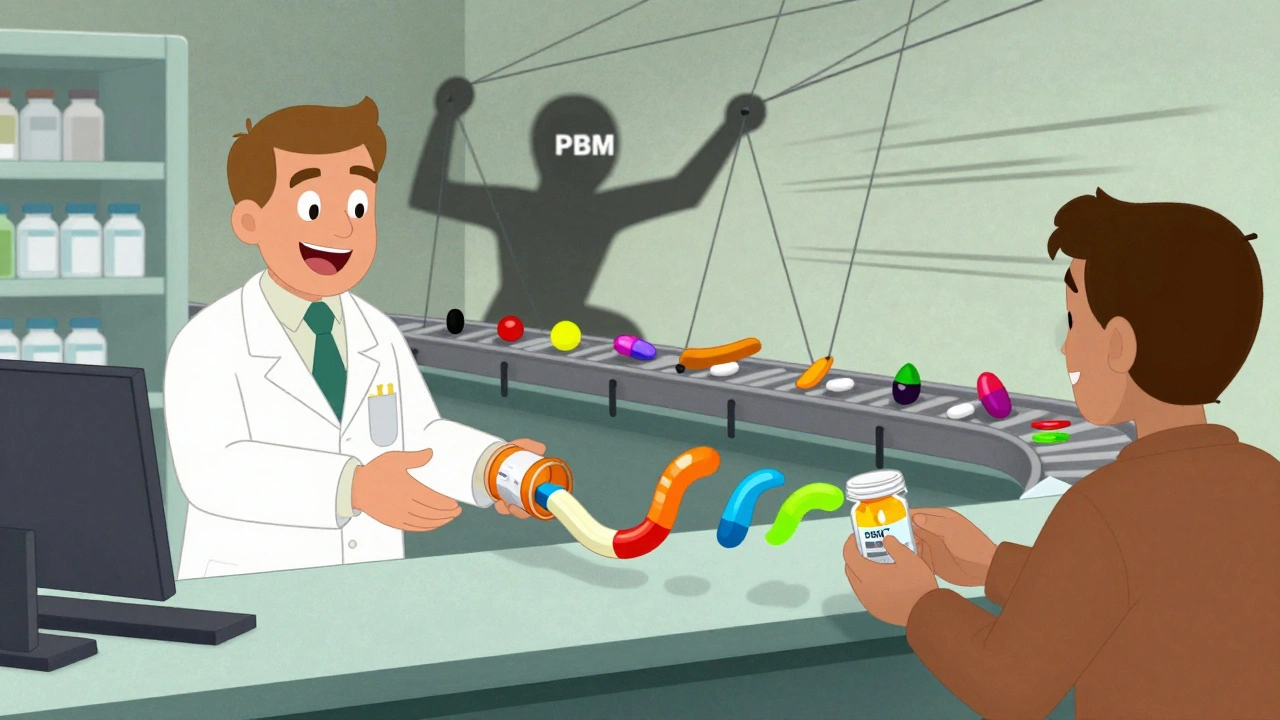
Why Is This Happening So Often?
You might think your doctor or pharmacist is choosing your generic. They’re not. It’s usually the pharmacy benefit manager (PBM)-companies like CVS Caremark or Express Scripts-that decide which generic gets dispensed. Why? Because they get rebates. The manufacturer that pays the biggest rebate gets your prescription, even if it’s a different formulation than last month. A 2022 Senate investigation found PBMs change preferred generic manufacturers an average of 4.7 times per year per drug. That means if you’re on a monthly refill, you could be on five different versions of the same drug in a year. No one tells you. No one asks if you’re okay with it. For drugs like levothyroxine, where 89% of prescriptions are filled with generics, this isn’t a rare event-it’s the norm. And it’s driving up hospitalizations. One 2023 study estimated that preventable side effects from generic switching cost the U.S. healthcare system $2.1 billion a year.What You Can Do to Protect Yourself
You don’t have to accept this as inevitable. Here’s what actually works:- Ask for the manufacturer name. When you pick up your prescription, ask: “Which company made this?” Write it down. If your pill looks different next time, ask why.
- Request “Dispense As Written” (DAW-1). Tell your doctor you want to stay on the same generic. They can write DAW-1 on the prescription, which legally prevents the pharmacist from switching it without your consent.
- Keep a medication log. Note the pill’s color, shape, imprint, and manufacturer. If you feel different after a refill, compare it to your log. That’s your evidence.
- Get blood tests. If you’re on warfarin, levothyroxine, or tacrolimus, ask your doctor to check your levels after any switch. Don’t wait for symptoms to get worse.
- Use the same pharmacy. Big chains switch generics more often. Independent pharmacies are often more willing to work with you to keep you on the same version.
When to Call Your Doctor
Don’t wait for a crisis. If you notice any of these after switching to a generic, call your doctor right away:- Sudden return of symptoms (seizures, brain fog, fatigue)
- New or worsening side effects (anxiety, insomnia, nausea, dizziness)
- Unexplained changes in mood or energy
- Feeling like the medication “doesn’t work anymore”

What’s Being Done About It?
Change is slow, but it’s coming. In 2023, Medicare Part D rules limited generic switches to no more than twice a year for seniors. The FDA launched a new testing program for complex generics in 2020. And in January 2024, the American Society of Health-System Pharmacists published updated guidelines advising against automatic substitution for 17 high-risk drugs, including bupropion XL and phenytoin. But until these rules are enforced everywhere, the responsibility falls on you. You’re the only one who notices the change in how you feel. You’re the only one who knows your body.Bottom Line
Generics save money. That’s good. But they shouldn’t cost you your health. The system is built on the assumption that all pills with the same active ingredient are interchangeable. For most people, that’s true. For a significant minority-especially those on NTI drugs-it’s dangerously wrong. If you’re on a medication where small changes can have big consequences, don’t let a rebate deal decide your treatment. Speak up. Track your pills. Ask for consistency. Your body will thank you.Can I ask my pharmacist to give me the same generic brand every time?
Yes. You can and should ask. Pharmacists can often honor requests for a specific generic manufacturer if it’s available. Just say, “I’ve been doing well on the [manufacturer name] version. Can you try to get me that one again?” Many pharmacies keep a list of preferred generics for patients who need consistency.
Are all generic versions of the same drug really the same?
No. While they contain the same active ingredient, the inactive ingredients and how the drug is released into your body can vary significantly between manufacturers. This is especially true for extended-release formulations like Adderall XR or Topamax ER. Two generics may meet FDA bioequivalence standards but still affect you differently.
Why does the FDA say generics are safe if people are having problems?
The FDA bases its approval on population-level data-what works for most people. But it doesn’t account for individual differences in metabolism, sensitivity, or how your body reacts to specific fillers. For the average person, a switch won’t matter. For someone with a narrow therapeutic index or a unique genetic profile, it can. The agency acknowledges this gap but hasn’t changed its standards yet.
Should I avoid generics altogether?
No. For most medications-like statins, antibiotics, or blood pressure pills-generics are safe and effective. The issue is with specific high-risk drugs. If you’re not on one of them, generics are a smart choice. If you are, ask questions and insist on consistency.
How do I know if my drug has a narrow therapeutic index?
Ask your doctor or pharmacist. Common NTI drugs include warfarin, levothyroxine, phenytoin, tacrolimus, cyclosporine, digoxin, and some seizure medications. You can also check the FDA’s Orange Book-search your drug name and look for “NTI” listed under therapeutic equivalence.
 Health and Wellness
Inna Borovik
December 5, 2025 AT 17:42Let’s be real-this isn’t about generics. It’s about the pharmaceutical-industrial complex selling you snake oil under a different label. The FDA’s 20% variance rule is a joke. If your life depends on stable blood levels, you’re basically playing Russian roulette with pill colors.
And don’t get me started on PBMs. They’re not pharmacies-they’re profit engines with a side of healthcare.
Stop blaming patients. Start suing the corporations.
Brooke Evers
December 7, 2025 AT 11:05I’m a nurse who’s seen this firsthand. A patient on levothyroxine switched generics and went from euthyroid to myxedema coma in 11 days. No one told her the pill changed. No one asked if she was okay.
I keep a printed sheet in my clinic with the manufacturer names for NTI drugs. Patients love it. It’s simple, it’s practical, and it saves lives.
If you’re on one of these meds, write down the name on the bottle. Keep a note in your phone. Don’t wait until you’re hospitalized to speak up.
Geraldine Trainer-Cooper
December 8, 2025 AT 02:31Akash Takyar
December 9, 2025 AT 07:36Thank you for this meticulously researched piece. The data presented here is not merely anecdotal-it is clinically significant and demands systemic reform.
While cost containment is a noble goal, it must not come at the expense of physiological stability for vulnerable populations.
I urge all healthcare professionals to adopt the DAW-1 protocol as standard practice, and to educate patients on the importance of manufacturer consistency.
Healthcare is not a commodity; it is a covenant.
Mayur Panchamia
December 9, 2025 AT 18:39India makes 40% of the world’s generics-and we do it right. You think Americans are getting safe pills? Half of them are imported from China with fillers that would make a lab rat puke.
Stop crying about your Adderall. If you can’t handle a different shape, maybe you’re not ready for real life.
Also, PBMs? They’re American. Blame your own broken system, not the generics.
PS: I’ve been on generic warfarin for 12 years. No issues. Your body’s weak, not the pill.
Chris Park
December 11, 2025 AT 11:53Did you know the FDA’s bioequivalence standards were written by lobbyists from big pharma in 1984?
And the ‘20% variance’? That’s not a loophole-it’s a backdoor for patent extensions.
Here’s the truth: brand-name companies pay PBMs to switch you to a cheaper generic that’s *almost* equivalent-so they can relaunch their brand as ‘new and improved’ two years later.
They want you dependent. They want you confused. They want you blaming yourself.
This isn’t about medicine. It’s about control.
Nava Jothy
December 13, 2025 AT 06:17I cried for three weeks after switching my levothyroxine.
I thought I was failing. I thought I was lazy. I thought I was broken.
Then I checked the bottle. Same dose. Different manufacturer. Same panic.
Why does the system make us feel crazy for feeling something real?
And why is it always the patient who has to fight for stability?
😭 I’m so tired of being told I’m overreacting.
Thank you for validating this. I’m printing this article and taking it to my doctor tomorrow.
Karen Mitchell
December 14, 2025 AT 08:11It’s not the generics’ fault. It’s the patients’ fault for being too sensitive.
Every time someone says they ‘feel different,’ it’s just confirmation bias. The placebo effect works both ways.
And yet, we’re told to validate every anecdote? We’re not running a support group-we’re managing a public health system.
Perhaps if people stopped obsessing over pill colors and started exercising, meditating, and eating whole foods, they wouldn’t need so many drugs in the first place.
Stop medicalizing normal human variation.
Myles White
December 16, 2025 AT 02:06I’ve been on generic phenytoin since 2017, and I’ve switched manufacturers six times. I keep a spreadsheet-color, shape, imprint, date, seizure frequency, mood score, sleep quality. I’ve found patterns. One manufacturer consistently causes a 0.5-point drop on my mood scale. Another causes nausea within 48 hours.
I’ve shared this with my neurologist. We now have a preferred manufacturer on file. My seizures dropped by 70%.
It’s not magic. It’s data. And if you’re on an NTI drug, you owe it to yourself to track this stuff. It’s not paranoia. It’s precision medicine.
Start small. One pill. One note. One week. You’ll be amazed at what you learn.
Rashmi Gupta
December 17, 2025 AT 06:51Oh please. You’re all acting like generics are poison. I’ve been on generic Adderall for five years. I’ve switched five times. I feel the same. I work. I pay taxes. I don’t cry in the shower.
Maybe your problem isn’t the pill-it’s your life.
Also, ‘narrow therapeutic index’ sounds fancy, but it’s just a buzzword to sell fear. I’ve never heard of a single person dying from a generic switch.
Stop scaring people for clicks.
Ibrahim Yakubu
December 17, 2025 AT 19:01My cousin in Lagos took a generic antiretroviral that changed color. He stopped taking it because he thought it was fake. He died of AIDS two months later.
Here in Nigeria, we don’t have the luxury of choosing manufacturers. We take what’s available. And if it makes us sick? We suffer silently.
So don’t lecture Americans about ‘speaking up.’ Most of the world doesn’t get the privilege of even asking for the same pill.
Y’all are lucky. Use your voice. For those of us who can’t, speak louder.
Nigel ntini
December 18, 2025 AT 07:00This is such an important conversation. Thank you for writing it with such care.
I’ve had patients come in with tears in their eyes saying, ‘I thought I was losing my mind.’ And it was the pill.
Let’s stop treating patients like numbers and start treating them like people.
Doctors, pharmacists, and insurers need to stop prioritizing rebates over real outcomes.
I’ve started handing out small cards to my patients: ‘Ask for the manufacturer name.’ Simple. Powerful.
Small changes. Big impact.
Saketh Sai Rachapudi
December 19, 2025 AT 02:16Generics are for poor people. If you can afford brand name, then get it. Why are you complaining? You're not poor so stop acting like you're being oppressed. I'm from India and we have the best generics in the world and no one here is crying about pill colors. You Americans are so soft.
Also your doctors are lazy. If you can't figure out your own meds, you shouldn't be on them.
Andrew Frazier
December 19, 2025 AT 21:01Wow. So you’re telling me if I switch from one generic to another, I might get seizures? That’s wild.
But here’s the thing-I’ve seen the same guy on Reddit cry every time his Adderall changes color. He’s 32 and still lives with his mom. Maybe he just needs to get a job.
Also, I work in pharma. I know how this works. The FDA doesn’t care about you. But guess what? Neither does anyone else. Get over it.
And if you’re so worried, just pay for the brand. No one’s stopping you.
PS: I’ve never heard of a ‘narrow therapeutic index’ until today. I’m not dumb, I just don’t care.