
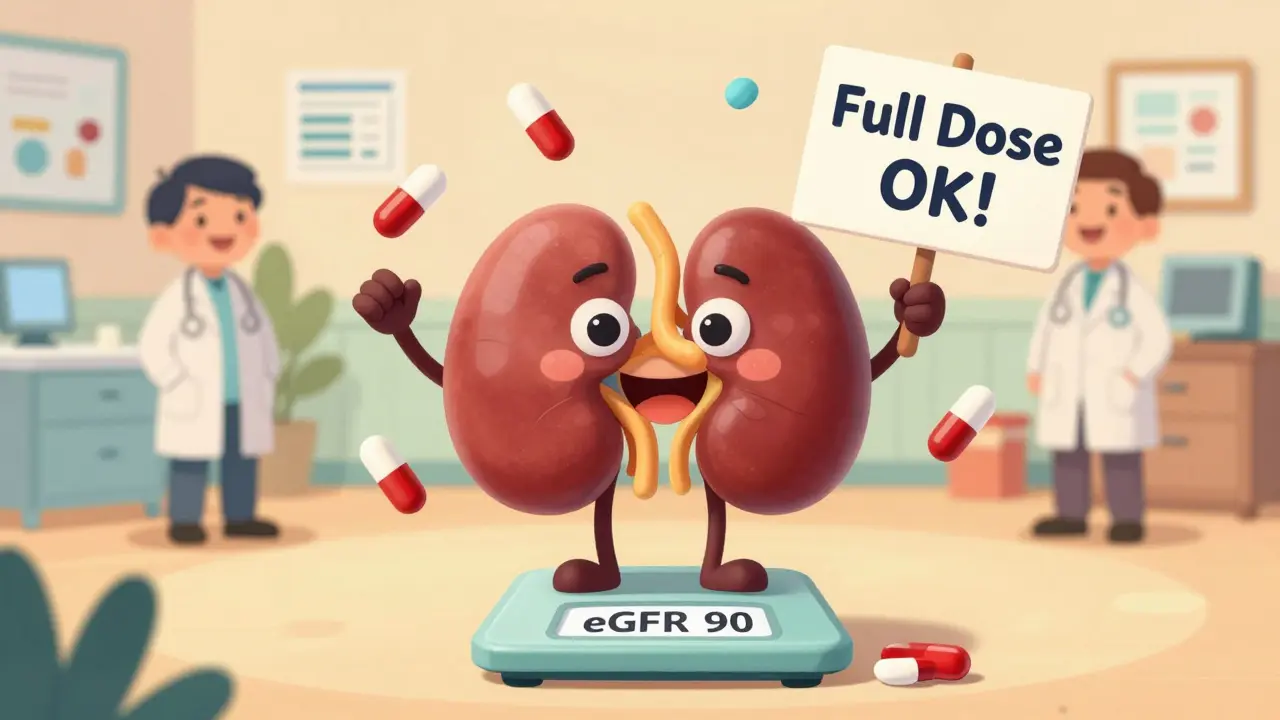
Renal Dosing Calculator
eGFR Input
Enter your estimated glomerular filtration rate
When Your Kidneys Change, Your Diabetes Meds Must Too
If you have type 2 diabetes and your kidneys aren’t working like they used to, you’re not alone. About 1 in 3 adults with diabetes also have chronic kidney disease (CKD). But here’s the thing: the drugs that help control your blood sugar can become risky-or even useless-if you don’t adjust the dose as your kidney function changes. It’s not about stopping treatment. It’s about making sure you still get the protection these drugs offer without putting yourself at risk.
Two of the most important diabetes medications-metformin and SGLT2 inhibitors-need special attention when your kidney function drops. And the rules have changed a lot in the last five years. What used to be a hard stop at an eGFR of 60 or 30? That’s outdated. Today, we’re using these drugs more safely, more effectively, and at lower kidney function levels than ever before. But that also means confusion. Your doctor might say one thing. Your pharmacy might say another. And your insurance might block it altogether.
What Is eGFR? (And Why It Matters More Than You Think)
eGFR stands for estimated glomerular filtration rate. It’s a number doctors use to estimate how well your kidneys are filtering waste. Normal is around 90 or higher. If it drops below 60, your kidneys are starting to struggle. Below 30? That’s advanced kidney disease. Below 15? You’re likely on dialysis.
But here’s the key: eGFR isn’t just a number on a lab report. It’s the main guide for how much of your diabetes medication you should take. Too much metformin when your kidneys are weak? Risk of lactic acidosis-a rare but dangerous buildup of acid in your blood. Too little SGLT2 inhibitor when you could still benefit? You’re missing out on kidney protection that can slow or even stop progression to dialysis.
Metformin: The Old Rules Are Gone
For years, metformin was pulled the moment your eGFR dipped below 60. That was the rule. But research changed everything. A 2014 study in the British Medical Journal found lactic acidosis from metformin happens at a rate of just 3.3 cases per 100,000 patient-years. That’s rarer than being struck by lightning.
Today, the guidelines are clear:
- eGFR ≥60 mL/min/1.73 m²: You can take up to 2550 mg per day. That’s the full dose.
- eGFR 45-59: Maximum dose drops to 2000 mg per day.
- eGFR 30-44: Maximum dose is 1000 mg per day. Many patients do fine on this.
- eGFR <30: Generally stopped. But some doctors will still give 500 mg daily if you’re stable and not sick.
Why the change? Because metformin doesn’t just lower blood sugar. It lowers heart attack risk, stroke risk, and even death. A 2021 meta-analysis showed patients on metformin with CKD lived longer than those on other drugs. The benefits outweigh the tiny risk-if you dose it right.
SGLT2 Inhibitors: The Kidney Protectors You Can’t Afford to Skip
SGLT2 inhibitors-like dapagliflozin, empagliflozin, and canagliflozin-are not just glucose-lowering drugs. They’re kidney-saving drugs. The evidence is overwhelming. In the DAPA-CKD trial, dapagliflozin cut the risk of kidney failure or death by 39%. The EMPA-KIDNEY trial showed similar results. These aren’t small gains. These are landmark changes in how we treat kidney disease.
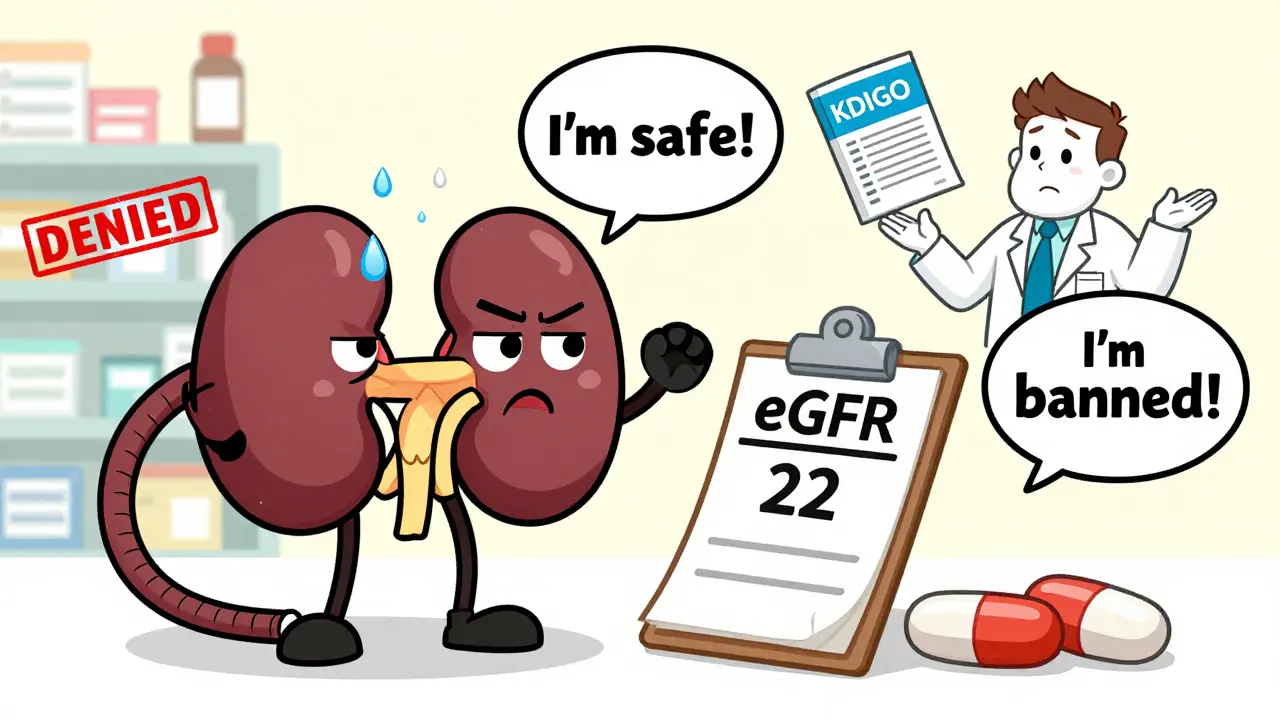
But here’s the twist: the rules for these drugs changed dramatically in 2022. The Kidney Disease: Improving Global Outcomes (KDIGO) group lowered the minimum eGFR for starting an SGLT2 inhibitor from 30 to 20 mL/min/1.73 m². That means if your kidney function is 22, you’re still a candidate.
Here’s how dosing breaks down by drug:
- Canagliflozin: Max 100 mg if eGFR is 45-59. Not recommended below 45.
- Dapagliflozin: Max 10 mg if eGFR is 25-45. Can be used down to eGFR 20.
- Empagliflozin: Max 10 mg if eGFR is 30-45. Not recommended below 30.
And here’s the most important point: if your eGFR drops after you start the drug, don’t panic. Many patients see a small, temporary dip in eGFR-2 to 5 points-within the first few weeks. That’s not a sign the drug is harming your kidneys. It’s a sign it’s working. The drug changes blood flow in the kidney, which temporarily lowers the filtration rate. Within 3 months, it usually stabilizes. If you stop it because of this dip, you lose the long-term kidney protection.
The Big Gap: Guidelines vs. Labels
Here’s where things get messy. The FDA still labels canagliflozin as contraindicated if your eGFR is below 45. But KDIGO says it’s safe down to 20. Your doctor might want to prescribe it. Your pharmacy might refuse to fill it. Your insurance might deny it.
A 2022 survey by the American Diabetes Association found 43% of endocrinologists had insurance denials for SGLT2 inhibitors in patients with eGFR between 20 and 29. That’s not a medical issue. That’s a paperwork issue.
Experts are clear: follow the guidelines, not the label. KDIGO, the ADA, and the European Association for the Study of Diabetes all agree: if the evidence says it’s safe and effective, use it. The FDA label hasn’t caught up. But your health should.
Combining Metformin and SGLT2 Inhibitors: The New Gold Standard
The best approach for most people with type 2 diabetes and CKD is to start both drugs together-if your eGFR allows.
Here’s how it works:
- If your eGFR is ≥60: Start metformin at full dose (2550 mg) and add an SGLT2 inhibitor at full dose.
- If your eGFR is 45-59: Reduce metformin to 2000 mg, keep SGLT2 inhibitor at full dose.
- If your eGFR is 30-44: Keep metformin at 1000 mg max, continue SGLT2 inhibitor if eGFR is ≥20.
- If your eGFR is 20-29: Stop metformin. Keep the SGLT2 inhibitor. This is the only window where you can’t take both.
- If your eGFR is <20: You can still continue the SGLT2 inhibitor if you’re tolerating it. Stop only if you’re sick, dehydrated, or on dialysis.
This combination isn’t just about blood sugar. It’s about survival. In trials, patients on both drugs had 30-40% less risk of kidney failure. That’s not a minor benefit. That’s life-changing.
What to Monitor and When
Regular kidney checks aren’t optional. They’re essential.
- For metformin: Check eGFR every 6-12 months if it’s above 60. Every 3-6 months if it’s 45-59. Every 3 months if it’s 30-44.
- For SGLT2 inhibitors: Check eGFR within 4 weeks of starting. Then every 3 months. Watch for that early dip-it’s normal.
- During illness: If you’re sick, vomiting, dehydrated, or have an infection, stop both drugs temporarily. Your kidneys are under stress. This is when lactic acidosis or acute kidney injury can happen.
Also, watch for signs of dehydration: dizziness, dry mouth, less urine. SGLT2 inhibitors make you pee more. If you’re not drinking enough water, you’re at risk.
What If You’re on Dialysis?
If you’re on hemodialysis or peritoneal dialysis, the rules get even more specific.
- Metformin: Some doctors give 250 mg daily on peritoneal dialysis. After hemodialysis, 500 mg may be given.
- SGLT2 inhibitors: Not recommended on dialysis. These drugs work in the kidneys. No kidney function? No benefit.
But even here, the science is evolving. A 2024 study in The Lancet is looking at whether low-dose dapagliflozin might still help dialysis patients with heart failure. That’s the next frontier.
What’s Next? The Future Is Already Here
In 2024, the FDA approved dapagliflozin for chronic kidney disease even if you don’t have diabetes. That’s huge. It means the drug’s benefits go beyond blood sugar. It’s about protecting the kidney itself.
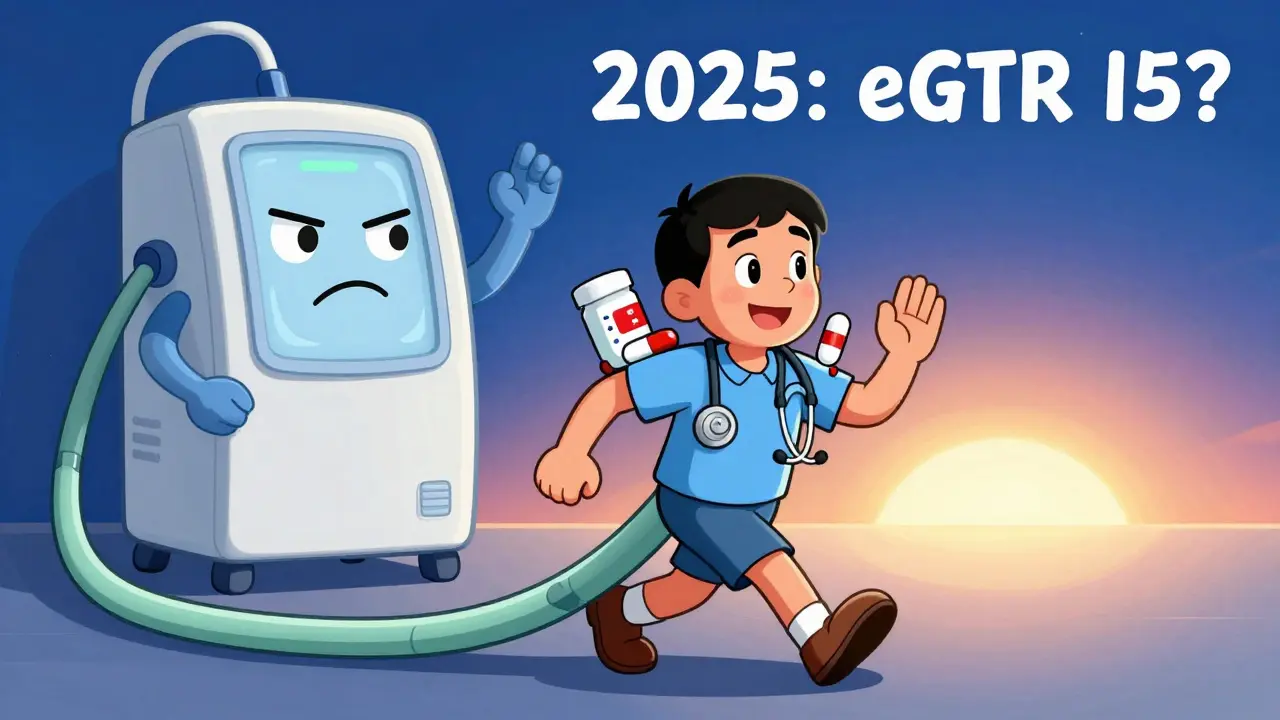
By 2025, guidelines may extend SGLT2 inhibitor use down to eGFR 15. And the cost-effectiveness? A 2023 report found these drugs save $128,000 per quality-adjusted life year gained-even in advanced CKD. That’s not just good medicine. It’s smart medicine.
So if you’re on metformin or an SGLT2 inhibitor and your kidney numbers have changed? Don’t assume the old rules still apply. Ask your doctor: "What’s my eGFR? And based on the latest guidelines, should we adjust my meds?"
What to Do Next
- Get your latest eGFR result. Don’t guess. Don’t rely on memory.
- Ask your doctor: "Am I still on the right dose?" and "Should I be on an SGLT2 inhibitor?"
- If your insurance denies the drug, ask for a letter of medical necessity. Cite KDIGO 2022 guidelines.
- Keep track of your fluid intake. Drink water daily, especially if you’re on an SGLT2 inhibitor.
- Never stop your meds during illness without talking to your doctor first.
Your kidneys don’t heal overnight. But with the right meds, at the right dose, you can slow the damage-and keep living well.
 Health and Wellness
Jeff Card
March 3, 2026 AT 11:11My kidney doc even showed me the data-lactic acidosis from metformin is rarer than getting hit by a vending machine. That's not a risk. That's a lottery ticket you didn't buy.
Matt Alexander
March 4, 2026 AT 07:23Gretchen Rivas
March 5, 2026 AT 00:43Helen Brown
March 5, 2026 AT 07:36John Smith
March 7, 2026 AT 07:10Sharon Lammas
March 8, 2026 AT 04:00marjorie arsenault
March 9, 2026 AT 00:14Deborah Dennis
March 9, 2026 AT 11:51Shivam Pawa
March 10, 2026 AT 09:45Diane Croft
March 11, 2026 AT 14:16Justin Rodriguez
March 13, 2026 AT 11:17