
Probiotic-Antibiotic Timing & Selection Calculator
Personalized Probiotic Guide
Select your antibiotic and provide basic information to get science-backed recommendations for probiotic use.
Your Personalized Plan
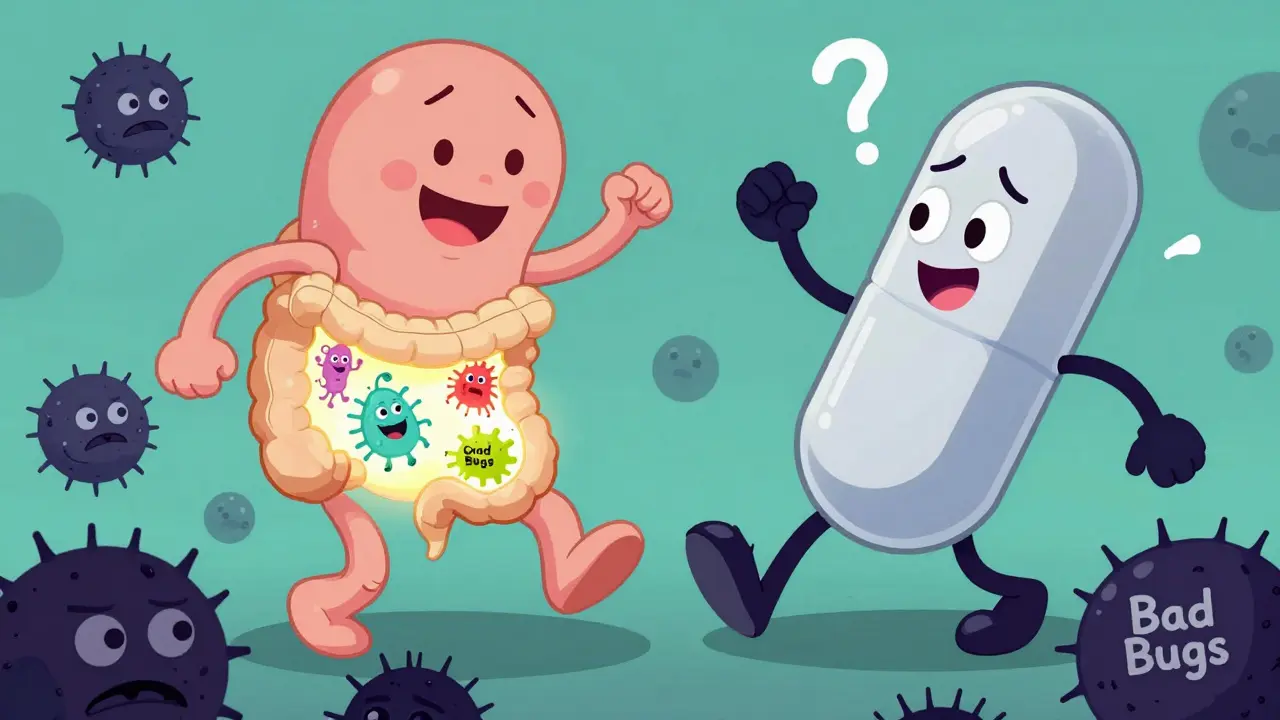
When you’re on antibiotics, your gut knows it. The medicine kills bad bacteria-but it doesn’t know the difference. It wipes out the good ones too. That’s why so many people end up with bloating, cramps, or worse-diarrhea that lasts days. It’s not just uncomfortable. It can make you miss work, skip meals, or even end up back in the doctor’s office. But what if you could protect your gut while still taking the antibiotics you need? That’s where probiotics come in.
Why Antibiotics Mess With Your Gut
Antibiotics are powerful. They target the bacteria causing your infection-whether it’s a sinus infection, pneumonia, or a urinary tract infection. But your gut is home to trillions of bacteria. Many of them help digest food, make vitamins, and keep your immune system in check. When antibiotics sweep through, they don’t pick and choose. They flatten entire neighborhoods of microbes. That’s why up to 30% of people on antibiotics get diarrhea. For some, it’s mild. For others, it’s Clostridioides difficile-a dangerous infection that can cause severe inflammation, fever, and even life-threatening complications.How Probiotics Help
Probiotics are live beneficial bacteria. They don’t cure infections. But they can act like a shield. When taken with antibiotics, certain strains help keep your gut lining intact, crowd out harmful bacteria, and reduce inflammation. The evidence is strong: studies show probiotics can lower the risk of antibiotic-associated diarrhea by 42% to 66%. That’s not a small win. It means fewer trips to the bathroom, less discomfort, and a faster return to normal life. The two strains with the most solid proof are Lactobacillus rhamnosus GG and Saccharomyces boulardii CNCM I-745. These aren’t just any probiotics. They’ve been tested in over 50 clinical trials. In one study of 8,670 people, those who took these strains were nearly half as likely to get diarrhea compared to those who took a placebo. For people at high risk of C. diff-like older adults or those in hospitals-S. boulardii cut infection rates by two-thirds.When and How to Take Them
Timing matters. If you take your probiotic at the same time as your antibiotic, the antibiotic might kill the good bacteria before they even get a chance to work. The best practice? Take your probiotic 1 to 2 hours after your antibiotic dose. This gives the antibiotic time to do its job, then lets the probiotic settle in without interference. Dose-wise, look for products with 10 billion to 100 billion colony-forming units (CFUs) per capsule. Most studies use this range. Take it once or twice a day, and keep going for at least a week after you finish your antibiotics. For high-risk patients, some doctors recommend continuing for two weeks. Don’t stop early-your gut needs time to rebuild.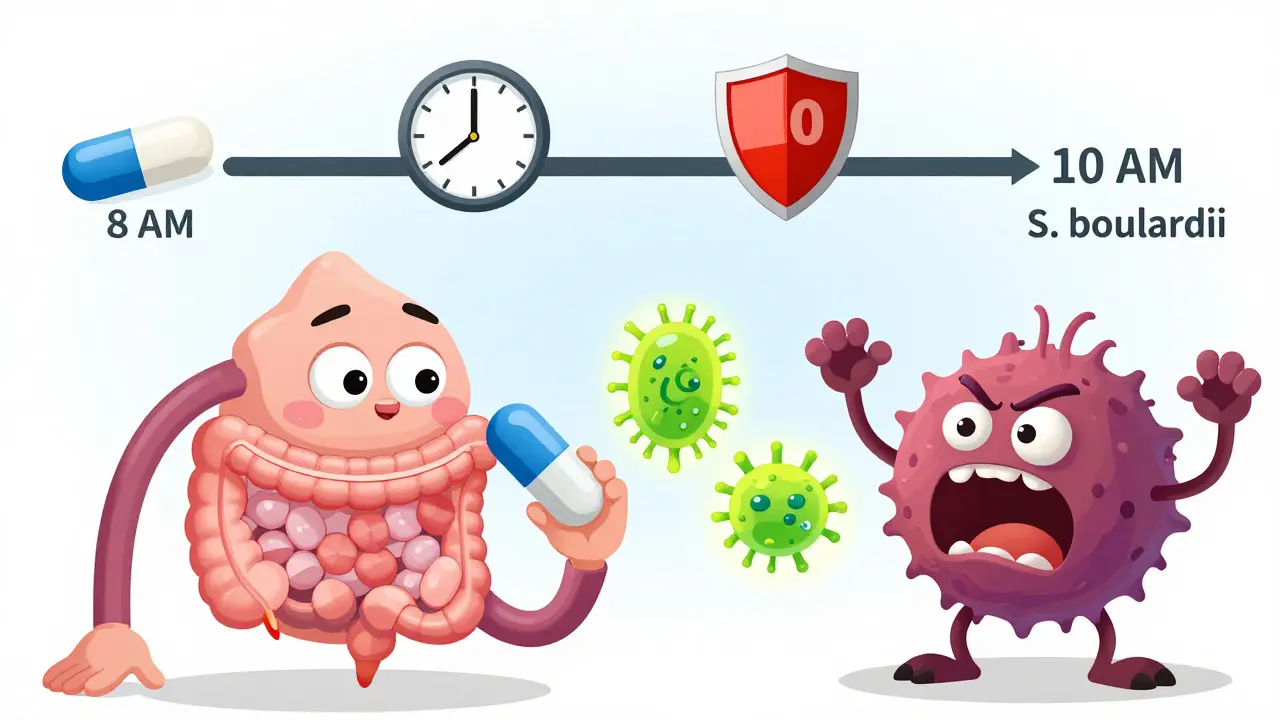
Which Probiotics Actually Work?
Not all probiotics are created equal. There are hundreds of brands on the shelf, but only a few strains have proven results. Stick to these:- Lactobacillus rhamnosus GG - Best for general antibiotic-related diarrhea
- Saccharomyces boulardii CNCM I-745 - Best for preventing C. diff infections
- Bifidobacterium lactis and Bifidobacterium longum - Help restore balance after antibiotics
What Doesn’t Work (and What Can Hurt)
Some people think more probiotics = better. That’s not true. Taking 500 billion CFUs won’t help more than 50 billion. Your gut can’t use it all. Excess just passes through. Also, avoid probiotics if you’re immunocompromised. People on chemotherapy, with central lines, or with severe pancreatitis have developed rare but serious infections from probiotics. There are documented cases of bacteremia-bacteria entering the bloodstream-from probiotic use in vulnerable patients. If you’re unsure, ask your doctor. And here’s the catch: some probiotics might delay gut recovery. A 2018 study found that people who took a multi-strain probiotic after antibiotics took longer to return to their normal gut microbiome than those who didn’t take any. But this was a small study, and it hasn’t been repeated. Most larger trials still show net benefit. So don’t panic-but do choose the right strains.Real Stories, Real Results
On Reddit, users share their experiences. One person took Culturelle (which contains L. rhamnosus GG) during a 10-day amoxicillin course and didn’t get the diarrhea they’d had with every previous antibiotic. Another took Garden of Life and still got C. diff after clindamycin. Why the difference? Strain choice. Culturelle had the right one. Garden of Life didn’t. Amazon reviews show a 4.1 out of 5 average rating. Most positive reviews mention taking probiotics 2 hours after antibiotics. The negative ones? Often from people who took the wrong strain or stopped too soon.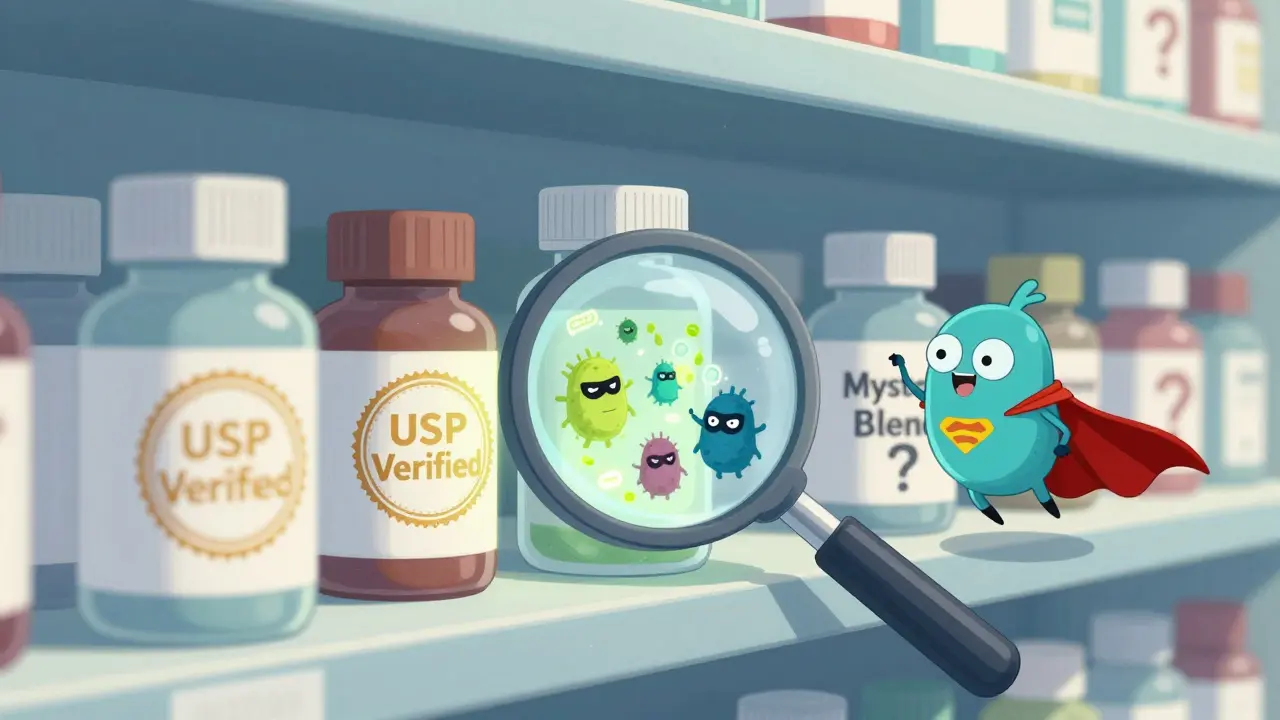
What About Cost and Availability?
Probiotics aren’t cheap, but they’re affordable. A month’s supply costs between $20 and $45, depending on the brand. Most are sold over-the-counter in pharmacies, grocery stores, and online. Insurance rarely covers them-so you pay out of pocket. But compared to the cost of a hospital visit for C. diff (which can run over $20,000), it’s a smart investment. Refrigerated probiotics tend to be more effective. Testing shows 78% of refrigerated products still have live bacteria at expiration, versus 62% for shelf-stable ones. If you buy shelf-stable, check the expiration date. Buy fresh.What’s New in 2026?
The science is evolving. In 2025, researchers found that 38% of commercial probiotics carry genes that make bacteria resistant to antibiotics like tetracycline and macrolides. That’s alarming. If these genes transfer to harmful bacteria in your gut, they could make future infections harder to treat. The FDA is now requiring new probiotic products to screen for these genes. That’s a big step. Meanwhile, next-generation probiotics are in trials. One called VE303-a precise mix of eight bacterial strains-reduced C. diff by 76% in early testing. These aren’t available yet, but they’re coming. The future isn’t just “more probiotics.” It’s “the right probiotics, for the right person, at the right time.”Bottom Line: Should You Take Probiotics with Antibiotics?
If you’re taking antibiotics and want to avoid diarrhea or C. diff, yes-take a probiotic. But not just any one. Choose Lactobacillus rhamnosus GG or Saccharomyces boulardii. Take it 1-2 hours after your antibiotic. Keep going for at least a week after your course ends. Avoid cheap, unverified brands. Skip them if you’re immunocompromised. This isn’t a magic fix. But it’s one of the few simple, low-risk steps you can take to protect your gut while your body fights infection. For most people, it’s worth it.Can I take probiotics at the same time as my antibiotic?
It’s better to wait 1 to 2 hours after taking your antibiotic before taking your probiotic. Antibiotics can kill the beneficial bacteria in probiotics if they’re taken together. Waiting gives the antibiotic time to work without interfering with the probiotic’s ability to colonize your gut.
Which probiotic strain is best for preventing antibiotic diarrhea?
The two strains with the strongest evidence are Lactobacillus rhamnosus GG and Saccharomyces boulardii CNCM I-745. L. rhamnosus GG is best for general antibiotic-associated diarrhea, while S. boulardii is especially effective at preventing Clostridioides difficile infections.
How long should I take probiotics after finishing antibiotics?
Continue taking probiotics for at least one week after your antibiotic course ends. For people at high risk of C. diff-like older adults or those with prior infections-doctors often recommend continuing for two weeks to support full microbiome recovery.
Are all probiotics the same?
No. Probiotics are strain-specific. A product labeled “probiotic” might contain 10 different strains, but only a few have proven benefits for antibiotic side effects. Look for products that list the exact strain names-like Lactobacillus rhamnosus GG-and avoid those with vague labels like “proprietary blend.” Choose USP Verified products for better quality control.
Can probiotics cause side effects?
Most people experience no side effects. Some report mild bloating or gas in the first few days, which usually goes away. But people with weakened immune systems-such as those on chemotherapy, with central lines, or severe pancreatitis-should avoid probiotics. There have been rare cases of bloodstream infections linked to probiotic use in these groups.
Do probiotics interfere with antibiotics?
Generally, no. Probiotics don’t reduce the effectiveness of antibiotics. But certain antibiotics like aminoglycosides can directly kill some probiotic strains. That’s why timing matters-take them apart. Also, avoid probiotics if you’re on aminoglycosides unless your doctor advises otherwise.
Are refrigerated probiotics better than shelf-stable ones?
Yes, often. Independent testing shows refrigerated probiotics maintain 78% viability at expiration, while shelf-stable ones average 62%. Live bacteria are what you want. If you buy shelf-stable, check the expiration date and buy from a store with high turnover. Avoid old stock.
Can probiotics cause antibiotic resistance?
Some commercial probiotics carry genes that confer resistance to antibiotics like tetracycline and macrolides. While rare, these genes could potentially transfer to harmful bacteria in your gut. The FDA now requires new probiotic products to screen for these resistance genes. Stick to reputable brands and avoid unverified products to reduce this risk.
Should I take probiotics if I’m on broad-spectrum antibiotics?
Yes, but the benefit may be smaller. Broad-spectrum antibiotics like piperacillin-tazobactam destroy a wider range of gut bacteria, making recovery harder. Probiotics still help reduce diarrhea risk, but they’re less effective at preventing C. diff in hospital settings. In these cases, doctors may consider other options like fecal microbiota transplantation (FMT) for high-risk patients.
Is there a difference between probiotics and prebiotics?
Yes. Probiotics are live beneficial bacteria. Prebiotics are fibers that feed good bacteria already in your gut. You can take both, but only probiotics are recommended alongside antibiotics to directly replace lost microbes. Prebiotics may help later during recovery, but they don’t provide immediate protection during antibiotic treatment.
 Health and Wellness
Lydia H.
January 17, 2026 AT 17:04Been taking L. rhamnosus GG with my antibiotics for years now. No more running to the bathroom every hour. Honestly, it’s the only thing that’s kept me from quitting meds early. Just don’t buy the cheap stuff-your gut deserves better.
Aman Kumar
January 19, 2026 AT 04:03Probiotics are a placebo-driven scam peddled by Big Gut Pharma. The microbiome is a complex ecosystem-you can’t just drop in a few strains and expect equilibrium. Science doesn’t support this reductionist nonsense. You’re playing with fire if you think a capsule can replace evolutionary adaptation.
Valerie DeLoach
January 19, 2026 AT 05:22Thank you for this. As someone who’s had C. diff twice, I can’t stress enough how crucial strain specificity is. I used to take whatever was on sale-ended up in the hospital. Now I only use Saccharomyces boulardii CNCM I-745, and I check the expiration date like it’s my job. It’s not expensive. It’s not glamorous. But it saved my life.
sujit paul
January 21, 2026 AT 04:41Have you considered that the FDA’s new screening requirements are just a distraction? The real issue is that probiotics are being used to mask the damage caused by overprescribed antibiotics. We’ve been conditioned to treat symptoms, not root causes. What if the solution isn’t more bacteria-but fewer antibiotics?
Phil Hillson
January 21, 2026 AT 19:38So you’re telling me I need to wait two hours after my antibiotic to take a pill I paid $30 for? And I’m supposed to care about CFUs and USP labels? Bro I just want to not poop my pants for a week. I’ll take the one with the cute bear on the bottle and call it a day
Josh Kenna
January 22, 2026 AT 05:26Y’all are overthinking this. I take mine right after my antibiotic and I’m fine. I don’t care about strains or refrigeration. I just want to feel normal again. Also I got the one with the blue bottle because it looked nice and it worked. Maybe science is overrated
Jackson Doughart
January 22, 2026 AT 21:19I appreciate the depth of this post. As someone who works in clinical nutrition, I’ve seen patients suffer needlessly because they were misled by marketing. The data on L. rhamnosus GG and S. boulardii is robust-but it’s buried under a mountain of unregulated products. It’s not about being perfect. It’s about being intentional. Thank you for clarifying the science without sensationalism.
Malikah Rajap
January 24, 2026 AT 20:12Oh my gosh, I just realized I’ve been taking probiotics at the same time as my antibiotics for months… and I’m fine?? But also, I’m 24 and healthy, so maybe my gut is just extra tough?? Like, do I need to stress about this if I’m not elderly or immunocompromised??
Astha Jain
January 26, 2026 AT 16:07Probiotics? Pfft. My grandma in Delhi used to eat curd with black salt after antibiotics. No capsules. No labels. Just food. Maybe we’re overcomplicating things because we’ve forgotten how to eat.
Jake Rudin
January 26, 2026 AT 16:52But… what if the real problem isn’t the antibiotics… or even the probiotics… but the assumption that our bodies need ‘fixing’ at all? We’ve been conditioned to believe that microbial imbalance is a flaw to be corrected, rather than a natural fluctuation in a dynamic system. The gut isn’t a garden to be planted-it’s a symphony to be listened to. And perhaps… the most profound intervention is not the capsule… but the pause. The silence. The letting-be.