
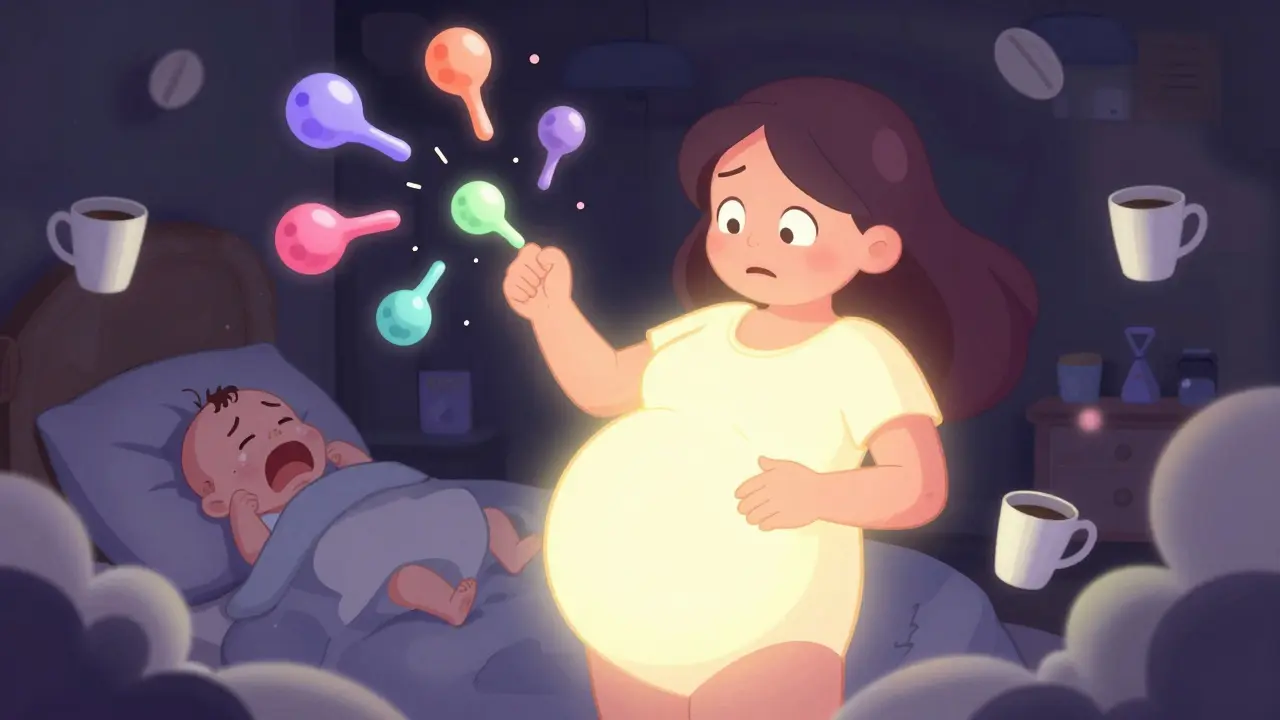
After giving birth, many women feel overwhelmed, tired, or emotional. That’s normal. But when those feelings don’t fade - when sadness, numbness, or panic take over - it’s not just the baby blues. It’s postpartum depression, a real medical condition that affects about 1 in 7 new mothers. And while hormones are often blamed, the truth is more complex. PPD isn’t just about estrogen dropping. It’s about how your brain, body, and life circumstances all interact after childbirth.
What Really Happens to Your Hormones After Birth?
During pregnancy, your body produces massive amounts of estrogen and progesterone - up to ten times higher than normal. Within just two to three days after delivery, those levels crash. They drop back to pre-pregnancy levels faster than almost any other physiological change in the human body. That sudden shift doesn’t just affect your uterus - it hits your brain too.
One key player is allopregnanolone, a metabolite of progesterone that helps calm your nervous system. When progesterone plummets, so does allopregnanolone. That can leave you feeling on edge, irritable, or emotionally raw. Oxytocin, the bonding hormone released during breastfeeding, also dips in some women, which may make it harder to feel connected to your baby - not because you don’t love them, but because your brain chemistry is out of sync.
But here’s the twist: studies have found that women with postpartum depression don’t always have different hormone levels than women who don’t develop it. Some women with very low estrogen still feel fine. Others with normal levels get severely depressed. So hormones alone don’t cause PPD. They create a vulnerable window - like a storm cloud hanging over your brain - but other factors determine whether you get soaked.
It’s Not Just Hormones - The Real Triggers
Think of postpartum depression like a house fire. Hormones might be the spark, but what really lets it burn is everything else around it.
- History of depression or anxiety - If you’ve struggled before, your risk jumps to 30% after birth.
- Lack of support - No partner, no family, no one to hold you while you cry? That isolation is toxic.
- Sleep deprivation - Newborns wake every 2-3 hours. After weeks of this, your brain can’t regulate mood properly.
- Financial stress or relationship problems - Money fights, a strained marriage, or feeling trapped in your new role can crush your spirit.
- Birth trauma - A difficult labor, emergency C-section, or feeling unheard during delivery can leave lasting emotional scars.
And it’s not just moms. About 1 in 10 new dads get depressed too. Transgender and adoptive parents also experience PPD at similar rates. This isn’t a “weakness” or a “mom thing.” It’s a biological and psychological response to massive life change.
How Do You Know It’s More Than Just Tired?
The baby blues usually peak around day 5 and fade by two weeks. Postpartum depression sticks around - and gets worse.
Signs you might be dealing with PPD:
- Feeling hopeless or worthless most of the day
- Loss of interest in your baby - or guilt over not feeling joy
- Constant crying, even when you don’t know why
- Difficulty sleeping even when the baby is asleep
- Appetite changes - eating too much or nothing at all
- Thoughts of harming yourself or your baby
If you’ve had these symptoms for more than two weeks, it’s time to reach out. You don’t have to wait until your six-week checkup. Don’t wait for someone to ask you if you’re okay. Ask for help yourself.
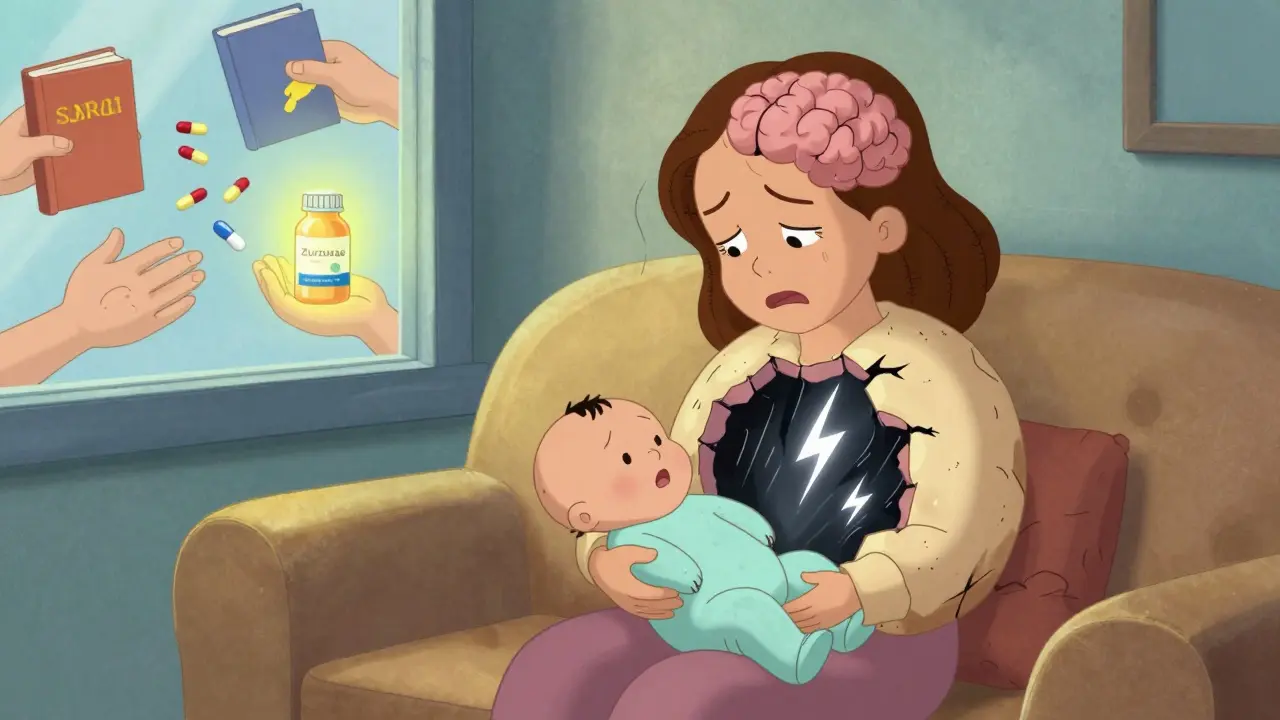
Treatment Options That Actually Work
There are two main paths: medication and therapy - and sometimes both.
Medications: SSRIs Are the First Line
Selective serotonin reuptake inhibitors (SSRIs) like sertraline and escitalopram are the most commonly prescribed. They’re safe during breastfeeding, with very little passing into breast milk. Sertraline, in particular, has been studied extensively and is often the first choice because it’s well-tolerated and effective.
Many women worry about taking pills while nursing. But the risk of untreated depression - missing feedings, not bonding, developing chronic anxiety - is far greater than the tiny amount of medication that might reach your baby.
Specialized Hormonal Treatments: Brexanolone and Zuranolone
In 2019, the FDA approved brexanolone (Zulresso), an IV treatment made from allopregnanolone. It works by replacing what your body lost after birth. But it requires a 60-hour hospital stay with constant monitoring because it can cause extreme drowsiness.
In 2023, a newer option came out: zuranolone (Zurzuvae). It’s an oral pill taken for just 14 days. No IV. No hospital. Just a short course that can lift symptoms in days, not weeks. This is a game-changer - especially for moms who can’t leave their baby for days.
But these aren’t for everyone. They’re expensive, and not all insurance covers them. They’re also meant for moderate-to-severe cases. Mild to moderate PPD often responds better to therapy and SSRIs.
Therapy: Talking It Out Works
Cognitive behavioral therapy (CBT) is the most proven form of talk therapy for PPD. In one 2020 study, over half of women who did CBT saw their symptoms cut in half. CBT helps you spot negative thought patterns - like “I’m a bad mom because I cried today” - and replace them with more realistic ones.
Interpersonal therapy (IPT) is another option. It focuses on relationships - how your new role as a parent is affecting your marriage, friendships, or family dynamics.
And you don’t need to go to a fancy office. Many therapists now offer telehealth sessions during nap time. Some community centers even run free support groups.
What Doesn’t Work - And What’s Still Experimental
Some people try estrogen patches or progesterone supplements to “fix” their hormones. But the evidence is weak. A 2001 study showed some women improved with estrogen, but later research found no consistent benefit. The American College of Obstetricians and Gynecologists doesn’t recommend hormonal therapy outside of clinical trials.
Transcranial magnetic stimulation (TMS) - a non-invasive brain stimulation technique - has shown promise in small studies, with about 68% of women responding positively. But it’s expensive and not widely available.
And while gut health and microbiome research is exciting - one 2021 study found different gut bacteria in women with PPD - we’re still years away from using this for treatment.
Screening Is Key - And It’s Becoming Standard
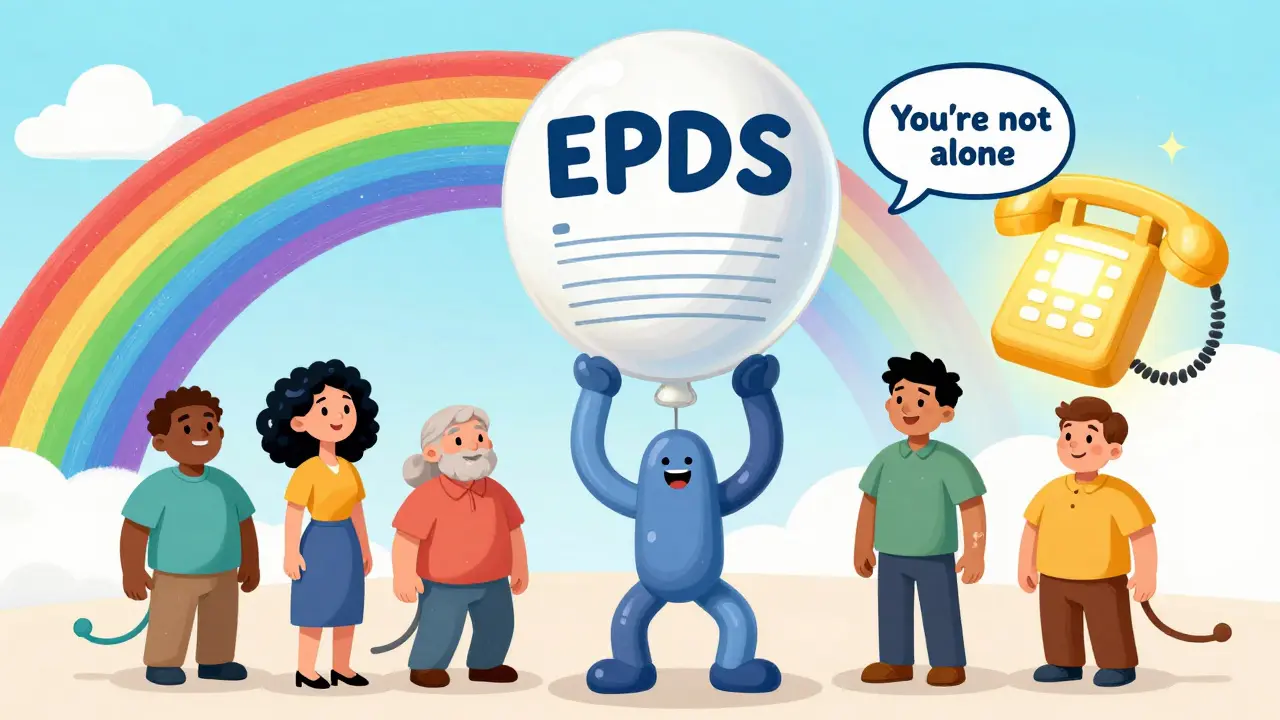
The Edinburgh Postnatal Depression Scale (EPDS) is a simple 10-question test. It asks things like: “I’ve been so unhappy I’ve had difficulty sleeping,” or “I’ve felt anxious for no good reason.” It takes less than five minutes.
Massachusetts was the first state to make PPD screening mandatory for all new mothers. Now, more hospitals are doing it. But if your provider doesn’t ask - ask them. Say: “I’ve been feeling off. Can we do the depression screen?”
And don’t wait until you’re in crisis. If you’ve had depression before, get screened during pregnancy. Half of PPD cases start before birth.
Where to Get Help Right Now
You’re not alone. Postpartum Support International runs a free warmline: 1-800-944-4773. Trained volunteers answer calls 24/7. Over 87% of callers say it helped them feel less alone.
Your OB-GYN, midwife, pediatrician, or family doctor can refer you to a therapist who specializes in perinatal mental health. If you’re in crisis - if you’re having thoughts of hurting yourself or your baby - call 988, the Suicide & Crisis Lifeline. Or go to the nearest emergency room.
Treatment works. Recovery is possible. You don’t have to suffer in silence. The fact that you’re reading this means you’re already taking a step forward.
Is postpartum depression the same as baby blues?
No. Baby blues are mild mood swings that start a few days after birth and usually fade within two weeks. Postpartum depression is more intense, lasts longer, and interferes with daily life. Symptoms include deep sadness, loss of interest in your baby, trouble sleeping even when you’re tired, and feelings of worthlessness or guilt.
Can I take antidepressants while breastfeeding?
Yes. Medications like sertraline and escitalopram are considered safe during breastfeeding. Only tiny amounts pass into breast milk, and studies show no negative effects on infant development. The risks of untreated depression - like poor bonding, missed feedings, or worsening mental health - are far greater than the minimal exposure to medication.
How long does postpartum depression last?
With treatment, most women start feeling better within 4-8 weeks. Without treatment, it can last for months or even years. About 1 in 5 women still have symptoms after one year. Early intervention is the best way to shorten the duration and prevent long-term effects on you and your child.
Do dads get postpartum depression too?
Yes. About 1 in 10 new fathers experience depression after their child is born. Risk factors include sleep loss, financial stress, relationship strain, and a partner with PPD. It’s often overlooked because society doesn’t expect men to be emotionally vulnerable - but it’s real, and it needs treatment.
Can postpartum depression affect my baby?
Yes. Untreated PPD can interfere with bonding, reduce responsiveness to your baby’s needs, and even affect their emotional and language development. But treating your depression improves outcomes for your child too. When you feel better, you’re more likely to smile, talk, and play with your baby - and that’s what helps them thrive.
Is therapy really necessary if I’m on medication?
Medication helps balance your brain chemistry, but therapy helps you rebuild your life. CBT teaches you how to manage negative thoughts, cope with stress, and improve communication with your partner. Many women find that combining both gives them the fastest and most lasting relief.
 Health and Wellness
Ryan Pagan
January 29, 2026 AT 06:09Man, I wish I’d known all this when my wife went through it. We thought she was just tired-turns out her brain was basically on fire. The part about allopregnanolone? Mind-blowing. It’s not weakness, it’s neurochemistry. And zuranolone? Finally, something that doesn’t require a 60-hour hospital stay. That’s a godsend for moms who can’t leave their newborns. Stop treating PPD like a personal failure-it’s a medical storm with a damn good treatment plan now.
Paul Adler
January 29, 2026 AT 16:29This is one of the most balanced, evidence-based explanations of postpartum depression I’ve encountered. The distinction between hormonal influence and systemic triggers is crucial. Too often, the conversation reduces to ‘just take a pill’ or ‘it’s all in your head.’ This article rightly frames it as a multifactorial condition requiring tailored intervention. Well done.
Robin Keith
January 31, 2026 AT 04:19Let me just say-this isn’t just about hormones, or sleep, or even trauma-though all of those are real, visceral, soul-crushing layers-it’s about the collapse of identity. The woman who once had a career, a social life, autonomy, and a sense of self is now a milk machine, a diaper changer, a ghost in her own body. And society? It hands her a onesie and says ‘enjoy this journey.’ No one tells her that her dopamine receptors are on vacation, that oxytocin’s been hijacked by a screaming void, that her prefrontal cortex is on life support. And when she breaks? They call it ‘baby blues.’ It’s not blues. It’s a funeral for the person she was-and no one brought flowers.
Sheryl Dhlamini
February 2, 2026 AT 00:14I had PPD after my second. No one asked me how I was. Not even my mom. I cried every night while rocking my daughter, convinced I was failing her. Then I found a telehealth therapist who got me on sertraline. Four weeks later, I smiled at my kid for the first time without guilt. I’m not ‘fixed’-but I’m here. And I’m not ashamed anymore. If you’re reading this and you’re drowning? Reach out. Even if it’s just to a stranger on the internet. You’re not alone.
LOUIS YOUANES
February 2, 2026 AT 04:45SSRIs are just chemical band-aids. The real problem is capitalism. You’re expected to bounce back from giving birth like it’s a weekend retreat. No paid leave, no childcare, no support. The system is designed to break mothers. Medication helps you cope with the wreckage-but it doesn’t fix the building. And zuranolone? Another pharma profit machine. They’ll charge $30K for a two-week pill while you’re still sleeping on the floor with a newborn. Wake up.
Andy Steenberge
February 3, 2026 AT 01:56Thank you for including dads and adoptive parents. Too many resources still treat PPD as exclusively a ‘mother’s issue.’ My partner had it after our adoption-no hormones involved, but the emotional overload, sleep deprivation, and fear of not being ‘enough’ hit just as hard. Therapy saved us. CBT helped her reframe the narrative from ‘I’m failing’ to ‘I’m learning.’ And yes, the EPDS screen? We did it at 3 weeks. It’s simple. Do it. No shame.
DHARMAN CHELLANI
February 4, 2026 AT 01:42hormones my ass. its all in your head. just meditate and drink more water.
kabir das
February 4, 2026 AT 16:37And what about the fathers?? Who checks on them?? The silent sufferers!! The ones who cry in the garage after work, holding the baby monitor like it’s a lifeline?? No one talks about it!! The stigma!! The silence!! The societal expectation that men must be stoic!! This is a crisis!! And they give you a pill?? A pill?? When what you need is a hug!!
Megan Brooks
February 6, 2026 AT 10:58The most profound insight here is that PPD isn’t a failure of willpower or maternal instinct-it’s a failure of systems. Our healthcare system screens too late. Our workplaces offer no real support. Our cultural narratives romanticize suffering. The fact that zuranolone exists-and is underutilized-is a moral indictment. We have the science. We have the tools. What we lack is the collective will to prioritize human well-being over productivity metrics. This isn’t just medicine. It’s justice.
Frank Declemij
February 6, 2026 AT 18:21SSRIs work. CBT works. Screening works. Stop overcomplicating it. Get help.
Pawan Kumar
February 8, 2026 AT 14:06Have you considered that this entire narrative is manufactured by Big Pharma to sell drugs? The FDA approved zuranolone after a single trial funded by Sage Therapeutics. The ‘epidemic’ of PPD? A marketing campaign. Real mothers don’t need pills-they need real community. The truth is hidden. The data is skewed. Wake up.
Kacey Yates
February 9, 2026 AT 08:44I had PPD and they gave me Zoloft and told me to ‘get more sleep’-like that was possible. I didn’t cry because I was weak. I cried because I was terrified. I didn’t bond with my baby because my brain was broken. Therapy didn’t fix me-my husband staying home for 3 months did. Stop blaming hormones. Blame a system that makes new parents beg for help.
rajaneesh s rajan
February 9, 2026 AT 22:21Look, I get it. Hormones crash. Sleep sucks. But let’s be real-most of you are just tired. You’re not depressed. You’re overwhelmed. And yeah, maybe the system’s broken. But if you’re not getting help because you think you’re ‘broken,’ then you’re buying into the narrative. Get a babysitter. Go for a walk. Talk to your partner. Stop Googling ‘am I broken?’ and start living. The pill isn’t the answer-it’s the distraction.