
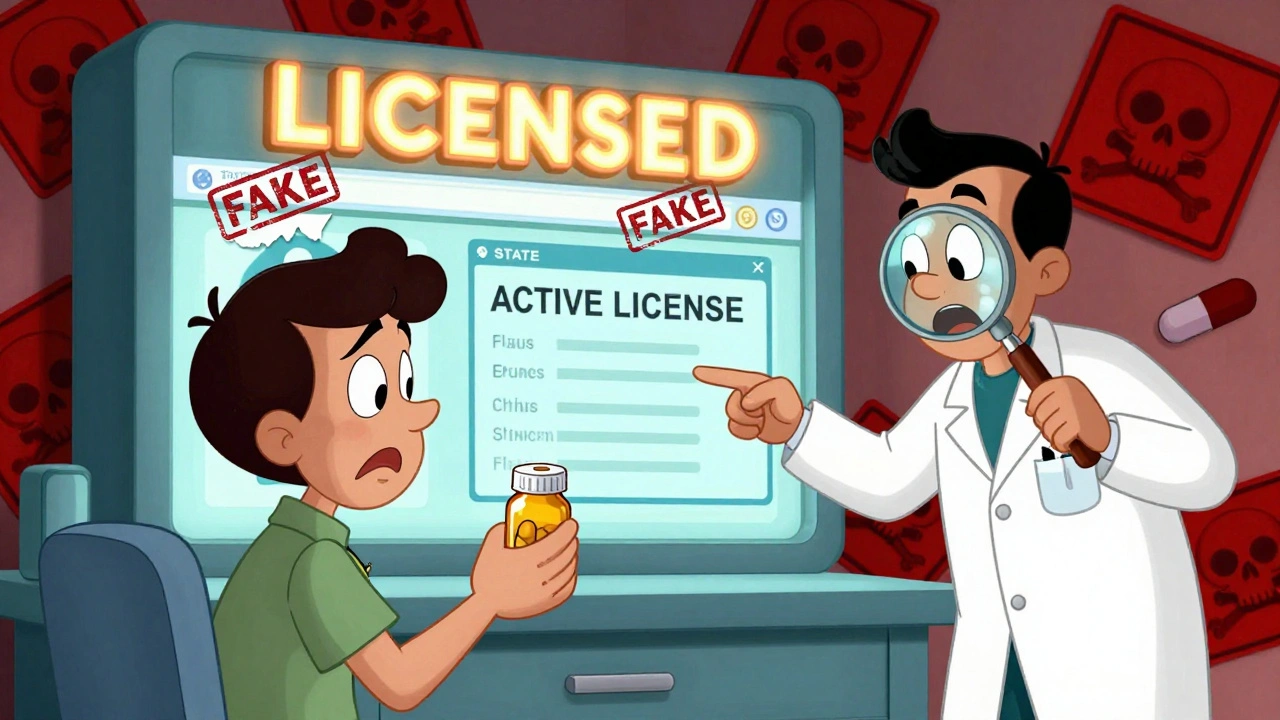
Buying medicine online sounds convenient-until you realize you might be ordering from a fake pharmacy. In 2024, the FDA shut down over 1,200 illegal online pharmacies selling fake, contaminated, or expired drugs. Many of these sites look professional, with fake licenses, professional logos, and even fake customer reviews. The only way to know if an online pharmacy is safe is to verify its license through official state or national databases.
Why checking pharmacy licenses matters
You wouldn’t buy a car from a stranger on the street without checking the title. So why trust them with your prescription meds? Online pharmacies that aren’t properly licensed may sell pills with no active ingredients, dangerous contaminants, or incorrect dosages. The risks aren’t theoretical. In 2023, a Chicago hospital hired a pharmacist whose Illinois license had been revoked-because they only checked their internal records, not the state database. The result? A $250,000 settlement after a patient suffered a severe reaction. State boards of pharmacy and national organizations like the National Association of Boards of Pharmacy (NABP) created verification systems to stop this. These aren’t just bureaucratic tools-they’re lifesavers. Between 2015 and 2022, states with strong verification systems saw a 37% drop in prescription drug diversion cases, according to the American Pharmacists Association.How state pharmacy verification systems work
Each U.S. state runs its own pharmacy license verification system. Washington State, for example, uses the Healthcare Enforcement and Licensing Management System (HELMS), which is free, fast, and user-friendly. Here’s how it works:- Go to doh.wa.gov (the official Washington State Department of Health site).
- Click on “License Verification” under the “Healthcare Professionals” section.
- Enter the pharmacy’s exact legal name or license number.
- Check the results: active status, expiration date, and any disciplinary actions.
- Confirm the license is current-no “expired” or “suspended” status.
The problem with checking just one state
If you’re verifying a pharmacy that operates in multiple states, checking only one state’s database is dangerous. A Florida-based illegal pharmacy once served customers in 17 states using just one valid license from a single state. That’s a loophole many fraudsters exploit. State systems are limited to their own jurisdiction. If a pharmacy is licensed in California but also ships to Texas, you’d need to check both the California Board of Pharmacy and the Texas State Board of Pharmacy separately. That’s time-consuming. A pharmacist with licenses in five states might spend over 22 minutes just verifying their own credentials across all boards.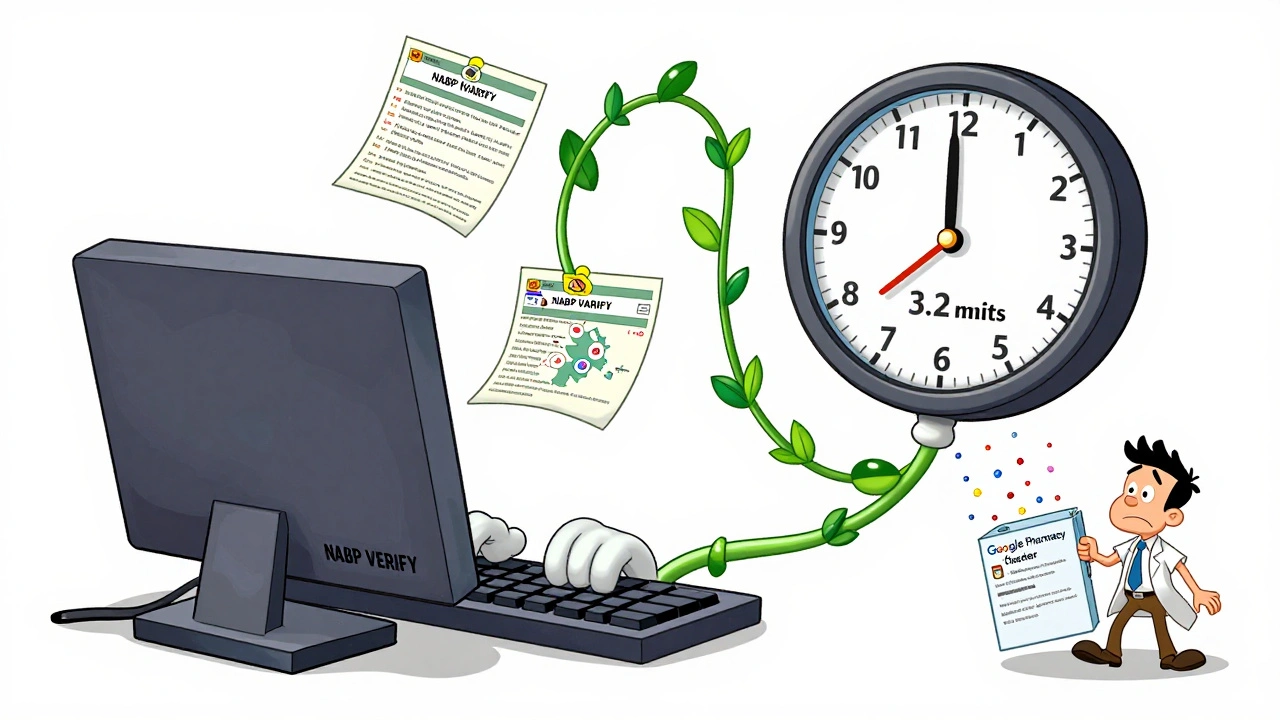
NABP Verify: The national solution
For pharmacies that operate across state lines-or if you’re a healthcare provider verifying multiple vendors-NABP Verify is the most reliable option. Launched in 2005, it’s a centralized database that pulls real-time data from 41 state boards (and growing). Unlike state systems, NABP Verify gives you a single report showing licensure status across all participating states. It updates in real time, so if a license is revoked in Ohio, you’ll see it immediately. It’s not free-$79 per year-but it saves time and reduces errors. A 2023 study in the Journal of the American Pharmacists Association found NABP Verify cut verification time from 47 minutes to just 3.2 minutes for multi-state practitioners. Many hospitals and large pharmacy chains use NABP Verify. According to the 2024 ASHP Technology Survey, 64% of hospital systems rely on it for vendor credentialing. But for individual consumers? The cost is a barrier. Only 28% of individual users adopt it, per the same survey.What to look for in a verified pharmacy
When you run a license check, here’s what a legitimate record should show:- Active status-not expired, suspended, or under investigation.
- Physical address-a real, verifiable location, not a PO box or virtual office.
- Licensed pharmacist on staff-the license should be linked to a licensed pharmacist responsible for dispensing.
- No disciplinary history-check for past violations like selling without prescriptions or mislabeling drugs.
What’s wrong with PTCB and other tools
Some people confuse pharmacy verification with technician certification. The Pharmacy Technician Certification Board (PTCB) verifies individual technicians-not the pharmacy itself. It’s useful if you’re hiring a tech, but it tells you nothing about whether the pharmacy is licensed to sell drugs. Similarly, websites like “VIPPS” (Verified Internet Pharmacy Practice Sites) are often mistaken for government systems. VIPPS is actually a voluntary accreditation program run by NABP. It’s a good sign-but it’s not a license. Always verify the underlying state license too.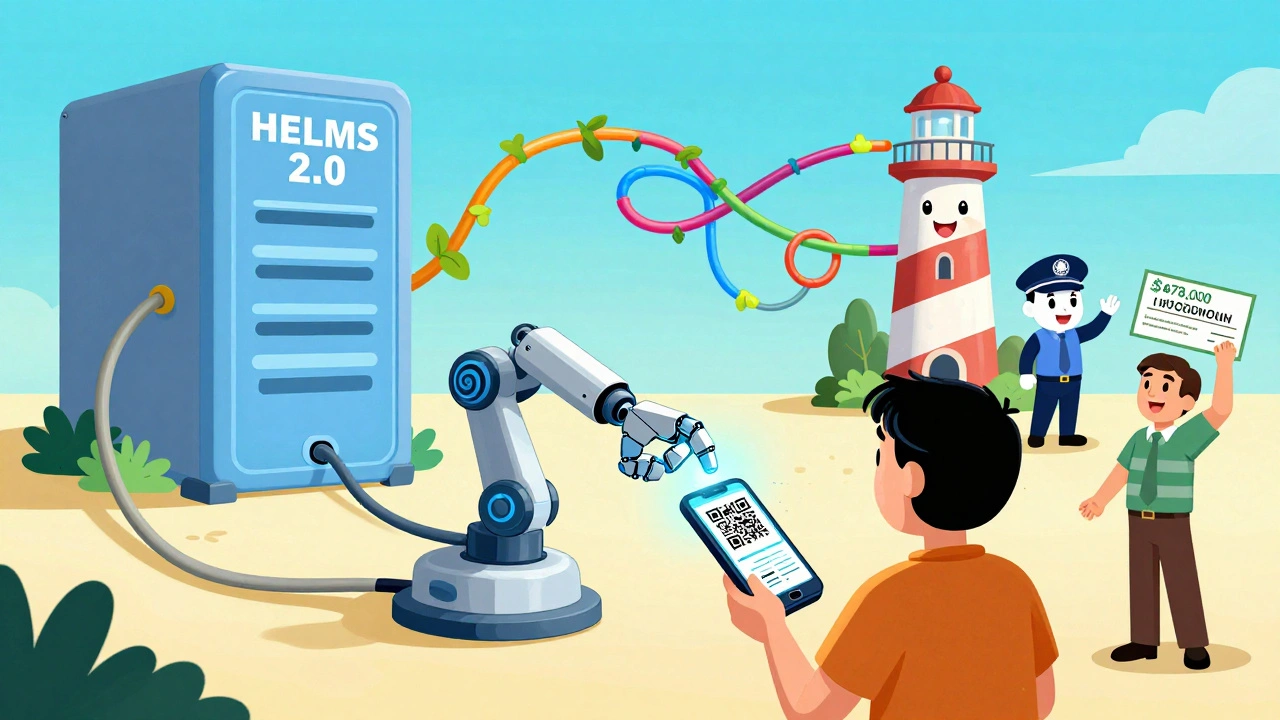
How to avoid verification pitfalls
Here’s what most people get wrong:- Assuming a .pharmacy domain means it’s safe-while the .pharmacy domain is restricted to verified pharmacies, some fraudsters still use it. Always cross-check with the state database.
- Trusting customer reviews-fake reviews are common. Look for verified license info, not testimonials.
- Waiting until the last minute-if you’re a pharmacy owner or hospital admin, verify licenses 30 days before renewal deadlines. The NABP’s 2024 Best Practices Guide shows this cuts staffing gaps by 63%.
- Using third-party lookup tools-many Google results show “pharmacy checker” sites that are either outdated or scams. Always go to the official state or NABP site.
What’s changing in 2025
The system is getting better. Washington State’s HELMS 2.0 upgrade, launching in late 2024, will add API integration so electronic health record systems like Epic can pull license data automatically. This will reduce verification time from seconds to under 1.5 seconds. NABP plans to expand its real-time network to cover 55 jurisdictions-including territories-by 2025. The FDA has also allocated $15 million in grants to help states upgrade their systems. Washington received $478,000 in May 2024 to improve its platform. Long-term, experts predict blockchain and biometric verification will replace current systems by 2028. Washington is already testing a pilot with Amazon Web Services to create tamper-proof digital licenses.Bottom line: Don’t guess-verify
Buying medicine online should be safe. But safety doesn’t come from flashy websites or fast shipping. It comes from a valid, active license. Whether you’re a patient, a pharmacist, or a hospital administrator, always check the license before you buy, hire, or prescribe. Use your state’s official portal for local pharmacies. Use NABP Verify for multi-state operations. And never, ever skip this step. The cost of skipping it isn’t just financial-it’s your health.How do I know if an online pharmacy is legitimate?
A legitimate online pharmacy will display its license number and physical address on its website. You must verify that license through your state’s official pharmacy board website or through NABP Verify. Don’t rely on logos, reviews, or domain names like .pharmacy-always check the official database.
Is NABP Verify worth the $79 annual fee?
If you’re a pharmacy owner, hospital, or provider who works with multiple states, yes. It saves hours of manual checks and reduces the risk of hiring or partnering with an unlicensed pharmacy. For individual consumers buying medicine occasionally, it’s not necessary-just use your state’s free verification system.
Can I verify a pharmacy license without knowing the exact name?
Most state systems, including Washington’s HELMS, require the exact legal name or license number. If you don’t have that, you won’t find the record. Try searching for the pharmacy’s physical address or phone number on Google to find its official business name. Avoid third-party sites that claim to search by “any info”-they’re often scams.
What if a pharmacy says it’s licensed but I can’t find it online?
That’s a major red flag. Legitimate pharmacies are required by law to be listed in state databases. If you can’t verify their license after checking the official state site, assume it’s not licensed. Report the pharmacy to the FDA’s MedWatch program or your state’s board of pharmacy.
Do I need to verify a pharmacy if I’m using a big-name retailer like CVS or Walgreens online?
You still should. Even big retailers sometimes partner with third-party fulfillment centers. Always check that the actual pharmacy dispensing your medication is licensed in your state. The parent company’s reputation doesn’t guarantee the pharmacy’s compliance.
 Health and Wellness
Jennifer Blandford
December 9, 2025 AT 09:47OMG this is literally life-saving info 😭 I just ordered some blood pressure meds last week from a site that looked so legit… now I’m sweating. Thanks for spelling this out like I’m not a total idiot. I’m checking my pharmacy right now.
Andrea Beilstein
December 10, 2025 AT 16:55we live in a world where you have to verify a pharmacy like it's a secret society but we trust algorithms to diagnose us from a quiz on instagram
the irony is beautiful
we built empires on trust and now we're terrified of a .pharmacy domain
what even is safety anymore
Tejas Bubane
December 12, 2025 AT 16:52another overcomplicated guide from a guy who thinks 22 minutes is a lot of time
just use NABP if you care
if you're buying meds online you already lost
stop pretending you're responsible
you're just lazy and want cheap opioids
Sarah Gray
December 13, 2025 AT 06:55It's astonishing how many people confuse accreditation with licensure. The distinction isn't merely semantic-it's a matter of legal accountability. NABP's VIPPS is not a substitute for state licensure verification. This post correctly emphasizes the necessity of primary-source validation. Any deviation from this standard constitutes negligence.
Angela R. Cartes
December 13, 2025 AT 16:18ugh i just spent 45 mins trying to find the washington state portal and it kept redirecting me to a .gov site that looked like a 2005 geocities page
how is this still a thing in 2024
and why does it look like my uncle’s e-bay account??
also i’m not paying $79 to check a pharmacy
that’s like paying to verify your toothbrush isn’t fake
😒
Anna Roh
December 14, 2025 AT 10:38my cousin died from fake Adderall. I wish I’d known this before. Don’t be like me. Check the license. Just do it. It takes 3 minutes.
Christian Landry
December 15, 2025 AT 07:42wait so if i’m in canada and buying from a us pharmacy do i check the us state board or canada’s? 🤔
also why does everyone say ‘state board’ like it’s obvious which one
imagine being a foreigner trying to navigate this
pls make a map
Ajit Kumar Singh
December 16, 2025 AT 09:09the real problem is not the verification systems the real problem is that people think they can buy controlled substances without a prescription and then act surprised when they get fake pills
you want to save money on meds? get a job
don’t gamble with your liver because you’re too lazy to drive 10 miles to a real pharmacy
also the .pharmacy domain is a gimmick
and NABP is just another corporate middleman charging you to do what should be free
the system is broken
but you’re not the victim
you’re the enabler
Simran Chettiar
December 16, 2025 AT 20:46It is indeed a matter of grave concern that the digital landscape has become a minefield for pharmaceutical safety. In many developing nations, access to even basic medications remains a challenge, and the proliferation of fraudulent online pharmacies only exacerbates the crisis. The absence of standardized global verification protocols creates a dangerous vacuum wherein unscrupulous actors thrive. While state-level and NABP systems are commendable, they remain fragmented and inaccessible to the majority of the world’s population. A universal, decentralized, and multilingual verification platform-perhaps leveraging blockchain technology as mentioned in the conclusion-would be a monumental leap toward equitable healthcare integrity. Until then, we are merely rearranging deck chairs on the Titanic.