
What Deep Brain Stimulation Really Does for Parkinson’s
Deep Brain Stimulation, or DBS, doesn’t cure Parkinson’s. It doesn’t stop the disease from progressing. But for many people, it changes everything. If you’ve been on levodopa for years and now you’re stuck in a cycle of OFF times-when meds don’t work-and painful, uncontrollable movements called dyskinesias, DBS can break that cycle. It’s not magic. It’s science. And it works best when the right person gets it at the right time.
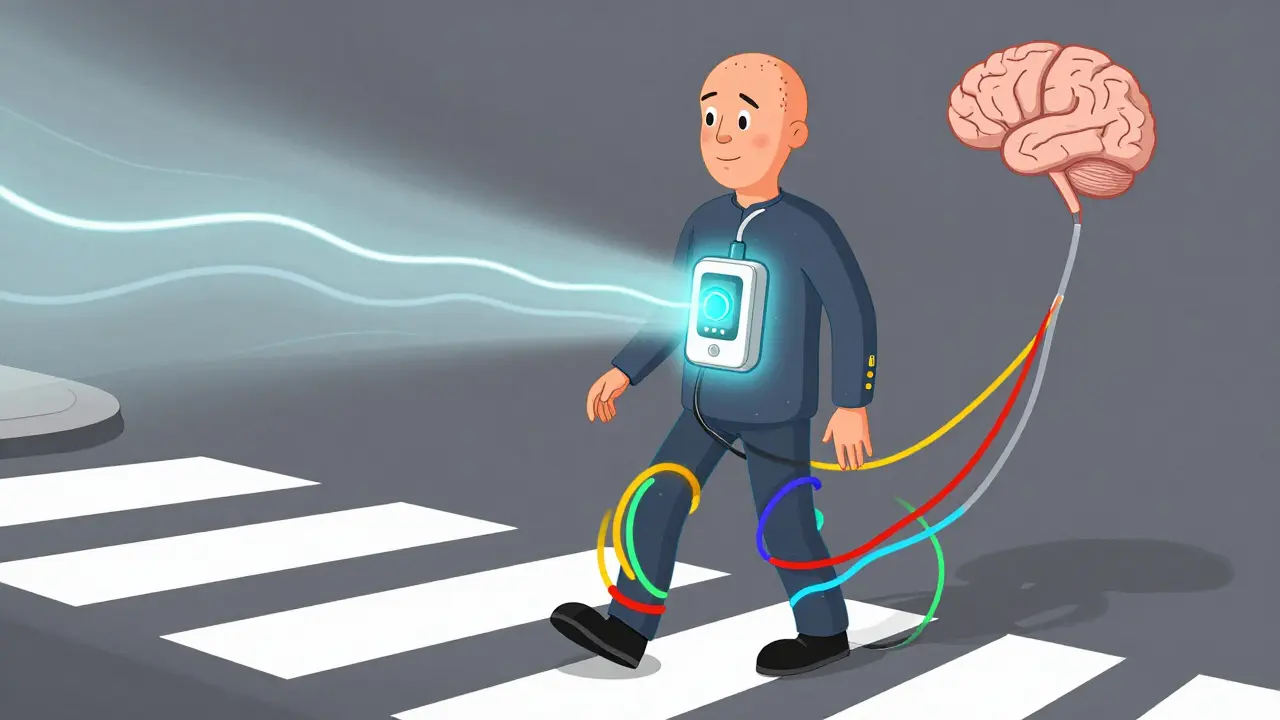
Here’s how it works: Thin electrodes, thinner than a pencil lead, are placed deep in the brain-usually in the subthalamic nucleus or globus pallidus. These aren’t meant to fix damaged cells. They’re meant to override the brain’s faulty signals. A pacemaker-like device implanted in your chest sends regular electrical pulses. These pulses calm the chaotic firing patterns that cause tremors, stiffness, and slowness. The result? Fewer OFF periods, less dyskinesia, and often, a 30-50% drop in daily medication.
The evidence is clear. The landmark EARLYSTIM trial in 2013 showed patients who got DBS early in their disease course had a 23-point improvement in quality of life scores-more than double the gain from meds alone. That’s not just a number. That’s being able to tie your shoes without help. Walking to the mailbox without freezing. Eating dinner without spilling. For many, it’s the difference between staying at home and living.
Who Is a Good Candidate for DBS?
Not everyone with Parkinson’s is a candidate. DBS only helps symptoms that respond to levodopa. If your tremors improve when you take your pill, DBS likely will too. If your balance problems or speech issues don’t get better with medication, DBS won’t fix them.
The standard criteria haven’t changed much since 1999, but they still hold up:
- You’ve had Parkinson’s for at least five years.
- Your motor symptoms improve by at least 30% after taking levodopa (measured by UPDRS-III scores).
- Your cognitive skills are intact-MMSE above 24 or MoCA above 21. Memory problems or confusion? That’s a red flag.
- You don’t have atypical parkinsonism. If you have progressive supranuclear palsy or multiple system atrophy, DBS won’t help. It’s not worth the risk.
- You’re physically healthy enough for surgery. No major heart or lung issues. No uncontrolled depression or anxiety.
These aren’t just checkboxes. They’re survival rules. A 2022 study found that patients who didn’t meet these criteria had a 60% higher chance of poor outcomes-no improvement, or worse, new problems.
Here’s the hard truth: Only 1-5% of eligible patients get DBS. Why? Many doctors don’t refer early enough. Patients think it’s a last resort. But the best time to consider DBS isn’t when you’re barely walking. It’s when meds start failing you-when you’re spending half your day stuck in OFF, and the other half shaking from dyskinesia. That’s when DBS can give you back your life.
STN vs. GPi: Which Target Is Right for You?
There are two main targets for DBS electrodes: the subthalamic nucleus (STN) and the globus pallidus interna (GPi). Both work well. But they have different strengths.
STN is the most common choice. It lets you cut your levodopa dose by up to half. That means fewer nausea episodes, less swelling in your legs, and fewer hallucinations from high-dose meds. But it can sometimes make thinking harder-word-finding, planning, decision-making. One Reddit user said, “My tremors are gone, but planning meals takes three times longer.” That’s STN.
GPi doesn’t reduce meds as much, but it’s better at controlling dyskinesia. If your biggest problem is uncontrollable jerking, GPi might be the better pick. It also tends to be gentler on mood and cognition. A 2009 VA/NINDS trial found GPi reduced dyskinesia by 70%, compared to 46% with STN.
There’s no universal answer. It depends on your symptoms, your goals, and your brain. A good team will map this out with you. If your main goal is to take fewer pills, STN. If you’re struggling with dyskinesia and worried about memory, GPi. Some centers even use real-time brain signals to decide on the fly during surgery. That’s the future-and it’s already here.
The Surgery: What to Expect
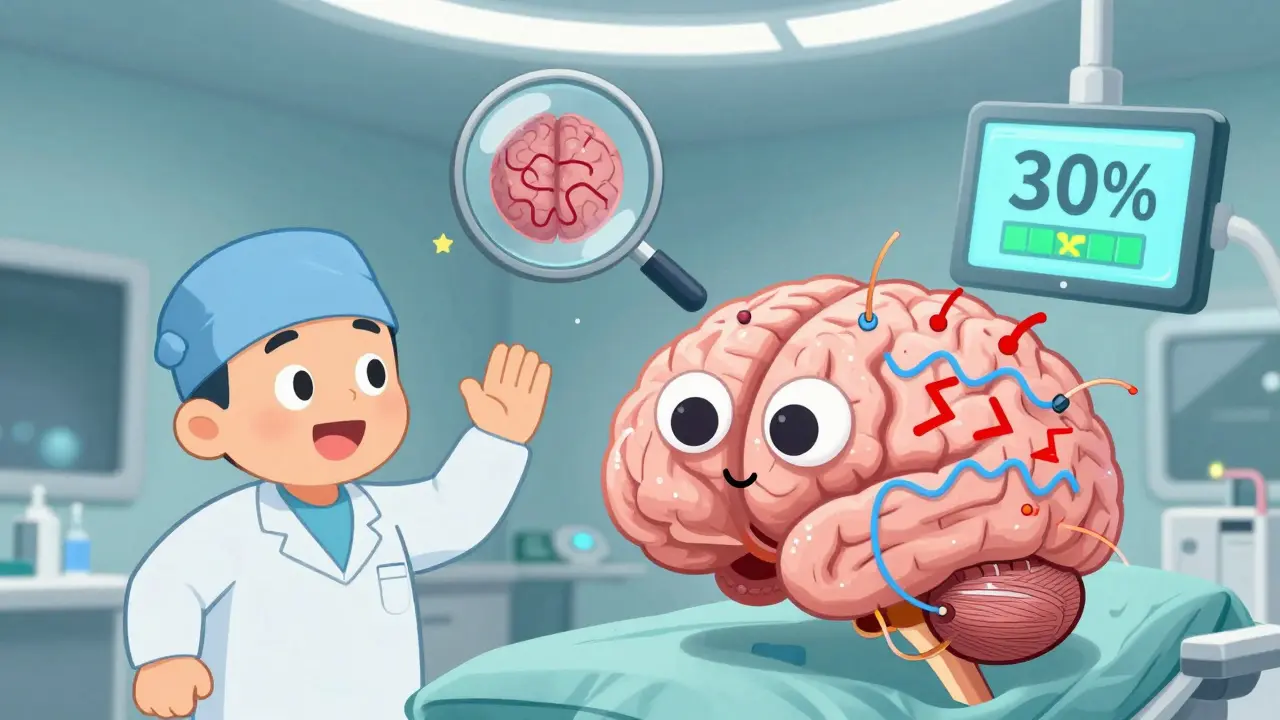
DBS isn’t brain surgery in the scary sense. You’re awake. You’re not under general anesthesia. You’ll be sedated, but you’ll be asked to move your fingers, speak, or walk during the procedure so the team can test the effects.
The process takes 3 to 6 hours, usually done in two stages. First, the electrodes are placed. A metal frame holds your head still. A tiny hole is drilled in your skull. Using MRI and microelectrode recordings, the team finds the exact spot-within a millimeter. You might feel a tingling, or your hand might twitch. That’s normal. It tells them they’re in the right place.
Then, a few days later, the battery is implanted under your collarbone or in your abdomen. It’s a smaller, cleaner procedure. You’re home in a day or two.
Modern systems are smarter than ever. Medtronic’s Percept™ PC and Boston Scientific’s Vercise™ Genus™ can actually listen to your brain. They detect abnormal beta wave activity (13-35 Hz), the same pattern that spikes when you’re stiff or slow. These devices adjust stimulation automatically-like a thermostat for your brain. That’s called closed-loop DBS. It’s FDA-approved and already in use. It’s more precise. Fewer side effects. Less need for manual tuning.
Life After DBS: The Real Challenges
DBS isn’t a one-and-done fix. The real work starts after surgery.
Programming takes months. The first few visits are every week or two. The team tweaks voltage, frequency, and pulse width. They’ll ask you to keep a symptom diary: “When did you feel stiff? When did the shaking come back? Did you have trouble speaking after your last dose?” This isn’t optional. It’s essential.
Some people get great results in weeks. Others take six to twelve months to find the sweet spot. Patience is key. And you’ll need to keep taking your meds-just less of them.
Complications happen. About 5-15% of people have hardware issues: a wire breaks, the battery dies early, or an infection forms. Infection risk is low-under 3%-but it’s real. If you have fever, redness, or swelling near the device, get help immediately.
Then there’s the cognitive stuff. About 10-15% of patients report subtle changes: slower thinking, trouble finding words, reduced motivation. Most improve with time and speech therapy. But some don’t. That’s why neuropsych testing before surgery is non-negotiable.
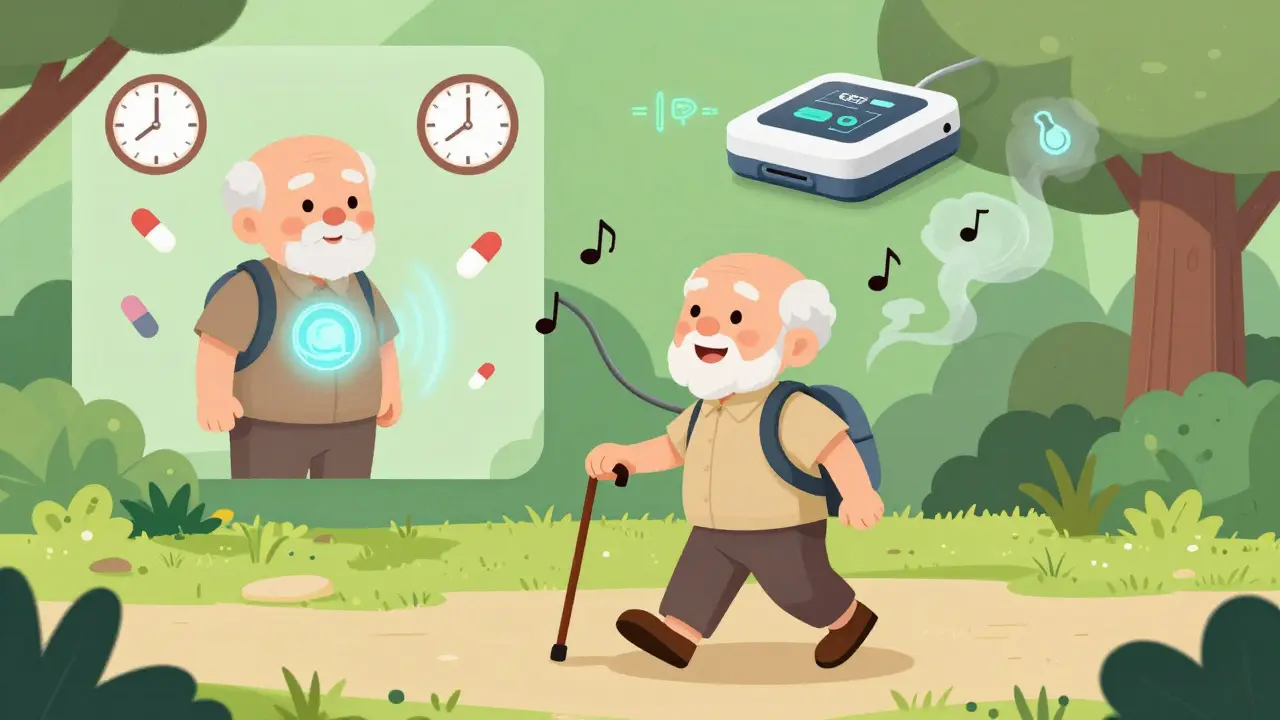
And yes, the battery needs replacing. Non-rechargeable ones last 3-5 years. Rechargeable ones last 9-15 years, but you have to charge them every few days. It’s a hassle, but most people say it’s worth it.
What DBS Won’t Fix
DBS is powerful-but limited. It doesn’t help:
- Balance problems or freezing of gait
- Speech that’s soft or slurred
- Constipation, urinary issues, or low blood pressure
- Depression, anxiety, or sleep problems
- Memory loss or dementia
These are called non-motor symptoms. They’re real. They’re disabling. And DBS doesn’t touch them. Some studies are testing whether future DBS systems can target areas linked to mood or cognition, but that’s still experimental.
One patient wrote on a Parkinson’s forum: “I thought DBS would stop the disease. It didn’t. It just made the good days better.” That’s the truth. It’s a tool, not a cure.
Cost, Insurance, and Access
DBS isn’t cheap. In the U.S., the total cost runs $50,000 to $100,000. But Medicare and most private insurers cover it if you meet criteria. The hard part? Getting approved. Insurers often require proof you’ve tried and failed on at least six months of optimized meds. That can take months.
And not every hospital can do it. High-volume centers-those doing over 50 DBS surgeries a year-have 20% fewer complications. Look for a movement disorders center with a full team: neurologist, neurosurgeon, neuropsychologist, and a DBS coordinator. If your clinic doesn’t have that, ask for a referral.
There are about 15,000-20,000 DBS procedures done each year worldwide. But there are over a million people with Parkinson’s. That means hundreds of thousands are missing out. Why? Because they’re never referred. Or they’re referred too late.
What’s Next for DBS?
The field is moving fast. Closed-loop systems are just the start. Researchers are now testing DBS in people with only 3 years of Parkinson’s-before symptoms get severe. Early data from the EARLYSTIM-2 trial looks promising.
There’s also talk of using wearable tech-like an Apple Watch-to track tremors and send data to your DBS device. Imagine your implant adjusting itself while you sleep, based on how you moved all day.
And genetics. A 2023 study found people with a specific gene mutation (LRRK2) respond 15% better to DBS. In the future, your DNA might help decide if you’re a candidate.
But the biggest breakthrough won’t be a new device. It’ll be better selection. We need to stop judging candidates just by tremors and stiffness. We need to look at gait, balance, mood, and daily function. That’s what the experts are pushing for. That’s how we make DBS work for more people-and work better.
Frequently Asked Questions
Is DBS safe for older adults?
Age alone doesn’t disqualify someone. Many patients in their 70s and even 80s do well with DBS-if they’re otherwise healthy. The key is overall fitness, not age. A 75-year-old with no heart disease, good cognition, and strong levodopa response can benefit just as much as a younger person. But frailty, dementia, or multiple medical issues increase risk. The team will assess your whole health, not just your Parkinson’s.
Can DBS help with tremor-only Parkinson’s?
Yes, but it’s not always the first choice. If tremor is your only symptom and it responds well to meds, doctors often try adjusting your pills first. But if meds stop working or cause side effects, DBS is very effective for tremor-especially with the thalamus target (though STN and GPi also work). Focused ultrasound is a non-invasive alternative for tremor, but it’s usually only done on one side. DBS can treat both sides safely.
Will I still need to take Parkinson’s medication after DBS?
Almost always, yes. DBS doesn’t replace meds-it complements them. Most people reduce their levodopa dose by 30-50%, which cuts down on side effects like nausea, swelling, and hallucinations. But you still need some medication to control symptoms that DBS doesn’t touch, like stiffness during OFF periods or non-motor issues. The goal is balance: less pill burden, more stable movement.
How long do the benefits of DBS last?
The motor benefits last at least 10 years for 85% of patients, according to long-term studies. That means you’ll keep getting fewer OFF periods and less dyskinesia for a decade or more. But Parkinson’s still progresses. Over time, symptoms that don’t respond to DBS-like balance problems or speech issues-may become more noticeable. That’s not DBS failing. It’s the disease advancing. DBS buys you time and quality, not immortality.
What if I don’t improve after DBS?
If you don’t improve, it’s usually because you weren’t a good candidate to begin with. Common reasons: poor levodopa response, atypical parkinsonism, or undiagnosed cognitive issues. Rarely, the electrodes are misplaced. If you’re not improving after 6-12 months of proper programming, your team will re-evaluate. Sometimes, adjusting the target or switching to the other side helps. But if the problem was misselection, no amount of tweaking will fix it. That’s why the pre-surgery evaluation is so critical.
Can I have an MRI after DBS?
Yes, but only under strict conditions. Most modern DBS systems are MRI-conditional, meaning you can have a scan-but only with specific settings: 1.5T or 3T machines, no head coils over the device, and the device turned off during the scan. Always tell the radiology team you have a DBS implant. Never go for an MRI without clearing it with your DBS team first. A wrong scan can damage the device or cause serious injury.
 Health and Wellness
chandra tan
January 10, 2026 AT 14:00India needs more centers like this.
Dwayne Dickson
January 11, 2026 AT 22:35Ted Conerly
January 13, 2026 AT 08:06Keep a symptom journal. Do the work. You got this.
Faith Edwards
January 13, 2026 AT 09:28Jay Amparo
January 14, 2026 AT 17:02Lisa Cozad
January 14, 2026 AT 21:48Saumya Roy Chaudhuri
January 15, 2026 AT 01:29Ian Cheung
January 15, 2026 AT 06:41anthony martinez
January 15, 2026 AT 12:21Mario Bros
January 15, 2026 AT 18:16Jake Nunez
January 16, 2026 AT 03:15Christine Milne
January 18, 2026 AT 01:41Bradford Beardall
January 18, 2026 AT 04:14