
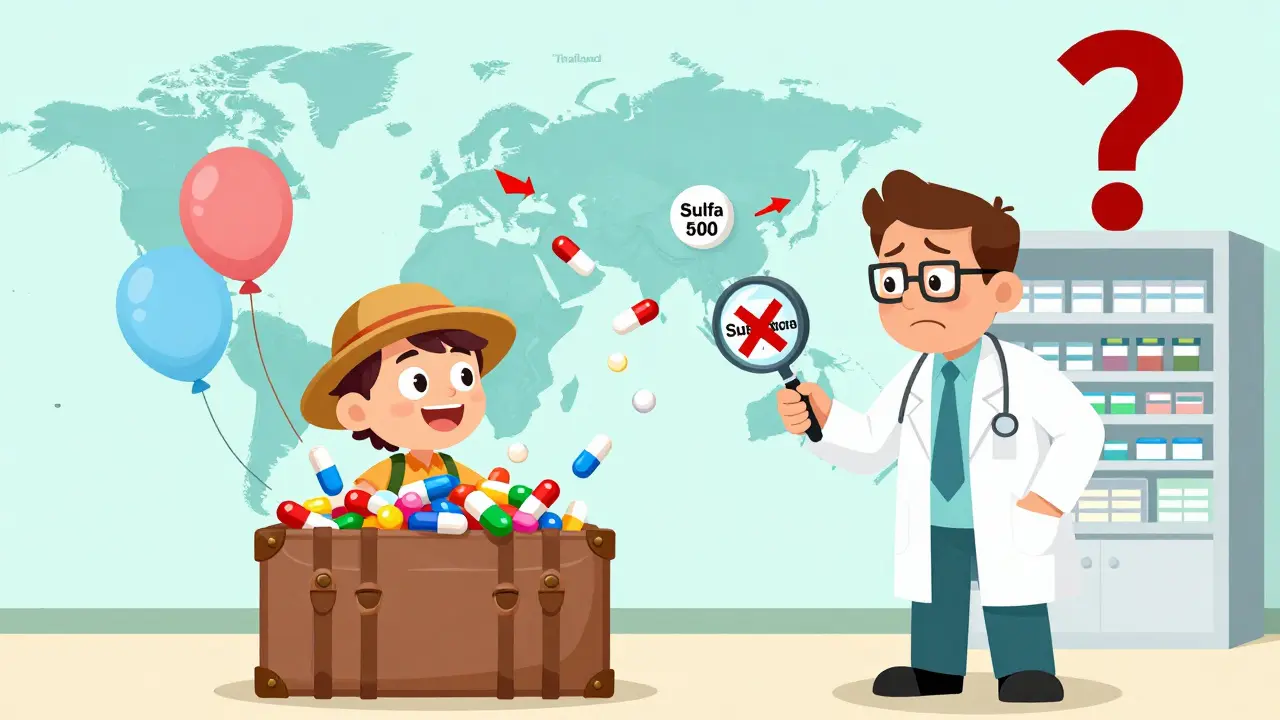
Every year, over 14 million people leave their home countries to get medical care elsewhere. They go for cheaper surgeries, faster appointments, or treatments not available at home. But while the savings can be huge - up to 70% on procedures like hip replacements or hair transplants - one major risk is often ignored: medication safety.
Why Medication Safety Is a Hidden Risk in Medical Tourism
You might fly to Thailand for a knee replacement, Turkey for a hair transplant, or India for cardiac surgery. The hospitals are clean, the doctors speak English, and the prices look too good to pass up. But what happens when you get home and need to refill your prescriptions? The truth is, drug regulations vary wildly between countries. A medication approved and safe in South Korea might be banned in the U.S. or not available in Canada. Some drugs sold abroad are counterfeit, diluted, or mislabeled. The World Health Organization estimates that 1 in 10 medical products in low- and middle-income countries are substandard or fake. Even in places with strong systems like Turkey or Mexico, the supply chain isn’t always transparent. Patients often come home with a handful of pills they can’t identify, no English labels, and no way to tell their local pharmacist what they’re taking. One woman from Ohio returned from Mexico after a dental procedure with antibiotics prescribed in Spanish, with no dosage instructions. She took them for a week - until her regular doctor spotted the mismatch and flagged a dangerous interaction with her heart medication.How Drug Standards Differ Around the World
Not all countries follow the same rules for drug approval, manufacturing, or labeling. In the U.S., the FDA requires rigorous testing before a drug hits the market. In other countries, the process can be faster - or less strict. - In India, many generic drugs are produced at low cost and exported globally, but quality control varies between manufacturers. - In Thailand and Malaysia, hospitals with JCI accreditation follow higher standards, including proper storage and labeling of medications. - In some Eastern European and Southeast Asian clinics, medications may be sourced from unregulated distributors to cut costs. - Even in EU-aligned countries like Turkey, the same drug might have a different brand name, strength, or inactive ingredients than what you’re used to. This isn’t just about names. A pill labeled “50 mg” in one country might contain only 30 mg of the active ingredient - or worse, a completely different chemical. Patients on blood thinners, diabetes meds, or epilepsy drugs are especially at risk. A small change in dosage can lead to hospitalization or death.What Happens When You Get Home?
About 26% of medical tourists report problems with follow-up care, and most of those involve medication. Here’s how it plays out:- You’re discharged with a 30-day supply of painkillers and antibiotics - but your insurance won’t cover refills because the drug isn’t on your formulary.
- Your doctor in the U.S. doesn’t recognize the brand name, so they guess the generic equivalent - and prescribe the wrong dose.
- You’re told to take a supplement or herbal remedy abroad, but it clashes with your regular meds when you return.
- You can’t find the exact drug at home, so you skip doses - which leads to infection, rejection of a transplant, or worsening of a chronic condition.
How to Protect Yourself Before You Travel
You don’t have to avoid medical tourism - but you do need to plan smarter. Here’s how:- Talk to your home doctor before you go. Bring a list of all your current meds, allergies, and conditions. Ask: “What if I get prescribed something new abroad? How will we manage it?”
- Ask for the generic name and active ingredient. Never rely on brand names. If you’re given “Sulfa 500,” ask for “sulfamethoxazole 500 mg.” Write it down.
- Request a copy of your prescription in English. Make sure it includes dosage, frequency, duration, and the manufacturer’s name.
- Check if the medication is approved in your country. Use the FDA’s database (for U.S. residents), Health Canada’s site, or your national drug regulator. If it’s not approved, ask your doctor if there’s a safe alternative.
- Don’t bring home unmarked pills. If the packaging has no label, no batch number, or no expiration date - leave it behind. It’s not worth the risk.
- Arrange telemedicine follow-up. Many JCI-accredited hospitals now offer post-discharge video consults. Use them to review your meds with the prescribing doctor before you land.
What to Look for in a Hospital
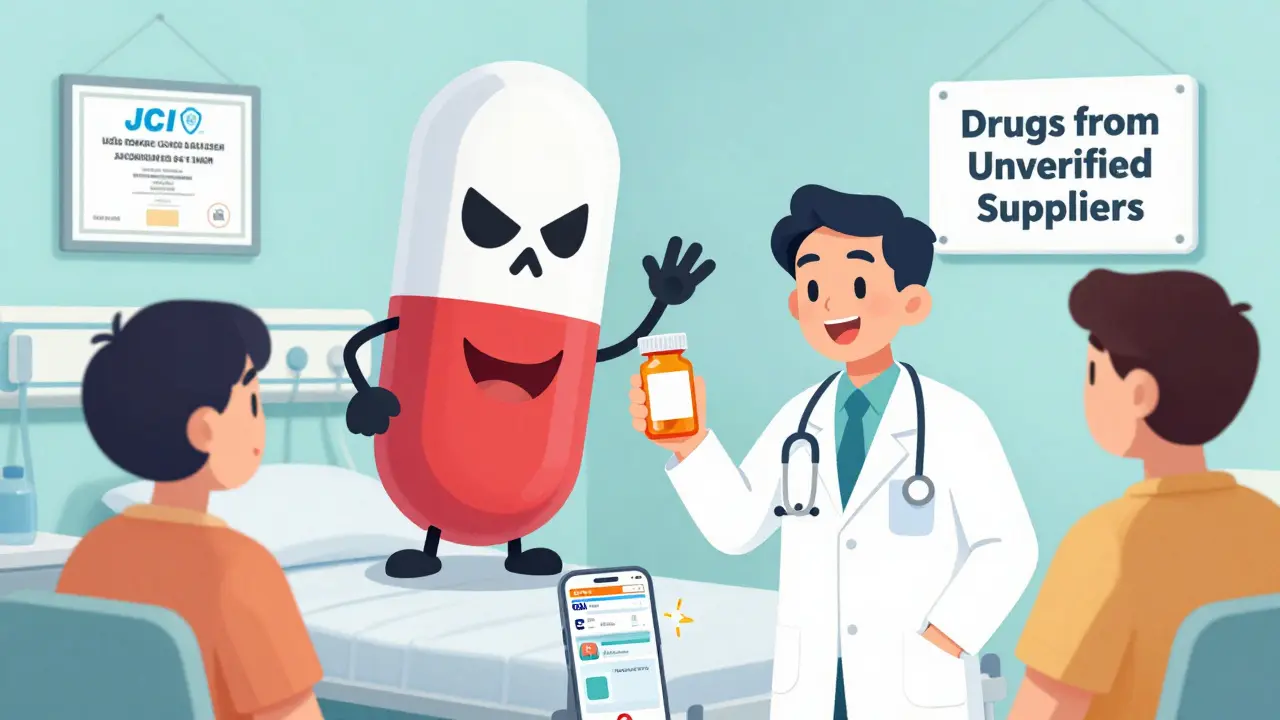
Not all medical tourism providers are equal. Accreditation matters - but not all accreditations are the same. - Joint Commission International (JCI) is the gold standard. Hospitals with JCI accreditation follow strict protocols for drug storage, labeling, and prescribing. Over 100 hospitals in Thailand and 50+ in India have this certification. - ISO 9001 focuses on quality management but doesn’t guarantee medication safety. - Local government licenses can be misleading. A clinic might be “licensed” but still source drugs from unverified suppliers. Ask: “Do you use only approved suppliers? Can I see your drug procurement policy?” If they hesitate, walk away.The Rise of Wellness Tourism and Hidden Risks
More people are combining medical care with spa treatments, detox programs, or stem cell therapies - often called “wellness tourism.” But this is where things get dangerous. Many wellness clinics offer injections, IV drips, or oral supplements that aren’t regulated as drugs. A “stem cell therapy” in Mexico might contain untested cells. A “hormone booster” in Thailand could be laced with steroids. These aren’t just ineffective - they can cause cancer, organ damage, or autoimmune reactions. Even natural supplements bought abroad can be risky. Turmeric capsules from Bali might contain heavy metals. Ashwagandha from India could be contaminated with pesticides. Your home doctor has no way to test or verify these.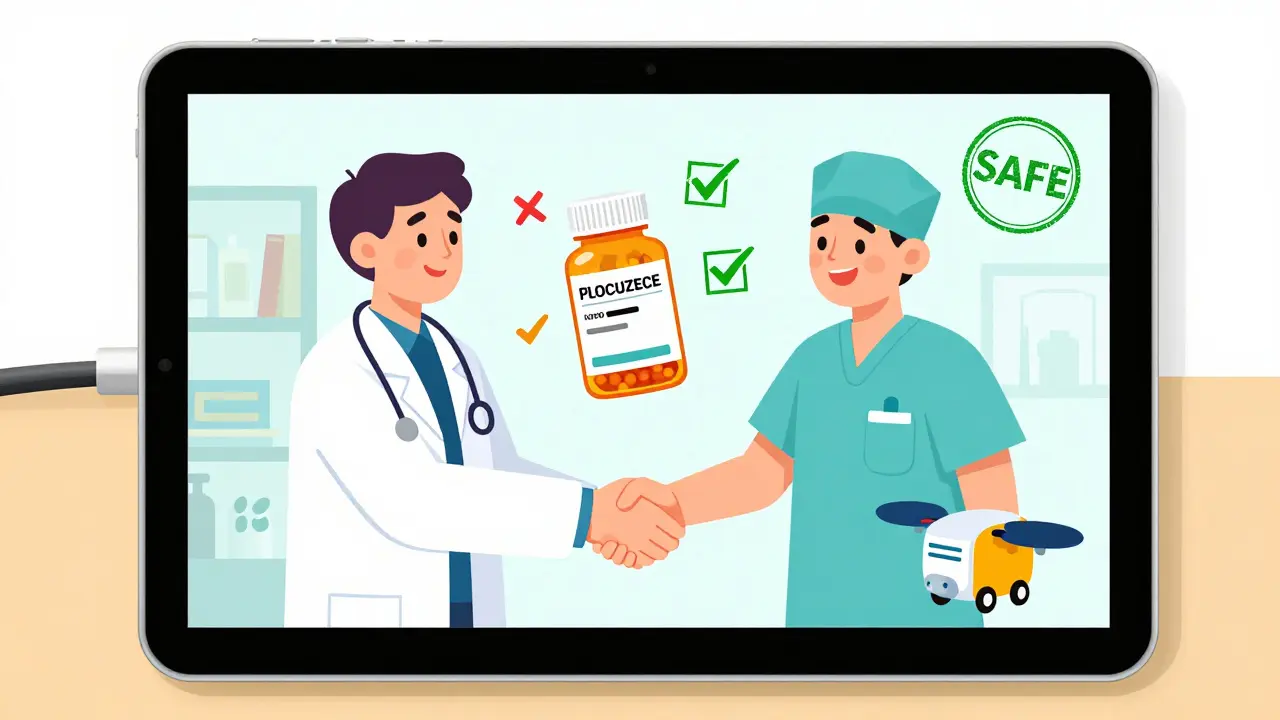
What’s Being Done to Fix This?
The industry is starting to wake up. Some hospitals now use digital health records that follow patients home. Severance Hospital in South Korea, for example, shares AI-generated treatment summaries with international patients’ home doctors. Others use blockchain to track drug authenticity from factory to patient. But progress is slow. There are no global standards for cross-border medication safety. No international agency enforces it. And most travel insurance policies don’t cover complications from overseas meds.Final Warning: The Cost Isn’t Just Financial
You might save $10,000 on a heart valve replacement by going to India. But if you end up back in the ER because the anticoagulant you were given didn’t match your blood type, that savings vanishes - along with your health. Medical tourism isn’t inherently bad. It’s a lifeline for many. But treating it like a vacation - booking flights, picking a hotel, and trusting the clinic’s brochure - is a deadly mistake. The real cost of medical tourism isn’t in the surgery. It’s in the pills you take home without knowing what’s in them.Plan ahead. Ask questions. Don’t assume. Your body isn’t a budget experiment.
Can I bring medication home from another country?
You can bring a personal supply of medication for your own use - usually a 90-day supply - but only if it’s legally prescribed and labeled. Always carry the original prescription and a letter from your doctor. Customs officials can seize unlabeled or unapproved drugs. Never ship meds internationally - it’s illegal and risky.
Are generic drugs from abroad safe?
Some are - but not all. Generic drugs made in JCI-accredited hospitals or by FDA-approved manufacturers are usually reliable. But many low-cost generics come from unverified suppliers. Check the manufacturer’s name and compare it to your home country’s approved list. If it’s not recognized, don’t take it.
What should I do if I can’t find my foreign-prescribed medication at home?
Don’t guess. Contact your doctor or pharmacist immediately with the drug’s generic name, dosage, and manufacturer. They can often find an equivalent. If not, they may need to contact the prescribing hospital abroad for details. Never substitute with a similar-looking pill - even if it’s the same brand name in another country.
Is JCI accreditation enough to guarantee medication safety?
JCI accreditation ensures strong hospital systems, including proper drug handling, storage, and record-keeping. But it doesn’t guarantee the drug itself is approved in your home country. Always verify the medication’s status with your local health authority, even if the hospital is JCI-certified.
Can I use telemedicine to manage my meds after returning home?
Yes - and you should. Many medical tourism providers now offer post-travel telehealth checkups. Schedule one before you leave. Have your home doctor join the call. This way, both providers can review your meds together and create a safe transition plan.
Are there any countries I should avoid for medication safety?
There’s no official blacklist, but avoid clinics in countries with weak regulatory oversight, especially for surgeries involving long-term medication. Be extra cautious in places with high rates of counterfeit drugs - including parts of Southeast Asia, Latin America, and Africa. Stick to JCI-accredited facilities and research the country’s drug approval system before booking.
Next Steps: What to Do Right Now
If you’re considering medical tourism:- Call your doctor today - not next week.
- Make a list of every medication you take.
- Research the destination’s drug regulations using your national health agency’s website.
- Ask the foreign hospital: “Will my meds be approved in [your country]?”
- Book a post-travel telehealth consult before you leave.
 Health and Wellness
Lana Kabulova
January 23, 2026 AT 00:37So let me get this straight-you’re telling me I can fly to India for a $3,000 heart valve replacement, come home with a pill I can’t read, and then spend six months adjusting because the formulation is ‘slightly different’? That’s not medical tourism-that’s Russian roulette with a prescription bottle. And don’t even get me started on the ‘wellness clinics’ selling stem cells in Bangkok. I’ve seen ads for ‘youth revival IV drips’ that cost more than my rent. If you’re going to gamble with your life, at least have the decency to read the fine print.
Oren Prettyman
January 23, 2026 AT 07:38It is, of course, entirely predictable that a piece of this nature would be framed as a cautionary tale, when in reality, the systemic failures of domestic healthcare infrastructure are the true root cause of this phenomenon. The notion that individuals should be admonished for seeking affordable, high-quality care abroad-while simultaneously being denied access to comparable services at home-is not merely ironic; it is a moral indictment of the American healthcare oligarchy. One does not simply ‘plan ahead’ when one’s insurance denies coverage for a necessary procedure, and then expects the patient to navigate labyrinthine regulatory frameworks in a foreign language. The burden is misplaced.
Tatiana Bandurina
January 24, 2026 AT 19:37Let’s be honest-most people who go abroad for medical care don’t care about JCI accreditation or generic names. They see a $10,000 surgery listed at $2,500 and click ‘book now.’ They don’t call their doctor. They don’t check the FDA database. They just assume the hospital knows what it’s doing. And when they get back with unmarked pills and a fever, they show up at the ER demanding answers. Meanwhile, their primary care physician has no idea what they took, and the ER docs are left guessing. This isn’t a public health issue-it’s a behavioral one. People treat their bodies like Amazon packages: cheap, fast, and disposable.
Philip House
January 25, 2026 AT 03:10Look, I get it. You want to save money. But if you’re gonna go to India for a hip replacement, you better be ready to deal with the fact that your ‘generic’ blood thinner might’ve been made in a garage in Mumbai. I’m not saying don’t go-I went to Thailand for a dental crown and it was fine. But I asked for the active ingredient. I took a photo of the bottle. I didn’t trust the English on the label. And I didn’t bring home anything without a batch number. If you’re too lazy to do that, don’t blame the system when you end up in the ICU. It’s not the hospital’s fault-you’re the one who didn’t do your homework.
Rob Sims
January 25, 2026 AT 19:27Oh wow. A 2,000-word essay on how not to die from a pill you didn’t read. Groundbreaking. Next you’ll tell us not to drink water from a faucet if we’re not sure it’s been filtered by the EPA. Newsflash: if you’re dumb enough to take a pill with no label, you deserve whatever happens. And let’s not pretend JCI accreditation is some magic shield-those hospitals still outsource meds to cut costs. The real problem? You think you’re smart enough to outsmart a global supply chain. You’re not. You’re just a tourist with a credit card and a death wish.
arun mehta
January 27, 2026 AT 12:50As an Indian professional who has worked in healthcare logistics, I can confirm that JCI-accredited hospitals in India follow stringent protocols-especially for critical medications. However, the real issue lies with third-party vendors and unregulated clinics that operate under the radar. Many patients are misled by marketing agencies posing as hospitals. Always verify the hospital’s official website and cross-check with the National Pharmaceutical Pricing Authority (NPPA) database. 🙏 Also, always carry a printed copy of your prescription in English. It saves lives. 🌏❤️
Chiraghuddin Qureshi
January 27, 2026 AT 17:37India has produced some of the world’s most reliable generic drugs-used by the WHO and the US military. But yes, the problem isn’t India-it’s the brokers. The clinics that promise ‘luxury care’ but use shady suppliers. I’ve seen patients come back with pills labeled ‘Amitriptyline 25mg’ that were actually acetaminophen. Don’t blame the country-blame the middlemen. And if you’re going, go through a hospital with a direct partnership with your home country’s health system. That’s the real safety net.
Kenji Gaerlan
January 29, 2026 AT 12:57bro why are we even talking about this like its a big deal. i went to mexico for a tooth implant and got some pills with no label. i just google the pill and it told me what it was. done. problem solved. if you cant figure out how to use google, maybe dont leave the house.
Hilary Miller
January 31, 2026 AT 07:28My cousin got a knee replacement in Colombia. Brought home 12 different pills. Took them all. Got sick. Doctor had to call the clinic in Colombia just to translate the labels. Now she has a spreadsheet of every med she’s ever taken abroad. Don’t be her.
Margaret Khaemba
February 1, 2026 AT 23:39This is so important. I work in a clinic and we get at least one patient a month who comes in with meds from abroad they can’t identify. We end up wasting hours trying to match them. If you’re going overseas, take a picture of every pill, every label, and send it to your doctor before you leave. It’s 5 minutes that could save your life.
Malik Ronquillo
February 2, 2026 AT 15:05Y’all are overthinking this. If you’re gonna go overseas for surgery, just don’t take any pills you don’t recognize. Boom. Problem solved. I mean, come on. You wouldn’t eat a sandwich from a stranger’s backpack-why would you swallow a mystery pill? Simple. Logic. Done.
shivani acharya
February 2, 2026 AT 15:07Let’s be real-this whole ‘medication safety’ thing is a distraction. The real story? The FDA and WHO are in bed with Big Pharma. They block cheaper drugs so you keep paying $1,000 for a pill that costs $3 to make. Those ‘counterfeit’ meds? They’re often the same as the branded ones-just made without the markup. The system’s rigged. You think JCI accreditation is about safety? Nah. It’s about branding. The real danger isn’t the pills-it’s the corporations that profit from your ignorance. 🤫💊
Sarvesh CK
February 4, 2026 AT 10:54The question we must ask is not merely whether foreign medications are safe-but whether our own systems have become so inaccessible, so financially oppressive, that they force individuals into ethically ambiguous choices. Medical tourism is not a failure of individual judgment; it is a symptom of systemic neglect. The fact that a patient must navigate a labyrinth of regulatory discrepancies, linguistic barriers, and institutional indifference to obtain basic care speaks not to their recklessness, but to the moral bankruptcy of the systems that claim to protect them. We must not pathologize the desperate-we must reform the structures that create desperation.
Akriti Jain
February 4, 2026 AT 13:15They’re lying. The WHO doesn’t even track fake meds properly. I read a whistleblower report-70% of ‘JCI-certified’ hospitals in India use the same middleman for all their drugs. That middleman? Owned by a US pharmaceutical exec. The pills are made in China, labeled in Dubai, shipped to India, then ‘exported’ as ‘local’. Your ‘generic’ blood thinner? It’s a repackaged Chinese knockoff with a fake batch code. And your ‘telemedicine follow-up’? A script read by a call center in Manila. They’re not trying to save you. They’re monetizing your fear.