
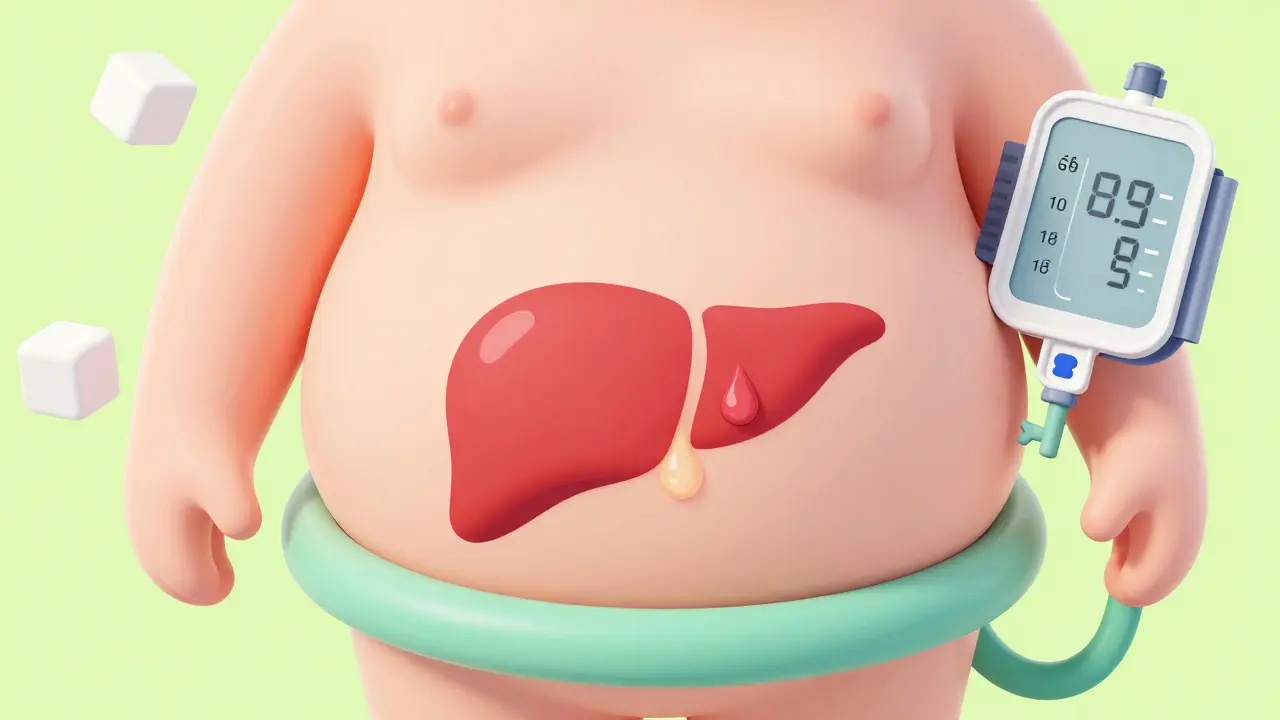
What is MASLD?
MASLD (Metabolic Dysfunction-Associated Steatotic Liver Disease) is the new name for what was once called NAFLD. It's defined by excess fat in the liver (at least 5% of liver cells) that isn't caused by alcohol. Instead, it's linked to metabolic issues like obesity, insulin resistance, and high blood sugar. This name change in June 2023 by the American Association for the Study of Liver Diseases (AASLD) reflects a deeper understanding: MASLD isn't just about the liver. It's a symptom of broader metabolic problems affecting your whole body.
Why MASLD is a silent threat
Most people with MASLD feel completely fine in the early stages. In fact, only 20% report symptoms like fatigue or mild pain in the upper right abdomen. This makes it dangerous. Without symptoms, many don't get tested until the disease has already caused damage. By the time jaundice (yellow skin) or swelling in the abdomen appears, the liver may be severely scarred. Think of it like high blood pressure - you won't feel it until it's too late. That's why regular check-ups matter, especially if you have risk factors like obesity or diabetes.
Major risk factors for MASLD
Here's what puts you at higher risk:
- Obesity: Especially around the waist. Men with waist sizes over 40 inches (102 cm) and women over 35 inches (89 cm) are at greater risk. This type of fat is linked to insulin resistance.
- Type 2 diabetes: About 70% of people with MASLD also have diabetes. High blood sugar damages the liver over time.
- Insulin resistance: When your body doesn't respond well to insulin, fat builds up in the liver. This happens in 90% of MASLD cases.
- High blood pressure: Systolic over 130 mmHg or diastolic over 80 mmHg increases risk. It's part of metabolic syndrome.
- High triglycerides: Levels above 150 mg/dL are common in MASLD patients.
These factors often cluster together. If you have three or more, you likely have metabolic syndrome - a major driver of MASLD. The good news? These are modifiable risks. You can change them.
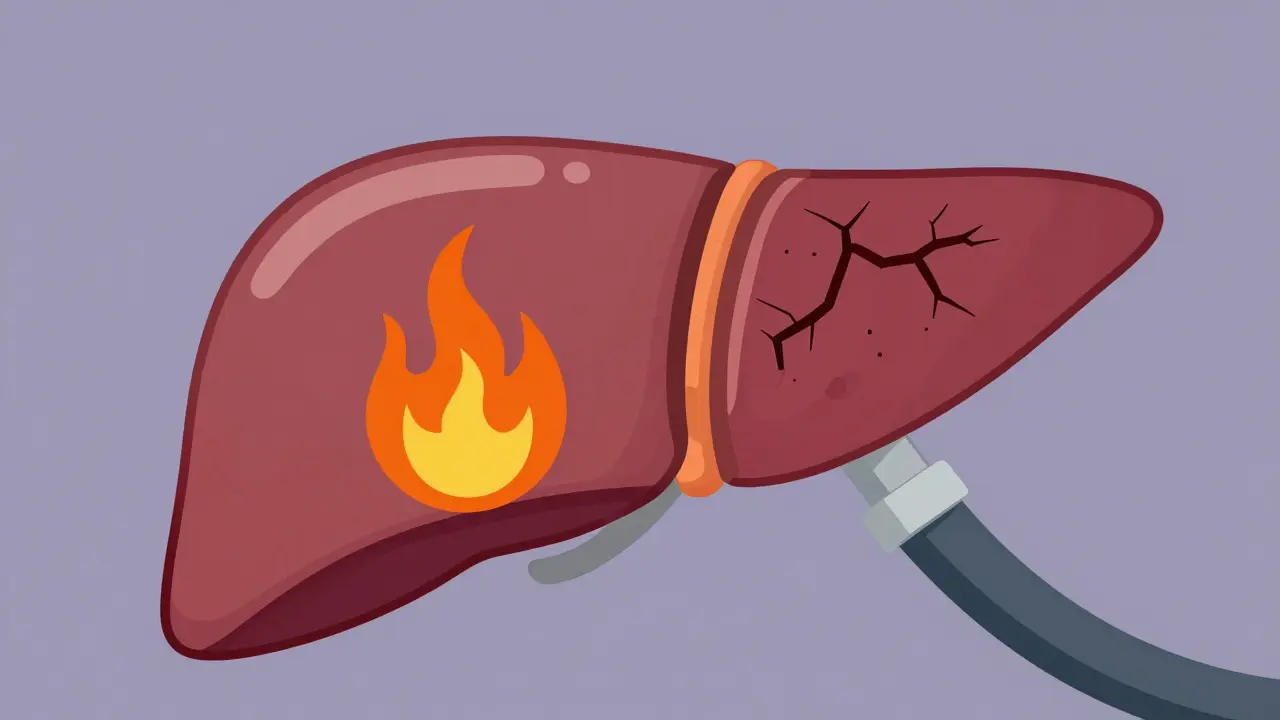
How MASLD progresses to serious liver damage
MASLD starts as simple fatty liver (steatosis). If left unchecked, it can become MASH (Metabolic Dysfunction-Associated Steatohepatitis), where inflammation and liver cell damage occur. Over years, this leads to liver fibrosis - scar tissue replacing healthy liver cells. Once fibrosis advances to cirrhosis, the liver can't function properly. About 15-25% of MASH cases develop cirrhosis within 10 years. At this stage, the risk of liver cancer rises significantly. The key takeaway: catching MASLD early is critical. Simple steatosis can be reversed with lifestyle changes, but cirrhosis is permanent.
Prevention strategies: Simple steps to protect your liver
Here's what works based on current research:
- Weight loss: Losing just 5-7% of your body weight reverses fat buildup in 81% of cases. For a 180-pound person, that's 9-12 pounds. Aim for gradual loss - 1-2 pounds per week.
- Exercise regularly: 150 minutes of moderate activity like brisk walking per week reduces liver fat by 30%. Even 30 minutes daily makes a difference.
- Adopt a Mediterranean diet: Mediterranean diet focuses on vegetables, whole grains, olive oil, fish, and nuts. It cuts liver fat by up to 30% in six months. Avoid sugary drinks and processed carbs.
- Control blood sugar: If you have diabetes, work with your doctor to keep HbA1c below 7%. This reduces liver stress.
- Monitor liver enzymes: Get ALT levels checked annually if you have risk factors. Levels above 30 U/L in women or 40 U/L in men signal potential liver issues.
Real-world success stories prove this works. A woman in Brisbane reduced her FibroScan score from 9.8 to 5.2 kPa in 12 months by losing 8% of her weight and following a Mediterranean diet. She now feels more energetic and has avoided further liver damage.

Early detection: Know your numbers
Since MASLD often has no symptoms, testing is key. Start with a routine blood test for liver enzymes (ALT and AST). Elevated ALT (above 30 U/L for women, 40 U/L for men) is a red flag. Your doctor may then recommend a FibroScan - a quick, painless ultrasound that measures liver stiffness. This replaces risky biopsies for most cases. If FibroScan shows high stiffness, further tests like MRI-PDFF can quantify liver fat. Early detection means catching MASLD before it progresses. Don't wait for symptoms; get tested if you have risk factors.
New treatments: Hope for advanced cases
For those with advanced MASLD, new options are emerging. In March 2024, the FDA approved resmetirom, the first drug for MASH. It reduced fibrosis progression in 24% more patients than placebo. While lifestyle changes remain the foundation, this drug offers hope for those with significant scarring. Other treatments are in development, including non-invasive blood tests for fibrosis detection expected in 2025. The future is bright - but prevention is still the best strategy.
Frequently Asked Questions
Is MASLD the same as NAFLD?
No, MASLD is the updated name for what was previously called NAFLD. In June 2023, the American Association for the Study of Liver Diseases changed the terminology to better reflect the underlying cause: metabolic dysfunction rather than just the absence of alcohol. This change helps doctors focus on treating the metabolic issues driving the disease, not just the liver fat itself.
Can MASLD be reversed?
Yes, especially in early stages. Simple steatosis (fatty liver without inflammation) is reversible with lifestyle changes. Losing 5-7% of body weight typically reverses fat buildup. Even in MASH (inflammation stage), 45% of cases show improvement with 10% weight loss. However, once cirrhosis develops, scarring is permanent - though progression can be slowed.
What foods should I avoid with MASLD?
Avoid sugary drinks (sodas, fruit juices), processed carbs (white bread, pastries), and fried foods. These spike blood sugar and increase liver fat. Instead, focus on whole foods like vegetables, legumes, whole grains, lean proteins, and healthy fats like olive oil and avocados. The Mediterranean diet is specifically recommended for MASLD management.
How much weight loss is needed to improve MASLD?
Losing 5-7% of your body weight reverses fatty liver in most cases. For example, a 200-pound person needs to lose 10-14 pounds. For more advanced inflammation (MASH), 10% weight loss is needed to resolve it in about 45% of cases. The key is consistency - gradual, sustainable weight loss works best.
Is there a blood test for MASLD?
There's no single blood test for MASLD, but liver enzyme tests (ALT and AST) can indicate liver stress. Elevated ALT levels (above 30 U/L for women, 40 U/L for men) often prompt further testing. New blood tests for fibrosis detection are in development, but currently, imaging like FibroScan or MRI-PDFF is used alongside blood work for diagnosis.
 Health and Wellness
Jennifer Aronson
February 4, 2026 AT 22:07From a cultural perspective, many traditional diets around the world already incorporate MASLD-preventive elements. For example, Mediterranean and Asian cuisines emphasize whole foods, healthy fats, and minimal processed sugars. Recognizing these patterns can help tailor prevention strategies to diverse communities. In Japan, the diet rich in fish and vegetables naturally supports liver health. Similarly, in parts of the Middle East, olive oil and legumes are staples that align with current recommendations. It's fascinating how these cultural practices predate modern medical advice. Many communities unknowingly follow MASLD prevention strategies through their traditional eating habits. This cultural overlap offers a unique opportunity for global health initiatives. By integrating local food traditions with evidence-based guidelines, we can create sustainable solutions. The key is to respect cultural contexts while promoting health. For instance, in Latin America, replacing fried foods with grilled options can make a significant difference. These small changes can be implemented without losing cultural identity. It's crucial to engage communities in these discussions to ensure effectiveness. Long-term success requires not just individual effort but collective cultural adaptation. This approach can make MASLD prevention more accessible and relatable worldwide.
Kate Gile
February 6, 2026 AT 13:45I've been following the exercise recommendations and it's making a real difference. Just 30 minutes of brisk walking daily has improved my energy levels and liver enzymes. Consistency is key-small steps lead to big results!
Pamela Power
February 6, 2026 AT 19:44Everyone needs to cut out sugar completely. Processed carbs are the real enemy. Stop making excuses and take responsibility for your health. This isn't rocket science.
Nancy Maneely
February 7, 2026 AT 09:18OMG this is so important! I can't believe how many people don't know about MASLD. Like, seriously, why isn't this on evry news channel? We need to spread awareness ASAP!
Phoebe Norman
February 8, 2026 AT 15:57I've been experiencing insulin resistance for years and the liver enzymes have been elevated. The study shows that weight loss of 5-7% can reverse steatosis However adherence is difficult without proper support systems
Dr. Sara Harowitz
February 10, 2026 AT 05:06This is a critical issue! America needs to take leadership in MASLD research and education. The current guidelines are insufficient! We must prioritize national health initiatives immediately!
Johanna Pan
February 11, 2026 AT 01:23In many Asian cultures, traditional diets already include many MASLD-friendly foods. For example, using fermented soy products and green tea regularly. It's heartening to see these practices align with medical advice
divya shetty
February 11, 2026 AT 01:59You should seek a specialist immediately. Relying on lifestyle changes alone is not enough. Many people in India have successfully reversed MASLD with strict medical supervision
Albert Lua
February 12, 2026 AT 15:36Losing 5-7% body weight reverses MASLD in most cases.