
What Manufacturer Safety Reporting Actually Means
When you buy a heart monitor, a children’s toy, or a car tire, you assume it’s safe. But safety doesn’t just happen. It’s enforced by law. Manufacturers-whether they make pacemakers, strollers, or airbags-are legally required to report any safety issue tied to their products. This isn’t voluntary. It’s mandatory. And failing to do it can cost them hundreds of thousands of dollars in fines, or worse, put lives at risk.
The system isn’t one-size-fits-all. Different agencies handle different products. The FDA oversees medical devices. The CPSC watches over everyday consumer goods. The NHTSA tracks vehicle safety. Each has its own rules, timelines, and definitions of what counts as a reportable event. But the goal is the same: catch problems early before more people get hurt.
Medical Devices: The FDA’s 30-Day Rule (and the 5-Day Emergency Clause)
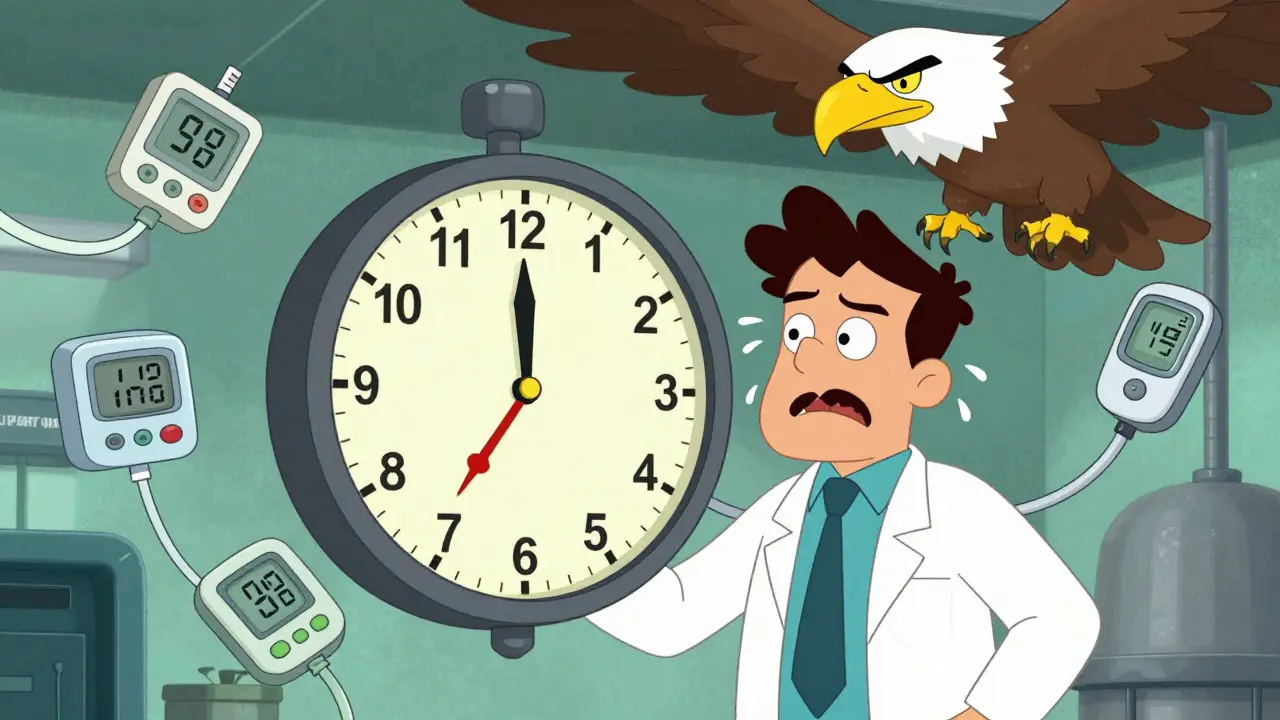
If you make a glucose meter, a surgical robot, or a hip implant, the FDA’s Medical Device Reporting (MDR) system applies. Under 21 CFR Part 803, manufacturers must report any incident where their device may have caused or contributed to a death or serious injury. That includes malfunctions that, if they happened again, could cause harm.
Timeline matters. You have 30 calendar days to file a report after becoming aware of the issue. But if the problem requires immediate action-like a recall or repair-you’ve got just five working days. That’s not a suggestion. That’s a legal deadline.
What counts as "becoming aware"? It’s not just when the CEO hears about it. The FDA says if any employee who could reasonably pass the info along to compliance staff learns about it, the clock starts. That means a customer service rep who gets a complaint, a field technician who sees a pattern of failures, even a nurse’s note in a hospital-any of these can trigger the reporting clock.
Reports must be submitted electronically through the FDA’s Electronic Submission Gateway. Paper forms are outdated. The system requires specific formats tied to the E3 standard. Many companies spend months setting up the IT infrastructure to handle this. One MedTech firm told the FDA Industry Forum they needed 2.5 full-time IT staff just to keep the system running.
Consumer Products: The 24-Hour Deadline That Keeps Manufacturers Up at Night
For everything else-baby strollers, coffee makers, Bluetooth speakers-the Consumer Product Safety Commission (CPSC) takes charge. Their rules are simpler in structure but far more aggressive in timing.
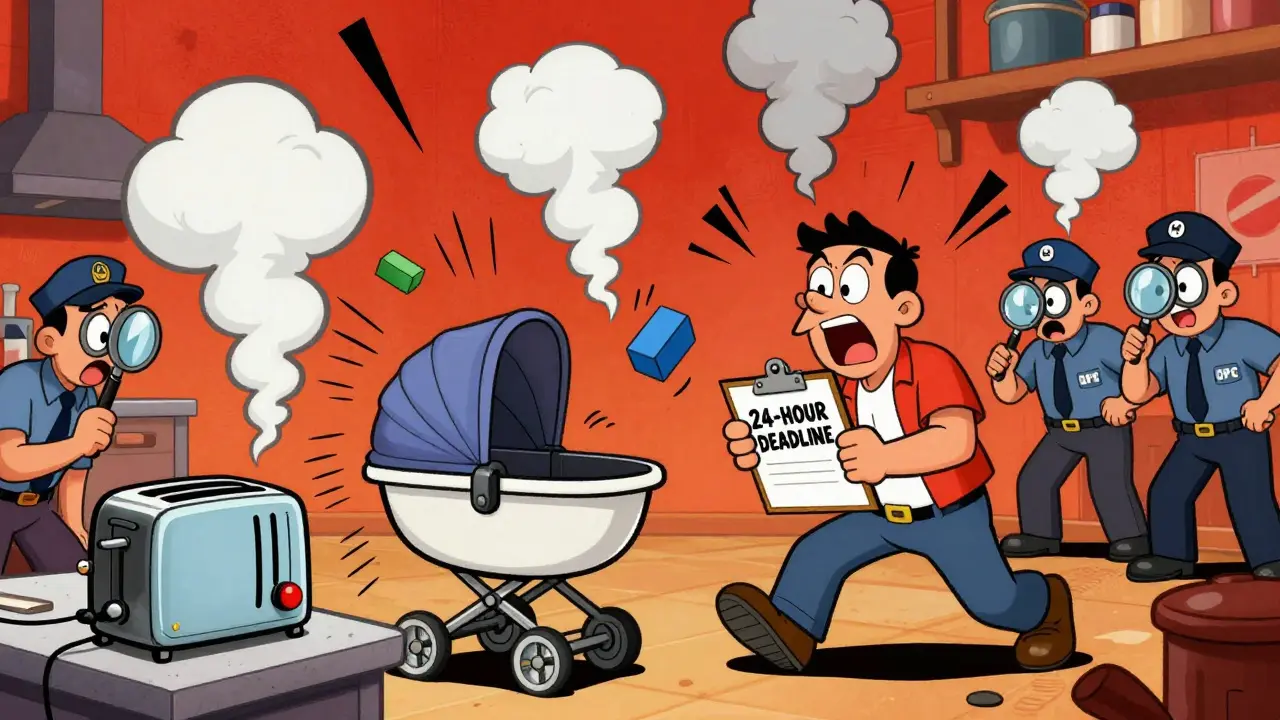
Under Section 15(b) of the Consumer Product Safety Act, manufacturers must report within 24 hours of obtaining "reportable information." That’s not when an injury happens. It’s when you learn a product has a defect that could create a substantial risk of injury or death-even if no one’s been hurt yet.
That’s a big difference from the FDA. You don’t need proof of harm. You just need reason to believe harm is possible. A batch of toasters that overheats? Report it. A crib slat that breaks under normal use? Report it. A toy with small parts that could be swallowed? Report it.
And the clock starts ticking the moment someone in your company-sales, quality, even a warehouse worker-gets info that could lead to a safety issue. CPSC’s 2022 Annual Report showed 37% of initial reports were incomplete, forcing follow-ups. That’s because companies scramble to meet the deadline and miss details. One appliance manufacturer admitted they hired two full-time staff just to handle CPSC reporting. Small businesses? They’re often the ones who get hit hardest.
Automotive: The Quarterly Data Trap
Car makers and tire manufacturers don’t report incidents as they happen. They report them in bulk. The NHTSA’s Early Warning Reporting (EWR) system requires quarterly submissions of crash, injury, and death data linked to specific vehicle models or components.
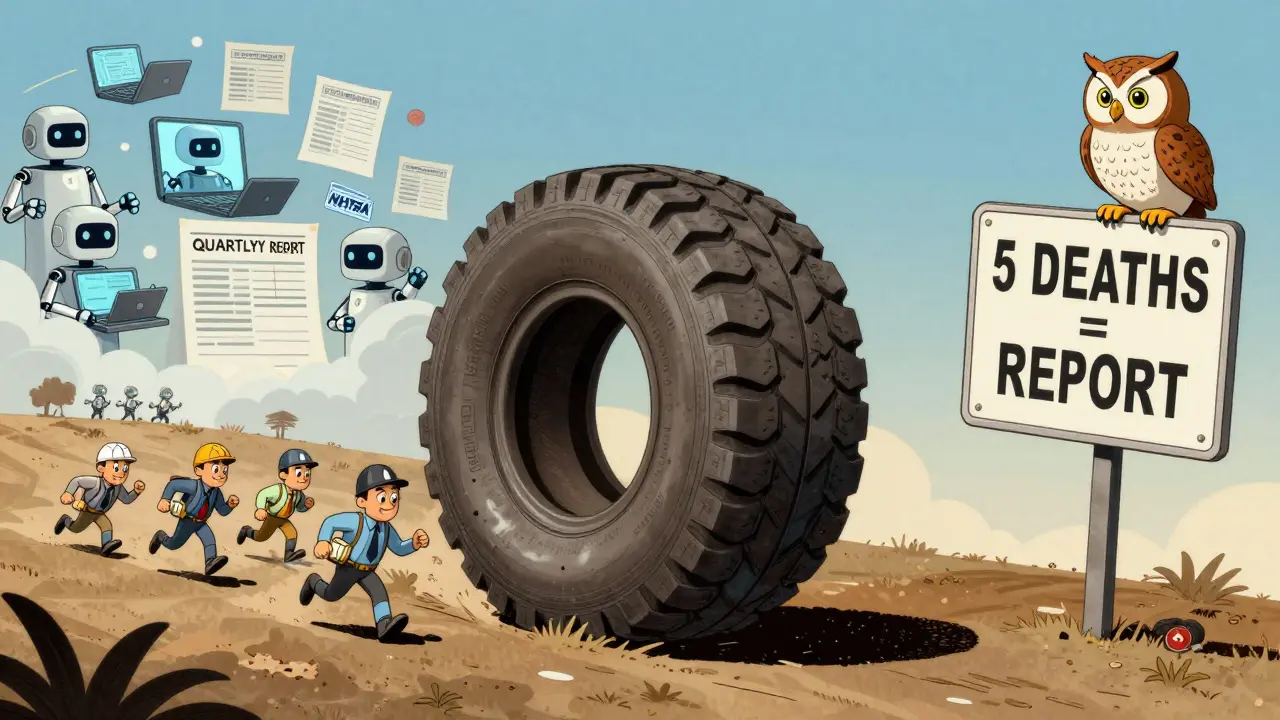
It’s not about every single incident. It’s about thresholds. For example, if a tire manufacturer gets reports of five or more deaths, ten or more injuries, or ten or more property damage claims tied to a single tire model in a quarter-they have to report. That’s when NHTSA steps in.
This system doesn’t require immediate action like the FDA or CPSC. But it creates a paper trail. Miss a quarter? Get flagged. Get too many reports? Expect a recall. The system’s designed to spot patterns before they become headlines.
Why Reporting Burdens Vary So Much
Why does the FDA give you 30 days and CPSC only 24 hours? It comes down to risk level and historical failure.
Medical devices are often life-critical. A faulty infusion pump can kill. But manufacturers have complex quality systems in place. The FDA expects them to investigate each report thoroughly. That takes time. So they get 30 days-but they must document every step, from complaint intake to root cause analysis, under 21 CFR 820.198.
Consumer products? They’re everywhere. Millions of units sold. A single defect can affect tens of thousands. The CPSC doesn’t wait for investigations to finish. They want to know about the risk as soon as it’s suspected. Speed over perfection.
And then there’s the Voluntary Malfunction Summary Reporting program, introduced by the FDA in August 2024. It lets medical device makers submit summary reports for low-risk malfunctions instead of individual ones. Medtronic cut their individual reports by 63% after joining. CPSC has no such option. That’s a major difference in burden.
The Real Cost of Compliance
Compliance isn’t free. It’s expensive. And it’s growing.
A 2023 survey by the Medical Device Manufacturers Association found 68% of companies spend over $50,000 a year just on FDA reporting. Small businesses (under 50 employees) spend nearly 19% of their entire quality department budget on it. One company reported spending 1,200 hours a year on MDR paperwork alone.
For CPSC reporting, the cost is more about staffing. The Association of Home Appliance Manufacturers found 54% of members got warning letters for late reporting. That’s not just fines-it’s reputational damage.
Software helps. Quality Management Systems (QMS) cost between $185,000 for small firms and over $750,000 for large ones. But even with software, the human element is unavoidable. Training staff to interpret what’s reportable takes 40 to 80 hours. And every inspector interprets the rules slightly differently. One quality manager on Reddit said three FDA inspectors gave three different answers on the same malfunction. That’s the reality.
What’s Changing in 2025 and Beyond
The system is evolving. The FDA is pushing for faster reporting on high-risk devices. H.R. 2987, the Medical Device Safety Act of 2023, proposes cutting the reporting window from 30 to 15 days for certain devices. It’s moving through Congress with bipartisan support.
CPSC is spending $25 million in FY2025 to modernize its reporting portal, aiming to cut review times from 17.3 days to 10 by 2026. They’re also working on better electronic submission tools.
And then there’s AI. Philips Healthcare is already using machine learning to scan hospital reports and flag potential device issues before they’re formally reported. Their MDR prep time dropped from over 8 hours to under 4. Deloitte predicts AI will cut reporting time by 60% by 2027. That’s not science fiction-it’s happening now.
What Happens If You Don’t Report?
Ignoring your obligations isn’t an option. The FDA can fine you up to $252,756 per violation. The CPSC can impose civil penalties too. But the real damage isn’t the fine. It’s the recall. The lawsuit. The loss of trust.
In 2023, the FDA received 1.2 million medical device reports. That’s up 37% since 2018. CPSC got over 14,000 consumer product reports. These numbers aren’t just statistics. They’re warnings. Each one represents a product that could have hurt someone.
Manufacturers who treat reporting as a box to check are setting themselves up for failure. Those who treat it as a safety tool-analyzing trends, fixing root causes, sharing insights-build stronger products and stronger brands.
Bottom Line: Reporting Is Your First Line of Defense
Manufacturer safety reporting isn’t red tape. It’s risk management. It’s how you protect your customers, your employees, and your business. Whether you’re making a pacemaker or a toaster, the rules are clear: if you know-or should know-something could harm someone, you have to tell the authorities.
Don’t wait for a recall. Don’t wait for a lawsuit. Build your reporting system now. Train your team. Document everything. Use the tools available. Because when safety fails, the cost isn’t measured in dollars-it’s measured in lives.
 Health and Wellness
Jaspreet Kaur Chana
January 15, 2026 AT 19:04Man, I never thought about how much work goes into keeping everyday stuff safe. I bought a baby stroller last year and assumed it was fine, but now I realize someone had to track every single defect, report it, and fix it before it hurt someone. In India, we don’t have this kind of oversight in half the products we use - I’ve seen toys with sharp edges, chargers that melt, and medical devices that just… stop working. It’s scary. But reading this made me appreciate the systems that do exist. We need more of this globally, not less.
Haley Graves
January 17, 2026 AT 13:41This is exactly why we need stricter enforcement, not more bureaucracy. Manufacturers know the rules. They have the resources. If they’re not reporting, it’s because they’re cutting corners to maximize profit. The 24-hour CPSC deadline isn’t too tight - it’s the bare minimum. Companies that can’t handle it shouldn’t be selling products that could kill children.
Diane Hendriks
January 18, 2026 AT 02:48The fact that the FDA allows 30 days for life-threatening device failures is a national disgrace. The Constitution guarantees life, liberty, and the pursuit of happiness - not corporate convenience. If your device kills someone, you should be reporting it within 4 hours, not 30 days. The system is broken because we’ve let corporations dictate safety standards. This isn’t regulation - it’s surrender.
Sohan Jindal
January 19, 2026 AT 13:54They're lying. All of it. The FDA, CPSC, NHTSA - they're all in bed with Big MedTech. The real reason they make you report is so they can track you. They know who's making what, and when you report, they tag your company for future surveillance. That's why they push electronic systems - so they can spy on your employees' emails, your warehouse logs, your customer service calls. This isn't safety. It's control.
Amy Ehinger
January 19, 2026 AT 22:10I work in a small medical device shop and I can tell you - the paperwork is insane. We have a guy whose only job is to sort through customer complaints and decide if they’re reportable. He’s been doing it for five years. He says half the time he’s just guessing. One time he reported a glucose meter that gave a slightly high reading - turned out the user had eaten candy right before testing. But you can’t risk it. I get why the rules are strict, but the system feels like it’s punishing the small guys while the big players just hire armies of lawyers to wiggle around it.
RUTH DE OLIVEIRA ALVES
January 20, 2026 AT 06:32It is imperative to underscore the ethical imperative underpinning mandatory safety reporting. The legal obligations delineated herein are not mere procedural formalities; they constitute a moral covenant between manufacturers and the public. To neglect these duties is to abdicate one’s responsibility to human dignity. The variances in regulatory frameworks across jurisdictions reflect not inefficiency, but calibrated risk mitigation - a testament to the sophistication of modern public health governance.
Crystel Ann
January 21, 2026 AT 20:17I just want to say thank you to everyone who works in compliance. I know it’s boring, it’s stressful, and no one ever praises you for it. But you’re the reason my grandma’s pacemaker didn’t fail. You’re the reason my nephew’s stroller didn’t collapse. This post made me cry a little - not because it’s sad, but because it’s true. Keep doing the quiet, unglamorous work. We see you.
Nat Young
January 23, 2026 AT 06:11Everyone’s acting like this is some noble system. Let me break it down - the FDA lets you report a death in 30 days? That’s a loophole. The CPSC wants a report in 24 hours for a toaster that might catch fire? That’s a trap. And the NHTSA only cares if five people die? That’s not a system. That’s a game of chicken with corpses. The real story is that these agencies are underfunded and overwhelmed, so they create rules that look tough but are easy to ignore. And the companies? They’re laughing all the way to the bank.
Niki Van den Bossche
January 25, 2026 AT 03:20There’s a metaphysical void in the architecture of safety reporting - a chasm between the bureaucratic imperative and the existential weight of human vulnerability. We reduce life-altering tragedies to checkboxes on an E3-formatted XML file. We quantify suffering as ‘incident thresholds’ and ‘reportable events.’ The soul of the product - the breath of the child who used it, the heartbeat of the patient who relied on it - is erased in the name of compliance. We are not managing risk. We are ritualizing indifference.
Jan Hess
January 25, 2026 AT 15:09Big thanks to the author for laying this out so clearly. I’m in quality control at a small med device company and this is our daily reality. We use software to track complaints but half the time we’re just emailing each other like ‘yo did you see that one nurse’s note?’ The 30-day clock is real and we’ve had close calls. The new FDA summary reporting thing? Game changer. Cut our workload in half. Let’s make more programs like that. More support, less punishment.
Iona Jane
January 27, 2026 AT 01:16They’re hiding something. Why does the FDA allow summary reporting for low-risk devices but not CPSC? Why is AI being used to cut reporting time? Who’s training the AI? Who’s feeding it the data? This isn’t about safety - it’s about hiding the real numbers. The 1.2 million reports? That’s just the tip. The rest? Buried. Suppressed. Deleted. You think they want you to know how many kids are getting hurt by toys? No. They want you to feel safe. So they make the system look clean. It’s not. It’s all smoke and mirrors.
ellen adamina
January 28, 2026 AT 15:11Wait - so if a warehouse worker sees a toaster with a frayed wire and doesn’t report it, does the clock still start? Because that’s wild. I work in logistics and we get damaged goods all the time. If I saw that and thought ‘eh, it’s probably fine’ - am I now legally responsible? This is terrifying. I need a flowchart.
Gloria Montero Puertas
January 29, 2026 AT 07:47Let’s be honest: most of these companies don’t care. They outsource compliance to offshore firms that speak broken English and don’t understand the difference between ‘serious injury’ and ‘minor irritation.’ The FDA’s system is a joke. The CPSC? A farce. And NHTSA? A glorified spreadsheet. If you’re a manufacturer and you’re not gaming the system, you’re an idiot. The rules are written by lawyers, for lawyers - not for safety.
Tom Doan
January 30, 2026 AT 12:33How ironic. We have AI systems that can predict device failures before they occur - yet we still rely on human beings to interpret vague regulatory language. One inspector says ‘malfunction’ means ‘any deviation.’ Another says ‘only if it causes harm.’ This isn’t regulation. It’s Russian roulette with compliance. And the worst part? The people who pay the price aren’t the CEOs. They’re the frontline workers who get fired when the audit fails.
Frank Geurts
January 31, 2026 AT 00:04As a global supply chain specialist, I have observed with great interest the divergent regulatory paradigms across jurisdictions. The American model, while rigorous, imposes disproportionate burdens on small and medium-sized enterprises. In contrast, the European Union’s Medical Device Regulation (MDR) harmonizes reporting obligations through centralized databases and standardized ontologies. The United States would benefit immensely from adopting similar interoperability frameworks - thereby reducing redundancy, enhancing data integrity, and promoting equitable compliance across enterprise sizes.