
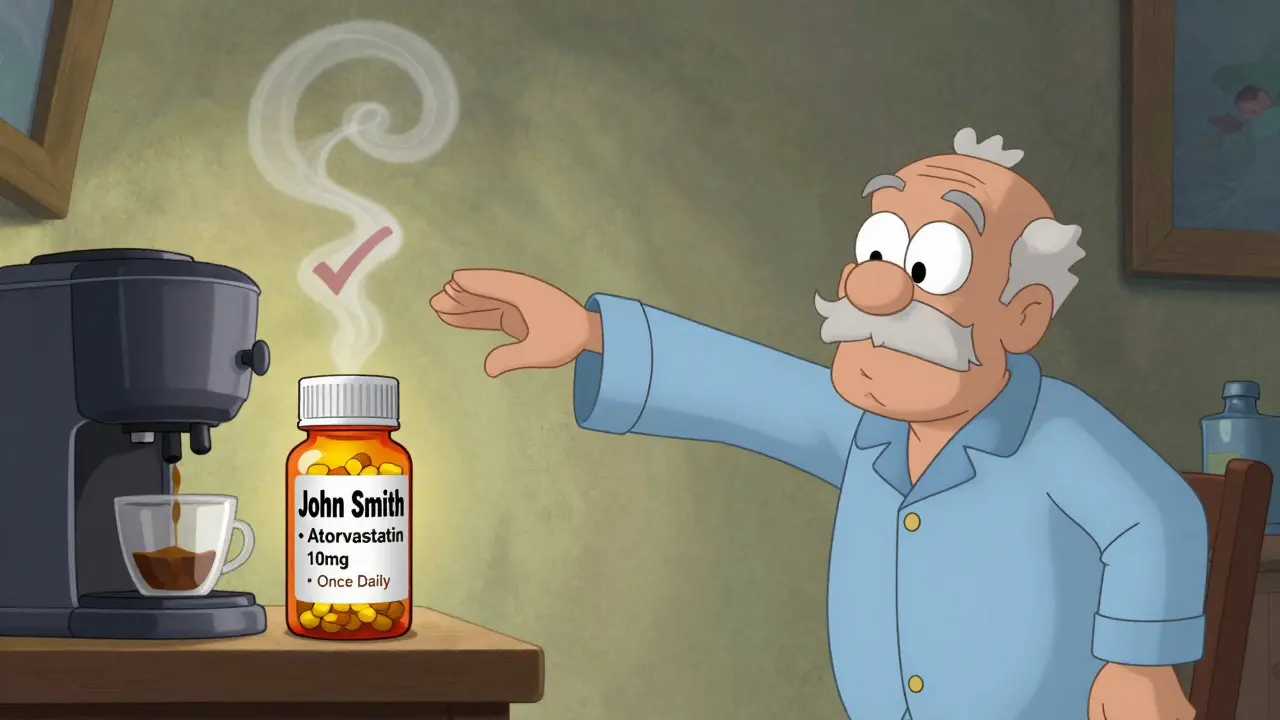
Every year, thousands of people in the U.S. end up in the hospital-or worse-because they took the wrong pill. Not because they meant to. Not because they’re careless. But because they didn’t stop to check the label. It’s easy to assume, "I know what this is." But your brain gets lazy. Especially when you’re tired, stressed, or taking five different pills at once. The truth? Checking your medication label before every dose isn’t just a good idea. It’s your best defense against a mistake that could kill you.
Why This One Habit Saves Lives
You don’t need to be a doctor to understand this: labels change. Your doctor switches your blood pressure med. The pharmacy gives you a new bottle. The generic version looks different. Even a tiny difference in color or shape can mean a dangerous mix-up. According to the FDA, medication errors cause between 7,000 and 9,000 deaths each year in the U.S. And over a third of those happen because someone didn’t check the label. It’s not just about big mistakes. Sometimes it’s a simple one: taking your morning insulin instead of your saline solution. Or swallowing a double dose because you forgot you already took it. Or mixing up two pills with similar names-like hydrocodone and hydromorphone. These aren’t rare. They happen daily. And they’re almost always preventable. The good news? A 2023 study from SmithRx found that people who check their label before every dose cut their risk of a medication error by 76%. That’s more than double the protection you get from using a pill organizer or a reminder app alone. This isn’t theory. It’s data. And it’s backed by real patients who’ve avoided hospital visits because they paused, looked, and confirmed.What to Look for on Every Label (The 10 Essentials)
You don’t need to memorize everything. But you do need to check these 10 things every single time:- Your full name - Is it spelled right? Does it match your ID?
- Drug name - Both brand and generic (e.g., "Lipitor" and "atorvastatin").
- Prescriber’s name - Did your doctor actually order this?
- Dosage - How many milligrams? How many pills? Don’t guess.
- Quantity and refills - Is this the same amount as last time?
- Warnings - "Avoid alcohol." "Take on empty stomach." "May cause dizziness." These matter.
- Date filled - If it’s older than 30 days, ask if it’s still good.
- Expiration date - Never take expired meds. They lose strength or become unsafe.
- Pharmacy info - Name and number. If something looks off, call them.
- Administration instructions - "Take once daily at bedtime" vs. "Take three times a day with food." Big difference.
That’s it. Ten items. Takes 3 to 5 seconds. Do it every time. No exceptions.
How to Make It Stick: The Three-Touch Method
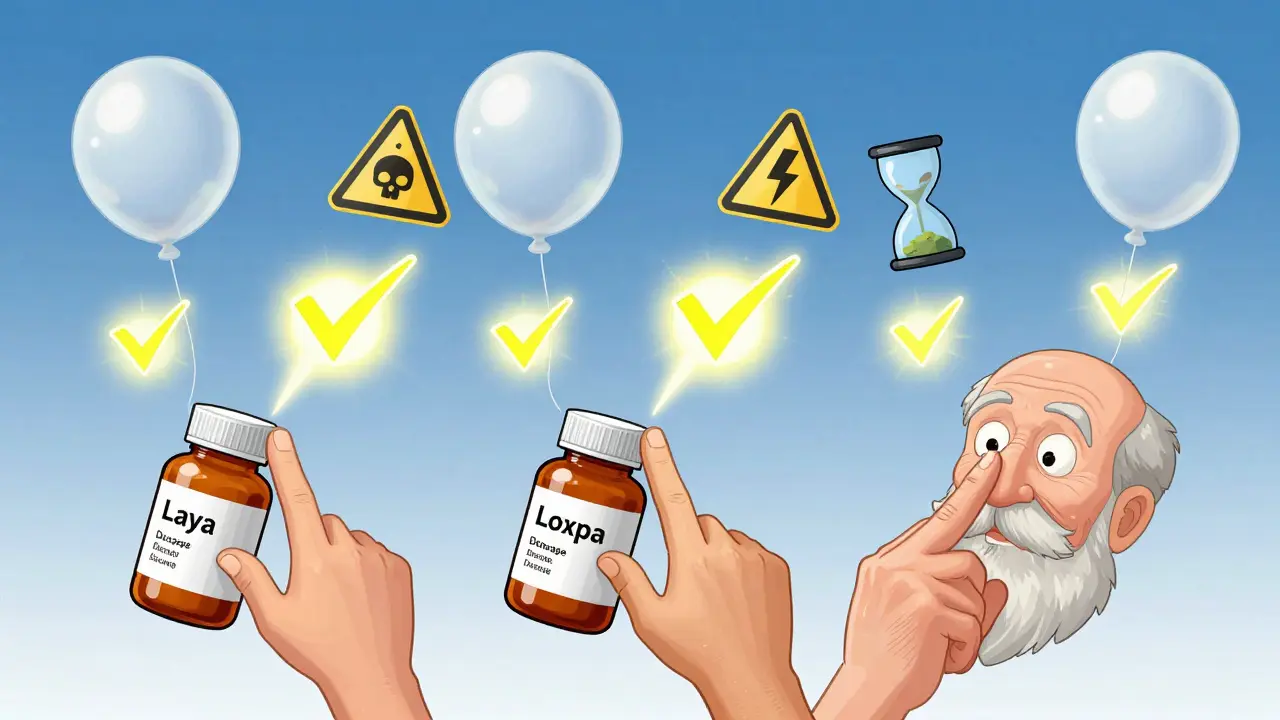
Habits don’t form from willpower. They form from repetition. And repetition needs structure. The American Society of Health-System Pharmacists (ASHP) recommends a simple technique called the Three-Touch Method. Here’s how it works:- Touch the label with your finger - physically point to your name.
- Touch the dosage - say out loud: "This is 10 mg of atorvastatin."
- Touch the instructions - say: "I take this once a day, at night."
That’s it. Three touches. Three words spoken aloud. It forces your brain to engage. You’re not just glancing-you’re confirming.
A clinical trial from SmithRx showed that people who used this method had a 92% adherence rate after 30 days. Those who just looked silently? Only 64%. Speaking it out loud makes it real. Your brain remembers what it hears. And what it says.
When You’re at Risk (And What to Do)
Some people need this habit more than others. If any of these apply to you, you’re in the high-risk group:- You take 5 or more medications daily
- You’re over 65
- You have memory issues or dementia
- You’ve had a medication error before
- You’re managing chronic conditions like diabetes, heart disease, or kidney failure
Here’s what works for these groups:
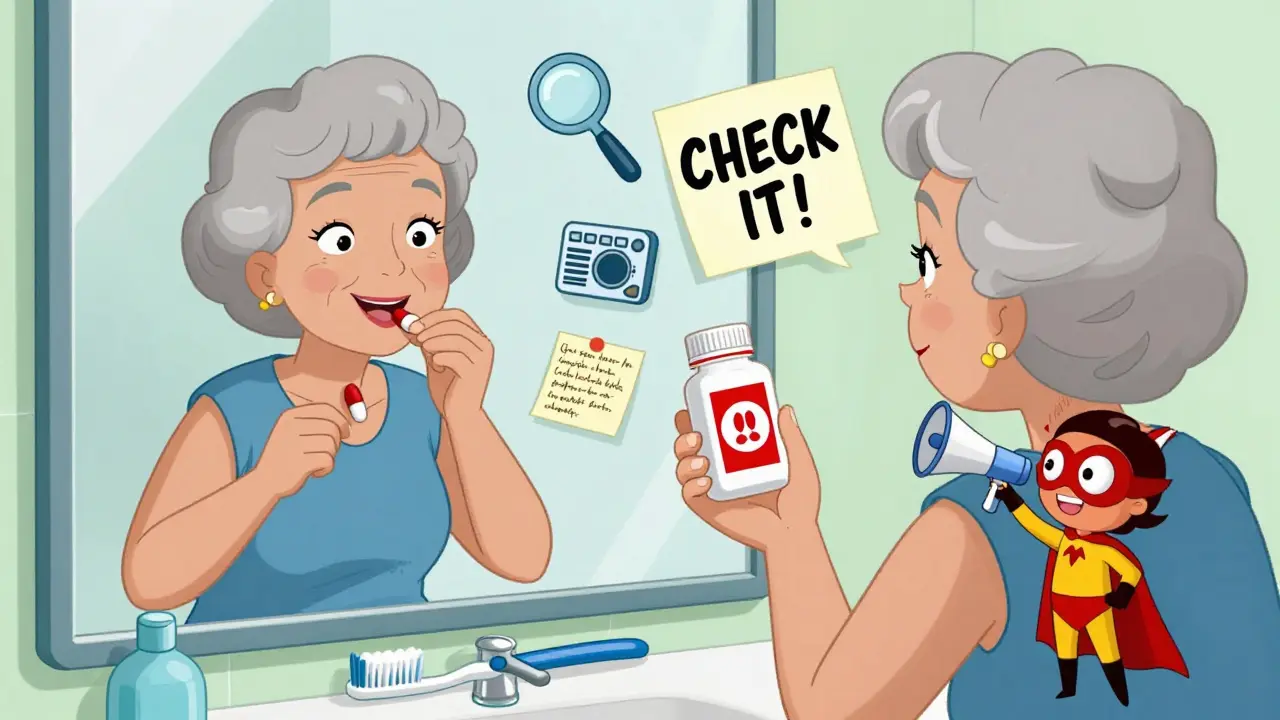
- Use a magnifier - If your eyesight isn’t perfect, get a cheap handheld magnifying glass. It cuts label-related errors by 38%.
- Color-code your bottles - Red for blood pressure, blue for cholesterol, green for diabetes. Pharmacists recommend this to 82% of patients with complex regimens.
- Place bottles where you’ll see them - Put your morning pills next to your coffee maker. Your nighttime meds next to your toothbrush. Out of sight? Out of mind.
- Teach-back method - Ask a family member to listen while you explain the label. If you can teach it, you’ll remember it. Studies show this boosts retention by 57%.
One woman in Brisbane, 72, told her pharmacist she kept confusing her thyroid med with her calcium pill. She started using a red sticker on the thyroid bottle and placed both on her kitchen counter. Within a week, she stopped mixing them. No more ER visits.
Why Apps and Pill Organizers Aren’t Enough
You’ve probably tried apps. You’ve bought those fancy pill boxes. But here’s the truth: they don’t replace label checking. An app can remind you to take a pill. But it can’t tell you if the pill in the compartment is the right one. A pill organizer can sort your meds. But if the pharmacist filled the wrong bottle, you’re still in danger. A 2023 study compared methods:- Pill organizers alone: 42% error reduction
- Medication apps without verification: 29% error reduction
- Label checking before every dose: 76% error reduction
Apps are helpful. But they’re a backup, not a replacement. The label is the source. Always go back to it.
What to Do When You Can’t Read the Label
If your eyesight is failing, you’re not alone. One in five adults over 65 have vision problems. But you don’t have to guess. Since January 2025, all prescription labels in the U.S. must follow new standards:- Minimum 6-point sans-serif font for key info
- 8-point or larger font for warnings
- High-contrast colors (black on white, not gray on yellow)
Still too small? Ask your pharmacist for a large-print copy. Most pharmacies will print one for free. Or ask them to write the key info on a sticky note and stick it to the bottle.
Some pharmacies now offer barcode scanning apps. You take a photo of the label, and the app confirms: "This is correct for John Smith, 10 mg, once daily." If your pharmacy has this, use it. But don’t skip the physical check. Use both.
Common Mistakes (And How to Avoid Them)
Here’s what goes wrong-and how to fix it:- "I’ve taken this for years, I know it." - Labels change. Always check.
- "I’m in a rush in the morning." - Move your meds to where you already stop: the sink, the coffee maker, your keys. Make it part of your routine.
- "The label is too confusing." - Ask your pharmacist to explain it. They’re trained to make it simple. Don’t be shy.
- "I forgot to check last time." - That’s okay. Don’t beat yourself up. Just start again. Habits aren’t perfect. They’re persistent.
One man in Ohio skipped checking for three months. He took his diabetes pill instead of his blood thinner. He had a stroke. He survived. Now, he checks every dose-out loud. He says it saved his life.
Final Thought: It’s Not About Being Perfect. It’s About Being Consistent.
You don’t have to be flawless. You don’t have to memorize every detail. You just have to pause. Look. Confirm. This habit takes 18 to 22 repetitions to become automatic. That’s about 3 weeks. Do it every morning, every night. No exceptions. Soon, it’ll be as natural as washing your hands before eating. And when you do? You’re not just protecting yourself. You’re protecting your family. Your caregivers. The people who love you and worry when you’re sick. The label isn’t just ink on plastic. It’s your safety net. Check it. Every time.What if I forget to check the label once? Am I in danger?
Forgetting once won’t cause harm-but it’s a warning sign. Medication errors don’t happen because of one mistake. They happen because of repeated lapses. If you forget once, it’s easier to forget again. That’s why consistency matters more than perfection. Just get back on track. The next time you reach for your pill, pause. Look. Confirm. That’s all it takes to stay safe.
Can I rely on my pharmacist to catch errors?
Pharmacists are trained to catch mistakes, but they’re not mind readers. They fill dozens of prescriptions a day. They can’t check every bottle against every patient’s history. Your label check is the final, most reliable safety step. Think of it like a seatbelt: your pharmacist helps design the car, but you’re the one who buckles up. Always do it yourself.
Are generic drugs less safe than brand names?
No. Generic drugs must meet the same FDA standards as brand-name drugs. They have the same active ingredients, strength, and effect. The only differences are color, shape, or inactive ingredients-which is why checking the label matters even more. A generic version might look completely different. That’s why you can’t assume. Always verify the name and dosage.
What if my label has abbreviations I don’t understand?
Never guess. Abbreviations like "qd" (once daily) or "BID" (twice daily) can be confusing. Ask your pharmacist to write out the full instructions in plain language. Most will do it for free. Or ask them to print a simple instruction card you can stick to your pill bottle. Clarity beats cleverness when your health is on the line.
Is this habit really necessary if I only take one or two pills?
Yes. Even one pill can be dangerous if taken wrong. A single dose of the wrong blood thinner, painkiller, or heart medication can cause serious harm. You don’t need to be on five drugs to be at risk. In fact, people taking fewer meds often skip checks because they think they "know" them. That’s when mistakes happen. Check every bottle, every time. No exceptions.
 Health and Wellness
Jimmy V
March 15, 2026 AT 00:43Check the label. Every. Single. Time. I used to think I was too careful to mess up-until I grabbed the wrong pill at 2 a.m. after a 36-hour shift. Didn’t even realize it until my heart started racing. Now? I touch the label, say it out loud, and only then take it. 76% reduction? Yeah. That’s real. Don’t be the statistic.
Richard Harris
March 15, 2026 AT 19:09i really like this post. i’ve been doing the three-touch thing for a few weeks now and it’s crazy how much more confident i feel. even if i’m half-asleep. just touching the label and saying the name out loud… it sticks. no more guessing. thanks for sharing.
tamilan Nadar
March 17, 2026 AT 07:04in india we dont have fancy apps or color coded bottles but we do have mothers who yell at you to check the bottle before swallowing. same principle. label check = survival. simple. no need for tech. just awareness. my grandpa took his blood pressure med for 12 years without checking. died last year. dont be him.
Adam M
March 18, 2026 AT 01:00People who don’t check labels are just asking for trouble. This isn’t a suggestion. It’s a requirement. If you can’t be bothered to read five words before swallowing a pill, you shouldn’t be on medication.
Ali Hughey
March 18, 2026 AT 14:08THEY’RE HIDING THINGS FROM US!!
Why do labels keep changing? Who’s controlling the ink? Why is the font size inconsistent? I’ve seen the same pill with different shapes in the same pharmacy! The FDA? Big Pharma? The Pharmacist Union? It’s a coordinated effort to keep us dependent! I checked my insulin bottle yesterday-it had a QR code that led to a .gov site with a hidden message: "DO NOT TRUST THE LABEL."
Now I take photos of every bottle. And I wear tin foil. Just in case.
Alex MC
March 20, 2026 AT 02:56This is one of those things that sounds obvious… until you realize you’ve been doing it wrong for years. I started using the three-touch method after my dad had a near-miss. Now I do it without thinking. It’s like brushing my teeth. Small habit. Huge impact. Thanks for the clarity.
rakesh sabharwal
March 21, 2026 AT 16:39Let’s be honest-the real issue is pharmaceutical deregulation and the commodification of healthcare. You’re reducing systemic failure to a behavioral hack. The label-checking ritual is a band-aid on a hemorrhage. Meanwhile, the FDA approves generics with 15% bioequivalence variance and pharmacies outsource labeling to offshore contractors. This post treats symptoms, not causality.
Aaron Leib
March 22, 2026 AT 04:42One of the most practical things I’ve read in a long time. No fluff. Just actionable steps. I showed this to my mom-she’s 74, on six meds, and blind in one eye. She got a magnifier from the pharmacy today. Said it felt like getting glasses again. Small wins matter.
Dylan Patrick
March 23, 2026 AT 09:32I used to think I was too smart to mess up. Then I took my sister’s anxiety pill by accident. Felt like a zombie for 6 hours. Now? I have a sticky note on my bathroom mirror: "LOOK. SAY. TAKE." I say it out loud. Every. Time. My dog even starts barking when I reach for the bottle. He knows the routine. We’re all in this together.
Kathy Leslie
March 24, 2026 AT 07:11I didn’t think I needed this until I started taking meds for depression. One day I took two pills because I didn’t check. Felt awful for days. Now I do the three-touch thing. It’s not about being paranoid-it’s about being kind to yourself. You deserve to feel safe with what’s in your body.
Amisha Patel
March 25, 2026 AT 06:07My aunt in Mumbai uses a different trick-she writes the pill name on her hand with a marker every morning. Simple. Works. No tech needed. I tried it for a week. Felt silly but it stuck. Now I do it for my dad’s pills. Sometimes the oldest methods are the best.
Elsa Rodriguez
March 26, 2026 AT 06:31THIS IS WHY PEOPLE DIE. I had a friend who took the wrong heart med. She was 41. Left two kids. No one was there to check. No one was watching. And now? Her husband won’t let anyone else touch the medicine cabinet. I don’t care how "simple" this sounds-it’s life or death. Don’t be lazy. Don’t be arrogant. Don’t be the person who says "I know what this is." You don’t. Not anymore.
Serena Petrie
March 26, 2026 AT 20:36So… just check the label. Got it.