
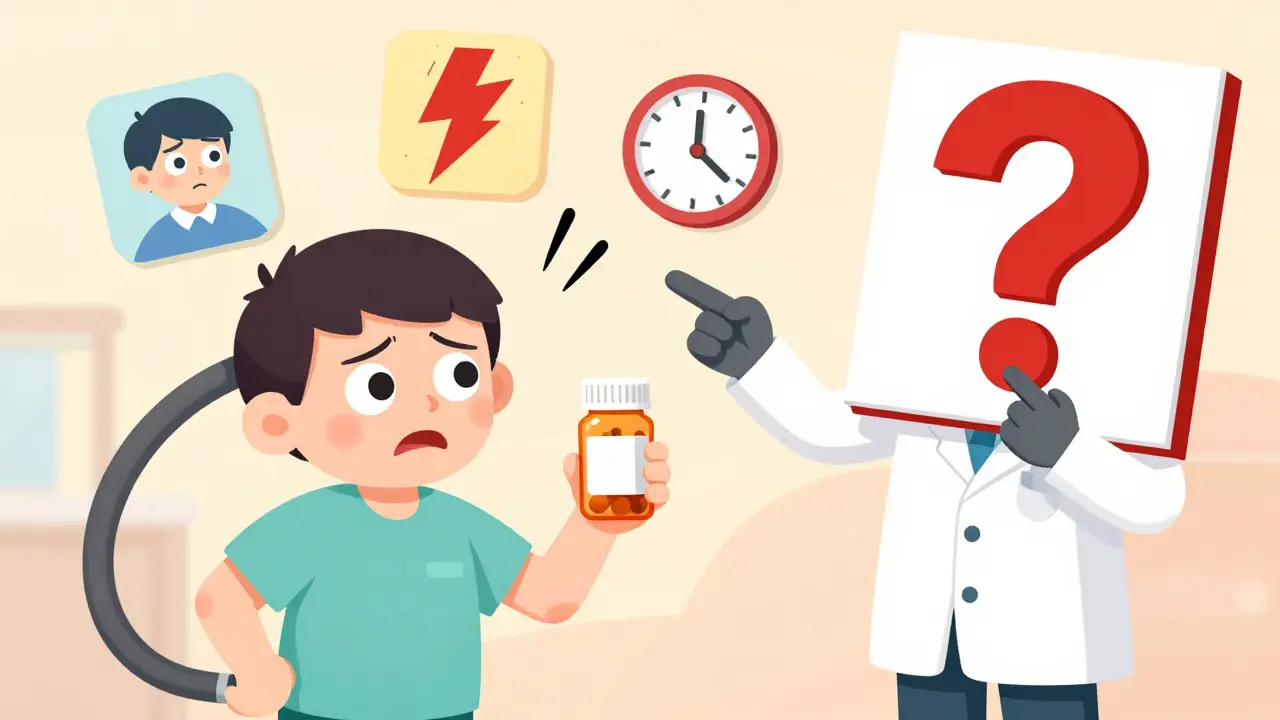
Getting the wrong medication, the wrong dose, or even the wrong drug entirely isn’t just a mistake-it’s a safety risk. And if you’ve noticed something off-like a pill that looks different, a side effect you didn’t expect, or a prescription that doesn’t match what your doctor said-you’re not overreacting. You’re doing exactly what you should: paying attention. Reporting a medication error isn’t about blaming anyone. It’s about stopping the same thing from happening to someone else.
Recognize the Error First
The first step is simple but critical: know when something’s wrong. Medication errors come in many forms. Maybe you were given a pill with a different color or shape than usual. Maybe your pharmacist didn’t catch that the dosage changed from 10mg to 50mg. Maybe you started feeling dizzy, nauseous, or breaking out in a rash after taking a new prescription. These aren’t just "bad luck." They’re red flags.Don’t wait for symptoms to get worse. If you notice a change in how you feel after taking medicine, write it down. Note the date, time, what you took, and how you felt. Take a photo of the pill bottle if the label looks off. Keep the container-even if it’s empty. These details matter when you report it.
Gather the Facts Before You Speak
When you talk to your provider, don’t rely on memory. Bring everything you have:- The medication name (check the bottle, not just your memory)
- The dose and how often you were told to take it
- The route (pill, injection, cream, etc.)
- When you took it and when you noticed the problem
- Any symptoms you’ve had since
- A photo of the pill or packaging if it looks different
- Your medical records if you have them (especially allergy info)
Many people skip this step because they’re nervous or feel rushed. But the more specific you are, the faster your provider can act. If you’re unsure about the medication, ask to see the original prescription or the pharmacy’s dispense record. You have a right to that information.
Speak Up-But Know How to Do It Effectively
Telling your doctor or nurse something went wrong can feel scary. What if they get mad? What if they think you’re being difficult? The truth is, most providers want to hear from you. A 2022 study found that patients who reported errors clearly and calmly were 3 times more likely to get a serious response than those who hesitated or downplayed it.Here’s how to say it without sounding accusatory:
- Start with: "I’m concerned about something that happened with my medication."
- State the facts: "I was prescribed 5mg of lisinopril, but the bottle says 10mg. I took one yesterday and felt lightheaded."
- Ask: "Can we check what was ordered versus what was given?"
- Request: "Can you document this in my file?"
If they brush you off, say: "I’m not asking for an apology-I’m asking for this to be fixed so it doesn’t happen again." Most providers will respond better when you frame it as a system issue, not a personal one.
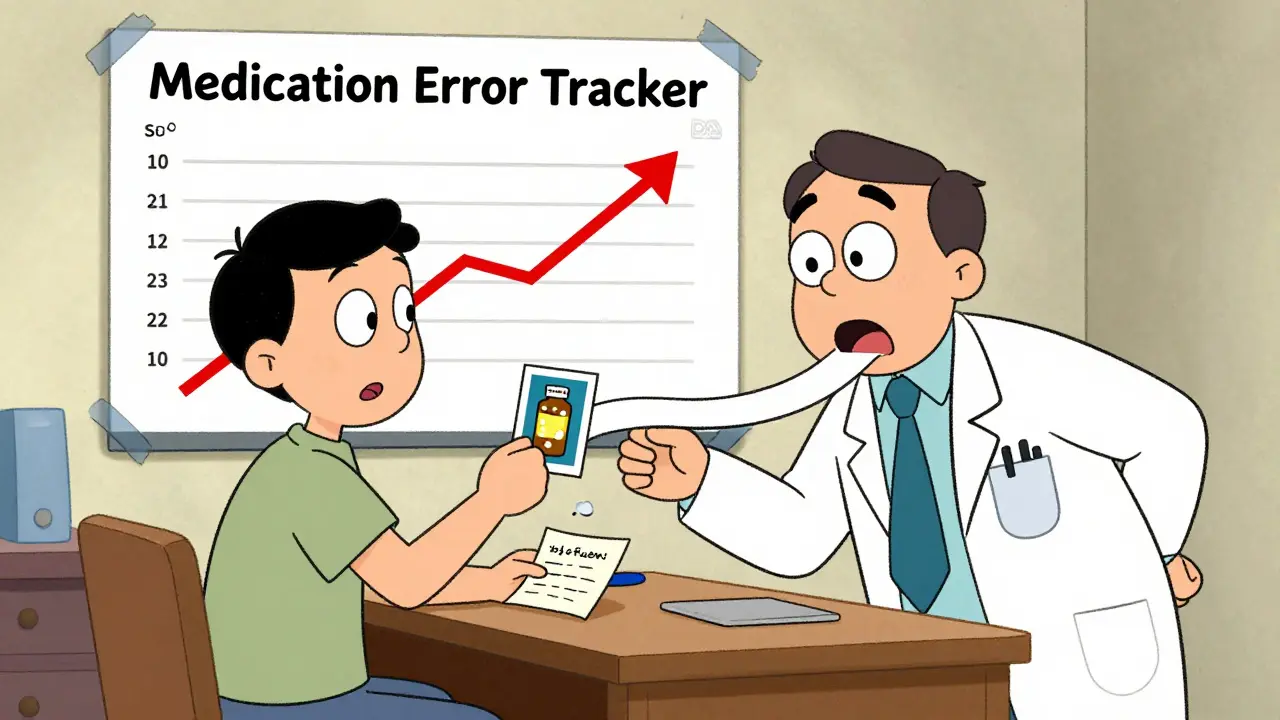
Report It Internally-And Outside
Your provider’s office or hospital should have an internal system to log medication errors. Ask for a copy of the report they file. If they don’t have one, insist they create one. This isn’t just paperwork-it’s how they track patterns and fix problems.But internal reporting isn’t enough. You should also report to the FDA’s MedWatch program. It’s free, confidential, and designed for patients like you. Since 2023, the FDA’s online form takes less than 10 minutes to fill out. You don’t need a doctor’s note. You don’t need to prove it was a mistake. Just describe what happened.
Why bother with the FDA? Because they track nationwide trends. If 20 people report the same wrong dosage on the same drug, the FDA can issue a recall. In 2023, one patient’s MedWatch report led to a recall of 12,000 bottles of a blood pressure med after the same labeling error showed up in three states.
What If You’re Reporting a School Medication Error?
If the error happened at school-like your child was given the wrong asthma inhaler or a dose meant for another student-act fast. Schools in 48 U.S. states are legally required to report these incidents. Call the school nurse immediately. Ask for the incident report form. Demand a written summary of what happened and what they’re doing to prevent it.Parents often don’t get follow-up. A 2022 study found that only 32% of school districts made changes after a medication error. Don’t accept silence. If you don’t hear back within 5 days, write a formal letter to the school principal and the district’s health services office. Keep a copy.
Common Obstacles-and How to Beat Them
You might run into roadblocks:- "It’s probably just a coincidence." Say: "I didn’t feel this way before I took this med. I need you to check the records."
- "We don’t keep that info." Under HIPAA, you’re entitled to your medical records within 30 days. If they delay, file a complaint with the U.S. Department of Health and Human Services.
- "We can’t do anything about it now." That’s false. Even if you’re fine now, reporting helps prevent future harm. The goal isn’t to punish-it’s to protect.
A 2023 study in the Journal of General Internal Medicine found that 79% of patients who tried to get records to support their report were delayed. Don’t wait. Request your records the same day you notice the error. Email it. Send it certified mail. Don’t let bureaucracy silence you.
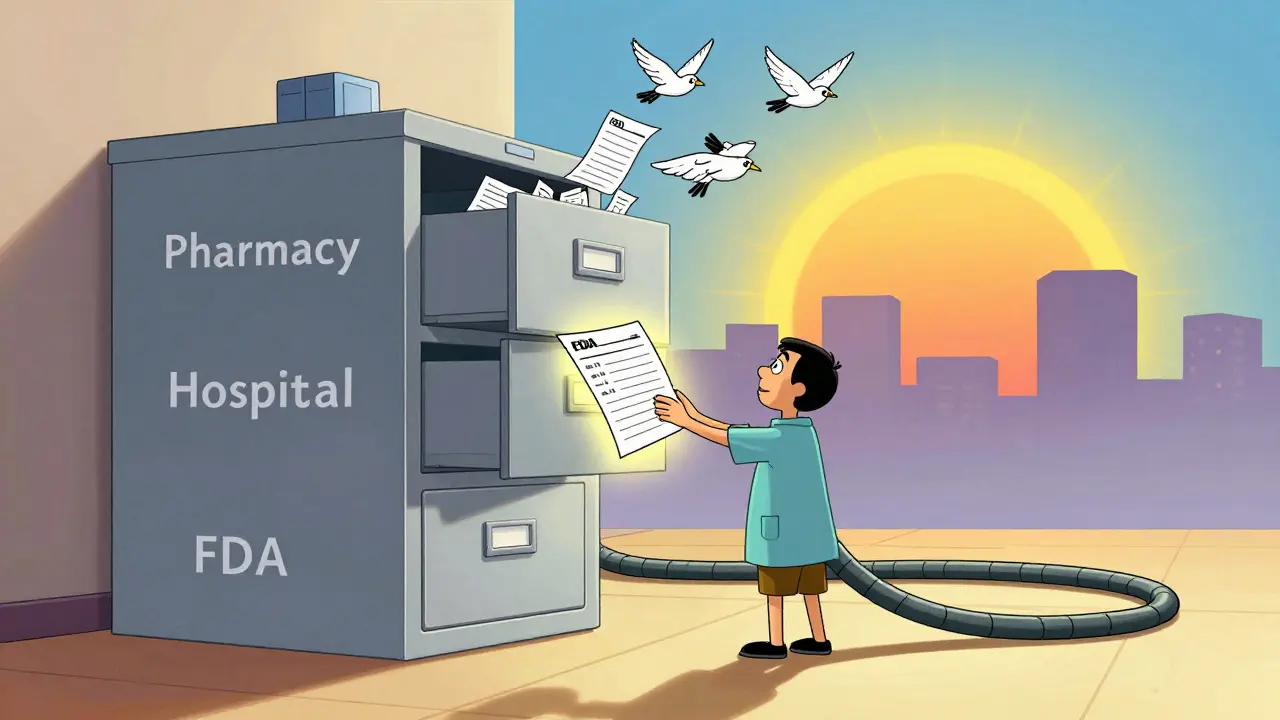
Why This Matters More Than You Think
Medication errors injure 1.3 million Americans every year. That’s more than car accidents. Most of these errors are preventable. But they only get fixed when someone speaks up.Think of it this way: if you see a broken step on a sidewalk, you don’t wait for someone to fall. You call the city. Medication errors are the same. Your report might be the one that triggers a label change, a software fix in the pharmacy system, or a new training rule for nurses.
The Institute for Safe Medication Practices has documented over 200 safety improvements since 1991-each one started with a patient or provider saying, "This shouldn’t have happened."
What Happens After You Report?
You won’t always get a call back. The FDA receives over 140,000 reports a year. Most are anonymous. But if you include your contact info, they’ll send you a confirmation number. That’s your proof you reported it.If you reported it to your provider, ask for a follow-up meeting in two weeks. Say: "I’d like to know what changes were made because of my report." Most clinics will respond. If they don’t, escalate to the office manager or patient advocate.
Some patients worry about legal trouble. But research shows that when doctors apologize and disclose errors openly, lawsuits drop by 37%. You’re not starting a lawsuit-you’re helping fix a system.
Final Thought: You’re Not a Problem. You’re a Solution.
Healthcare systems are complex. People make mistakes. But when patients speak up, those mistakes stop being hidden and start being fixed. You don’t need to be a doctor, a lawyer, or a safety expert to make a difference. You just need to be observant, persistent, and willing to ask for more.Next time you notice something off with your meds-don’t second-guess yourself. Write it down. Gather the facts. Speak up. Report it. Someone’s life could depend on it.
What counts as a medication error?
A medication error is any mistake that happens during prescribing, dispensing, or taking a drug. This includes the wrong drug, wrong dose, wrong patient, wrong time, wrong route (like swallowing a pill meant to be injected), or a drug interaction that wasn’t caught. Even if no harm occurred, if the error could have caused harm, it still counts.
Can I report a medication error if I’m not sure it was an error?
Yes. You don’t need to be certain. The FDA and safety organizations encourage reporting even if you’re unsure. If you noticed something odd-a pill that looks different, a symptom you didn’t expect, a label that doesn’t match your prescription-report it. Experts will review it and determine if it was an error. Better to report and be wrong than to stay silent and risk someone else getting hurt.
Will reporting a medication error get me or my provider in trouble?
No, not if you report it properly. The goal of reporting is to fix systems, not punish individuals. Most hospitals and pharmacies use "just culture" models that separate honest mistakes from reckless behavior. If you report calmly and factually, you’re helping your provider improve-not blaming them. Studies show that non-punitive reporting increases safety by 300-400%.
How long do I have to report a medication error?
There’s no legal deadline for patients to report to the FDA. But the sooner you report, the better. Internal hospital reports usually need to be filed within 24 to 72 hours. For the FDA’s MedWatch, submit as soon as possible-especially if the error caused a reaction. The FDA prioritizes reports involving serious harm or new safety risks. Even reports filed weeks later can help identify trends.
Do I need a doctor’s note to report to the FDA?
No. You do not need a doctor’s note, medical records, or proof to report to the FDA’s MedWatch program. You can report as a patient, family member, or caregiver. Just describe what happened, what medication was involved, and what symptoms you experienced. The FDA accepts reports from anyone, anytime.
What if my provider refuses to acknowledge the error?
If your provider dismisses your concern, document the conversation (date, time, who you spoke to). Then request your medical records in writing. If they don’t respond within 30 days, file a complaint with the U.S. Department of Health and Human Services. You can also report directly to the FDA or the Institute for Safe Medication Practices. Your report still matters-even if your provider won’t act.
Can I report a medication error that happened at a pharmacy?
Yes. Pharmacies are required to report dispensing errors internally, but you can also report directly to the FDA’s MedWatch program. Include the pharmacy name, location, and the pharmacist’s name if you know it. The FDA uses this data to track patterns across pharmacies. If multiple people report the same error from the same pharmacy, it can trigger an inspection.
Is reporting a medication error confidential?
Yes. When you report to the FDA’s MedWatch program, your name and contact details are kept confidential unless you choose to share them. Your report will not be linked to your medical record without your permission. The Institute for Safe Medication Practices also offers anonymous reporting. Your privacy is protected by federal law.
Next steps: If you’ve just noticed a medication error, take 10 minutes right now. Write down the details. Find the pill bottle. Take a photo. Then go to the FDA’s MedWatch website and file a report. You’ve already done the hardest part-seeing it. Now make sure it doesn’t happen again.
 Health and Wellness
Meina Taiwo
December 22, 2025 AT 11:26Just filed my MedWatch report after my kid got the wrong inhaler dose at school. Took 8 minutes. No doctor note needed. Do it.
Peggy Adams
December 24, 2025 AT 01:52lol why even bother? the system’s rigged. they’ll just bury it in a spreadsheet and laugh while the next person gets poisoned. i’ve seen it happen.
Cameron Hoover
December 25, 2025 AT 17:57This is the kind of post that reminds me why I still believe in people. Not everyone’s gonna speak up, but the ones who do? They’re the ones keeping us alive. Thank you for writing this.
Grace Rehman
December 25, 2025 AT 21:43so you’re telling me the only thing standing between me and a lethal dosage is my ability to take a photo of a pill bottle and type into a government form? wow. what a system. we’re all just one diligent grandma away from not dying.
Southern NH Pagan Pride
December 26, 2025 AT 13:04they know. they always know. the pharma lobby funds the FDA’s ‘confidential reporting’ system so they can say ‘we’re transparent’ while the real errors get classified as ‘anomalous data.’ the same pills that caused the rash in ohio? they’re in your state next week. check the batch code. i’ve been tracking this since 2021.
the pharmacist didn’t miss the dosage. they were told to. the label change was intentional. the ‘side effects’? designed to keep you coming back for more. you think this is about safety? it’s about profit margins and stock prices. your report won’t change anything unless you take it to the press.
they’ll say ‘we’re investigating’ and then quietly reissue the same batch with a new sticker. i’ve got screenshots. i’ve got emails. i’ve got the internal memo from the distributor that says ‘do not alert patients.’
if you really want to stop this? don’t report to the FDA. report to your congressperson. and then tell everyone you know. don’t wait for someone to die. they already have.
Hannah Taylor
December 27, 2025 AT 00:37so i took my med last week and the pill was a diff color? i thought it was just my eyes but now im paranoid. i took a pic. i called the pharmacy. they said ‘oh that’s just a new manufacturer.’ but the bottle said ‘made in china’ and my last one said ‘made in usa’ and i swear i saw a chinese flag on the box but it was blurry and now i think they’re replacing my meds with something else. like a mind control drug. or a tracker. i think the pills are nano-tech. i think they’re watching me through my thyroid.
i filed a report anyway. but i didn’t use my real name. i used ‘anonymous rebel.’ i think they’re tracking my ip. i think the FDA is a front for the cia. i think my doctor’s phone is bugged. i think my cat knows.
Christina Weber
December 27, 2025 AT 22:30It is imperative that patients understand the legal and ethical obligations of healthcare providers under HIPAA and the Joint Commission standards regarding medication error reporting. Failure to document and report discrepancies constitutes a breach of the standard of care and may constitute negligence under tort law. You are not merely a ‘patient’-you are a stakeholder in the integrity of the healthcare delivery system. Document everything. Demand a copy of the incident report. If denied, file a formal complaint with the Office for Civil Rights. Do not rely on goodwill. Reliance on institutional benevolence is a dangerous fallacy.
Jay lawch
December 29, 2025 AT 20:17When the West collapses under the weight of its own bureaucracy, it will be the quiet ones-the ones who took photos, who wrote down dates, who didn’t scream but demanded records-who will be remembered. The Indian subcontinent has known this for centuries: truth is not shouted, it is recorded. You think your report to the FDA matters? Of course it does. But only because the American system is too broken to self-correct. In India, we don’t wait for permission. We document. We archive. We pass the paper to the next person. That is how civilizations survive. Not through hashtags. Not through viral posts. But through the stubborn, silent act of keeping a record.
They will tell you it’s ‘not your place.’ They will tell you ‘we’re just following protocol.’ But protocol is written by men who never held a child who couldn’t breathe because the inhaler was wrong. And those men? They’re not the ones who will be blamed when the body count rises. You are. You are the one who knew. And you said nothing. Or you said something. The choice is yours. But history does not forgive silence.
Jerry Peterson
December 31, 2025 AT 02:44I’m Nigerian-American. Back home, if you got the wrong medicine, you’d go to the pharmacy, yell for 20 minutes, and the owner would hand you a new bottle plus free beans. Here? You need a lawyer, a notary, and a signed affidavit from your dog. I miss the beans.
Brian Furnell
January 1, 2026 AT 06:30There’s a profound epistemological tension here: the individual’s embodied knowledge (I felt lightheaded after taking this) versus institutional epistemic authority (the label says 5mg, therefore it is 5mg). The patient’s phenomenological experience is systematically devalued in favor of administrative orthodoxy. This is not a ‘mistake’-it is a structural failure of epistemic justice. Your report is not a complaint. It is a corrective act of epistemic resistance. And if the system refuses to hear you? Then you become the archive. Keep every receipt. Every photo. Every timestamp. The algorithm doesn’t know your name-but it will remember your data.
Also: the FDA’s MedWatch portal is underfunded, understaffed, and algorithmically prioritizes ‘serious adverse events.’ But if 37 people report the same error from the same batch? It becomes a signal. Noise becomes data. And data becomes action. So report. Even if it feels futile. Especially then.
Adrian Thompson
January 1, 2026 AT 11:26they’re putting tracking chips in the pills now. i know because my cousin’s ex-bf works at the FDA. he said they’re testing it on seniors first. ‘less resistance,’ he said. that’s why they want you to report-so they can log your meds and your location. they’re building a national health surveillance grid. next thing you know, your insulin will ping the NSA when your blood sugar drops. don’t trust the form. don’t trust the ‘confidential’ label. burn the bottle. don’t report. just stop taking the meds.
Sarah Williams
January 3, 2026 AT 06:20I reported a wrong dose last year. Got a call from the pharmacy two days later. They apologized. Gave me a $50 gift card. And changed their labeling system. You’re not crazy for caring. You’re the reason things get better.
mukesh matav
January 3, 2026 AT 19:44My father had a stroke because the nurse gave him the wrong anticoagulant. We never reported it. We were too tired. Too scared. Too broke to fight. I wish we had. Now I tell every patient I meet: speak up. Even if you’re quiet. Even if you’re scared. Even if you think no one will listen. Someone will. I’m listening now.
Swapneel Mehta
January 5, 2026 AT 19:39My sister is a nurse. She told me they get training on ‘just culture’ every year. But in practice? If you report an error, you get extra shifts. If you don’t, you get a coffee mug. The system rewards silence. That’s why your report matters more than you know. You’re not just fixing a pill. You’re breaking a cycle.
Dan Adkins
January 7, 2026 AT 14:22It is an incontrovertible fact, substantiated by peer-reviewed epidemiological studies conducted by the World Health Organization and the Centers for Disease Control and Prevention, that medication errors constitute the fourth leading cause of preventable mortality in the United States of America. The failure of the citizenry to engage in proactive, documented, and legally compliant reporting mechanisms represents a systemic abdication of civic responsibility. One must not conflate the convenience of silence with the morality of acquiescence. The invocation of HIPAA and the Federal Food, Drug, and Cosmetic Act affords the individual not merely a right, but a solemn duty to report. Failure to do so constitutes a dereliction of ethical obligation. Therefore, I implore you: act. Immediately. With precision. With documentation. With courage.