
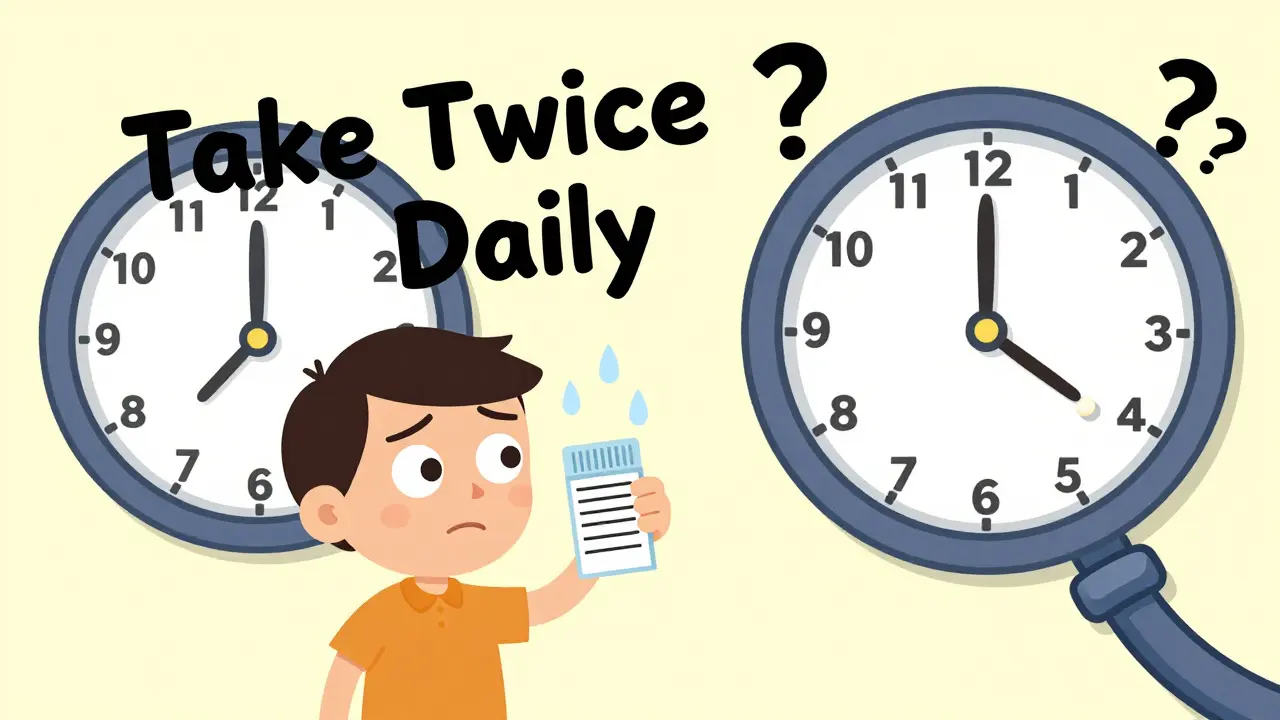
Ever stared at your prescription label and wondered, "When exactly should I take this?" You’re not alone. Millions of people misinterpret their medication instructions every year-not because they’re careless, but because the labels are confusing. A simple phrase like "take twice daily" can mean wildly different things to different people. One person takes it at 8 a.m. and 8 p.m. Another takes it at breakfast and dinner. Someone else just takes both pills at once because "twice" sounds like "two at a time." And that’s exactly how errors start.
What "Take Twice Daily" Really Means
The phrase "take twice daily" is everywhere. But it’s not enough. The FDA says it’s not clear enough. In fact, their own data shows that 43.7% of medication errors tied to dosage labels come from vague timing instructions like this. What you need is specificity: "Take one tablet in the morning and one tablet in the evening." That’s the gold standard now. Why does it matter? Because timing affects how well your medicine works-and whether it causes side effects. For example, if you’re on a blood pressure pill that lowers your heart rate, taking it at night might make you too drowsy the next day. Or if you’re on a steroid that causes stomach upset, taking it without food could lead to nausea or ulcers. Explicit timing helps you match the drug’s needs with your life.Why "As Needed" Can Be Dangerous
"Take as needed for pain" sounds simple. But how many times is "as needed"? Is it three times? Five? Ten? The FDA found that 67.8% of people don’t know the maximum daily dose for pain meds labeled this way. That’s terrifying. Tylenol (acetaminophen) can cause liver failure if you take more than 4,000 mg in 24 hours. That’s just eight 500 mg pills. But if your label doesn’t say "Do not exceed 4 tablets in 24 hours," you might not realize you’re risking your liver. Always look for the maximum daily dose. If it’s not on the label, ask your pharmacist. Don’t assume. Don’t guess. Write it down. Keep it on your phone. Set a reminder. Because when it comes to painkillers, more isn’t better-it’s deadly.Milliliters, Not Teaspoons
If your prescription is a liquid-like antibiotics for kids or cough syrup-look at the unit of measure. The FDA and U.S. Pharmacopeia have required pharmacies to use milliliters (mL) since 2020. No more "teaspoon" or "tablespoon." Why? Because a teaspoon from your kitchen isn’t the same as a medical teaspoon. Studies show that 27.4% of parents measuring liquid medicine with household spoons give the wrong dose. Your prescription should say "5 mL," not "1 tsp." If it doesn’t, ask for a dosing cup or syringe. Never use a kitchen spoon. Even if the label says "teaspoon," ask the pharmacist to rewrite it in mL. It’s your right. And it could save your child’s life.What About "With Food" or "On an Empty Stomach"?
These phrases matter more than you think. Some drugs need food to be absorbed. Others can’t touch food or they won’t work. Take levothyroxine, the thyroid pill. The FDA-approved instructions say: "Take on an empty stomach, 30 to 60 minutes before breakfast." But a 2023 Harvard Health survey found that 32.7% of patients took it with their morning coffee and toast. That cuts absorption by up to 50%. Your thyroid levels stay low. Your fatigue stays high. Your doctor thinks the dose is wrong-when it’s just the timing. Same goes for antibiotics like amoxicillin. Some need food to reduce stomach upset. Others, like tetracycline, must be taken on an empty stomach because calcium in dairy blocks absorption. Always check the label. If it’s unclear, ask: "Should I take this before or after eating?"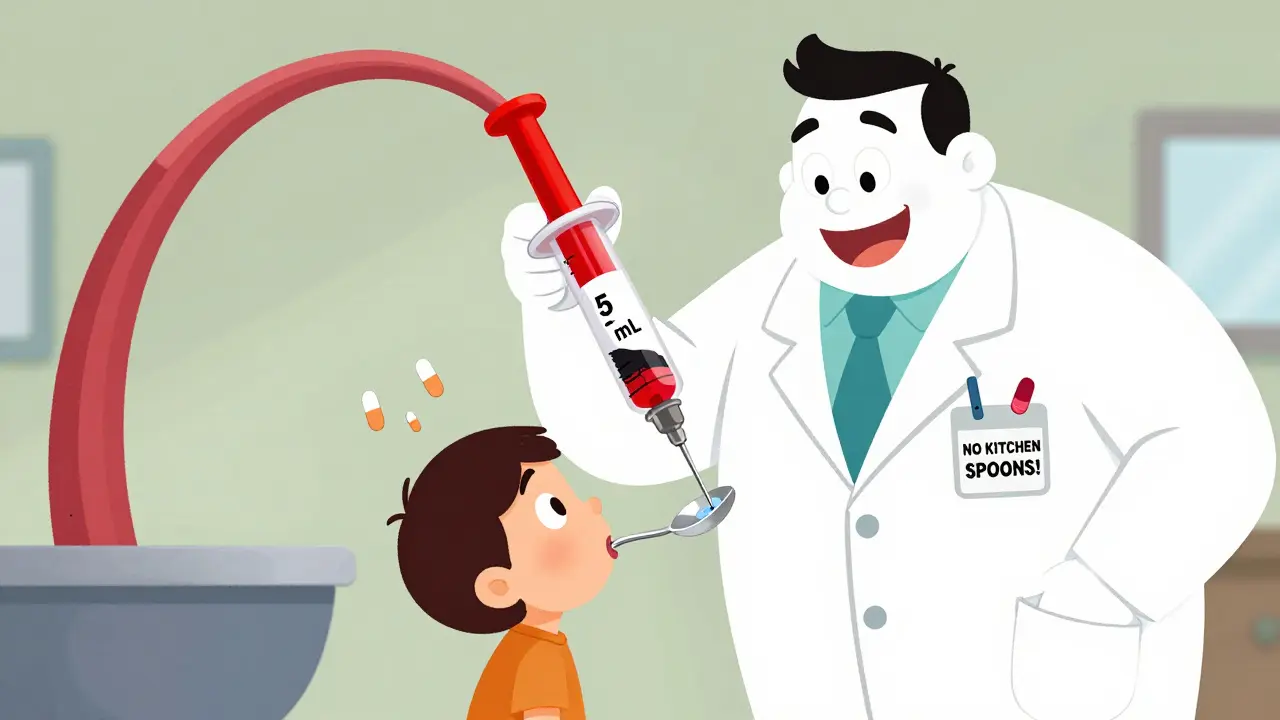
Why "B.I.D." and "T.I.D." Are Outdated
You might see "b.i.d." or "t.i.d." on your label. Those are Latin abbreviations for "bis in die" (twice daily) and "ter in die" (three times daily). But here’s the problem: only 37.4% of adults understand them, according to the American Medical Association. That’s less than 4 in 10 people. If you see "b.i.d." on your label, don’t guess. Ask your pharmacist to rewrite it as "take two times a day-morning and evening." Same with "t.i.d." → "take three times a day-at breakfast, lunch, and dinner." The FDA recommends this. The AMA demands it. And your safety depends on it.Shift Workers and the Timing Problem
If you work nights, "morning" and "evening" don’t mean much. A 2022 study found that 22.3% of night-shift workers misinterpreted "take in the morning" as "take when you wake up," even if that was 8 p.m. That’s not their fault. The label didn’t account for their life. The solution? Ask for personalized timing. Say: "I work nights from 11 p.m. to 7 a.m. When should I take this?" Your pharmacist can adjust: "Take one at 7 p.m. and one at 7 a.m." That’s still every 12 hours-it’s just matched to your schedule. Pharmacists are trained to do this. But they won’t unless you ask.What If the Label Doesn’t Match What the Doctor Said?
It happens. Your doctor says "take once daily," but the label says "take twice daily." That’s not a typo. That’s a red flag. Always compare what your doctor told you with what’s on the bottle. If they don’t match, call the pharmacy. Ask them to verify the prescription with your doctor. Pharmacies are required to check for errors before dispensing. But they’re busy. And mistakes slip through. Don’t assume it’s correct. Don’t take it unless you’re 100% sure. A mismatched dose could be dangerous-or even fatal.What’s Changing in 2024 and Beyond
The rules are getting stricter. As of January 1, 2024, all new drugs approved by the FDA must include explicit timing instructions on their patient labels. By 2027, every prescription label in the U.S. will need a "Medication Schedule Grid"-a simple chart showing exactly when to take each dose, day by day. Some states are already ahead. California passed a law in 2024 requiring pictograms on labels-tiny icons showing a sun for morning, moon for night, plate for with food. These visuals help people who read poorly or speak another language. It’s not just about words anymore. It’s about understanding.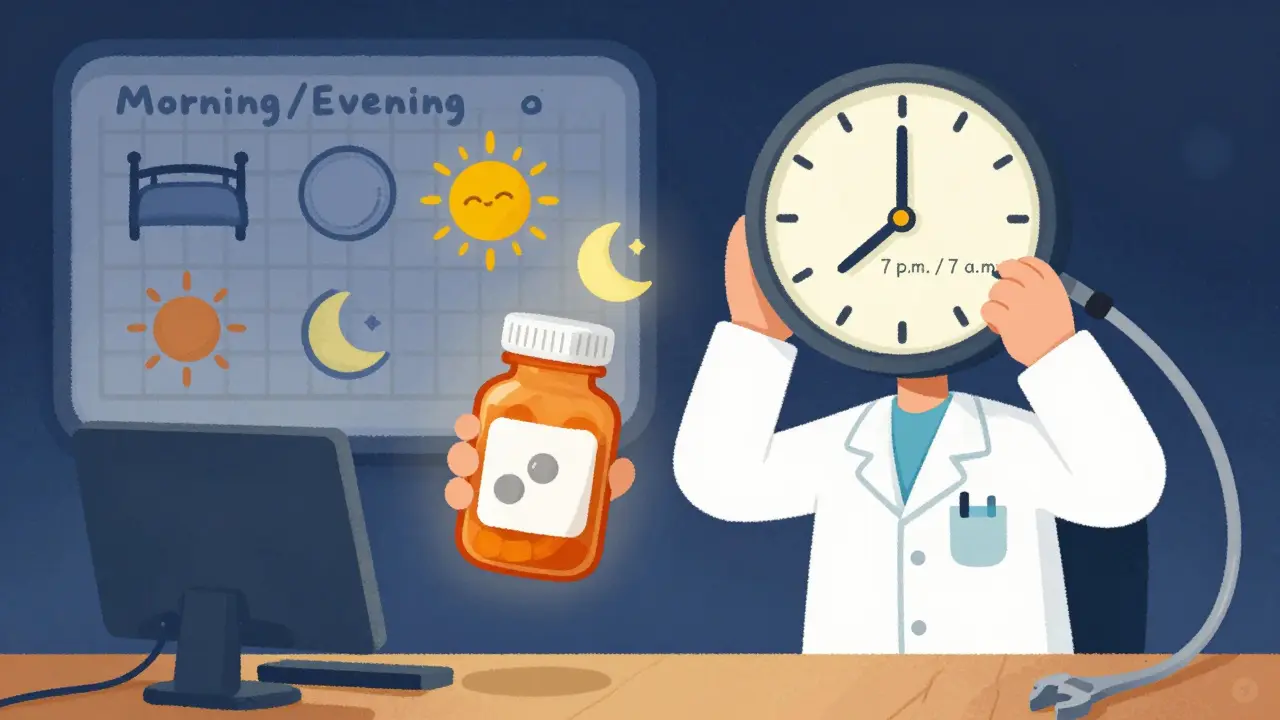
How to Protect Yourself Right Now
You don’t have to wait for new labels. Here’s what to do today:- Always read the label before leaving the pharmacy.
- Ask: "Can you write this out in plain English?"
- Confirm: "What’s the maximum number of doses per day?"
- Ask: "Should I take this with food or on an empty stomach?"
- Request a dosing cup or syringe for liquids.
- If you work nights or have an irregular schedule, ask for a custom timing plan.
- Take a photo of the label and save it on your phone.
- Set phone alarms for each dose.
When to Call Your Pharmacist
Don’t wait until you feel sick. Call your pharmacist if:- The instructions are vague or confusing
- You’re unsure if you should take it with food
- You missed a dose and don’t know what to do
- You’re taking multiple pills and worry about interactions
- You’re pregnant, breastfeeding, or caring for a child
Real Stories, Real Consequences
One woman took her blood thinner twice a day because the label said "twice daily"-but she thought it meant two pills each time. She ended up in the ER with internal bleeding. Another man took his diabetes pill "as needed" for three days straight because he felt tired. His blood sugar crashed. He passed out at work. On the flip side, a man with type 2 diabetes switched from "take 2 tablets daily" to "take one with breakfast, one with dinner." He stopped getting stomach cramps. His blood sugar stabilized. He said: "It was like the medicine finally worked the way it was supposed to."Final Thought: You’re the Last Line of Defense
Doctors write prescriptions. Pharmacies fill them. But you’re the one who swallows the pill. You’re the one who remembers-or forgets. You’re the one who notices the side effects. You’re the one who can ask the question: "What does this really mean?" Don’t be afraid to speak up. Don’t assume it’s clear. Don’t trust vague labels. If something doesn’t make sense, ask again. And again. Your health isn’t a guessing game.What does "twice daily" mean on a prescription label?
"Twice daily" means take the medication two times in a 24-hour period. But the label should specify when-like "take one in the morning and one in the evening." If it doesn’t, ask your pharmacist to clarify. Vague terms like this are a leading cause of medication errors.
Can I use a kitchen spoon to measure liquid medicine?
No. Kitchen spoons vary in size and are not accurate. Prescription liquids should be measured in milliliters (mL) using a dosing cup or oral syringe provided by the pharmacy. Using a spoon can lead to under- or overdosing, especially in children.
What should I do if my prescription label says "as needed"?
Ask your pharmacist for the maximum daily dose. For example, if it’s a painkiller like acetaminophen, find out if the limit is 3,000 mg, 4,000 mg, or another amount. Never exceed that number in 24 hours, even if you still feel pain. Write it down and set a reminder.
Why do some labels say "take on an empty stomach"?
Some medications are absorbed better without food. Others can cause nausea or reduced effectiveness if taken with meals. For example, levothyroxine must be taken 30-60 minutes before breakfast. Taking it with coffee, milk, or food can cut its effect in half.
What do "b.i.d." and "t.i.d." mean on a prescription?
"b.i.d." means twice daily, and "t.i.d." means three times daily. But only 37.4% of adults understand these Latin abbreviations. Always ask your pharmacist to rewrite them in plain English: "Take two times a day" or "Take three times a day."
I work nights. How should I take my medicine if the label says "morning" and "evening"?
Ask your pharmacist to adjust the timing to your schedule. For example, if you sleep during the day and work at night, you might take your medication at 7 p.m. and 7 a.m. instead. The goal is to space doses evenly-usually every 12 hours-not to follow clock time.
What should I do if my label doesn’t match what my doctor told me?
Call the pharmacy immediately. Don’t take the medication until the discrepancy is resolved. It could be a transcription error, a miscommunication, or a wrong dose. Pharmacists are required to verify prescriptions with the prescriber before dispensing.
 Health and Wellness
Sean Feng
January 11, 2026 AT 04:10Just read the label and take it. Why does everything need a 10-page essay? I’ve been taking pills for 20 years and never needed a flowchart.
Stop overcomplicating it.
Adewumi Gbotemi
January 11, 2026 AT 21:44This is very important. In my country, many people use spoons because they don’t have measuring cups. I told my cousin to ask for a syringe and he saved his child from overdose. Simple things save lives.
Jason Shriner
January 13, 2026 AT 08:37Oh wow. The FDA finally noticed people can’t read. Who knew? I’m shocked. Shocked I tell you.
Next they’ll ban the word ‘as needed’ because someone thought it meant ‘take until you feel better’ and then took 17 pills in 3 hours.
Meanwhile, my grandma takes her meds with whiskey and calls it ‘her morning ritual.’ She’s 92. Still standing. Probably because she ignored all this.
Vincent Clarizio
January 14, 2026 AT 15:49This isn’t just about labels-it’s about systemic failure in healthcare communication. We’ve outsourced patient education to overworked pharmacists who are expected to explain complex pharmacokinetics in 90 seconds while a line of 12 people waits behind them. The real problem isn’t that people don’t understand ‘b.i.d.’-it’s that we’ve turned medicine into a transactional experience where clarity is a luxury, not a right. And then we blame the patient when they die from a typo on a bottle. We need mandatory visual schedules, AI-driven voice assistants integrated into pharmacy apps, and federal funding for plain-language literacy programs. This isn’t a ‘tip’-it’s a civil rights issue wrapped in a pill bottle.
Alex Smith
January 15, 2026 AT 13:34Love the part about night shift workers. I work 11pm–7am and took my BP med at 8am because the label said ‘morning.’ Felt like a zombie for a month. Asked my pharmacist and they said ‘take at 7pm and 7am’-game changer. Why do we assume everyone lives on a 9-to-5 clock? Also, yes to pictograms. My mom can’t read English but she knows a sun = morning, moon = night. Dumb that this isn’t standard yet.
Madhav Malhotra
January 16, 2026 AT 06:18In India, many people still get prescriptions written by hand. Sometimes the doctor writes ‘2x daily’ and the pharmacist reads it as ‘2 tablets.’ No one checks. I always ask for the full name of the medicine and repeat the instructions back. Small things. Big difference. Also, always keep the original box-sometimes the instructions are clearer there.
Priya Patel
January 16, 2026 AT 06:54OMG YES. I took my thyroid med with coffee for 3 years and wondered why I was still tired. My pharmacist looked at me like I’d just said I believed in flat earth. Now I take it with water 30 mins before breakfast. I have energy again. Why isn’t this on every label in giant letters??
Christian Basel
January 17, 2026 AT 10:27Let’s be real-the ‘as needed’ problem isn’t about patient ignorance, it’s about pharma’s liability minimization strategy. If you don’t specify a max dose, you can’t be held responsible for overdose. Same with ‘take with food’-vague enough to avoid liability, but precise enough to get FDA approval. It’s a regulatory loophole dressed up as patient education. The real fix? Mandate standardized dosage semantics across all EHRs and pharmacy systems. Not ‘plain language.’ Structural reform.
Roshan Joy
January 19, 2026 AT 06:10Great post! One thing I’d add: if you’re on multiple meds, use a pill organizer with time slots. I started using one with AM/PM/night labels and it cut my missed doses by 90%. Also, take a pic of the label with your phone-easier than reading tiny print when you’re half-asleep. 🙌