
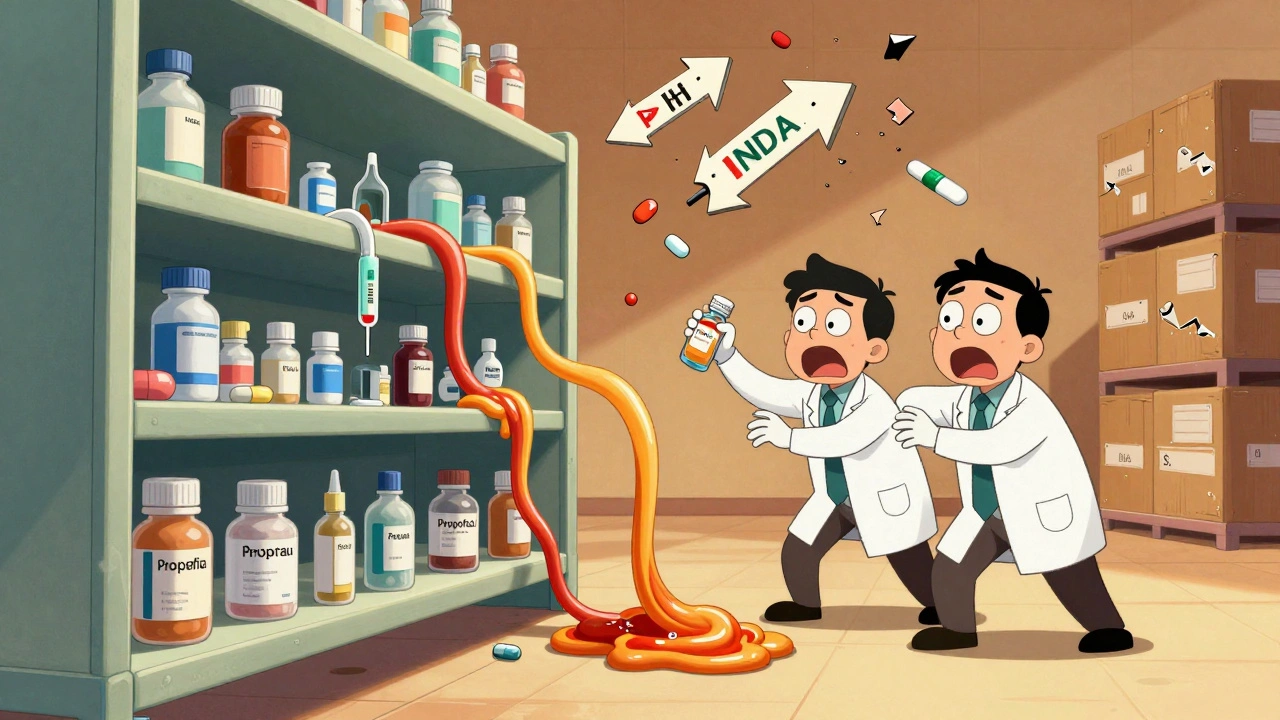
When the pandemic hit in early 2020, most people worried about masks, ventilators, and hospital beds. But behind the scenes, something quieter but just as dangerous was unfolding: drug shortages. Essential medications-antibiotics, insulin, blood pressure pills, even anesthetics used in emergency rooms-started disappearing from pharmacy shelves. At the same time, the illegal drug supply became more deadly. People who used drugs were getting substances laced with fentanyl, often without knowing it. The pandemic didn’t just change how we lived-it broke the systems that keep us alive.
Why Did Medications Disappear?
The global supply chain for pharmaceuticals was already stretched thin before COVID-19. Most of the active ingredients in common drugs came from just two countries: China and India. When lockdowns hit those regions in early 2020, factories shut down. Shipping slowed. Workers got sick. Suddenly, the raw materials needed to make even basic medications couldn’t get to the U.S. A study published in JAMA Network Open in October 2023 found that from February to April 2020, nearly one in three drug supply reports turned into actual shortages. That’s a fivefold jump from normal levels. Critical drugs like propofol (used in surgeries), heparin (a blood thinner), and even antibiotics like azithromycin became hard to find. Hospitals rationed doses. Patients delayed treatments. Some people with diabetes had to stretch their insulin supplies, risking dangerous spikes in blood sugar. It wasn’t random. The shortages hit generic drugs hardest-medications that cost pennies but are used by millions. Why? Because manufacturers make almost no profit on them. When costs rise or demand shifts, they stop making them. The pandemic exposed a system built on cheap labor and thin margins, not resilience.What Changed After May 2020?
By May 2020, things started to improve. Not because the world got better, but because the FDA stepped in. They started calling drugmakers directly, pushing them to fix bottlenecks. They fast-tracked inspections. They gave companies more flexibility to switch suppliers. These weren’t flashy policy changes-they were practical fixes. And they worked. By mid-2020, the rate of drug shortages dropped back to pre-pandemic levels. But here’s the catch: the system didn’t get stronger. It just got back to where it was before. The same vulnerabilities are still there. One factory shutdown. One port delay. One labor strike. And the same drugs could vanish again. Experts warn that without long-term reforms-like building domestic manufacturing capacity or requiring companies to report supply risks early-we’re just delaying the next crisis.The Hidden Crisis: Illicit Drugs Got Deadlier
While hospitals struggled to get morphine, the illegal drug market was doing something terrifying: getting more lethal. With borders closed and traditional smuggling routes disrupted, drug cartels started cutting their products with fentanyl-a synthetic opioid 50 to 100 times stronger than morphine. It’s cheap. It’s easy to smuggle. And it’s deadly. The CDC reported that drug overdose deaths jumped from 77,000 in 2019 to nearly 98,000 in 2020. By 2022, that number hit over 107,000. In states like West Virginia, Kentucky, and Vermont, overdose deaths rose more than 50% in just one year. People weren’t using more drugs-they were just getting poisoned by what they were using. One Reddit user described it simply: “The street supply got weird after lockdowns started. Doses that used to be fine knocked people out cold. Turns out, it was fentanyl.” That wasn’t an isolated story. Harm reduction workers in cities like Philadelphia and Boston saw a spike in overdoses linked to fake pills made to look like oxycodone or Xanax. They were just fentanyl.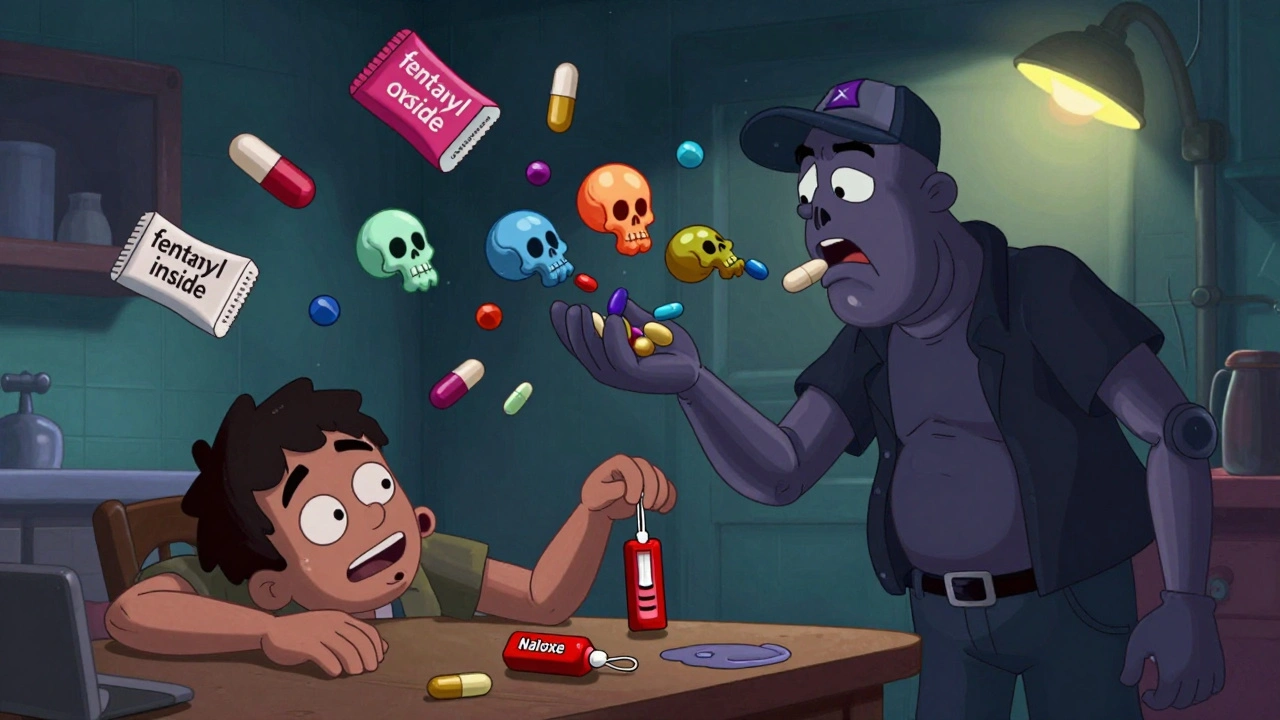
Why Couldn’t People Get Help?
At the same time, the support systems for people with addiction collapsed. Therapy centers closed. Needle exchanges shut down. 12-step meetings moved online-except many people didn’t have internet, phones, or privacy to join. A 2020 survey found that 67% of addiction treatment centers had their services disrupted. Behavioral healthcare visits dropped by 75% among people with private insurance. Older adults, rural residents, and low-income communities were hit hardest. Telehealth became a lifeline for some-but only if you had a smartphone, stable Wi-Fi, and someone who could help you set it up. The government did try to help. They allowed doctors to prescribe buprenorphine (a medication for opioid addiction) over the phone. They let patients take home more methadone. These changes saved lives. But they didn’t reach everyone. Many people still couldn’t access care. And for those who did, the emotional support-hugging a counselor, sitting in a group circle, feeling less alone-was gone.Who Got Left Behind?
The pandemic didn’t create new problems. It exposed old ones. People with addiction were already stigmatized. They were already ignored. When the crisis hit, they were less likely to get tested for COVID. Less likely to get emergency care. More likely to die alone. A study from the National Institute on Drug Abuse found that fear of legal consequences kept many from seeking help. If you’re using drugs and you feel sick, do you call 911? What if you’re afraid of being arrested? What if you’ve been told your life doesn’t matter? The data doesn’t lie: overdose deaths rose fastest in places with the least healthcare access. In rural counties, where clinics are miles away and pharmacies are few, the death rate climbed faster than in cities. In communities of color, where systemic neglect has long been the norm, the pandemic made things worse.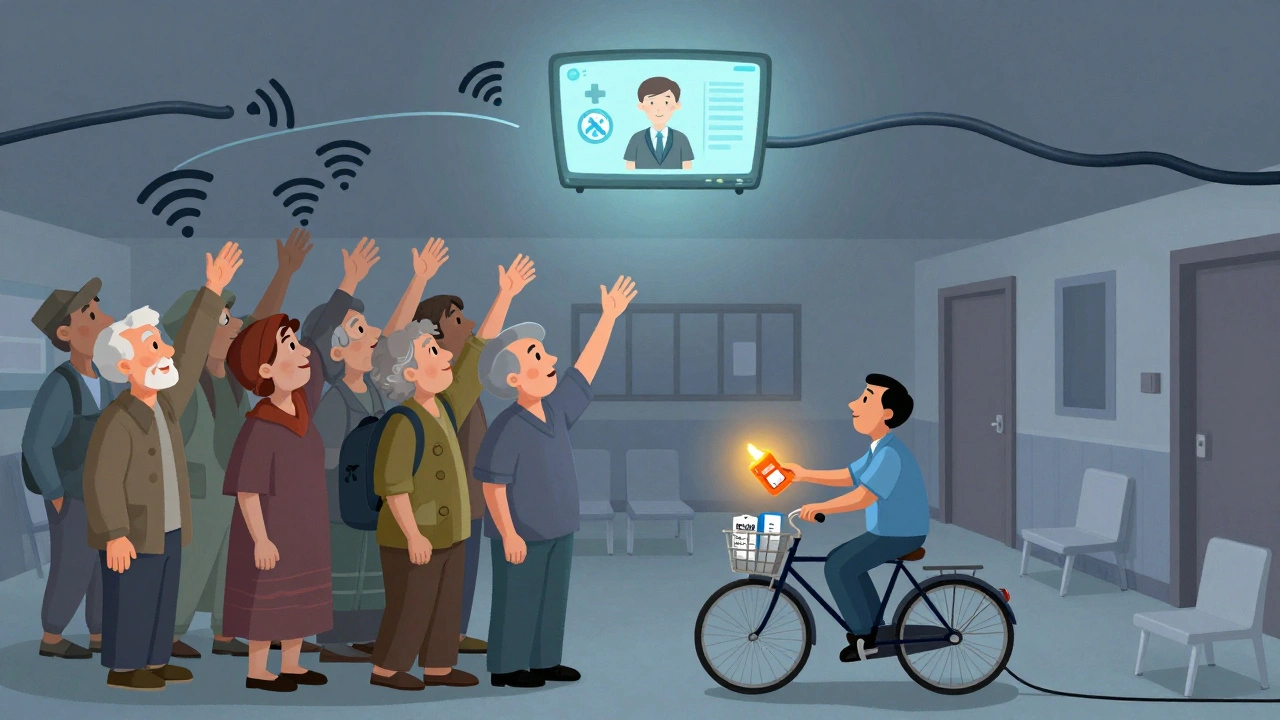
What’s Being Done Now?
Some progress has been made. The 2023 National Defense Authorization Act included new rules to improve transparency in drug supply chains. Companies now have to report potential shortages earlier. The FDA is keeping a closer eye on foreign suppliers. Harm reduction groups have expanded drive-through naloxone distribution. In Boston, they handed out 30% more overdose-reversal kits in 2020 than in 2019. But these are bandaids. The real fix requires changing how we value health. We need to invest in domestic manufacturing of essential drugs. We need to treat addiction as a medical issue, not a crime. We need to make sure telehealth works for everyone-not just the tech-savvy. The pandemic showed us that drug availability isn’t just about chemistry and logistics. It’s about policy. It’s about equity. It’s about who gets to live.What You Can Do
If you or someone you know relies on prescription medication, keep a 30-day supply on hand. Talk to your pharmacist about alternatives if your drug runs out. If you’re concerned about a loved one using drugs, learn how to use naloxone. It’s free in many places. It’s easy to use. It can save a life. Support organizations that provide harm reduction services. Push your lawmakers to fund addiction treatment and drug supply resilience. Don’t assume the system will fix itself. It didn’t before. It won’t now-unless we make it.Why did drug shortages happen during the pandemic?
Drug shortages happened because the global supply chain for pharmaceutical ingredients-mostly from China and India-broke down during lockdowns. Factories closed, shipping slowed, and workers got sick. Generic drugs, which have low profit margins, were hit hardest because manufacturers stopped making them when costs rose or demand shifted.
Did drug shortages last the whole pandemic?
No. The worst shortages occurred between February and April 2020. After May 2020, the FDA took direct action-calling manufacturers, fast-tracking inspections, and allowing supply changes-which brought most shortages back to pre-pandemic levels. But the system didn’t get stronger, so the same risks remain today.
Why did overdoses increase during the pandemic?
Illicit drug markets were disrupted by border closures and supply chain issues, so dealers started cutting drugs with fentanyl-a cheap, powerful opioid. People didn’t know what they were taking. Overdose deaths jumped 31% from 2019 to 2020, then another 15% in 2021. States like West Virginia and Kentucky saw increases over 50%.
Could telehealth help people with addiction during lockdowns?
Yes, but not for everyone. Telehealth allowed doctors to prescribe buprenorphine remotely and expanded take-home methadone doses, which lowered overdose risk for many. But people without reliable internet, smartphones, or tech support-especially older adults and those in rural areas-were left out. Behavioral care visits dropped 75% among privately insured patients.
What’s being done to prevent future drug shortages?
The 2023 National Defense Authorization Act now requires drugmakers to report potential shortages earlier. The FDA is monitoring foreign suppliers more closely. Some states are funding domestic manufacturing. But experts say true change needs long-term investment in resilient supply chains and profit incentives for essential generic drugs.
 Health and Wellness
Kyle Flores
December 8, 2025 AT 00:15I saw a friend go through this last year. She’s diabetic and couldn’t get her insulin for three weeks. Had to split pills, stretch doses, and cry in the pharmacy parking lot. No one talks about how the little things - the cheap meds - are the ones that keep people alive. We act like it’s just about profits, but it’s about dignity too.
And then there’s the fentanyl. My cousin overdosed on a pill he thought was Xanax. He didn’t even know what he was taking. That’s not addiction - that’s poison.
We need to stop pretending this is about personal failure. It’s systemic collapse.
Ryan Sullivan
December 9, 2025 AT 18:10The entire pharmaceutical supply chain is a pathological example of neoliberal inefficiency. The commodification of essential medicines - particularly generics - represents a failure of regulatory capture and profit-driven rationality. The FDA’s reactive interventions are merely palliative, not structural. Until we decouple drug manufacturing from shareholder value maximization, we are merely rearranging deck chairs on the Titanic.
Wesley Phillips
December 10, 2025 AT 15:02So like… the whole system is just a house of cards? 😅
One factory closes and suddenly people are dying because their blood pressure meds vanished? Bro. We’re literally this fragile?
And now fentanyl’s everywhere like it’s a new flavor of Skittles. I feel like we’re living in a bad episode of Black Mirror but no one’s got the budget to fix it.
Also - why are we still outsourcing everything to China and India? Like… we’re a country with nukes but can’t make our own aspirin? 🤦♂️
Olivia Hand
December 10, 2025 AT 16:56I worked in a rural clinic during the worst of it. We had to ration antibiotics. One woman came in with a UTI and was crying because she’d been waiting three weeks for her meds to come in. She didn’t have a car. No internet. Couldn’t do telehealth.
And then the overdose stats came out. I looked at the map - same counties. Same people. Same neglect.
It’s not a coincidence. It’s a pattern. We’ve always chosen convenience over care. The pandemic just made it visible.
Desmond Khoo
December 12, 2025 AT 10:03Y’all need to stop acting like this is new 😭
I’ve been begging people for years: get naloxone. It’s free. It’s in your local pharmacy. It’s like a fire extinguisher for your brain.
And if you know someone using drugs - don’t judge. Just hand them the kit. Talk to them. Sit with them.
We can fix this. Not with laws. With love. And maybe a little more funding for harm reduction.
❤️🩹
Louis Llaine
December 13, 2025 AT 14:06So let me get this straight - we spent billions on stimulus checks but couldn’t spare a few million to keep insulin in stock?
Wow. Just… wow.
And now we’re surprised people are dying? Newsflash: when you treat human life like a spreadsheet, people die. Shocking, I know.
Jane Quitain
December 14, 2025 AT 00:13My mom used to take blood pressure meds and she always said ‘I’m not gonna let this stop me’ - and she didn’t. But so many others did. I just wish people knew how many quiet heroes are out there just trying to stay alive with no help.
Pls don’t forget them. They’re still out there.
💖
Kyle Oksten
December 14, 2025 AT 09:25The real tragedy isn’t the shortage - it’s that we accepted it as normal. We normalized the idea that life-saving drugs should be treated like commodities, not rights. We built a system where profit dictates access, and then we pretend we’re surprised when people die.
This isn’t about policy. It’s about moral bankruptcy.
And we’re all complicit - by silence, by distraction, by scrolling past the headlines.
Sam Mathew Cheriyan
December 16, 2025 AT 08:15China made the virus to control the world’s meds bro. They knew we’d panic and beg for their pills. Then they held them hostage. The FDA? Totally bought into it. They’re all in on it. You think this is about supply chains? Nah. It’s about control. The deep state wants you dependent. Fentanyl? That’s the distraction. Keep people too messed up to protest.
Wake up.
Also - why is the CDC always late? They knew. They always know.
Ernie Blevins
December 17, 2025 AT 04:52People died because they were junkies. The system didn’t fail. They failed. Why didn’t they just get help? Why didn’t they just stop? Simple answer: they’re weak. The meds weren’t the problem. The people were.
Nancy Carlsen
December 18, 2025 AT 17:45My sister works at a needle exchange in Philly. She told me they gave out 300 naloxone kits in one weekend after lockdowns started. No one was talking about it. No one was celebrating it.
But those kits saved lives. Real ones. With names. With moms. With dreams.
Let’s stop waiting for Congress. Let’s just help each other. We’ve got this. 💪❤️
And if you’re reading this - go get trained. It takes 2 minutes.
Ted Rosenwasser
December 19, 2025 AT 19:17Let’s be real - the entire generic drug industry is a Ponzi scheme built on Chinese labor arbitrage and American regulatory apathy. The FDA’s ‘fixes’ were performative. They didn’t fix anything. They just moved the bottleneck from the factory floor to the paperwork pile.
And now we’re supposed to be impressed that they allowed ‘flexibility’? Flexibility? That’s not innovation. That’s surrender dressed up as policy.
Real reform requires dismantling the entire profit-driven infrastructure. But no one wants to hear that. Too inconvenient.