
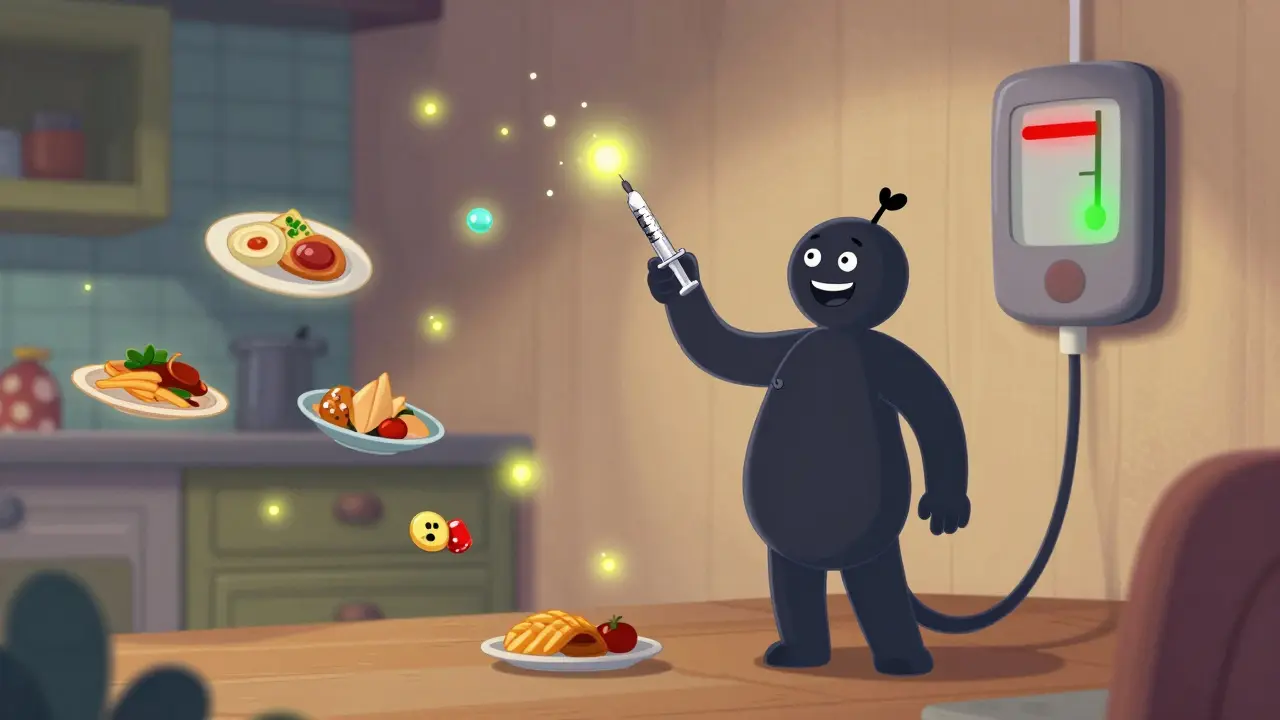
When you’re trying to manage type 2 diabetes and lose weight at the same time, most medications make it harder-not easier. Insulin makes you gain weight. Sulfonylureas? Same thing. Even the newer oral pills barely move the needle on the scale. But something changed in the last five years. A new class of drugs didn’t just help control blood sugar-they turned weight loss into a side effect that most people actually wanted. These are GLP-1 receptor agonists.
How GLP-1 Agonists Work: More Than Just a Shot
GLP-1 is a hormone your body makes naturally after you eat. It tells your pancreas to release insulin when blood sugar rises, slows down how fast your stomach empties, and sends a signal to your brain: ‘You’re full.’ GLP-1 receptor agonists are synthetic versions of that hormone. They mimic what your body already does-but stronger, longer, and more reliably.
That’s why they work on two fronts. First, they reduce your A1C by helping your body release insulin only when it’s needed, blocking excess glucagon (the hormone that tells your liver to dump sugar), and improving how your muscles use glucose. Second, they shrink your appetite. Not by making you feel hungry all the time, but by turning down the volume on cravings. People on these drugs often say they no longer crave sugary snacks or big meals. It’s not willpower. It’s biology.
Studies show these drugs slow gastric emptying by 15-30% in the first hour after eating. That means sugar enters your bloodstream slowly, avoiding those spikes that make your body store fat. At the same time, they activate neurons in your hypothalamus that say ‘stop eating,’ while quieting the ones that scream ‘more food.’ The result? People eat less-not because they’re fighting hunger, but because they don’t feel the urge to begin with.
Weight Loss Numbers That Shock Even Doctors
Before GLP-1 agonists, losing 10% of your body weight was considered a win in obesity treatment. Now, it’s the baseline.
Take semaglutide (Wegovy), the strongest version available. In the STEP 3 trial, people lost an average of 15.3 kg (about 34 pounds) over 68 weeks. Nearly 9 out of 10 lost at least 5% of their weight. More than half lost 15% or more. That’s not just weight loss-it’s a transformation. For someone weighing 250 pounds, that’s 37 pounds gone. For many, it’s enough to reverse prediabetes, reduce blood pressure, or even get off insulin.
Liraglutide (Saxenda) is older and weaker, but still effective. People typically lose 5-8% of their body weight. Dulaglutide (Trulicity) sits in the middle. But semaglutide? It’s in a different league. The STEP 8 trial showed semaglutide 2.4 mg led to 15.8% weight loss. Liraglutide 3.0 mg? Only 6.4%. The difference isn’t subtle.
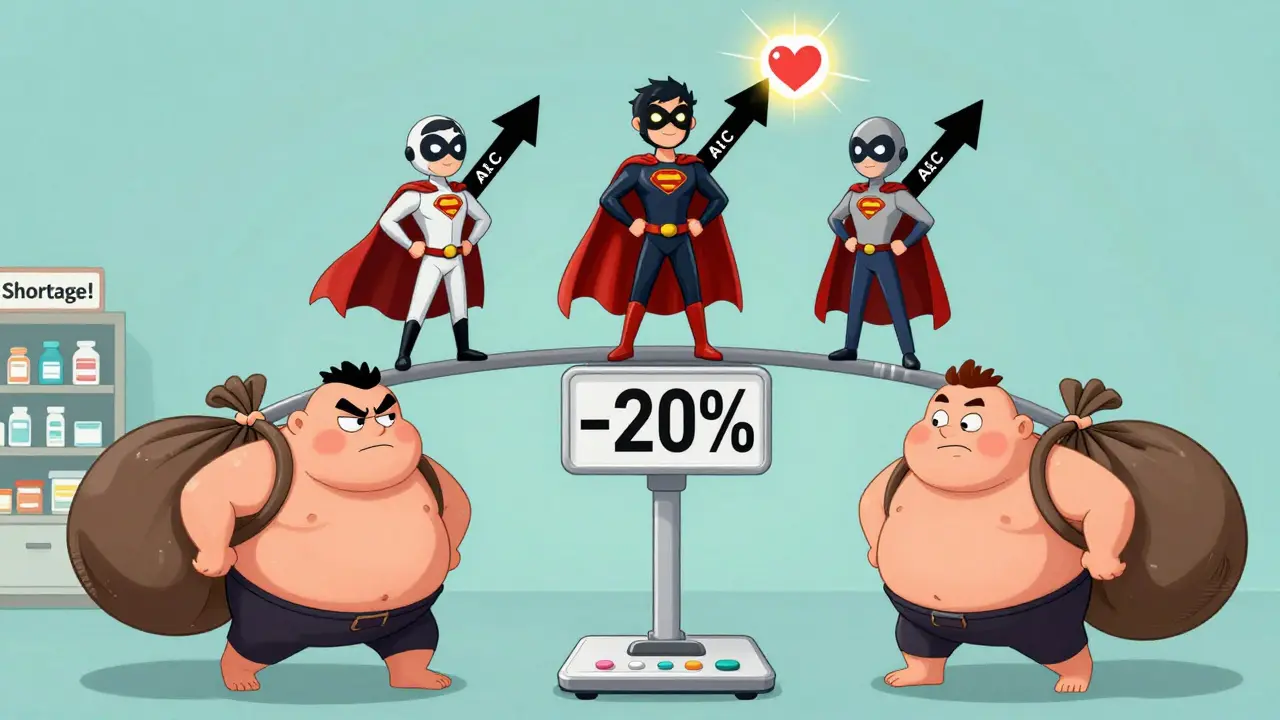
And then there’s tirzepatide (Zepbound). It’s not just a GLP-1 agonist-it’s a dual agonist, hitting both GLP-1 and GIP receptors. In the SURMOUNT-1 trial, people lost an average of 20.2% of their body weight. That’s close to what bariatric surgery achieves. And it’s all with a weekly injection.
A1C Reduction: Not Just a Bonus, a Game-Changer
If weight loss is the headline, A1C reduction is the quiet hero. Most people with type 2 diabetes start with an A1C of 8% or higher. That’s not just high-it’s dangerous. Every 1% drop in A1C lowers your risk of complications by 35%.
GLP-1 agonists consistently knock 1.0-1.8% off A1C levels. Semaglutide (Ozempic) at 1.0 mg weekly dropped A1C from 8.7% to 6.9% in one major trial. That’s not ‘improved’-that’s normal. Liraglutide brought down A1C by 1.14%. DPP-4 inhibitors? They drop it by 0.5-1.0% and don’t help with weight. Insulin? It lowers A1C but adds 4-10 kg of weight. GLP-1 agonists do both better.
And here’s the kicker: they reduce cardiovascular risk. The LEADER trial showed liraglutide cut heart attacks, strokes, and heart-related deaths by 13% in high-risk patients. That’s why the American Diabetes Association now recommends GLP-1 agonists as a first-line option for people with diabetes who also have heart disease or are at high risk.
How They Compare to Other Diabetes Drugs
| Medication Type | A1C Reduction | Weight Change | Dosing |
|---|---|---|---|
| GLP-1 Agonists (Semaglutide) | 1.8% | −15% body weight | Once weekly injection |
| GLP-1 Agonists (Liraglutide) | 1.14% | −5% to −8% body weight | Once daily injection |
| Insulin | 1.5-2.0% | +4 to +10 kg | Once to multiple times daily |
| Sulfonylureas | 1.0-1.5% | +2 to +4 kg | Once or twice daily pill |
| DPP-4 Inhibitors | 0.5-1.0% | ±0.5 kg | Once daily pill |
| SGLT2 Inhibitors | 0.5-1.0% | −2 to −5 kg | Once daily pill |
GLP-1 agonists stand out because they’re the only class that gives you meaningful weight loss without causing hypoglycemia (low blood sugar) when used alone. They’re also the only ones proven to reduce heart disease risk in people with diabetes. Even SGLT2 inhibitors-often called the other ‘miracle’ class-don’t match the weight loss or appetite suppression.
Side Effects: The Trade-Off
These drugs aren’t magic. They come with real side effects, especially at first.
Nausea affects 15-20% of users. Vomiting? Around 5-10%. Diarrhea and constipation are common too. Most of these happen during the first few weeks as your body adjusts. The key is slow titration. Semaglutide starts at 0.25 mg once a week and climbs over 16-20 weeks to 2.4 mg. Rushing this increases side effects.
Doctors recommend taking the shot at bedtime to reduce nausea. Avoiding fatty meals during the first month helps too. Over-the-counter meds like dimenhydrinate (Dramamine) can ease nausea if it’s bad.
Some people worry about the injection. But the pens are small, fine needles, and most users master it after 2-3 tries. In surveys, 85% of people are self-sufficient after training. The bigger hurdle? Needle anxiety. About 1 in 3 new users feel it.
The biggest risk? Weight regain after stopping. Studies show people regain 50-70% of lost weight within a year if they stop. That’s not a failure-it’s biology. These drugs change your appetite set point. Stop them, and your body tries to go back to where it was.
Who Gets Access? Cost and Insurance
Without insurance, these drugs cost $800-$1,200 a month in the U.S. That’s out of reach for most. Even with insurance, many plans require you to try other meds first-like metformin or lifestyle changes-before approving them.
Medicare Part D covers about 62% of prescriptions, but often requires prior authorization. Some private insurers only cover them for people with a BMI over 30 and a diabetes diagnosis. Others now cover them for obesity alone, thanks to the FDA’s 2022 approval of Wegovy for chronic weight management.
Supply shortages are real. Since 2022, semaglutide has been on the FDA’s shortage list. Pharmacies run out. Prescriptions get delayed. In some areas, patients wait weeks just to get their first dose.
Real People, Real Results
On Reddit’s r/Ozempic community, people share stories of losing 100 pounds or more. One user dropped 105 pounds in 14 months. Another lost 18% of body weight in six months. But they also talk about the nausea, the slow ramp-up, the fear of running out.
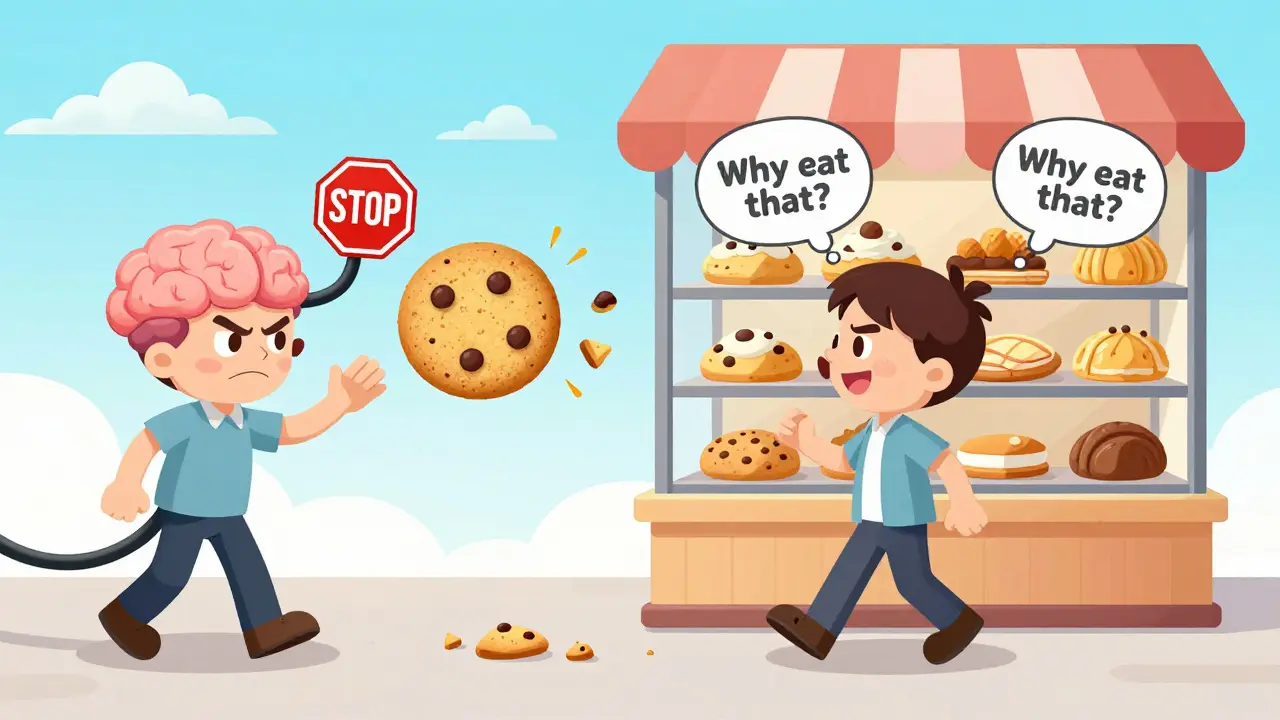
What surprises most is how their relationship with food changes. ‘I used to crave cookies after dinner,’ one user wrote. ‘Now, I look at them and think, ‘Why would I eat that?’ It’s like my brain reset.’
That’s the secret. These drugs don’t just suppress appetite-they rewire your cravings. Sugar stops being tempting. Big meals stop feeling satisfying. You eat because you’re hungry, not because you’re bored, stressed, or used to it.
The Future: Beyond Weight and Blood Sugar
Scientists are now testing GLP-1 agonists for conditions no one expected.
In a 2024 Lancet study, semaglutide reduced liver fat by 52% in people with fatty liver disease-twice as much as placebo. In heart failure patients with obesity, semaglutide improved walking distance and reduced shortness of breath. Novo Nordisk is even testing oral semaglutide for Alzheimer’s prevention, based on early data showing it may protect brain cells.
And the market is exploding. The global GLP-1 market hit $23.5 billion in 2022. By 2028, it’s expected to hit $48 billion. Semaglutide alone brought in $10.8 billion in 2023. Tirzepatide is catching up fast. The next wave? Oral versions, triple agonists, and cheaper generics.
For now, GLP-1 agonists are the most powerful tool we have for managing both type 2 diabetes and obesity. They’re not perfect. They’re not cheap. They’re not easy. But for the first time, they make it possible to lose weight and lower A1C without fighting your own biology.
What to Do Next
If you’re struggling with diabetes and weight, talk to your doctor. Ask if a GLP-1 agonist is right for you. Bring up your A1C, your weight, your goals. Ask about insurance coverage. Ask about the titration plan. Ask what to expect in the first month.
Don’t assume it’s too expensive. Some manufacturers offer savings cards. Some pharmacies have discount programs. Some insurers will approve it if you document failed attempts with other meds.
And remember: this isn’t a quick fix. It’s a long-term tool. The best results come when you combine the drug with better food choices, movement, and sleep. But for the first time, the drug helps you do that-without feeling like you’re starving yourself.
 Health and Wellness
Arjun Seth
January 16, 2026 AT 16:47People think these drugs are magic, but they're just chemical crutches. You're not fixing your life-you're just numbing your hunger with a needle. And when you stop? You gain it all back, plus guilt. Real change is discipline, not drugs.
Jaspreet Kaur Chana
January 18, 2026 AT 15:08Bro, I've been on semaglutide for 8 months now and I lost 42 pounds without even trying to diet. I used to eat biryani every Friday like it was a religious ritual-now I look at it and feel nothing. It's not about willpower, it's about biology resetting. My grandma in Punjab said I looked like a different person. She cried. I cried. It's not just weight-it's dignity.
Haley Graves
January 18, 2026 AT 16:37Let’s be real-this isn’t about weight loss. It’s about survival. Type 2 diabetes kills. Insulin makes you fat and tired. These drugs give you your life back. Stop pretending it’s a fad. If you’re not taking this seriously, you’re putting your organs at risk.
Gloria Montero Puertas
January 19, 2026 AT 03:05Of course, the pharmaceutical industry is thrilled-because they’ve found the perfect product: a drug that creates lifelong dependency, masks poor lifestyle choices, and costs $1,200 a month. And yet, somehow, the media calls it ‘revolutionary’? Wake up. This is capitalism dressed up as medicine.
Tom Doan
January 20, 2026 AT 01:53It's interesting how the article presents GLP-1 agonists as a panacea, yet omits the fact that 30% of users discontinue due to GI side effects within the first six months. The data on weight regain post-discontinuation is also stark-yet the piece frames it as ‘biology,’ not a pharmacological limitation. One wonders if the tone reflects clinical optimism or marketing strategy.
Annie Choi
January 20, 2026 AT 13:41GLP-1s are the first class that actually targets the neurobiology of appetite-not just insulin. That’s huge. We’ve been treating diabetes like a glucose problem, but it’s a brain problem. These drugs reset the set point. It’s not magic, it’s neuroscience. And yes, the cost sucks-but so does dying at 52 from a heart attack because you couldn’t lose 30 pounds.
Jan Hess
January 21, 2026 AT 00:26I’ve been on liraglutide for a year. Nausea sucked for the first month but now it’s fine. I went from 240 to 185. My A1C dropped from 8.9 to 5.8. I’m off metformin. I don’t crave sugar anymore. I still eat pizza. I just don’t need three slices. It’s not perfect but it’s the first thing that actually worked for me after 15 years of trying everything else
Dan Mack
January 23, 2026 AT 00:15They’re hiding the truth. These drugs are being pushed because Big Pharma wants you addicted. The FDA is in their pocket. The shortages? Artificial. They’re rationing to keep prices high. And don’t get me started on the ‘weight regain’-that’s not biology, that’s a trap. You think you’re cured? You’re just on life support. They want you paying forever
Amy Vickberg
January 23, 2026 AT 07:03For anyone scared to ask their doctor-just do it. Bring this article. Write down your numbers. Say ‘I want to live longer.’ They’ll listen. I was terrified of needles too. Now I do it while watching Netflix. It’s not a big deal. And if insurance says no-call them back. And again. And again. You’re worth it.
Ayush Pareek
January 24, 2026 AT 17:38My cousin in Mumbai started on semaglutide last year. He’s lost 50 pounds. His blood pressure is normal. His kids say he has energy again. He still eats roti and dal-just smaller portions. It’s not about giving up culture. It’s about keeping your health so you can enjoy it longer. This isn’t a Western trick-it’s a global gift.
Sarah Mailloux
January 25, 2026 AT 00:13Just got my first prescription. Nausea is brutal but I’m sticking with it. My mom had diabetes and died at 61. I’m 43. I don’t want to be her. This isn’t vanity. It’s legacy.
Nilesh Khedekar
January 25, 2026 AT 16:46You people act like this is some miracle cure but let me tell you something-when you stop taking it, your body doesn’t just go back to normal, it goes back to war. You become hungrier than before. The cravings come back like a tsunami. And the worst part? Everyone blames you. ‘Why did you gain it all back?’ Like you didn’t do everything right. Like the drug wasn’t doing the work. It’s not your fault. It’s the system. They sold you a temporary fix and called it a solution.