
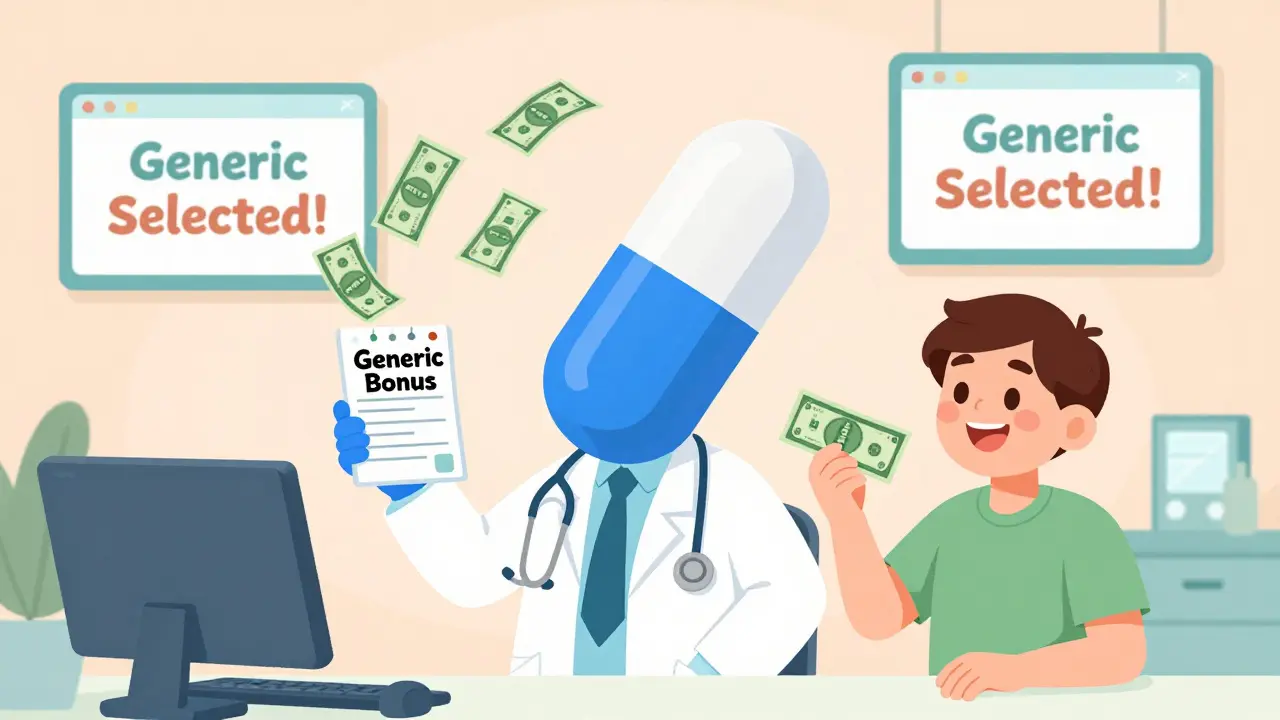
When a doctor writes a prescription, they’re not just choosing a medicine-they’re making a decision that affects a patient’s health, their own income, and the entire healthcare system’s bottom line. Over the last two decades, financial and non-financial rewards have been quietly woven into how providers choose between brand-name drugs and their cheaper, equally effective generic counterparts. These aren’t just random bonuses. They’re structured, data-driven systems designed to shift prescribing habits. And they’re working-sometimes too well.
Why Generic Prescribing Matters
Generic drugs aren’t knockoffs. They’re exact copies of brand-name medications, approved by the FDA to work the same way, in the same dose, with the same safety profile. The only difference? Price. A generic version of a commonly prescribed statin might cost $4 instead of $200. That’s not a small saving-it’s life-changing for patients on fixed incomes, and it slashes billions off national healthcare spending.
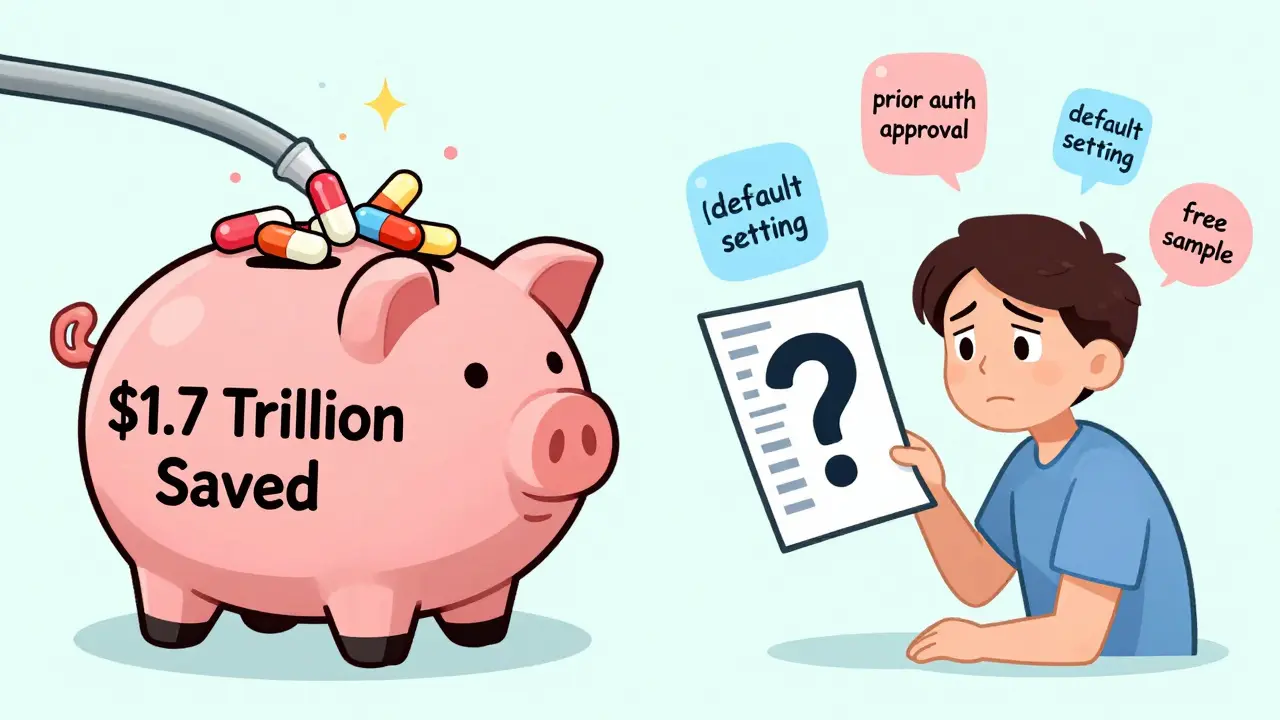
In the U.S., generics make up 90.5% of all prescriptions filled, but they account for just 23% of total drug spending. That gap is why incentives exist. The Congressional Budget Office estimates that between 2009 and 2019, generics saved the healthcare system $1.7 trillion. That’s not theoretical. It’s real money that keeps clinics open, lowers insurance premiums, and lets patients afford their meds month after month.
How Incentives Work-The Real Mechanisms
There are two main types of incentives: financial and non-financial. Both are designed to make prescribing generics easier, more rewarding, or less burdensome.
Financial incentives come in different shapes. Some health plans pay providers $5 to $15 per generic prescription in targeted drug classes-like blood pressure meds or diabetes drugs. Others offer annual bonuses of up to $5,000. UnitedHealthcare’s Value-Based Prescribing Program, for example, tied payments to how often providers chose generics over brands. In primary care settings, this led to a 24.7% increase in generic use. Blue Cross Blue Shield plans have similar models. The money doesn’t come from thin air-it’s often pulled from savings generated by lower drug costs.
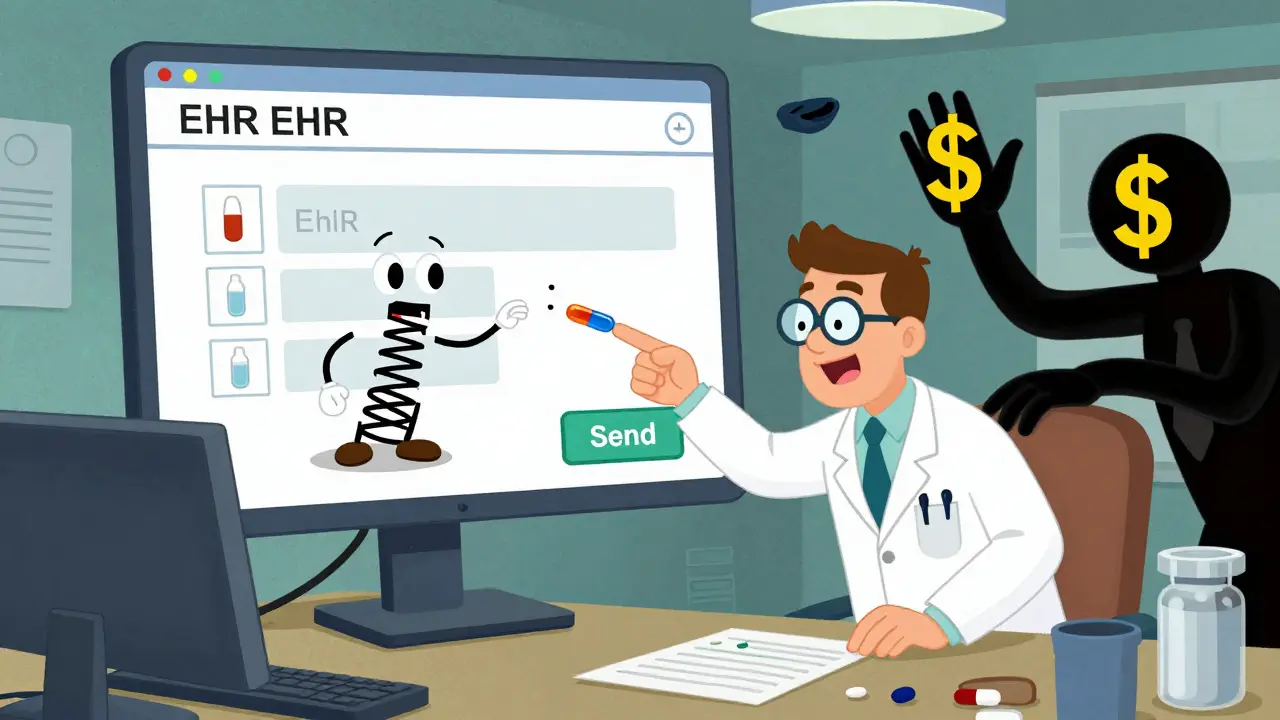
Non-financial incentives are quieter but just as powerful. Some systems give providers faster prior authorization approvals if they stick to generics. Others offer priority scheduling or public recognition. One of the most effective tools? E-prescribing defaults. When an EHR system automatically selects a generic drug as the first option, prescribing rates jump by over 22 percentage points. That’s not coercion-it’s smart design. Humans default to the path of least resistance. If the system nudges you toward the cheaper, equally effective option, you’re far more likely to click ‘send’ without thinking twice.
What Doesn’t Work-And Why
Not all incentive programs deliver. Formulary tiering-where generics are placed in the lowest-cost tier for patients-is common but weak. It shifts cost to the patient, not the provider. Studies show it only increases generic use by 8-12%. That’s not enough.
Even worse are programs that ignore clinical nuance. A 2023 JAMA study found that providers enrolled in the 340B drug discount program-meant to help safety-net clinics-actually prescribed fewer generics. Why? Because they got deep discounts on brand-name drugs. The system rewarded them for choosing more expensive options. That’s a perverse incentive: the program meant to lower costs ended up increasing them.
Another red flag? When incentives come from pharmaceutical companies. Research shows physicians who receive free samples, meals, or sponsored education are 37% less likely to prescribe generics, especially in the first year after a drug goes generic. This isn’t about greed-it’s about human psychology. Relationships matter. A rep who shows up every month with coffee and a free sample creates a bond. That bond influences prescribing, even if the provider doesn’t realize it.
Provider Voices: The Real Story
Doctors aren’t robots. Their opinions on these programs are mixed.
Dr. Michael Chen, an internist in California, says UnitedHealthcare’s bonus program added $2,800 to his annual income with almost no extra work. "It felt fair. I was already prescribing generics. Now I got paid for it."
But Dr. Sarah Williams, a family doctor in Texas, feels differently. "Some programs feel like they’re trying to turn me into a pharmacy technician. I have a patient with three chronic conditions and a history of adverse reactions. I can’t just grab the cheapest option."
Reddit threads from r/physicians echo this. One user, "MedDoc2020," wrote: "Generic incentives work great for simple cases-hypertension, acid reflux. But when someone has complex comorbidities, you need flexibility. One-size-fits-all doesn’t save lives."
A 2021 MGMA survey of 1,200 providers found that 63% liked incentives when they were voluntary and tied to quality metrics. But 78% worried that if patients found out their doctor was being paid to prescribe generics, trust would erode. That’s a real concern. Patients don’t always understand the difference between a brand and a generic. If they think their doctor is choosing based on money, not medicine, the relationship breaks.
Global Comparisons: What Other Countries Do Better
The U.S. isn’t alone in this. Germany uses a system called reference pricing. The government sets a reimbursement rate for a drug class-the lowest-priced generic in that class. If you prescribe a more expensive brand, the patient pays the difference. Result? 93% of off-patent prescriptions are generic. That’s higher than anywhere else.
England’s NHS tried a different route: they banned doctors from dispensing drugs themselves. Why? Because when providers could sell meds directly, they prescribed 3.1% more expensive drugs per patient. Removing the profit motive helped. The U.S. still allows many providers to dispense-and that creates a conflict.
The Future: Where Incentives Are Headed
The next wave of incentives won’t just be about cost. They’ll be about outcomes.
UnitedHealthcare’s 2024 rollout of value-based prescribing contracts ties payments to both cost savings and clinical outcomes-like hospitalization rates or medication adherence. CMS is testing standardized $2 co-pays for essential generics in Medicare Advantage plans. Preliminary results show a 22.7% improvement in adherence for chronic conditions.
The 2022 Inflation Reduction Act includes provisions to shorten patent monopolies on brand-name drugs, which could push generic use up another 5-7% by 2027. Experts predict generic prescriptions will hit 94% of all fills by 2028.
But the biggest challenge remains: how to design incentives that save money without sacrificing care. The best programs don’t force providers into boxes. They give them tools-e-prescribing defaults, decision support alerts, clear guidelines-and reward them for using them wisely. They exclude drugs where brand matters-like epilepsy meds or thyroid hormones-where tiny differences in formulation can cause real harm.
What Providers Need to Know
If you’re a clinician, here’s what you should do:
- Know your plan’s incentive structure. Is it a bonus? A bonus with limits? A default setting?
- Use clinical decision support tools. Don’t ignore alerts-they’re there to help, not hinder.
- Advocate for exceptions. If a patient needs a brand, document why. Don’t assume it’s automatic.
- Don’t accept gifts from pharma reps. They’re not free. They influence you.
- Stay informed. The rules change every year. What worked in 2022 might be outdated in 2026.
Generic prescribing isn’t about choosing cheap over good. It’s about choosing smart over expensive. When done right, it’s one of the most effective ways to make healthcare more sustainable without sacrificing quality.
Do generic drugs work as well as brand-name drugs?
Yes. Generic drugs contain the same active ingredients, dosage, strength, and route of administration as their brand-name counterparts. The FDA requires them to meet the same strict standards for safety and effectiveness. The only differences are inactive ingredients, packaging, and price. For 90% of medications, generics are just as effective.
Are provider incentives for generics ethical?
It depends on how they’re designed. Incentives that reward cost-saving without restricting clinical judgment are ethical. But when incentives are tied to profit from pharmaceutical companies, or when they override individual patient needs, they become problematic. The key is transparency and clinical flexibility. If the goal is to help patients afford care, not to boost provider income, the system works.
Can incentives lead to worse patient outcomes?
Yes-if they’re poorly designed. Studies show that when providers are pressured to prescribe generics in complex cases-like epilepsy, thyroid disease, or psychiatric conditions-they may inadvertently cause harm. Patients may experience side effects or reduced effectiveness if the generic isn’t bioequivalent in their specific case. The best programs include clinical exceptions and avoid rigid rules.
Why do some doctors resist generic prescribing incentives?
Many feel it undermines their clinical autonomy. They worry they’ll be forced into a one-size-fits-all model that ignores patient history, allergies, or unique responses. Others distrust the motives behind the programs-especially if they’re tied to insurance companies or pharmacy benefit managers with profit-driven goals. Trust matters. If providers feel like they’re being managed, not supported, resistance grows.
Do patients know if their doctor is being paid to prescribe generics?
Almost never. Most incentive programs are hidden from patients. But surveys show that if patients found out, 78% of providers believe it would damage trust. Transparency is a double-edged sword. While openness builds honesty, it can also make patients question whether their care is being influenced by money. The best approach is to focus on the benefit to the patient: "This generic works just as well and costs $4 instead of $200."
 Health and Wellness