
Generic Drug Savings: Real Numbers and Healthcare Statistics
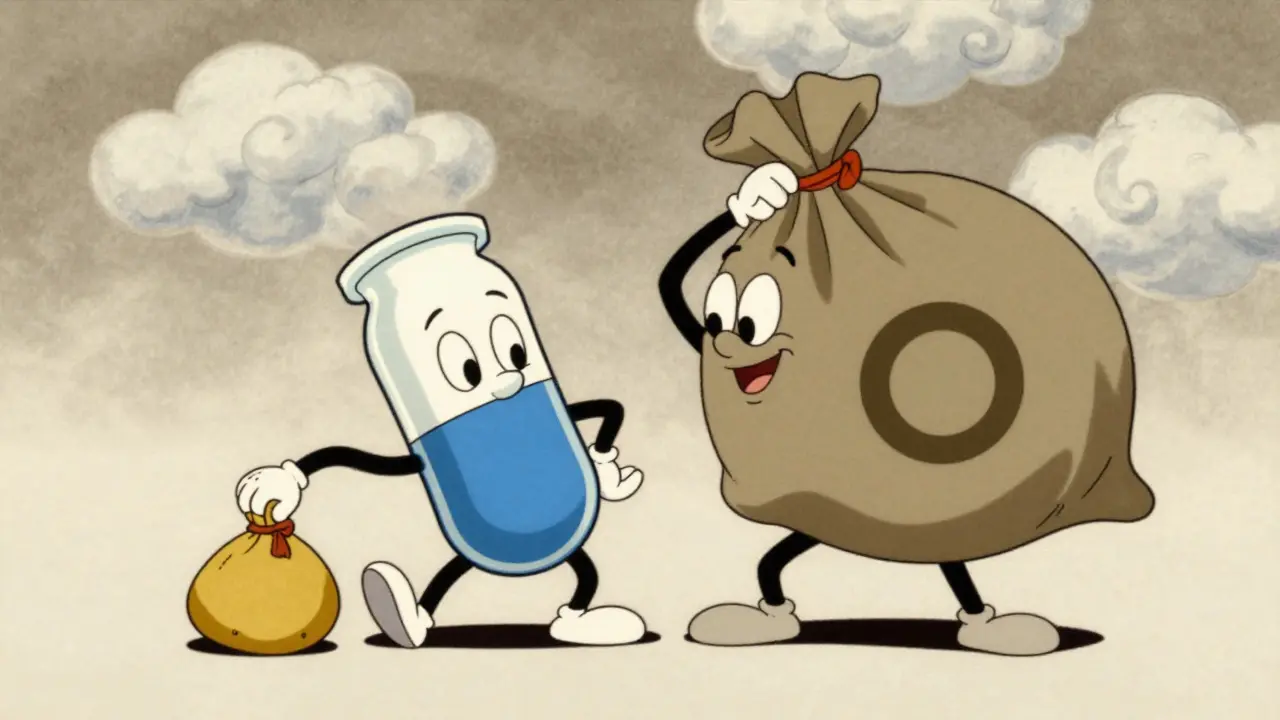
You might think you know what generic drugs are, but have you ever stopped to look at the actual math? It creates a situation that sounds almost too good to be true. Imagine a market where 90 percent of all transactions happen using one type of product, yet those same products make up less than a fifth of the total money spent. That is exactly what happens with medication.
In plain terms, most people don't realize just how much money the generic system saves us. We often hear about high medicine prices, but we rarely get the hard data showing the alternative. When you switch from a brand-name drug to its generic equivalent, the price tag drops dramatically. In fact, the average out-of-pocket cost in 2024 was just under $7 for a generic script compared to nearly $29 for the original brand. That isn't just a little savings; that is a massive difference for your wallet.
The 90 Percent versus 12 Percent Paradox
If you look at the prescription habits in the United States, a strange pattern emerges. By 2024, generic and biosimilar medicines made up roughly 90 percent of all prescriptions filled. Yet, these cheap versions accounted for only 12 percent of the total spending on drugs. On the other side, brand-name drugs made up just 10 percent of prescriptions but soaked up 88 percent of the spending money. Experts call this the "90 over 13 paradox," and it perfectly explains why healthcare costs feel so unbalanced.
This gap exists because the unit price of generics is incredibly low compared to patented brands. For every $100 spent on medicine, more than half goes toward covering the small slice of brand-name scripts, while the vast majority of pills taken come from the low-cost generic bucket. When you calculate this out nationally, Americans spent about $98 billion on 3.9 billion generic prescriptions. In contrast, they dropped $700 billion on just 435 million brand scripts. The volume is huge, but the spend per pill is tiny for the generic side.
How Much Money Is Really Saved?
Numbers can get fuzzy without context, so let's talk about the total value. According to recent reports from the Association for Accessible Medicines (AAM), the savings generated by generics and biosimilars were staggering. Just in 2023 alone, the U.S. healthcare system saved approximately $445 billion thanks to these lower-cost options. Over the past decade, that total accumulation hits a mind-boggling figure of $3.4 trillion.
Even the regulators see this value clearly. The FDA estimates that generic drugs approved in just the single year of 2022 generated around $18.9 billion in projected savings. When you include older drugs approved before 2021, the annual savings pushed well past $408 billion. These aren't hypothetical figures based on models; they are calculated based on the actual market behavior and substitution rates observed in pharmacy claims.
| Metric | Generic/Biosimilar | Brand-Name |
|---|---|---|
| Prescription Volume Share | 90% | 10% |
| Total Spending Share | 12% | 88% |
| Avg Cost (2024) | $6.95 | $28.69 |
| Uninsured Cost Trend | -6% since 2019 | +50% since 2019 |

Biosimilars: The Next Wave of Savings
While traditional generics cover the basics, there is a more complex version emerging called biosimilars. Think of these as the generic equivalents for biologic drugs, which are larger, more complex molecules used for serious conditions like cancer and autoimmune diseases. Biologics are notoriously expensive to make, so their generic copies bring relief to a different segment of patients.
Since their introduction, biosimilars have generated over $56 billion in healthcare savings. Just in 2024, they contributed another $20.2 billion to the ledger. Oncology (cancer care) has seen some of the biggest wins here. Before biosimilars arrived, oncology spending was growing fast. Once these alternatives entered the market, the growth rate of oncology spending was cut roughly in half. This means billions of dollars saved specifically on cancer medicines, reaching $18 billion in savings in 2020 alone.
A great example of this happened recently with Stelara, a common treatment for Crohn's disease and psoriasis. By July 2025, nine different biosimilar versions launched, offering prices up to 90 percent lower than the original. This kind of competition opens access for people who otherwise couldn't afford the treatment, proving that market competition works even for high-tech biology.
Why Don't All Patents Expire Immediately?
If generics are so cheap, why does the original manufacturer hold onto their monopoly for so long? You would think a patent expires after 20 years, and then the floodgates open. Sometimes, companies find ways to delay that opening. One tactic involves filing dozens of additional patents on minor parts of the drug, like the packaging or the manufacturing process. This is known as a "patent thicket."
For example, analysts have documented blockbuster drugs where the company obtained over 75 patents just to push the expiration date from 2016 all the way to 2034. Another tricky move is called "product hopping." Here, a company changes the pill slightly-maybe the shape or color-just enough to force doctors to prescribe the new version, making the old generic obsolete. These tactics prevent savings from happening on time.
There is a lot of noise about the cost of prescription drugs, but the core issue often comes down to delayed competition. Policies currently being discussed aim to stop these delays, including legislation targeting patent thickets. Limiting these practices could yield billions more in savings over the next ten years, but until laws change, these hurdles remain.
What Happens in 2025 and Beyond?
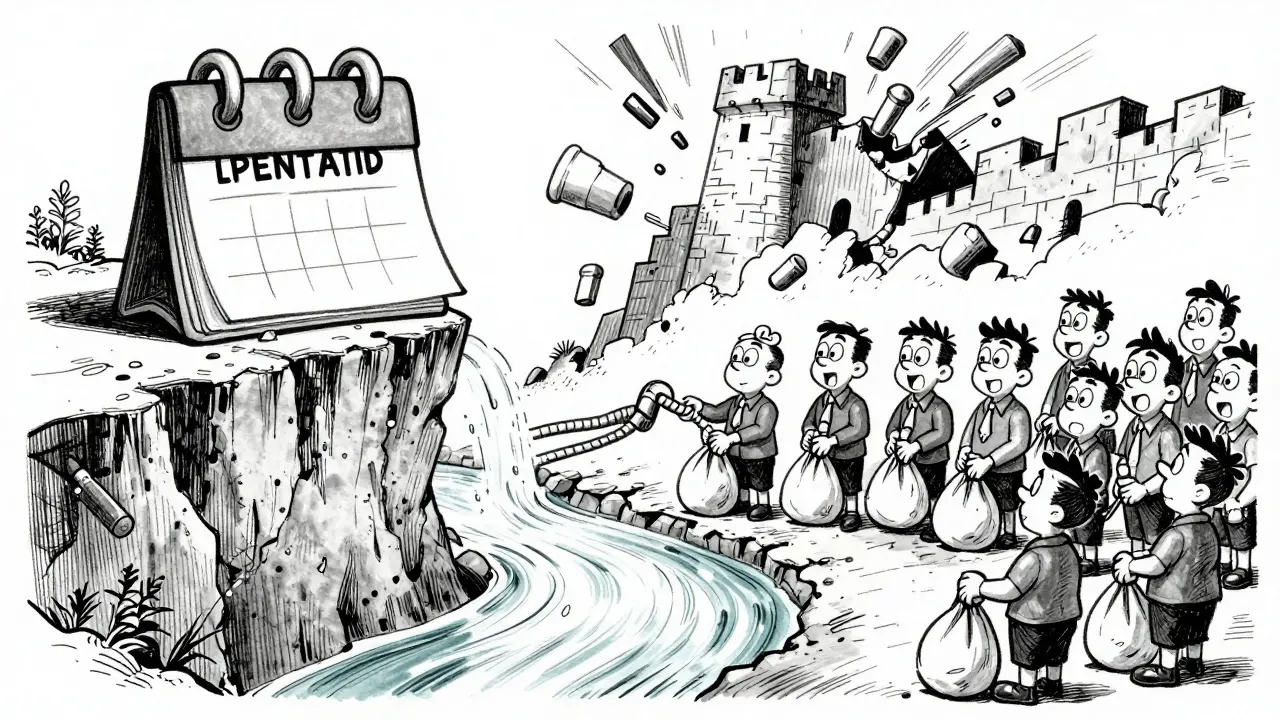
Looking at the timeline, 2025 is shaping up to be a massive year for potential savings. This is because several major brand-name drugs are losing their patent protection. This event is often called a "patent cliff." When a big patent falls off, the generic manufacturers rush in, and prices plummet.
Several blockbusters face this reality in late 2025. Entresto, a heart failure treatment, had sales of $5.4 billion in 2023. Tradjenta, for diabetes, brought in $1.7 billion, and Opsumit for pulmonary hypertension was worth $1.5 billion. Combined, these represent roughly $8.6 billion in brand sales that will eventually shift to the cheaper generic pool. When these drugs hit the market, the cost for patients typically drops by 80 to 90 percent.
Common Questions About Generic Value
Are generic drugs really the same as brand names?
Yes, generic drugs must contain the exact same active ingredients in the same dosage and strength. The FDA requires them to work the same way in the body, ensuring bioequivalence. The only differences are usually the inactive ingredients like fillers or colors.
Do I need to switch to generic myself?
Pharmacists automatically substitute generics if your insurance allows it. However, you can ask your doctor to write "dispense as written" if you prefer a specific brand, though you may pay the higher full price.
How much does a generic save me personally?
For the average patient, the generic co-pay is often around $6.95 versus $28.69 for brand. If you are uninsured, the savings are even larger, sometimes dropping from over $130 down to under $10 for the same medication.
Will biosimilars ever replace all biologics?
Will biosimilars ever replace all biologics?
Experts project that biosimilars will capture significant market share. While they are already cutting cancer drug costs in half, they still hold less than 30% of the competitive market, meaning there is room for even more growth in the near future.
Does the government track these savings?
Absolutely. Organizations like the FDA, the Congressional Budget Office, and the Association for Accessible Medicines publish annual reports tracking spending, prescription volume, and estimated savings across the healthcare system.
Next Steps for Patients
If you have a chronic condition requiring daily medication, checking if your current prescriptions have generic versions is the first logical step. Insurance plans usually incentivize this through lower tier copays. Furthermore, discussing biosimilar options with your specialist for expensive biologics could unlock access to care that was previously financially out of reach.
 Health and Wellness