
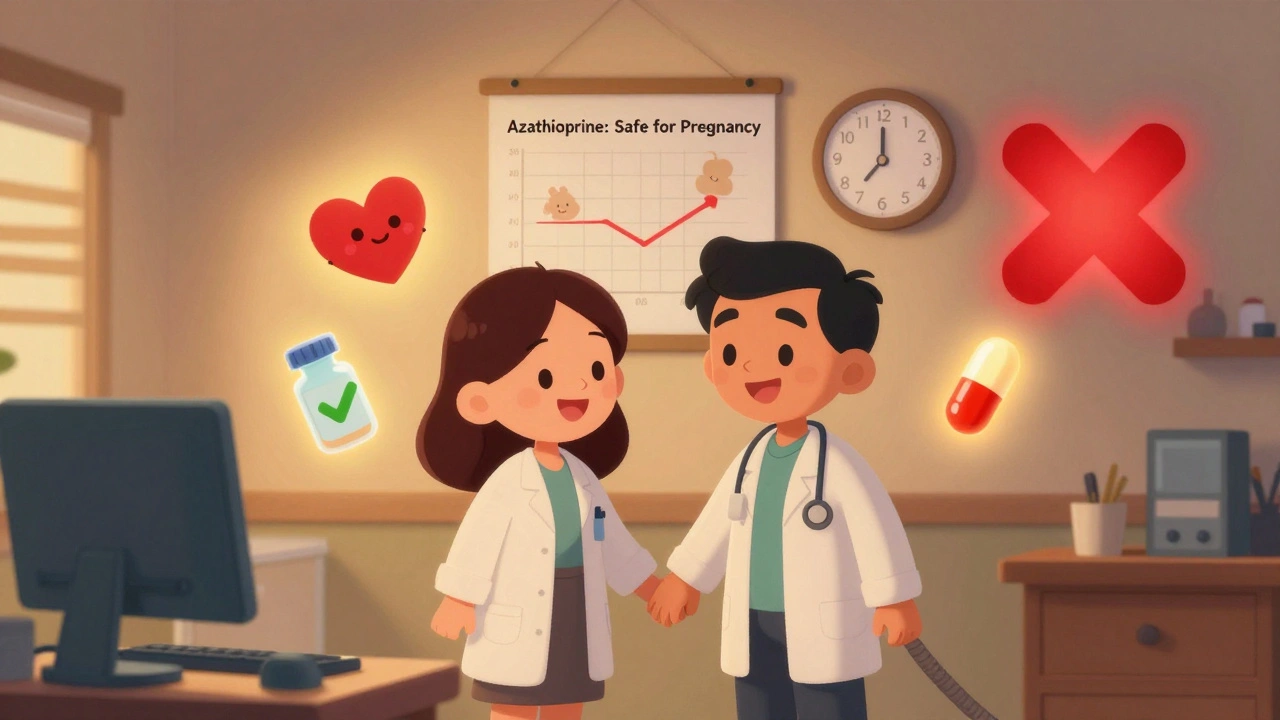
Immunosuppressant Pregnancy Safety Checker
This tool helps you understand the pregnancy safety profile of your immunosuppressant medication based on medical evidence. Select your drug to see key risks and recommended action steps.
Preconception Planning Tips
Always consult with your healthcare team before starting a pregnancy while on immunosuppressants. Key considerations include:
- Timing medication switches to allow for adequate clearance
- Testing fertility before conception if medications affect sperm/egg quality
- Monitoring disease activity during pregnancy
When you’re on immunosuppressants for an autoimmune disease or after an organ transplant, thinking about having a baby can feel overwhelming. You’re not alone. Many people wonder: Can I get pregnant safely while taking these drugs? The answer isn’t simple - but it’s not impossible either. Over the last 20 years, doctors have learned a lot about how these medications affect fertility, pregnancy, and baby health. The good news? With the right planning, many people on immunosuppressants go on to have healthy pregnancies and children. The catch? You can’t wing it. Timing, drug choice, and preconception counseling aren’t optional - they’re essential.
Which Immunosuppressants Are Safe During Pregnancy?
Not all immunosuppressants are created equal when it comes to fertility and pregnancy. Some are risky, others are relatively safe - and knowing the difference can change everything.Azathioprine is one of the safest options. Studies tracking over 1,200 pregnancies in women taking this drug found no increase in birth defects, miscarriages, or developmental issues. It’s been used for decades in transplant patients and those with lupus or rheumatoid arthritis, and the data is solid. If you’re planning a pregnancy and on azathioprine, your doctor may just keep you on it.
Contrast that with methotrexate. This drug, often used for rheumatoid arthritis and psoriasis, is a known embryo poison. It can cause severe birth defects, including skull and brain malformations. Even if you’re not trying to get pregnant, you need to stop methotrexate at least three months before conception. Why? Because it lingers in your body and can damage developing eggs or sperm long after you’ve stopped taking it.
Cyclophosphamide is even more serious. It’s a chemotherapy drug used for severe autoimmune conditions. In women, it can cause permanent ovarian damage - up to 70% of those who take more than 7 grams per square meter of body surface lose their fertility permanently. In men, it can cause irreversible azoospermia (no sperm) in about 40% of cases. If you’re on this drug and want kids someday, talk to your doctor about freezing eggs or sperm before you start.
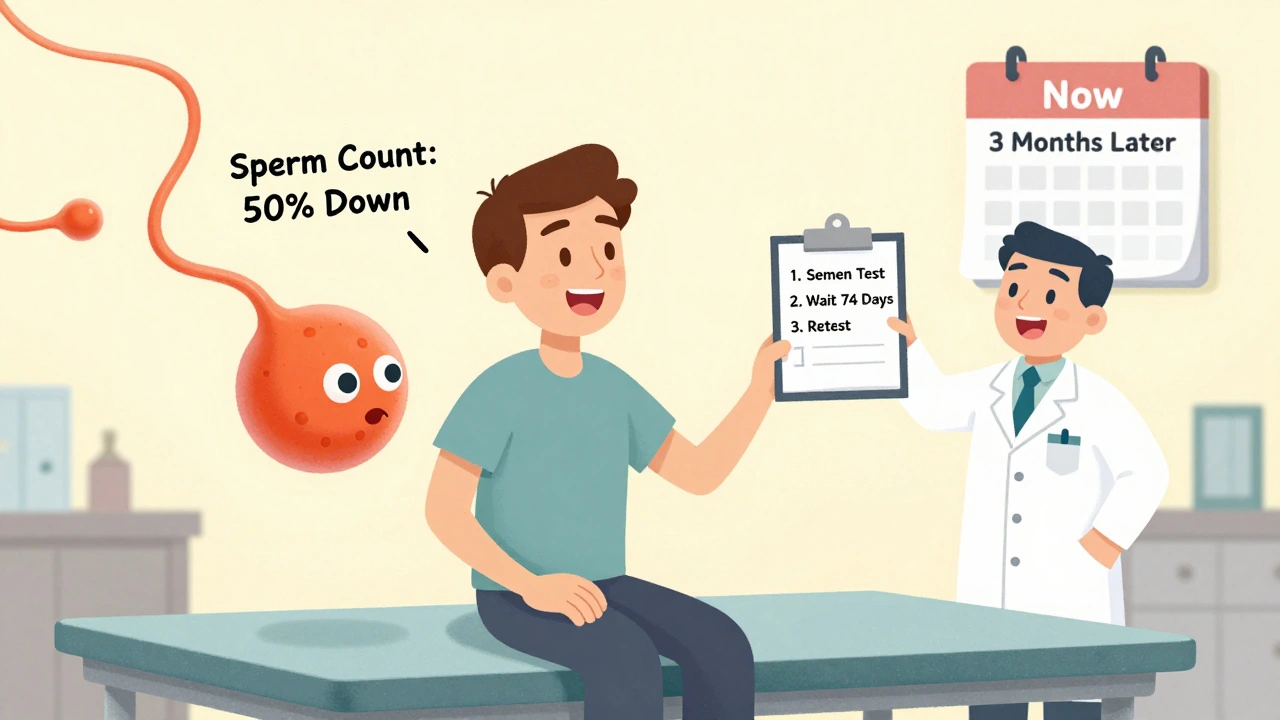
For men, sulfasalazine is a common culprit. It cuts sperm counts by 50-60%, but here’s the relief: it’s reversible. Once you stop taking it, sperm counts bounce back in about three months. No need for fertility preservation - just time. But don’t assume it’s harmless. Always get a semen analysis before trying to conceive.
Then there’s sirolimus. Despite being used in transplant patients, it’s classified as unsafe during pregnancy. Early reports showed a 43% miscarriage rate - far higher than the normal 15-20%. There are also cases of structural birth defects. The FDA hasn’t approved it for use in pregnancy, and most doctors will switch you off it well before conception.
Belatacept is newer. Early data from three pregnancies show healthy babies, but that’s just three cases. It’s promising, but not yet proven. Your doctor might consider it if other options aren’t working - but only after careful discussion.
Steroids and Pregnancy: What’s the Real Risk?
Prednisone and other corticosteroids are often used long-term for autoimmune diseases. Many assume they’re safe because they’re “natural” hormones. But they’re not harmless.These drugs can interfere with ovulation and sperm production. They also increase the risk of premature rupture of membranes by 15-20%. That means your water breaks too early - a leading cause of preterm birth. They’re also linked to higher rates of gestational diabetes and high blood pressure during pregnancy.
But here’s the twist: you usually don’t stop them. Stopping steroids suddenly can trigger a disease flare - and that’s more dangerous to your baby than the drug itself. The key is to use the lowest effective dose. Many doctors reduce the dose in early pregnancy and keep it stable afterward. Monthly monitoring of blood pressure, glucose, and weight becomes critical.
Male Fertility: The Overlooked Side of the Story
Most preconception counseling focuses on women. But men on immunosuppressants need attention too. Many drugs were approved before regulators required testing for male reproductive effects. That means we’re still catching up.Cyclophosphamide? Can wipe out sperm production permanently. Sulfasalazine? Slows sperm count, but it’s reversible. Methotrexate? Damages sperm DNA - even if you don’t notice changes in volume or motility.
The FDA recommends three key tests for men: a baseline semen analysis, another after one full spermatogenic cycle (about 74 days), and a final one 13 weeks after stopping the drug. Why? Because sperm take about three months to fully regenerate. If you’re on a drug that could hurt sperm, waiting three months after stopping isn’t enough - you need proof it’s recovered.
Don’t assume you’re fine just because you feel healthy. A man can have normal libido and erections but still have zero or low-quality sperm. That’s why testing isn’t optional. It’s the only way to know if you’re ready to try for a baby.
When to Start Planning - And Who Should Be on Your Team
You don’t wait until you miss a period to talk about this stuff. You start at least six months before you want to conceive. Why? Because switching medications takes time. Some drugs need to be cleared from your system. Others require monitoring to make sure your disease stays under control.For example, if you’re on methotrexate, you stop it three months before trying. If you’re on cyclophosphamide, you might need to freeze eggs or sperm before starting. If you’re a transplant patient, your kidney or liver function needs to be stable for at least six months before pregnancy - and your creatinine levels should be below 13 mg/L to avoid high risk of pre-eclampsia.
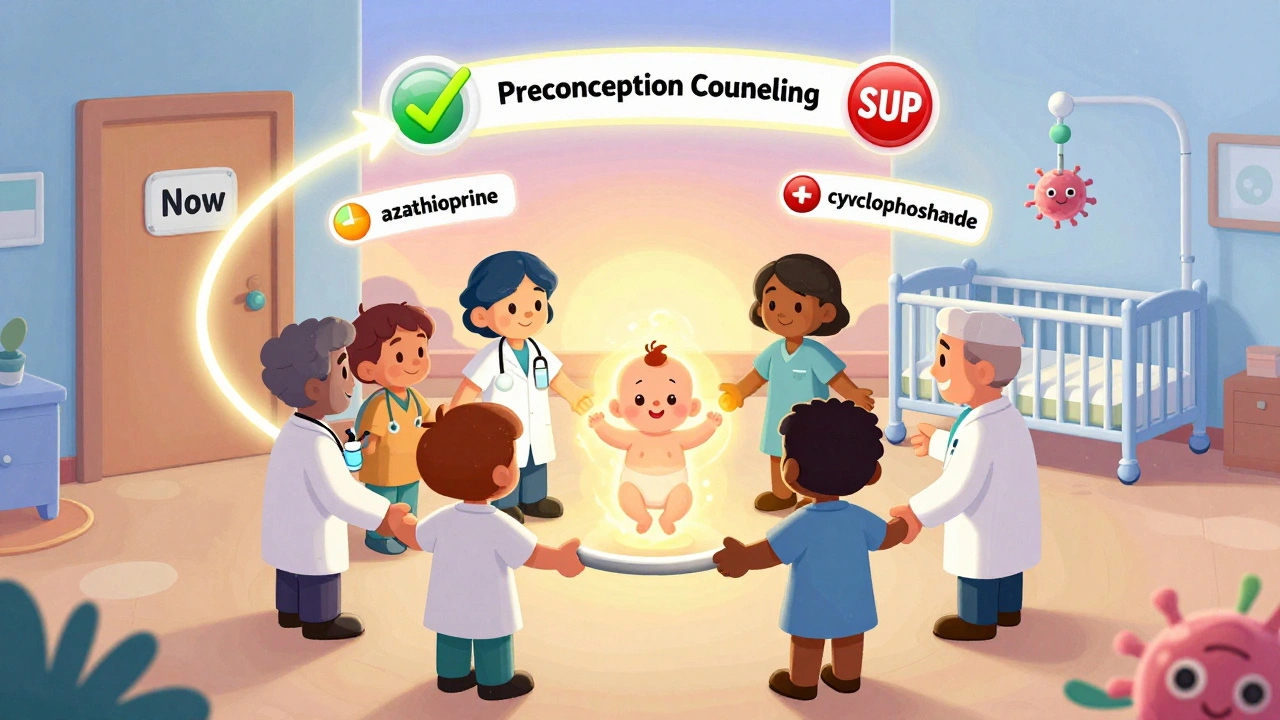
This isn’t something you do alone. You need a team: your transplant specialist, your rheumatologist or gastroenterologist, a reproductive endocrinologist, and your OB-GYN. Some hospitals have dedicated fertility clinics for patients on immunosuppressants. They track outcomes, adjust meds, and monitor both mom and baby closely.
And don’t forget your pharmacist. They know the interactions. They can flag if a new prescription might clash with your current regimen. They’re part of the safety net.
What About Breastfeeding?
Many people worry: “Can I breastfeed if I’m still on immunosuppressants?”It depends. Chlorambucil? No. It passes into breast milk and can suppress the baby’s immune system. Azathioprine? Usually yes. Only tiny amounts get into milk, and studies show no harm to breastfed infants. Prednisone? Safe if you take it after feeding and wait a few hours before the next one.
Always check with your doctor before starting breastfeeding. Some drugs have no data - and that’s not the same as being safe. When in doubt, pump and dump for a few hours after taking your dose.
Long-Term Risks for the Baby
You might be relieved to hear your baby was born healthy. But what about five years from now?Studies show that babies exposed to immunosuppressants in the womb have a 2.3 times higher risk of infections in their first year. Their B-cell and T-cell counts are lower. That doesn’t mean they’ll get sick constantly - but it does mean they need careful monitoring. Vaccines might need to be delayed. Illnesses might need faster treatment.
Long-term studies on brain development, growth, and cancer risk are still lacking for many newer drugs. That’s why registries are being built - to track these children into adulthood. If you’re part of this group, consider joining a registry. Your data helps future parents make better choices.
The Bottom Line: Knowledge Is Power
Pregnancy on immunosuppressants isn’t about avoiding risk - it’s about managing it. You can’t control every variable, but you can control your preparation. Talk to your doctors early. Get tested. Switch meds if needed. Don’t let fear silence you - but don’t rush either.The field has come a long way since 2000, when doctors had almost no data on children born to parents on these drugs. Now, we have guidelines. We have safety profiles. We have success stories. But the most powerful tool you have? Preconception counseling. That one conversation - with the right team - can mean the difference between a risky pregnancy and a healthy one.
Don’t wait until you’re pregnant to ask the hard questions. Ask them now. Because your future child deserves more than hope - they deserve a plan.
 Health and Wellness
Ali Bradshaw
December 6, 2025 AT 07:30Been on azathioprine for lupus for 8 years. Got pregnant naturally after 6 months of planning. No issues. My OB and rheum doc were on the same page. Just make sure you’re not trying to do this alone. Team up. It’s doable.
Also, stop scrolling and start scheduling that preconception consult. Your future kid will thank you.
Lynette Myles
December 6, 2025 AT 23:36Did you know the FDA doesn’t require long-term fetal tracking for most immunosuppressants? That’s why we’re flying blind. The studies you cited? Small. Industry-funded. And no one’s tracking the kids at age 12 for autoimmune onset or neurodevelopmental delays. This isn’t medicine. It’s gambling with DNA.
Rupa DasGupta
December 8, 2025 AT 21:56Okay but like… what if you’re poor and can’t afford to freeze eggs or see a fertility specialist? 😭 My meds are covered but my sperm count test? $400 out of pocket. And my doc just said ‘try anyway’ 🤡
Why is this so expensive when it’s literally about human life??
Deborah Jacobs
December 9, 2025 AT 02:28I’m a mom of two on azathioprine. Both kids are 7 and 9 now - brilliant, healthy, wild as hell. I cried when I found out I could get pregnant. I cried harder when I held them. The fear was real. But the love? Bigger.
Don’t let the scary stats silence you. Let them inform you. Talk to your team. Get the labs. Switch meds if needed. But don’t let fear steal your joy. You’re not broken. You’re just navigating a different path. And you’re not alone.
Also - breastfeeding on azathioprine? Yes. I did it. My pediatrician was skeptical. The data said fine. I trusted both. My kids never got sick more than any other toddler. You got this.
Marvin Gordon
December 9, 2025 AT 15:28Guys. Stop treating this like a horror movie. You’re not poisoning your future child. You’re managing a chronic condition. That’s not a flaw - it’s a fact of life. If you’re on methotrexate and trying to conceive, you’re not being careful - you’re being reckless. But if you’re on azathioprine and you’ve planned? You’re doing better than 90% of people trying to get pregnant without any medical oversight.
Stop the fear porn. Start the prep. And for god’s sake - get that semen analysis. Men, this isn’t just a ‘woman’s issue.’ Your sperm matters too.
Philip Kristy Wijaya
December 11, 2025 AT 12:17Let me be the first to say this out loud: The entire premise of this article is a corporate wellness scam designed to sell more fertility consults and drug switches. Azathioprine is safe? Says who? The same pharma reps who told us thalidomide was fine for morning sickness. We have zero longitudinal data beyond five years. The FDA approves drugs based on short-term endpoints. Not lifelong outcomes. You think your child will be fine? You’re trusting a system that let opioid addiction explode while approving new painkillers. This isn’t medicine. It’s capitalism with a stethoscope.
And don’t get me started on ‘preconception counseling’ - that’s just a fancy term for ‘pay us $800 to tell you what you already know.’
Freeze your eggs? Sure. But don’t believe the hype. The real risk isn’t the drug. It’s the illusion of control.
Lucy Kavanagh
December 11, 2025 AT 21:58My sister did IVF on cyclophosphamide after transplant. Got pregnant. Baby was fine. But the hospital made her sign 17 forms and pay £12k out of pocket. Meanwhile, the NHS won’t cover it because ‘it’s not medically necessary.’
Britain treats fertility like a luxury. America treats it like a product. Both are broken. We need systemic change. Not more pamphlets.
Jimmy Jude
December 13, 2025 AT 06:57They say knowledge is power. But what if the knowledge is a lie? What if the ‘safe’ drugs are just the ones we haven’t watched long enough? What if the children born to these mothers are the canaries in the coal mine - and we’re too busy selling hope to hear them sing?
We are not just managing disease. We are engineering the next generation with untested chemicals. And we call it progress?
Wake up. This isn’t science. It’s faith dressed in lab coats.