
What Is Exercise-Induced Bronchoconstriction?
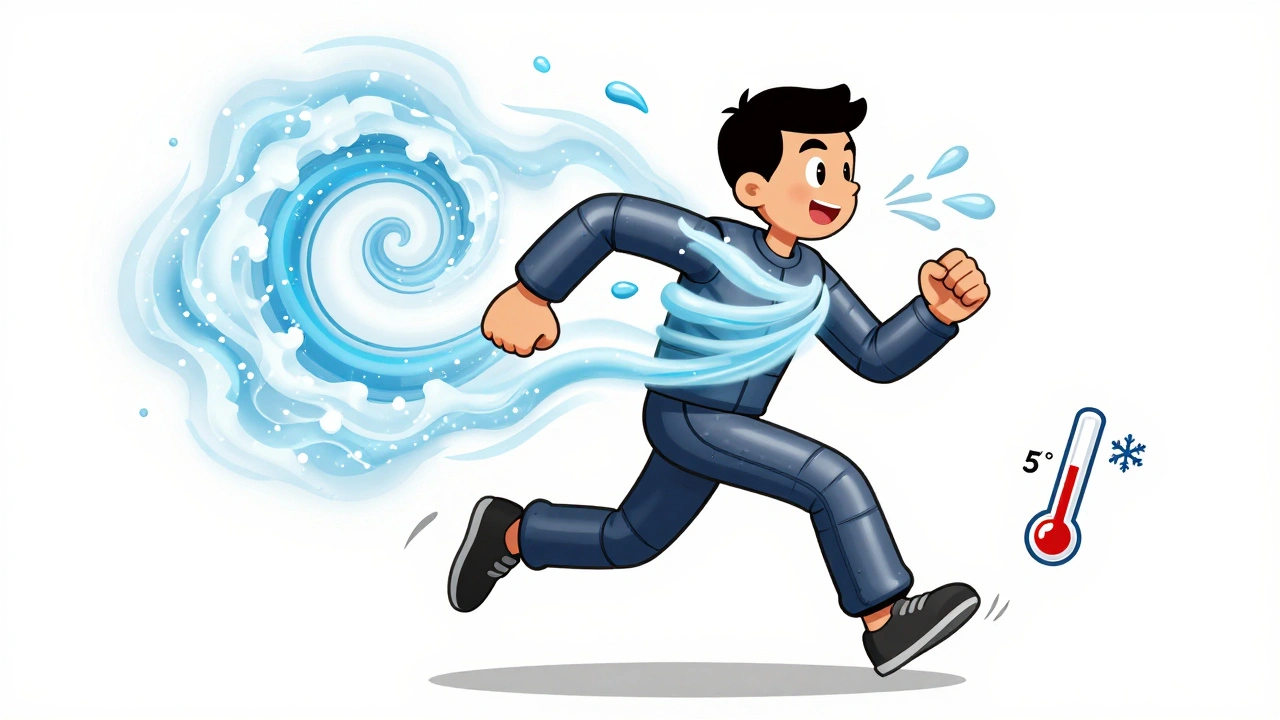
Exercise-induced bronchoconstriction (EIB) happens when your airways narrow during or right after physical activity. You might feel short of breath, cough, or have chest tightness-not because you have asthma, but because your lungs are reacting to the way you breathe during exercise. When you push hard during a run, swim, or soccer game, you’re breathing fast and shallow, pulling in cold, dry air. That air strips moisture and heat from your airways, triggering inflammation and muscle tightening around your bronchial tubes. It’s not a sign of poor fitness. In fact, up to 90% of people with asthma have EIB, and 9-30% of people without asthma experience it too.
How Do You Know If You Have EIB?
Symptoms usually show up 5-20 minutes after you stop exercising. You might feel like you can’t catch your breath, your throat feels scratchy, or you start coughing uncontrollably. Wheezing is common, but not everyone has it. The key sign? These symptoms go away on their own within 30-60 minutes. If you notice this pattern consistently during or after workouts, especially in cold or dry weather, EIB is likely the cause.
Doctors confirm EIB with a simple test: you exercise on a treadmill or bike until your heart rate hits 80-90% of your max. Then, they measure your lung function before and after using a spirometer. A drop of 10% or more in your forced expiratory volume (FEV1) confirms EIB. You don’t need a complex scan or blood test-just a controlled workout and a lung reading.
Non-Drug Ways to Prevent EIB Symptoms
You don’t always need medication to manage EIB. Simple lifestyle tweaks can cut symptoms dramatically.
- Warm up before you push hard. Do 10-15 minutes of moderate activity like brisk walking or light cycling. This triggers a protective effect called the refractory period, where your airways stay open for up to two hours afterward. Skip the quick stretch-this needs real, sustained effort.
- Avoid cold, dry air. If it’s below 10°C (50°F) or humidity is under 40%, your risk of EIB jumps by 73%. Exercise indoors when possible. If you must go outside, cover your mouth with a scarf or mask. Heat exchange masks (like Nike E+ or Respro®) help a little, but they’re only about 42% effective compared to inhalers.
- Choose your sport wisely. Sports with short bursts of activity-like baseball, football, or sprinting-trigger EIB in only 22% of people. Endurance sports like cross-country skiing, ice hockey, or long-distance running hit 85% of people with EIB. That doesn’t mean you can’t do them, but you’ll need better prevention.
- Watch the air quality. Pollen counts above 9.7 grains/m³ or an air quality index over 50 can worsen symptoms. Check local forecasts before heading out.
- Stay fit. Every 1-MET improvement in your VO2 max (a measure of cardiovascular fitness) reduces EIB severity by 12%. Regular aerobic training makes your lungs more resilient.
When to Use an Inhaler for EIB
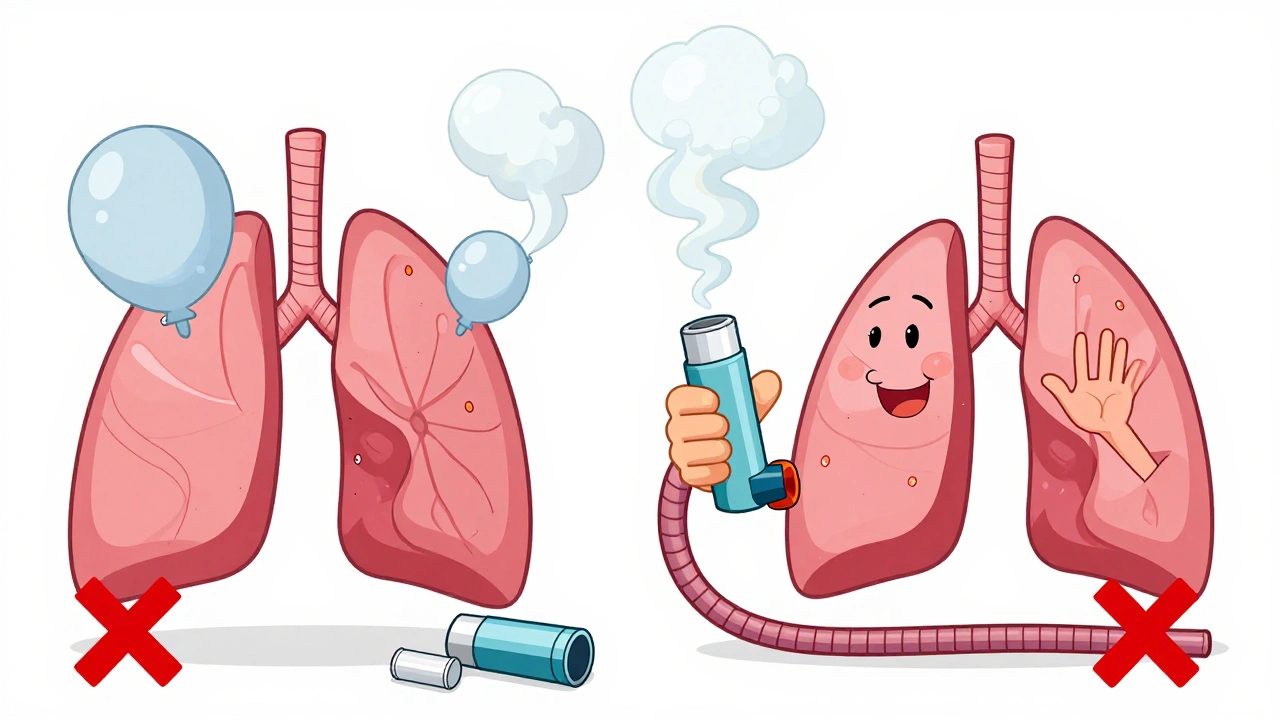
Short-acting beta-2 agonists (SABAs), like albuterol, are the gold standard for preventing EIB symptoms. They work fast and are safe for daily use before exercise.
Here’s how to use them right:
- Take two puffs of your inhaler (90 mcg per puff) 5 to 20 minutes before you start exercising.
- Use a spacer. It’s a simple plastic tube that attaches to your inhaler. It boosts the amount of medicine reaching your lungs by 70% compared to spraying directly into your mouth.
- After inhaling, hold your breath for 10 seconds. This lets the medicine settle deep in your airways instead of bouncing off your tongue or throat.
- Wait at least one minute between puffs if you need a second one.
Albuterol works for 2-4 hours. That means if you’re playing a two-hour soccer game, you’re covered. No need to re-dose mid-game unless your doctor says otherwise.
What If Your Inhaler Isn’t Enough?
One in three people still have symptoms even after using albuterol correctly. That doesn’t mean you’re doing it wrong-it means your airways might be inflamed underneath.
If you’re using your rescue inhaler more than twice a week just for exercise, talk to your doctor about adding a daily controller:
- Inhaled corticosteroids (ICS) like fluticasone (200-400 mcg daily) reduce inflammation and cut symptoms by 50-60%. They’re not for quick relief-they’re for long-term protection.
- Leukotriene receptor antagonists like montelukast (10mg once daily) help about 30-40% of people. It’s a pill, not an inhaler, and works well for those who hate using devices.
- Combination therapy-using a daily ICS plus a pre-exercise SABA-reduces symptoms by 78%, far better than either alone.
Some newer guidelines, like GINA 2022, suggest switching to an as-needed ICS-formoterol combo instead of albuterol-only for frequent users. But in sports medicine, albuterol before exercise is still the most common and trusted approach.
Common Mistakes That Make Inhalers Fail
Here’s the hard truth: 63% of EIB treatment failures aren’t because the medicine doesn’t work-they’re because people use the inhaler wrong.
- No spacer? You’re losing more than half your dose.
- Not holding your breath? The medicine just sits in your mouth.
- Storing your inhaler in the car or gym bag? Cold temperatures below 10°C reduce propellant effectiveness by 40%.
- Using a spacer longer than 6 months? Plastic gets cloudy and staticky, cutting efficiency by 25%.
- Assuming one puff is enough? Two puffs are standard. One might not be enough to fully open your airways.
Check your technique every six months. Ask your pharmacist to watch you use it. It takes less than a minute-and it could mean the difference between finishing your run or having to stop.
What About Diet or Natural Remedies?
Some people turn to supplements hoping for relief. Omega-3s (2-4 grams daily for 3 weeks) and vitamin C (500mg daily) have shown modest benefits in small studies-31% and 48% fewer symptoms, respectively. But the Mayo Clinic says there’s not enough solid evidence to recommend them for everyone. They’re not replacements for proven treatments.
Don’t waste money on unproven products like herbal sprays, breathing trainers, or “lung cleanses.” Stick with what’s been tested in clinical trials: warm-ups, environmental control, and proper inhaler use.

Can You Still Be an Athlete With EIB?
Yes. Elite athletes with EIB compete at the highest levels. Olympic swimmers, marathoners, and soccer players all manage it successfully. The International Olympic Committee stopped requiring therapeutic use exemptions for EIB medications in 2022, recognizing these drugs are for health-not performance enhancement.
What matters isn’t whether you have EIB-it’s whether you’re managing it. People who avoid exercise because they’re afraid of symptoms are 2.3 times more likely to become obese and lose 37% of their cardiovascular fitness over time. That’s worse than the symptoms themselves.
What’s Next for EIB Treatment?
Research is moving fast. Smart inhalers with Bluetooth trackers (like Propeller Health) are already showing 47% better adherence in early trials. They remind you when to take your dose and log your usage so your doctor can see patterns.
Scientists are also looking at fractional exhaled nitric oxide (FeNO)-a breath test that measures airway inflammation. If your FeNO level is above 25 ppb, you’re more likely to respond well to inhaled steroids. This could one day let doctors personalize treatment before you even start.
Final Takeaway: You Don’t Have to Choose Between Health and Activity
EIB isn’t a life sentence to sitting out. With the right tools, 95% of people can exercise without limits. Start with the basics: warm up, avoid cold/dry air, use your inhaler correctly with a spacer, and see your doctor if symptoms persist. Don’t let fear or misinformation keep you from moving. Your lungs are designed to work harder-you just need to give them the right support.
Can EIB go away on its own?
EIB symptoms usually fade within 30-60 minutes after stopping exercise, but the condition itself doesn’t disappear unless managed. Without treatment, symptoms return every time you exercise under triggering conditions. Proper prevention strategies can make symptoms rare or mild, but they won’t vanish without consistent care.
Is albuterol safe to use before every workout?
Yes. Albuterol is safe for daily pre-exercise use in people with EIB. The American Thoracic Society strongly recommends it for this purpose. However, if you’re using it more than twice a week for symptoms beyond exercise, you may have underlying asthma that needs daily controller medication. Talk to your doctor to rule that out.
Do I need a prescription for my EIB inhaler?
Yes. Albuterol, fluticasone, montelukast, and other EIB medications are prescription-only in the U.S. and most countries. Over-the-counter inhalers (like Primatene Mist) are not recommended for EIB-they’re less effective and carry higher risks. Always get a proper diagnosis and prescription from a healthcare provider.
Can children outgrow EIB?
Some children see improvement as they get older, especially if they stay active and manage triggers well. But many continue to have EIB into adulthood. The key is early diagnosis and proper management. Kids who avoid sports due to unmanaged EIB are at higher risk for obesity and poor fitness later in life.
How do I know if my inhaler is empty?
Most inhalers have a counter that shows how many doses are left. If yours doesn’t, write the date you opened it and track how often you use it. A standard albuterol inhaler has 200 puffs. If you use two puffs a day, it lasts about 3 months. Never rely on shaking or spraying-it’s unreliable. Replace it when the counter hits zero or after 12 months, even if it’s not empty.
Can I use a nebulizer instead of an inhaler for EIB?
Nebulizers deliver the same medicine as inhalers but take longer-10-15 minutes vs. under a minute. They’re not practical for pre-exercise use unless you’re in a clinical setting. Inhalers with spacers are faster, more portable, and just as effective. Save nebulizers for severe flare-ups, not routine prevention.
 Health and Wellness
Christian Landry
December 8, 2025 AT 03:15Mona Schmidt
December 8, 2025 AT 20:55Taya Rtichsheva
December 9, 2025 AT 20:09Darcie Streeter-Oxland
December 10, 2025 AT 16:53Katie Harrison
December 12, 2025 AT 04:26Sarah Gray
December 13, 2025 AT 08:40Guylaine Lapointe
December 14, 2025 AT 06:30Suzanne Johnston
December 14, 2025 AT 08:17