
Drug Recall Checker
Check Your Medication for Recalls
Verify if your prescription or over-the-counter medication is currently recalled by the FDA. Note: This tool uses sample data for demonstration purposes.
This tool simulates FDA recall data for demonstration purposes. For real-time verification, always check the official FDA recall database at fda.gov/safety/recalls
Every year, thousands of medications are pulled from shelves because they pose unexpected risks. Some contain harmful contaminants. Others cause rare but deadly side effects only visible after millions of people have taken them. The FDA doesn’t wait for headlines to act - it issues recalls and safety alerts daily. But if you’re not sure where to look, you might never know your prescription was recalled until it’s too late.
What Happens When a Drug Is Recalled?
A drug recall isn’t always because a product is dangerous. Sometimes it’s because the pills were mislabeled, packaged incorrectly, or contaminated during manufacturing. Other times, new data shows a serious side effect that wasn’t clear during clinical trials. The FDA classifies recalls into three levels:- Class I - The most serious. Use could cause serious injury or death. (Example: pills with toxic mold or wrong strength.)
- Class II - Might cause temporary health problems or low risk of serious harm. (Example: incorrect expiration date.)
- Class III - Unlikely to cause harm, but violates FDA labeling or manufacturing rules. (Example: missing instructions.)
In 2022 alone, the FDA issued 127 drug recalls. Thirty-one of those were tied to compounded drugs - custom-mixed medications that aren’t subject to the same pre-market testing as regular prescriptions. One outbreak in 2022 linked to contaminated compounded steroids sickened 753 people across 20 states. That’s why staying informed isn’t optional - it’s life-saving.
How the FDA Finds Dangerous Drugs
The FDA doesn’t just guess when a drug is unsafe. It uses real-world data from millions of patients. Its system, called MedWatch, collects over 1.3 million reports of side effects every year. Most come from doctors and pharmacists, but patients can report too. These reports help spot patterns - like a sudden spike in liver damage linked to a specific brand of blood pressure pill.Behind the scenes, the FDA uses AI tools to scan data from electronic health records, insurance claims, and even social media. In January 2023, it launched a new AI system that analyzes 1.2 billion patient records to find safety signals 40% faster than before. That means dangerous drugs are flagged sooner - and recalled faster.
But here’s the catch: experts estimate that 94% of serious side effects go unreported. Many patients don’t know how to report. Others think their symptom is just "bad luck." That’s why the FDA pushes hard for public reporting - every report matters.
Where to Find Official FDA Drug Alerts
You don’t need to wait for your doctor to tell you. The FDA makes all alerts public. Here’s how to get them directly:- FDA Drug Safety Communications (DSCs) - These are the highest-priority alerts. They’re posted on the FDA’s website and sent by email. In 2022, the FDA issued 37 of these, including one that forced all ADHD stimulants to add a boxed warning about heart risks.
- MedWatch Email Subscription - Sign up at fda.gov/medwatch. Over 457,000 people get alerts this way. You can choose to receive only urgent alerts or all updates.
- FDA MedWatch App - Available on iOS and Android. You can report side effects in under 5 minutes, check for recalls, and get push notifications. As of September 2023, it had over 187,000 downloads.
- FDA Recall Website - Go to fda.gov/safety/recalls. You can search by drug name, company, or date. All recalls are archived here.
Don’t rely on pharmacy notifications alone. Many pharmacies don’t update their systems fast enough. In one case, a patient took a recalled blood thinner for three weeks after the recall was issued - because the pharmacy’s system hadn’t flagged it yet.
What About Supplements and Over-the-Counter Drugs?
This is a big blind spot. The FDA doesn’t review dietary supplements for safety before they’re sold. That means if you take a "natural" weight-loss pill or a sleep aid from the shelf, there’s no guarantee it’s safe. In 2022, the FDA got 2,750 reports of problems from supplements - but only issued 12 formal safety alerts.Why? Because the agency can only act after harm is proven. Unlike prescription drugs, supplements don’t need FDA approval before hitting shelves. That’s why you should check the FDA’s supplement alerts page and avoid anything that promises "miracle" results.
Even OTC painkillers like ibuprofen or acetaminophen can be risky if taken too long or mixed with other meds. The FDA issued a warning in 2023 about liver damage from high doses of acetaminophen in combination products - something many people didn’t realize.
How to Use Alerts Without Getting Overwhelmed
Doctors get dozens of safety alerts every week. A 2023 study found they receive an average of 67 drug alerts per week - but only 12% are truly urgent. That’s called "alert fatigue." Most clinicians ignore them.Here’s how to avoid the same problem:
- Subscribe only to FDA DSCs - Skip general newsletters. Stick to official FDA alerts.
- Check your meds monthly - Look up your top three prescriptions on the FDA recall site. Takes 3 minutes.
- Use the MedWatch app - Set a weekly reminder to check for new alerts.
- Ask your pharmacist - They get real-time updates. Ask: "Has anything changed with my meds recently?"
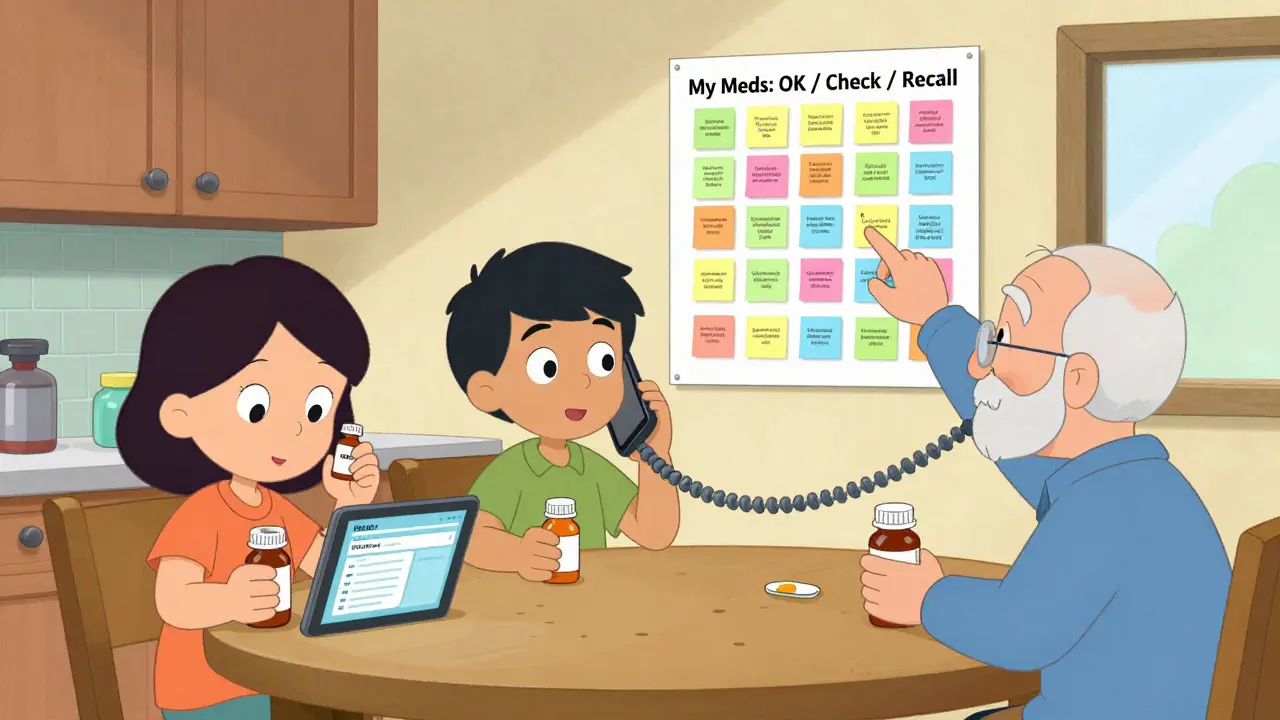
Some hospitals use color-coded alert systems: red for immediate action, yellow for review within 24 hours, green for awareness only. You can do the same at home. Keep a list of your meds. Next to each, write "OK," "Check," or "Recall" - and update it every time you refill.
What to Do If Your Drug Is Recalled
If you find your medication on a recall list, don’t panic. Don’t stop taking it without talking to your doctor - sudden withdrawal can be dangerous. Here’s what to do:- Don’t throw it away. Some recalls require you to return the product to the pharmacy or manufacturer.
- Call your doctor or pharmacist. They’ll tell you if you need a replacement or if it’s safe to continue.
- Report the issue. Use the MedWatch app or website. Your report helps protect others.
- Check the recall notice. It will say if you need to return the pills, get a refund, or switch brands.
In 2022, a recall of a popular blood pressure med affected over 200,000 people. Most didn’t know until their pharmacy called - but those who checked the FDA site early were able to switch to a safe alternative before running out.
Global Alerts and What You Need to Know
If you buy medicine online from outside the U.S., or if you travel and refill prescriptions abroad, you’re outside the FDA’s protection. The World Health Organization’s VigiBase tracks global drug safety, but only 12% of its reports come from low-income countries - where most of the world’s population lives.Always check if a drug sold overseas is approved in the U.S. If it’s not, it may not have been tested for safety here. The FDA warns against buying drugs from websites that don’t require a prescription. Many contain fake or dangerous ingredients.
Final Tips to Stay Safe
- Keep a current list of all your medications - including doses and why you take them.
- Use the FDA MedWatch app. It’s free, simple, and works offline.
- Don’t assume your pharmacy will catch everything. Double-check.
- Report even small side effects. A headache after a new med might be the first sign of something bigger.
- Teach older family members how to check recalls. Many don’t know where to look.
Drug safety systems are powerful - but only if you use them. The FDA doesn’t notify you automatically. You have to take the first step. In 2023, only 12% of U.S. adults knew how to report a bad reaction. Don’t be in that group. Your life could depend on it.
How do I know if my prescription was recalled?
Check the FDA’s official recall page at fda.gov/safety/recalls. You can search by drug name, manufacturer, or date. You can also sign up for FDA email alerts. Never rely only on your pharmacy - they may not update their system immediately.
Can I report a side effect myself?
Yes. Anyone can report a side effect using the FDA’s MedWatch system - online, by phone, or through the free MedWatch app. Your report helps the FDA spot patterns and issue warnings faster. Even if you’re not sure it’s related, report it. The FDA investigates all submissions.
Are over-the-counter drugs and supplements monitored the same way?
No. Prescription drugs are tested before sale, but supplements are not. The FDA can only act after harm occurs. In 2022, there were 2,750 reports of problems with supplements - but only 12 formal alerts. Always research supplements before taking them, and avoid ones with claims like "miracle cure" or "all-natural weight loss."
What should I do if my drug is recalled?
Don’t stop taking it without talking to your doctor. Some recalls require you to return the medication or switch to a different brand. Contact your pharmacist or prescribing provider immediately. They’ll tell you if it’s safe to continue, if you need a replacement, or if you should return the pills. Always follow the recall notice instructions.
How often should I check for drug recalls?
Check at least once a month, especially if you take three or more medications. Use the MedWatch app to set a monthly reminder. If you’re on a new medication, check weekly for the first month. Most recalls are announced within days of discovery - so staying current is key.
 Health and Wellness
Tru Vista
January 3, 2026 AT 10:28Class I recalls? More like Class I chaos. FDA’s system is a glorified bingo card. I checked my blood pressure med last week-still on the shelf, but the batch number? Totally untraceable. Why do they even bother?
Vincent Sunio
January 4, 2026 AT 08:36One must observe, with considerable consternation, that the FDA’s regulatory architecture remains fundamentally anachronistic. The reliance upon MedWatch-a system predicated upon voluntary, non-validated, and statistically insignificant reporting-is not merely inefficient; it is epistemologically indefensible. The absence of mandatory adverse event reporting constitutes a structural failure of pharmacovigilance.
JUNE OHM
January 5, 2026 AT 21:18THEY’RE LYING TO US!!! 🚨 I heard from a pharmacist friend (who works at a "big chain"-you know the one) that they get a secret list every week of drugs that are recalled but never posted. They just wait until people get sick, then "oops, we forgot to tell you." 😒💊 #FDAcorruption #BigPharmaLies
Shanahan Crowell
January 6, 2026 AT 15:07Okay, this is actually super helpful-thank you for laying this out so clearly! I never realized how much I was relying on my pharmacy to catch things. I just downloaded the MedWatch app right now. I’m setting a monthly reminder. Small steps, but this feels like a win. 🙌
Lori Jackson
January 8, 2026 AT 07:00It’s not that people don’t report-they’re just too lazy to care. I’ve seen patients ignore chest pain because "it’s just stress." And now they wonder why their meds are recalled? Please. Personal responsibility is dead. The FDA can’t babysit every idiot who thinks "natural" means safe.
Wren Hamley
January 8, 2026 AT 19:55AI scanning 1.2 billion records? That’s wild. But here’s the kicker-what if the AI’s trained on biased data? Like, what if it only picks up reports from big hospitals and ignores rural clinics? Then you get a blind spot bigger than the one the FDA’s trying to fix. We need diversity in the data, not just volume.
Sarah Little
January 8, 2026 AT 22:05Have you considered the implications of compounded drugs being excluded from pre-market testing? The 2022 steroid outbreak was a perfect storm of regulatory gaps and institutional complacency. We’re not talking about minor labeling errors-we’re talking about fungal meningitis in immunocompromised patients. The FDA’s hands are tied by outdated statutes.
innocent massawe
January 10, 2026 AT 01:21Good info. In Nigeria, we get fake pills every day. Sometimes the bottle says "FDA approved"-but it’s not even the real FDA. I just ask my pharmacist: "Is this the same as the one from the hospital?" If not, I don’t take it. 😊
veronica guillen giles
January 10, 2026 AT 10:28Wow. So the FDA’s doing the work… and most of us are just scrolling past it like it’s another ad? 😏 Let me guess-you also think your "organic" kale is GMO-free? Wake up. This isn’t rocket science. It’s basic self-preservation. And no, your pharmacy won’t save you.
Ian Ring
January 10, 2026 AT 11:01Excellent, thorough breakdown. I’ve been using the FDA recall site for years-still, I didn’t realize the MedWatch app had offline functionality. That’s a game-changer for people without reliable internet. Thank you for highlighting this. I’ve shared it with my elderly parents.
erica yabut
January 12, 2026 AT 04:08Let’s be real-supplements are a circus. The FDA’s not "slow"-they’re legally handcuffed. You can’t regulate snake oil unless someone dies. And guess what? People die. Every. Single. Week. But hey, at least the label says "all-natural" and has a picture of a leaf. 🍃💀