
Diarrhea isn’t just an uncomfortable trip to the bathroom-it’s a signal your body is trying to tell you something. Whether it’s a sudden, watery episode after eating bad food or a persistent issue that drags on for weeks, the type of diarrhea you have determines everything: how you treat it, what tests you need, and whether it’s something serious.
What Really Counts as Diarrhea?
Doctors don’t just count how many times you go. Diarrhea is defined by stool consistency and volume: three or more loose or watery stools in a day, with total weight over 200 grams. It’s not about frequency alone-it’s about how much water is in your stool. You might have five firm stools and be fine. Or you might have two very loose ones and have diarrhea.
The big split is between acute and chronic. Acute diarrhea lasts 14 days or less. Most cases clear up on their own in 2 to 5 days. Chronic diarrhea lasts longer than 14 days, and if it goes beyond 30 days, it’s considered persistent. This isn’t just a time difference-it’s a completely different medical problem.
Acute Diarrhea: The Quick Fix
When acute diarrhea hits, it’s usually because of a bug. Viruses like rotavirus, norovirus, or adenovirus cause 70 to 80% of cases in developed countries. Bacteria like Campylobacter or Salmonella make up 10 to 20%. Parasites like Giardia are less common but still a factor, especially after hiking or travel.
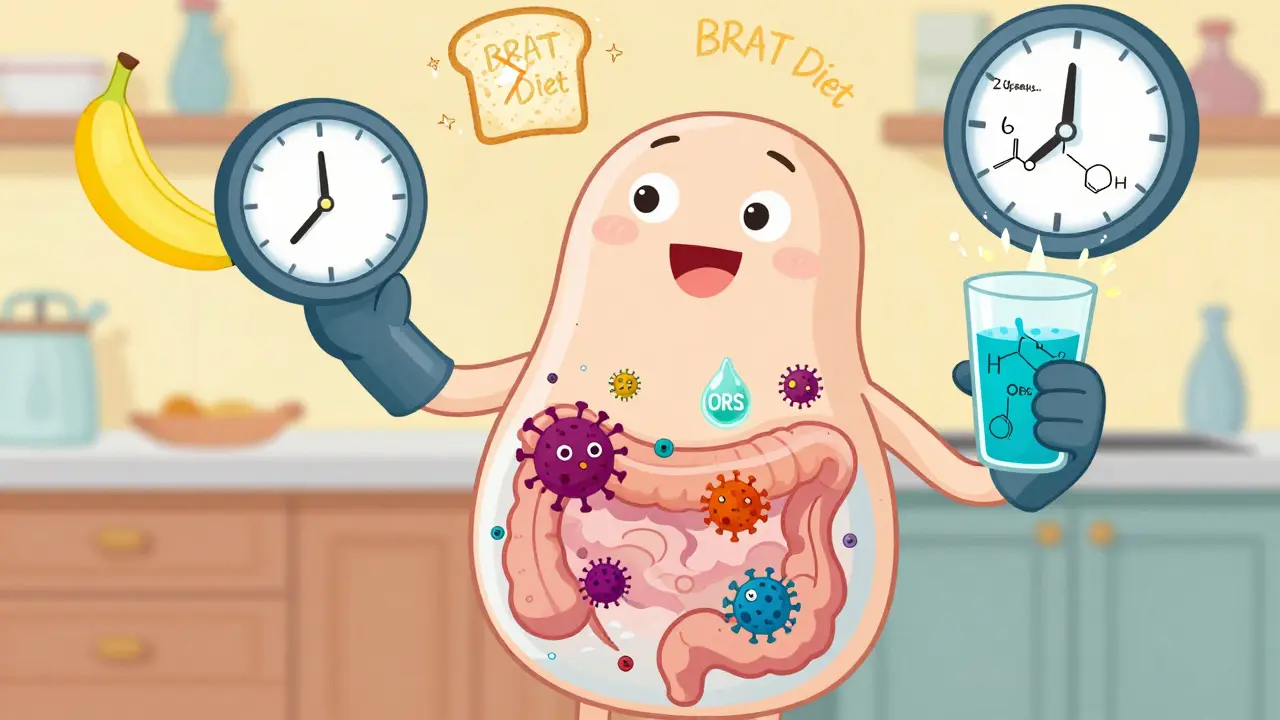
Most people don’t need antibiotics. In fact, using them unnecessarily can make things worse by killing off good gut bacteria. The CDC says the best treatment is simple: oral rehydration solution (ORS). This isn’t just water with sugar. The WHO formula has precise amounts: 2.6g sodium chloride, 2.9g trisodium citrate, 1.5g potassium chloride, and 13.5g glucose per liter of water. It’s been proven to cut death rates from diarrhea by 93% in kids in developing countries.
Forget the old BRAT diet (bananas, rice, applesauce, toast). That’s outdated. Experts now say get back to normal foods within 24 to 48 hours. Your gut needs nutrients to heal. Eating bland food won’t speed things up-eating properly will.
Chronic Diarrhea: The Hidden Problem
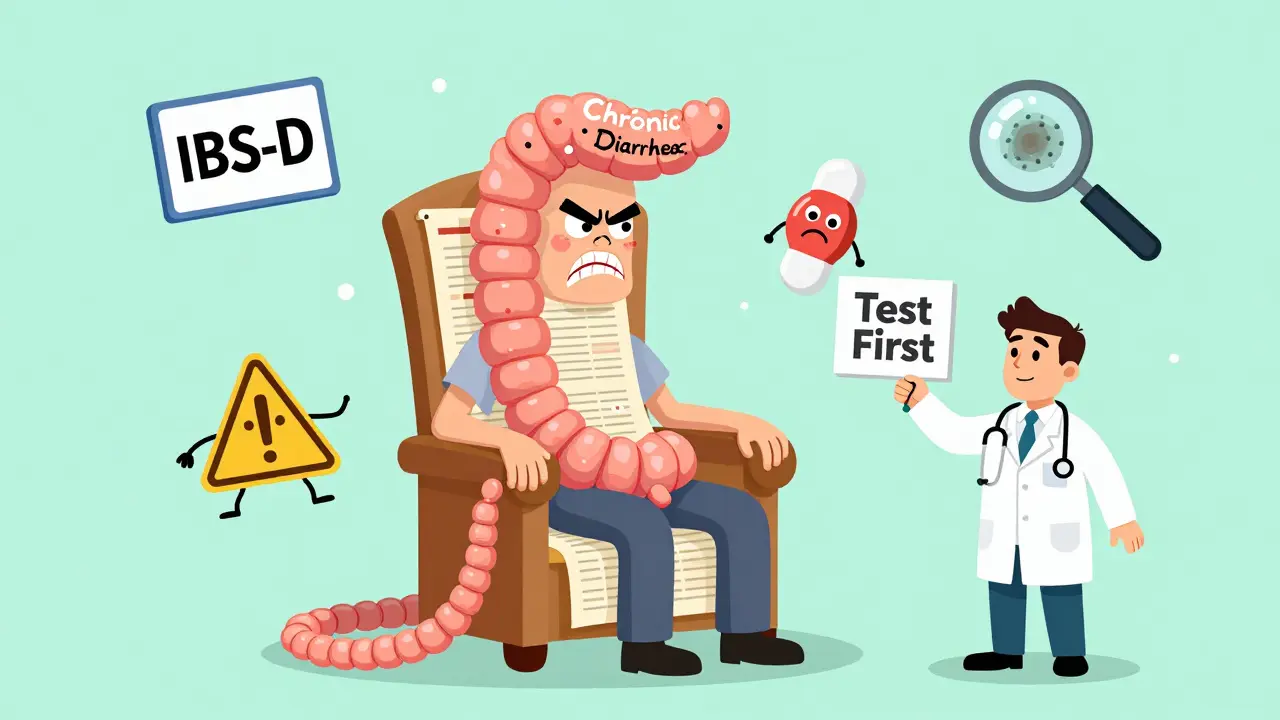
If diarrhea lasts more than two weeks, it’s rarely from an infection. Around 80% of chronic cases are caused by non-infectious issues. The big ones:
- Inflammatory Bowel Disease (IBD)-Crohn’s disease or ulcerative colitis. Affects 1.6 million Americans.
- Irritable Bowel Syndrome with Diarrhea (IBS-D)-a functional disorder that affects 10 to 15% of people globally.
- Bile Acid Malabsorption-happens in 25 to 30% of people after gallbladder removal.
- Medication-induced-antibiotics, metformin, laxatives, and even some heart meds can trigger it.
- Celiac disease-often misdiagnosed as IBS. About 40% of celiac cases are initially labeled wrong.
Doctors look for clues: Does it happen at night? Does fasting help? Is there weight loss? Blood in stool? These signs point to something structural, not just a twitchy gut.
Antimotility Drugs: When They Work-and When They’re Dangerous
Loperamide (Imodium) is the go-to antimotility drug. It slows down your gut, reducing stool frequency and urgency. For chronic diarrhea, it’s often the most effective tool. Many IBS-D patients report cutting bathroom trips from 8-10 per day to 2-3 with 2mg taken before meals.
But here’s the catch: don’t use it for acute diarrhea if you have fever or bloody stools. Why? Because if it’s caused by Shiga-toxin E. coli or other invasive bacteria, slowing the gut lets the toxin sit and damage your colon. That can lead to hemolytic uremic syndrome-a life-threatening condition, especially in kids.
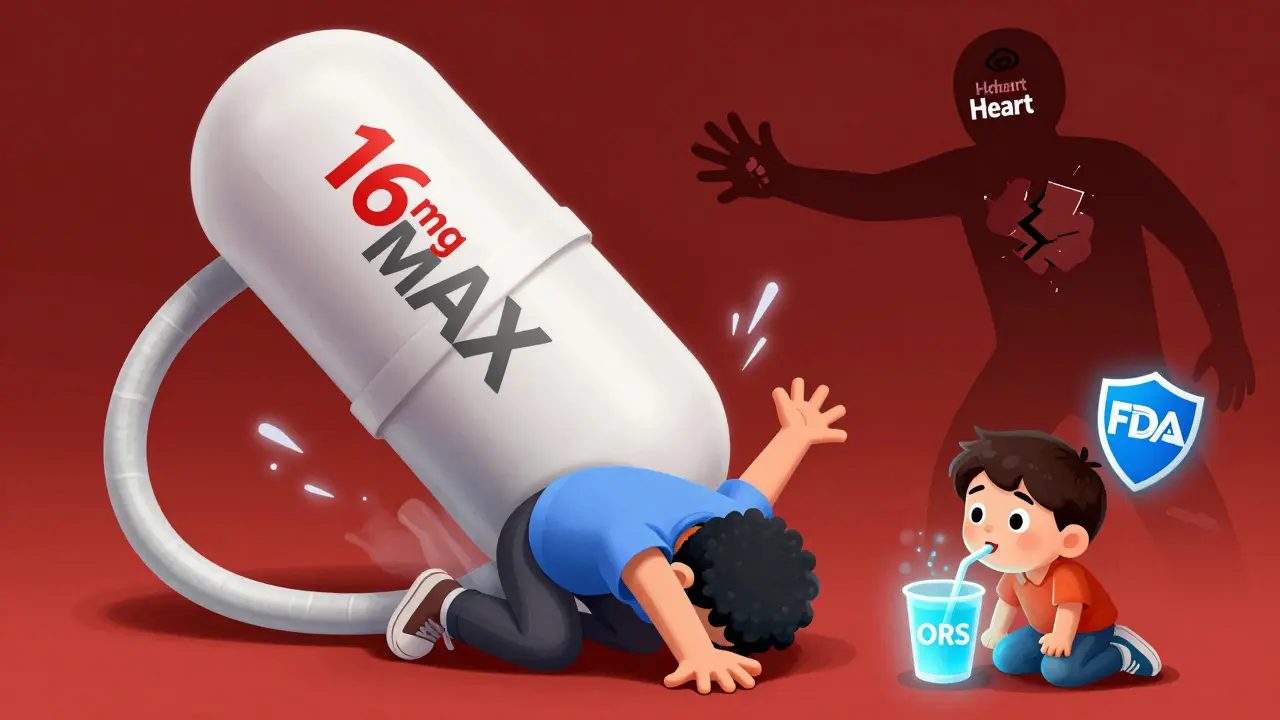
The FDA warns against using loperamide in children under 2. Even in kids 2 to 5, use extreme caution. And never take more than 16mg in a day for acute cases. Some people push past that limit, chasing relief. Between 2011 and 2021, the FDA recorded 1,247 cases of loperamide misuse, including 57 deaths. People were taking 50, 100, even 200mg a day. It can cause heart rhythm problems, even fatal arrhythmias.
Bismuth subsalicylate (Pepto-Bismol) is another option. It has mild antimotility effects and also kills some bacteria and reduces inflammation. But it can turn your tongue black and your stool gray. It’s not for long-term use.
What You Should Do
If you have acute diarrhea:
- Drink ORS or a balanced electrolyte solution-not soda, not sports drinks.
- Start eating normal foods within a day.
- Avoid loperamide if you have fever, bloody stool, or recent travel to a high-risk area.
- See a doctor if it lasts more than 3 days, or if you’re dehydrated (dry mouth, dizziness, little urine).
If you have chronic diarrhea:
- Stop assuming it’s IBS. Get tested: CBC, CRP, fecal calprotectin, thyroid function, and possibly a colonoscopy.
- Track triggers: caffeine, dairy, artificial sweeteners, high-FODMAP foods.
- Try a low-FODMAP diet under a dietitian’s guidance. It works for 50 to 75% of IBS-D patients.
- Loperamide can help-but don’t self-prescribe long-term. Work with a doctor to find the root cause.
The Bigger Picture
Diarrhea kills 525,000 children a year worldwide. In the U.S., it costs $2.8 billion annually in medical bills and lost work. Yet, we treat it like a minor annoyance. That’s dangerous.
Chronic diarrhea isn’t just inconvenient-it’s often a red flag for cancer, autoimmune disease, or malabsorption. A 2022 survey found 68% of chronic diarrhea patients waited six months or longer for a diagnosis. That’s too long.
And while loperamide is a powerful tool, it’s not a cure. It’s a bandage. If you’re relying on it daily for months, you’re masking the real problem.
The future of diarrhea care is personalization. Researchers are testing biomarker panels to match patients with the right treatment-whether it’s loperamide, bile acid binders, probiotics, or dietary changes. In five years, we may be tailoring therapy based on your gut microbiome, not just your symptoms.
For now, the best advice is simple: Don’t ignore persistent diarrhea. Don’t overuse loperamide. And don’t wait months to get answers. Your gut is speaking. Listen before it screams.
Is loperamide safe for long-term use in chronic diarrhea?
Loperamide can be used long-term under medical supervision for conditions like IBS-D or bile acid malabsorption. However, tolerance can develop-some patients increase their dose over time, which raises the risk of side effects like constipation, dizziness, or heart rhythm issues. The FDA recommends never exceeding 16mg per day. Always work with a doctor to rule out underlying causes before relying on loperamide daily.
Can dehydration from diarrhea be dangerous even in adults?
Yes. While children are more vulnerable, adults-especially older adults or those with kidney disease-can develop severe dehydration quickly. Signs include dark urine, dry skin, rapid heartbeat, confusion, or fainting. In extreme cases, it can lead to kidney failure or shock. Oral rehydration solution is the best prevention. If you can’t keep fluids down or are dizzy, seek medical help immediately.
Why is bloody diarrhea different from watery diarrhea?
Bloody diarrhea usually signals inflammation or infection in the colon-things like bacterial infections (Shigella, E. coli O157), inflammatory bowel disease, or even colon cancer. Antimotility drugs like loperamide can trap harmful bacteria or toxins in the colon, worsening damage. This is why doctors always check for blood before prescribing these medications. If you see blood, don’t take loperamide-see a doctor.
Is the BRAT diet still recommended for acute diarrhea?
No. The BRAT diet (bananas, rice, applesauce, toast) is outdated. It’s low in protein and fat, which slows healing. The American College of Gastroenterology now recommends reintroducing a normal, balanced diet within 24 to 48 hours. Foods like lean meats, yogurt, potatoes, and whole grains help restore gut function faster than restrictive diets.
Can probiotics help with diarrhea?
Yes, but not all probiotics are the same. Strains like Lactobacillus rhamnosus GG and Saccharomyces boulardii have strong evidence for preventing antibiotic-associated diarrhea and reducing acute infectious diarrhea duration by about one day. However, they don’t work for chronic diarrhea caused by IBD or celiac disease. Products like Align contain L. paracasei, which may help IBS symptoms, but results vary. Don’t expect miracles-use them as a supplement, not a cure.
Why do some people with chronic diarrhea feel dismissed by doctors?
Many chronic diarrhea cases, especially IBS-D, are diagnosed by exclusion-meaning other diseases must be ruled out first. This process can take months and multiple tests. Patients often feel like their symptoms aren’t taken seriously because there’s no visible damage on scans. But conditions like bile acid malabsorption or microscopic colitis require specific tests (like fecal calprotectin or colon biopsy) that aren’t always ordered upfront. Persistence matters. If you have nocturnal diarrhea, weight loss, or blood in stool, push for further testing.
 Health and Wellness
Janelle Pearl
March 7, 2026 AT 20:29Just had a week-long bout of this after a camping trip. I didn’t even think about ORS-just chugged Gatorade. Big mistake. Ended up in urgent care. Now I keep those packets in my backpack. Seriously, if you’re traveling or even just eating street food, carry them. It’s not glamorous, but it saved me.
Also, never used loperamide before. Learned the hard way that bloody stool + Imodium = bad news. Lesson learned.
Robert Bliss
March 8, 2026 AT 17:22My uncle used to swear by the BRAT diet. I tried it once. Felt like I was eating cardboard. Then my doc said ‘just eat chicken soup and toast’ and I felt better in a day. Guess he was right lol
rafeq khlo
March 9, 2026 AT 17:41Doctors dont know nothing about gut health its all about money they dont want you to know that probiotics and fasting cure everything loperamide is a drug company scam
Morgan Dodgen
March 10, 2026 AT 00:53Let me guess-this article was sponsored by the WHO and Big ORS. They’ve been pushing this water+salt nonsense for decades while real science shows gut healing requires microbiome modulation, not electrolyte brute force.
And don’t get me started on loperamide. The FDA warnings? PR fluff. The real danger is the pharmaceutical-industrial complex suppressing bile acid sequestrants because they can’t patent them. Meanwhile, people with bile malabsorption are left to suffer while Big Pharma sells them $200/month meds they don’t need.
Samantha Fierro
March 10, 2026 AT 20:15I appreciate how clearly this breaks down the difference between acute and chronic diarrhea. As a nurse, I’ve seen too many patients self-treat with loperamide for weeks-only to show up with unexplained weight loss and elevated CRP. It’s heartbreaking.
The point about fecal calprotectin is critical. It’s a simple, noninvasive test that can rule out IBD before jumping to IBS. Yet so many primary care providers still don’t order it. If you have persistent symptoms, ask for it. Don’t wait six months.
And yes, the BRAT diet is outdated. I tell my patients: if you can eat it without throwing up, it’s probably fine. Protein matters. Fat matters. Your gut needs fuel to heal.
APRIL HARRINGTON
March 11, 2026 AT 03:26OMG I had chronic diarrhea for 2 YEARS and everyone just told me to eat less fiber and take Imodium like it was a vibe lmao
Turned out I had bile acid malabsorption after gallbladder removal and no one even mentioned it until I screamed at my doctor to run a SeHCAT test
Now I take cholestyramine and my life is different
Y’all need to push for testing dont just accept IBS as a catchall
Also loperamide is not a snack
Leon Hallal
March 11, 2026 AT 11:27You people are so naive. This whole thing is a distraction. The real cause of chronic diarrhea is glyphosate in your food and water. It’s in everything. The FDA doesn’t care. The WHO doesn’t care. They’re all bought off. Loperamide? That’s just keeping you docile while they poison your microbiome further.
Buy organic. Stop eating anything that comes in a box. Drink rainwater. Your gut will thank you. Or it won’t. Either way, you’re being lied to.
Janelle Pearl
March 12, 2026 AT 19:45Replying to my own comment because I just remembered-I started taking Saccharomyces boulardii after the trip and it actually helped with the lingering cramps. Not magic, but not nothing either. I’ve been keeping it in my medicine cabinet ever since.
Also, I tried the low-FODMAP diet. It was brutal. But after 4 weeks? My gut stopped screaming. Worth the broccoli sacrifice.
Judith Manzano
March 14, 2026 AT 06:11This is such a needed post. I’ve been dealing with IBS-D since college and honestly felt like a weirdo for needing to plan every outing around bathrooms.
It took me 5 years and 3 different doctors before someone ordered a fecal calprotectin test. Turns out I had microscopic colitis. No one ever thought to check.
Now I take bismuth subsalicylate on bad days and it’s been life-changing. Also, my stool turned gray for a week. Felt like I was in a sci-fi movie. But hey, no more panic attacks before dinner.
Jazminn Jones
March 14, 2026 AT 20:05The author demonstrates a commendable grasp of clinical gastroenterology. However, the omission of recent literature on gut-brain axis modulation via vagal nerve stimulation is glaring. While ORS remains foundational, emerging data from 2023 trials suggest that neurohormonal dysregulation plays a more significant role in IBS-D than previously acknowledged.
Furthermore, the dismissal of the BRAT diet as ‘outdated’ is overly simplistic. While nutrient-dense reintroduction is ideal, the BRAT diet’s low-residue nature remains clinically useful in acute, hypermotile states-particularly in elderly patients with comorbid cardiac conditions.
One must not confuse populism with evidence.
Philip Mattawashish
March 15, 2026 AT 02:29Of course you’re all talking about loperamide like it’s a harmless candy. You think you’re safe? You think the FDA’s warning is enough?
They’re not telling you the truth. Loperamide isn’t just toxic-it’s engineered to create dependency. The dosage limits? A lie. The heart risks? A cover-up. People who take it daily are being slowly poisoned so they keep coming back for more.
And what about the real cause? It’s not food. It’s not bacteria. It’s EMFs from your phone. Your gut doesn’t like 5G. That’s why it’s worse at night. That’s why fasting helps.
Turn off your Wi-Fi. Sleep in a Faraday cage. Your colon will thank you.
Tom Sanders
March 16, 2026 AT 11:32Yeah cool story. I had diarrhea once. Took Imodium. Done. Why are we writing an essay about this?