

Why Your Cough Won’t Go Away
If you’ve been coughing for more than eight weeks, you’re not alone. About 1 in 10 adults deal with a persistent cough that just won’t quit. And if you’ve tried cough syrups, humidifiers, or even antibiotics with no luck, you’re probably frustrated. The truth? Most chronic coughs aren’t caused by colds or infections. They’re tied to three quiet, often overlooked conditions: GERD, asthma, and postnasal drip - now called upper airway cough syndrome.
These three are responsible for 80 to 95% of chronic cough cases in people who don’t smoke and aren’t taking blood pressure meds like ACE inhibitors. That means if you’ve been stuck in cough limbo for months, the answer likely lies in one of these three - not in some mysterious illness.
Step One: Rule Out the Dangerous Stuff First
Before you start chasing GERD or allergies, your doctor needs to make sure nothing serious is going on. That means checking for red flags: coughing up blood, unexplained weight loss, night sweats, fever, or swelling in your legs. If any of these are present, you need imaging like a CT scan - not a trial of antihistamines.
But here’s the catch: if your chest X-ray is normal (and it usually is), you’re almost certainly not dealing with lung cancer, tuberculosis, or bronchiectasis. That’s good news. It means the workup can focus on the common culprits without unnecessary scans or radiation. In fact, a chest CT in someone with a normal X-ray finds cancer in only 0.1% of cases - and exposes you to the equivalent of 74 chest X-rays. Not worth it unless the signs point that way.
Step Two: The Big Three - Asthma, GERD, and Upper Airway Cough Syndrome
Now you get to the heart of the matter. The diagnostic approach isn’t about running every test possible. It’s about smart, targeted trials. You don’t need a fancy machine to start fixing this. You need a plan.
Asthma (including cough-variant asthma) is behind 24-29% of chronic cough cases. And here’s the twist: many people with asthma-related cough don’t wheeze. Their only symptom? A dry, hacking cough - worse at night, after exercise, or around cold air. Spirometry (a simple breathing test) can catch it, but if that’s normal, a methacholine challenge test is the gold standard. A positive result means your airways are overly sensitive - and that’s why your cough won’t stop.
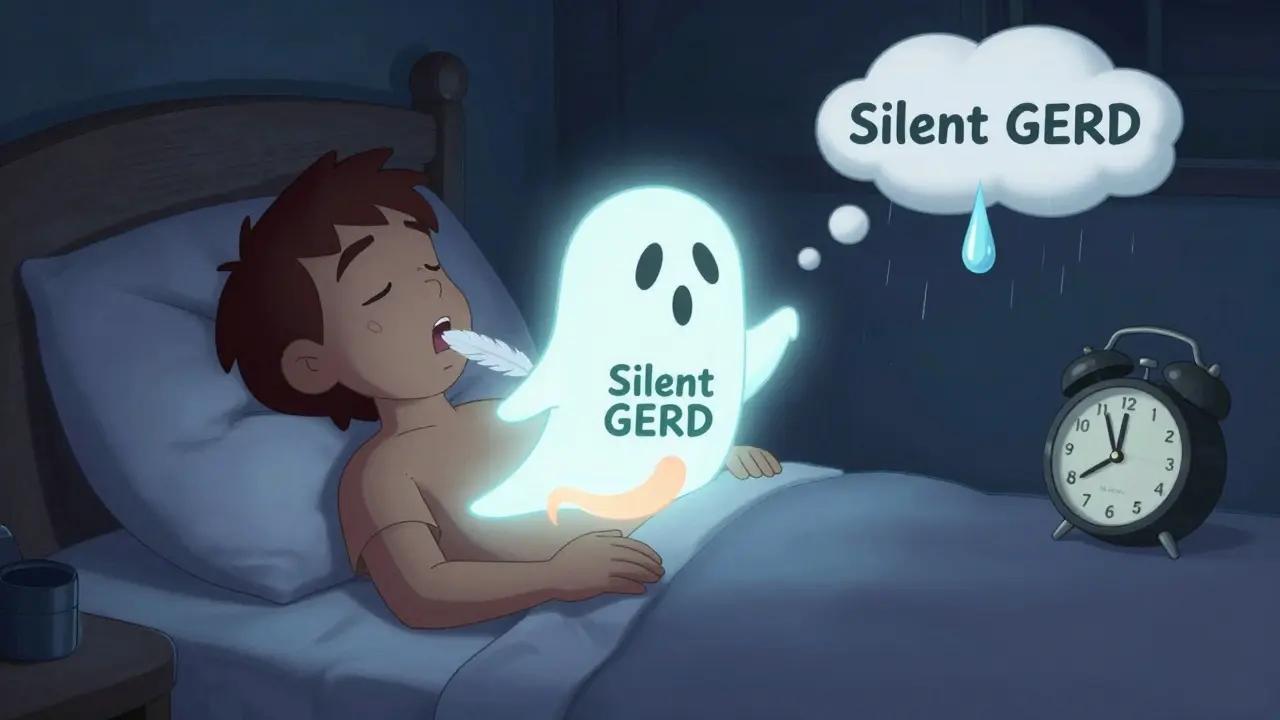
GERD (gastroesophageal reflux disease) causes 21-41% of chronic coughs. But here’s the surprise: up to 70% of people with GERD-induced cough have no heartburn. It’s silent reflux. Stomach acid creeps up, irritates the throat, and triggers coughing - especially when lying down or after meals. The classic test? A 2-4 week trial of high-dose proton pump inhibitors (PPIs), like omeprazole or esomeprazole, taken twice daily. But here’s the catch: only 50-75% of people respond. And if you’re one of the 35-40% who improve on placebo, you might be misdiagnosed. That’s why newer guidelines from the American College of Gastroenterology (March 2024) now warn against starting PPIs without evidence of reflux.
Upper Airway Cough Syndrome (UACS) - what we used to call postnasal drip - is the most common cause, responsible for 38-62% of cases. It’s not just mucus dripping down your throat. It’s inflammation in the nasal passages and upper airways that makes your cough reflex hypersensitive. Allergies, colds, or irritants like smoke or dry air can trigger it. The test? A 2-3 week trial of a first-generation antihistamine (like brompheniramine or chlorpheniramine) plus a decongestant (like pseudoephedrine). If your cough drops by half or more in that time? You’ve got UACS. Response rates are 70-90% when the diagnosis is right.

How the Tests Work - And Why They’re Not What You Think
You might expect blood tests, CT scans, or endoscopies. But the real power of this workup is simplicity. You don’t need a specialist to start. Your family doctor can begin the process.
- Spirometry: You blow into a tube. If your FEV1 improves by 12% and 200 mL after a bronchodilator, asthma is likely. Normal results? Don’t rule it out - go for the methacholine challenge.
- Chest X-ray: A quick, low-radiation check to rule out tumors, infections, or structural problems. If it’s clear, you’re in the 95% group where the big three are the likely cause.
- Hull Airway Reflux Questionnaire (HARQ): A 10-question survey you can take online. Score above 13? You likely have laryngopharyngeal reflux - a type of silent GERD linked to cough. It’s not perfect, but it’s fast and free.
- Hull Cough Questionnaire: Used to measure how much your cough is affecting your life. Score above 15? Your cough is severe. This helps track progress during treatment.
These aren’t fancy gadgets. They’re tools designed to avoid overtesting. A 2022 study found that after 3-6 months of focused experience, family doctors can correctly diagnose the cause in 80% of cases using just history, exam, X-ray, and spirometry.
Why Treatment Trials Are the Gold Standard
Here’s where most people get confused. We don’t diagnose GERD by doing a 24-hour pH probe first. We don’t confirm asthma by doing a full allergy panel. We treat first - and see if the cough improves.
Why? Because the symptoms overlap too much. You can have both asthma and GERD. Or UACS and silent reflux. The only way to know which one is driving your cough is to turn it off - one at a time.
Here’s the typical sequence doctors follow:
- Stop any ACE inhibitors (like lisinopril) if you’re on them - they cause cough in 5-35% of users.
- Trial for UACS: antihistamine + decongestant for 2-3 weeks. If it helps, you’re done.
- If no improvement, try asthma: inhaled bronchodilator or corticosteroid for 2-4 weeks. If cough improves, asthma is the trigger.
- If still no luck, try high-dose PPIs for 4-8 weeks. If cough fades, GERD was the culprit.
Each trial takes time. You can’t rush it. And you have to stick with it. A 2019 review found that 25-40% of patients quit the trials early because they didn’t see instant results. But if you give it the full time, you’re far more likely to get answers.
The Catch: When None of the Three Work
Here’s the hard truth: 10-30% of chronic coughs don’t respond to any of the big three. That doesn’t mean you’re broken. It means you’re in the minority.
Other possible causes include:
- Chronic refractory cough (CRC): Your cough reflex is just too sensitive. No clear trigger. New drugs like gefapixant (approved in late 2022) and camlipixant (under FDA review as of May 2024) target this by blocking nerve signals that cause coughing. In trials, they reduced cough frequency by 18-25%.
- Pertussis (whooping cough): Rare in adults, but possible. Requires a special nasal swab - not a regular test.
- Chronic aspiration: Swallowing problems that let food or saliva enter the lungs. Often seen in older adults or those with neurological conditions.
- Environmental triggers: Dry air, pollution, or workplace irritants like dust or chemicals.
AI is starting to help here too. A 2023 Lancet study showed that machine learning can analyze cough sounds and tell apart asthma-related cough from GERD-related cough with 87% accuracy. It’s not mainstream yet - but it’s coming.
What to Do Now
If you’ve had a cough for more than two months:
- Stop blaming colds or allergies. They’re rarely the cause.
- Write down when your cough happens - after meals? At night? After exercise? Around pets or dust?
- Check if you’re on any blood pressure meds. If so, talk to your doctor about alternatives.
- Ask your doctor for a chest X-ray and spirometry. Don’t skip these.
- Request a 2-3 week trial of an antihistamine + decongestant. Don’t wait for a specialist.
- If that doesn’t work, ask about an asthma inhaler trial - even if you don’t wheeze.
- If still no improvement, discuss a PPI trial. But don’t start it without understanding it might not work.
Most people get relief within weeks - not years. But only if they follow the right steps.
What Not to Do
- Don’t take antibiotics unless you have a confirmed bacterial infection. Less than 5% of chronic coughs are bacterial.
- Don’t buy expensive cough syrups. They don’t touch the root cause.
- Don’t assume it’s stress or anxiety. Those can make it worse - but they rarely cause it alone.
- Don’t wait for a specialist. Your GP can start the process.
Can GERD cause a cough without heartburn?
Yes. In fact, most people with GERD-related cough don’t have heartburn. This is called silent reflux. Acid travels up the esophagus and irritates the throat or voice box, triggering coughing - especially at night or after eating. You might notice a sour taste, throat clearing, or hoarseness instead.
Is a chest X-ray necessary for chronic cough?
Yes - but not for the reason most people think. It’s not to find asthma or GERD. It’s to rule out serious conditions like lung cancer, tuberculosis, or bronchiectasis. If your X-ray is normal, which it is in most cases, you can confidently focus on the three common causes.
How long does it take for a cough treatment trial to work?
It varies. For postnasal drip (UACS), you should see improvement in 1-2 weeks. Asthma treatments usually show results in 2-4 weeks. GERD trials take the longest - 4 to 8 weeks. Patience is key. Stopping too early means you might miss the right diagnosis.
Can asthma cause a cough without wheezing?
Absolutely. This is called cough-variant asthma. The only symptom is a dry, persistent cough - often worse at night, after exercise, or in cold air. Many people are misdiagnosed with bronchitis or allergies for years before their asthma is caught. A spirometry test or methacholine challenge can confirm it.
Are over-the-counter antihistamines effective for postnasal drip?
Yes - but only first-generation ones like chlorpheniramine or brompheniramine. Newer ones like loratadine or cetirizine are less effective for cough because they don’t cross into the brain as well. Adding a decongestant like pseudoephedrine boosts the effect. The combination works in 70-90% of true UACS cases.
What if nothing works after trying the big three?
You may have chronic refractory cough (CRC), where the nerves in your airways are overly sensitive. This affects 10-20% of chronic cough patients. New medications like gefapixant and camlipixant are now available or in late-stage approval. Ask your doctor about a referral to a cough clinic or pulmonologist who specializes in this.
 Health and Wellness
Tony Du bled
December 22, 2025 AT 14:32Why do we always think it's something complex?
Kathryn Weymouth
December 22, 2025 AT 17:42Julie Chavassieux
December 23, 2025 AT 00:16Candy Cotton
December 23, 2025 AT 22:30Jeremy Hendriks
December 25, 2025 AT 15:38Sai Keerthan Reddy Proddatoori
December 27, 2025 AT 13:41Sam Black
December 27, 2025 AT 20:03Thanks for the reminder to check the obvious.
Aliyu Sani
December 28, 2025 AT 09:05Gabriella da Silva Mendes
December 28, 2025 AT 17:35Art Van Gelder
December 30, 2025 AT 10:05And yeah, I still take the antihistamine + decongestant combo every winter. Just in case.