
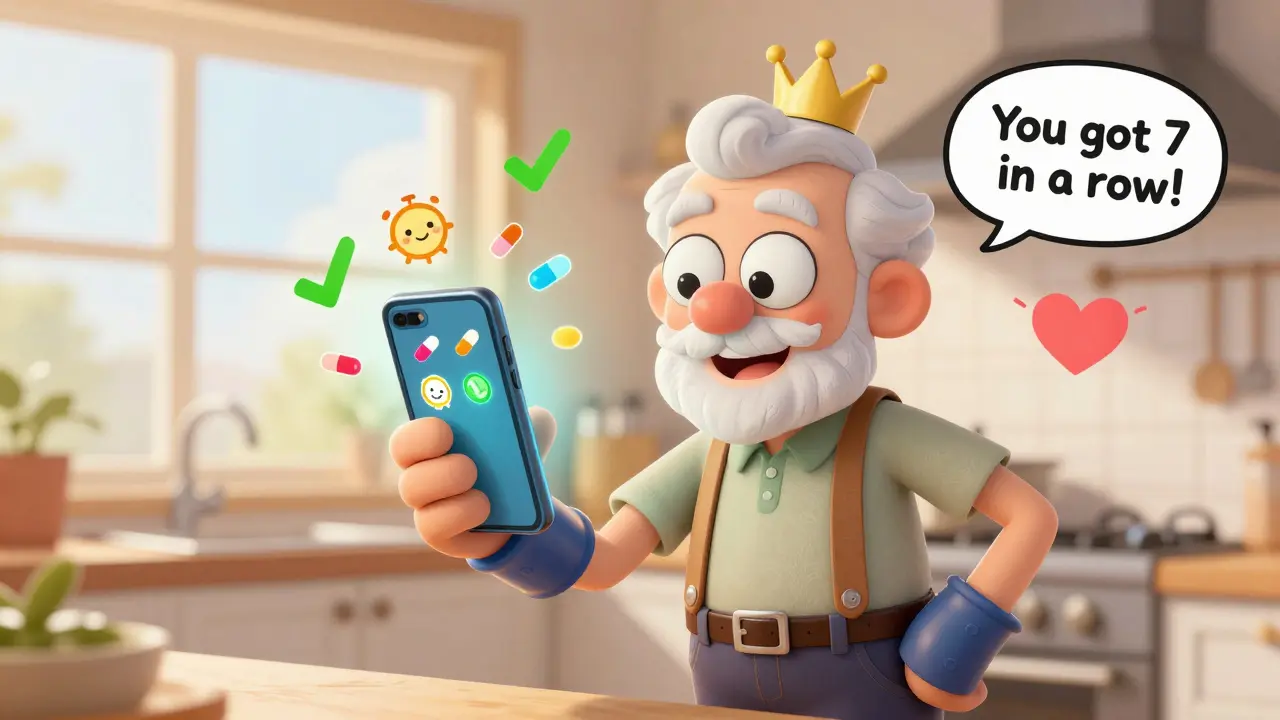
For millions of people managing chronic conditions like high blood pressure, diabetes, or heart disease, taking pills on time isn’t just a habit-it’s a matter of life and death. Yet, medication adherence remains a massive problem. About half of all patients don’t take their medicines as prescribed. In the U.S. alone, that costs the system over $300 billion a year in avoidable hospital visits, emergency care, and worsening conditions. The good news? Digital tools are making it easier than ever to stay on track-and the data backs it up.
Why Medication Reminder Apps Actually Work
It’s not magic. It’s science. A 2020 meta-analysis in the Journal of Clinical Pharmacy and Therapeutics found that medication reminder apps improved adherence with a Cohen’s d effect size of 0.40. That’s higher than motivational interviewing, educational pamphlets, or even therapy sessions. Why? Because they tackle the real reasons people miss doses: forgetting, confusion over complex regimens, or simply losing track.
These apps don’t just buzz at 8 a.m. They adapt. They let you set different times for different pills. They show you what each medication is for. They even let you log side effects or mood changes. A 2023 NIH study in federally qualified health centers found users improved adherence by 43% compared to just 10% in the control group. That’s not a small win-it’s life-changing for someone with heart failure or kidney disease.
What Makes a Good Medication Reminder App?
Not all apps are built the same. The best ones share a few key features:
- Customizable reminders-You can set multiple alarms per day, with different sounds, vibration patterns, or even repeat schedules for weekly meds.
- Medication database-Pre-loaded info on common drugs, including purpose, dosage, and possible interactions. No more Googling “what is this pill for?”
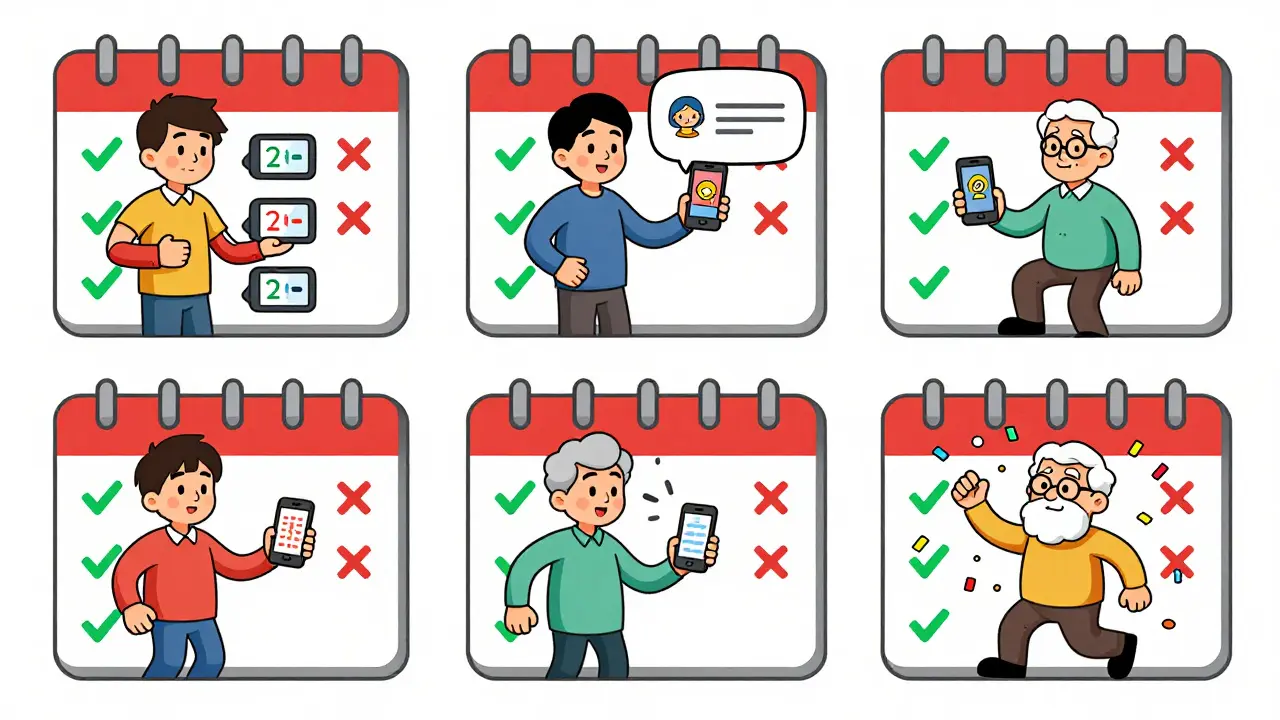
- Visual tracking-A calendar that shows green checkmarks for taken doses and red X’s for missed ones. Seeing your streak builds motivation.
- Shared access-Let a family member or caregiver see your adherence stats. Great for elderly users or those with memory issues.
- Integration-Some apps sync with pharmacies or EHRs (electronic health records) through FHIR APIs. That means your pharmacist can see if you’re refilling on time.
Apps that skip these basics often fail. A 2025 JMIR review found that apps with high personalization-like adjusting reminders based on your daily routine or even your mood-performed far better than generic ones.
Top 5 Medication Reminder Apps in 2026
Out of more than 1,200 apps on the market, five dominate. Here’s what sets them apart:
| App Name | Platform | Personalization | Integration | User Rating (2026) |
|---|---|---|---|---|
| Medisafe | iOS, Android | AI-driven reminders, mood tracking, caregiver alerts | HL7 FHIR, pharmacy sync | 4.7/5 (iOS), 4.6/5 (Android) |
| MyTherapy | iOS, Android | Custom dosing schedules, symptom logging, health reports | Exportable PDF reports, no direct EHR sync | 4.6/5 (iOS), 4.5/5 (Android) |
| Round Health | iOS, Android | Condition-specific plans (diabetes, hypertension) | Pharmacy refill reminders, prescription tracking | 4.5/5 (iOS), 4.4/5 (Android) |
| CareZone | iOS, Android | Family sharing, pill photo library, refill alerts | Pharmacy locator, insurance info | 4.4/5 (iOS), 4.3/5 (Android) |
| Mango Health | iOS, Android | Gamification, rewards, adherence streaks | Pharmacy sync, prescription history | 4.3/5 (iOS), 4.2/5 (Android) |
Medisafe leads in AI features, predicting when you’re likely to miss a dose based on your past behavior. MyTherapy shines for users who want to track symptoms alongside meds-useful for conditions like depression or chronic pain. Round Health is ideal if you have one primary condition like hypertension. CareZone is the go-to for families managing multiple prescriptions. Mango Health turns sticking to your regimen into a game, which works surprisingly well for younger users or those who need a little extra motivation.
Who Benefits the Most?
It’s not just seniors. While only 29% of adults over 65 use these apps, they’re the ones who benefit most. A 2023 NIH study found that even older adults with limited tech experience could set up the apps after a 15-minute tutorial. The real barrier isn’t age-it’s whether someone believes the app will help.
Younger users (18-49) use them at a 68% rate, but often for short-term meds like antibiotics. The real power lies in long-term chronic disease management. People with multiple prescriptions, especially those with heart disease, diabetes, or kidney failure, see the biggest gains. One study showed patients on five or more daily pills improved adherence by 52% with a personalized app.
But here’s the catch: if you’re not convinced you need it, you won’t stick with it. Apps that just beep don’t work. Apps that explain why taking your pill matters-like linking a missed dose to increased risk of stroke-are the ones that change behavior.
Pitfalls and Limitations
These tools aren’t perfect. A 2025 review in JMIR found that 7 out of 14 apps studied were no longer updated. That means your reminder system could vanish overnight. Stick with apps from established companies-Medisafe, MyTherapy, and CareZone have been around since 2012 and show no signs of fading.
Battery drain and notification failures are common complaints. Some users report apps dying on Android phones or missing alerts when the phone is in sleep mode. Always check settings: disable battery optimization for your app, and enable background activity.
Then there’s the digital divide. Dr. Michael Johnson from the American Pharmacists Association points out that many elderly and low-income patients don’t have smartphones, reliable Wi-Fi, or the confidence to use apps. For them, a simple pill organizer with alarms might be more realistic than a full digital solution.
Also, apps can’t replace human care. If you’re skipping pills because you can’t afford them, no app will fix that. If you’re afraid of side effects, no notification will ease your fear. The best apps work alongside your doctor, pharmacist, or caregiver-not instead of them.
What’s Next? AI, Smart Pills, and Real-Time Feedback
The next wave is here. Medisafe’s 2025 update introduced AI that predicts missed doses before they happen. It notices if you’ve been skipping afternoon pills on weekends and adjusts your reminders. In a pilot, this boosted sustained engagement by 15%.
Other innovations are on the horizon. Smart pill bottles that beep when opened, connected blister packs that send refill alerts to your pharmacist, and even ingestible sensors that confirm you swallowed your pill are being tested. The Digital Medicine Society predicts 35% of apps will integrate with these devices by 2027.
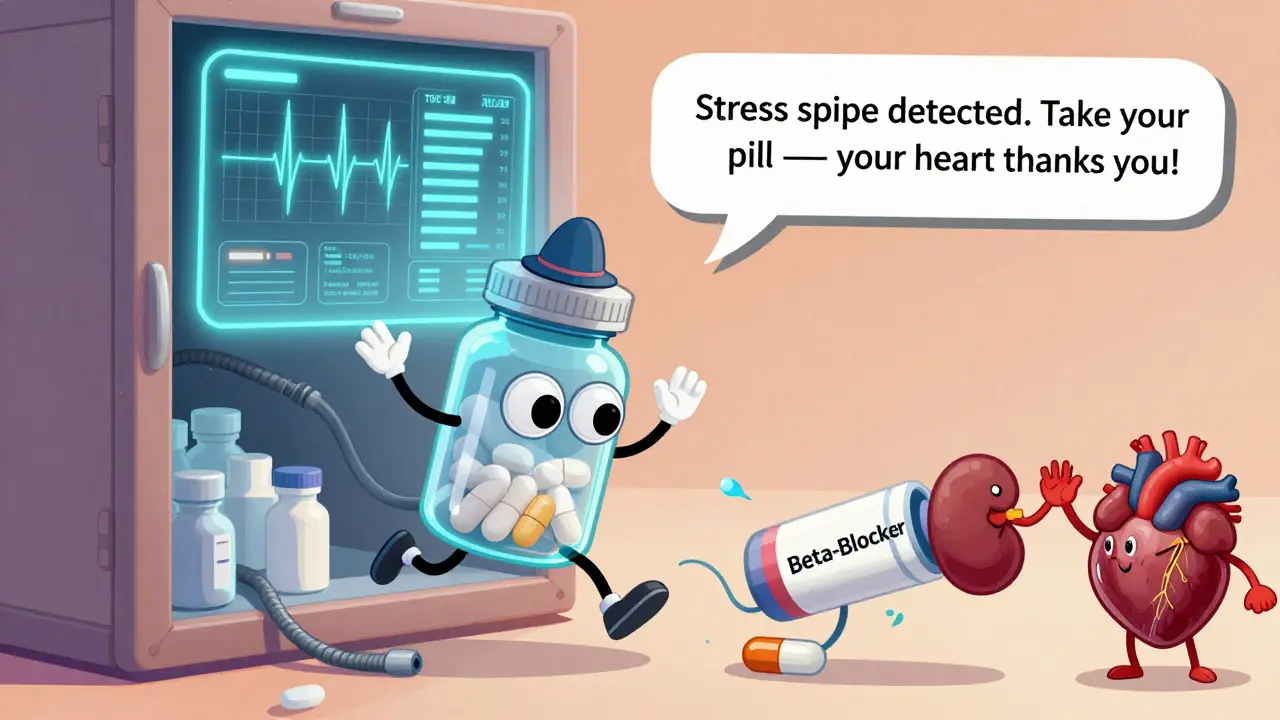
But the real breakthrough? Personalization powered by AI. Imagine an app that knows you’re stressed, your blood pressure spiked last week, and you skipped your beta-blocker. It doesn’t just remind you-it says, “You’ve been under pressure. Taking your pill today helps prevent another spike. Here’s what it does for your heart.” That’s not a notification. That’s support.
How to Get Started
Ready to try one? Here’s how to pick and set up your app:
- Start simple-Pick one app. Don’t try three. Medisafe or MyTherapy are solid choices.
- Input all your meds-Include name, dose, time, reason, and refill date. Be thorough.
- Set multiple alarms-If you take pills at 7 a.m. and 7 p.m., set two. Add a backup at 8 a.m. and 8 p.m. if you often oversleep.
- Enable notifications-Go into phone settings and make sure the app can run in the background and send alerts.
- Share access-Add a trusted person so they can check your progress if you forget.
- Review weekly-Look at your adherence graph. Celebrate streaks. Don’t beat yourself up over a missed dose.
It takes about 3-5 uses to feel comfortable. Most users say it becomes second nature within two weeks.
Do medication reminder apps really work?
Yes, but only if you use them consistently. Studies show they improve adherence by 40% or more on average, outperforming traditional methods like pill organizers or printed schedules. Apps that personalize reminders, track symptoms, and offer visual progress reports are the most effective.
Are these apps safe and private?
Top apps like Medisafe and MyTherapy follow HIPAA standards, use AES-256 encryption for data at rest, and TLS 1.2+ for data in transit. They don’t sell your data. Still, avoid apps that ask for unnecessary permissions like your contacts or location. Stick with well-reviewed apps from reputable developers.
Can I use these apps if I’m over 65?
Absolutely. A 2023 NIH study found older adults, even those with little tech experience, could set up apps after a 15-minute training session. Many seniors prefer them over pill boxes because they offer more detail and can be shared with caregivers. The key is choosing a simple interface and getting help during setup.
What if I forget to take my pill? Will the app help?
Most apps let you log a missed dose and explain why. Some even suggest a catch-up plan. But they can’t force you to take it. The real power is in the pattern: if you miss a dose, the app notices and might adjust future reminders or send a gentle nudge. Over time, this builds awareness and accountability.
Do I need a smartphone to use these apps?
Yes, currently. All major apps require iOS 13+ or Android 8+. If you don’t have a smartphone, consider a basic digital pill dispenser with alarms or ask your pharmacist about free adherence programs that include phone-based reminders. Apps are powerful, but they’re not the only option.
Final Thought: It’s Not About the App, It’s About the Habit
Medication adherence isn’t a tech problem. It’s a human one. We forget. We get overwhelmed. We’re scared. We’re tired. Apps don’t fix those feelings. But they give us structure. They remind us we’re not alone. They show us progress we can’t see otherwise.
If you’re struggling to take your pills, try one app. Set it up. Use it for two weeks. Look at your stats. You might be surprised at how much you’ve done right-and how much better you can feel.
 Health and Wellness
John Sonnenberg
February 9, 2026 AT 17:36PAUL MCQUEEN
February 11, 2026 AT 15:20Monica Warnick
February 11, 2026 AT 20:35Ashlyn Ellison
February 12, 2026 AT 17:17Jonah Mann
February 13, 2026 AT 23:44THANGAVEL PARASAKTHI
February 14, 2026 AT 19:13Chelsea Deflyss
February 16, 2026 AT 05:45Tricia O'Sullivan
February 16, 2026 AT 10:51