
Are generic drugs just copies? Let’s cut through the noise.
You’ve been there. Your doctor hands you a prescription. You walk to the pharmacy, and the pharmacist says, "We can give you the generic version-it’s much cheaper." You pause. Is this a cheap knockoff? Will it even work the same? You’ve heard stories: "My cousin switched to generic and felt awful," or "The brand-name just works better." But here’s the truth: generic drugs are not copies in the way you think. They’re scientifically proven to be the same in every way that matters-except the price.
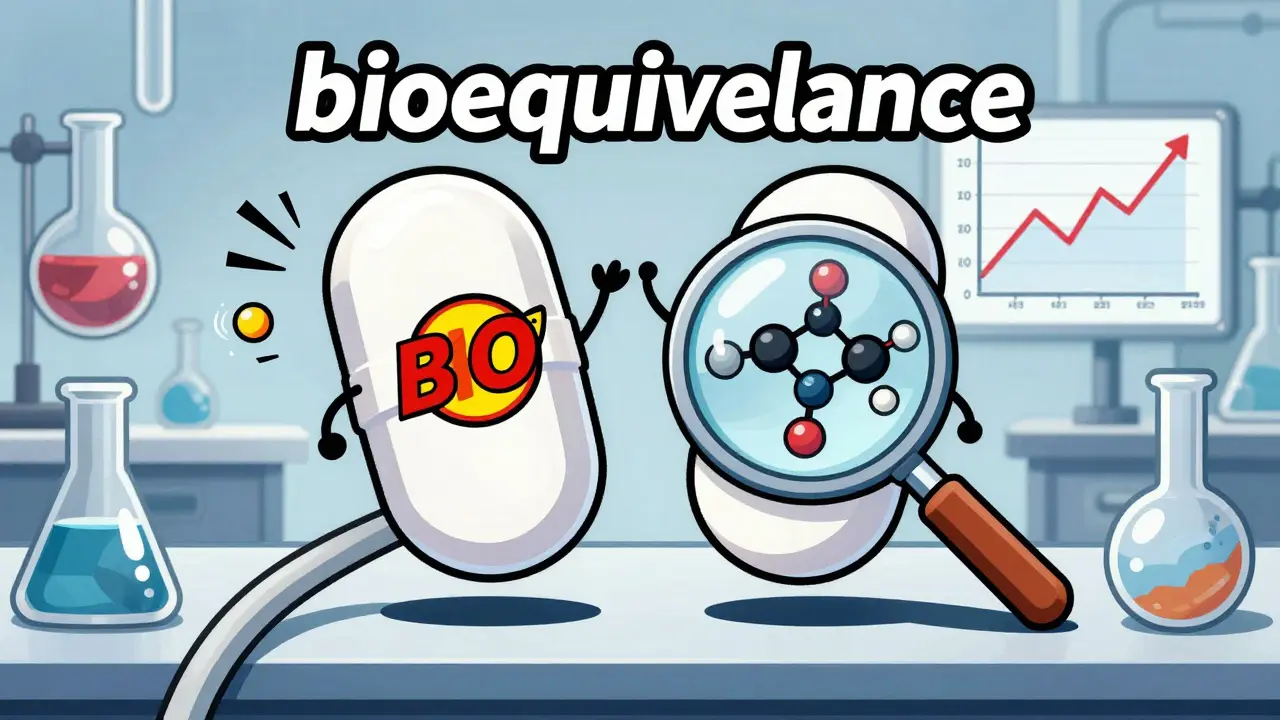
The U.S. Food and Drug Administration (FDA) doesn’t just approve generics because they look similar. They demand proof-hard data-that the active ingredient behaves exactly the same in your body as the brand-name drug. That means the same amount of medicine enters your bloodstream at the same rate. The FDA requires this through bioequivalence studies. For a generic to be approved, its absorption curve must fall within 80% to 125% of the brand-name drug’s curve. That’s not a guess. That’s lab-tested, peer-reviewed science.
What’s actually in a generic drug?
Here’s the breakdown: generic drugs contain the exact same active pharmaceutical ingredient (API) as the brand-name version. If your brand-name pill has 20mg of atorvastatin, so does the generic. Same strength. Same dosage form-tablet, capsule, liquid. Same route-oral, injectable, topical. Same labeling. The FDA checks this with random inspections at manufacturing sites around the world. In 2022, the FDA reviewed over 2,000 generic applications. Not one was approved without matching the brand’s active ingredient down to the last milligram.
So what’s different? The stuff you don’t see. The fillers, dyes, flavors, and preservatives. These are called inactive ingredients, or excipients. They help the pill hold its shape, taste better, or dissolve properly. Brand-name companies trademark their pill’s color and shape. Generics can’t copy that look, so they change the appearance. A blue pill becomes white. A capsule with a red stripe becomes clear. But the medicine inside? Identical.
Some people blame side effects on generics-nausea, dizziness, headaches. But in most cases, it’s not the active ingredient. It’s a reaction to a different filler. A person allergic to cornstarch might react to a generic version that uses it, while the brand used lactose. These reactions are rare, and pharmacists can usually swap you to another generic if it happens.
Why are generics so much cheaper?
It’s simple: generics don’t pay for the original research. When a brand-name drug is first developed, the company spends $1-$3 billion on clinical trials, animal testing, and regulatory filings. That’s why a new drug might cost $500 a month. Once the patent expires-usually after 20 years-other companies can make the same drug. They don’t need to repeat those expensive trials. They just prove bioequivalence, which costs about $1-$5 million. That savings gets passed on.
The numbers speak for themselves. According to the Congressional Budget Office, generic drugs cost, on average, 85% less than brand-name versions. GoodRx data from 2023 shows the average generic prescription costs $4.27. The same brand-name drug? $61.85. That’s not a discount. That’s a revolution in access.
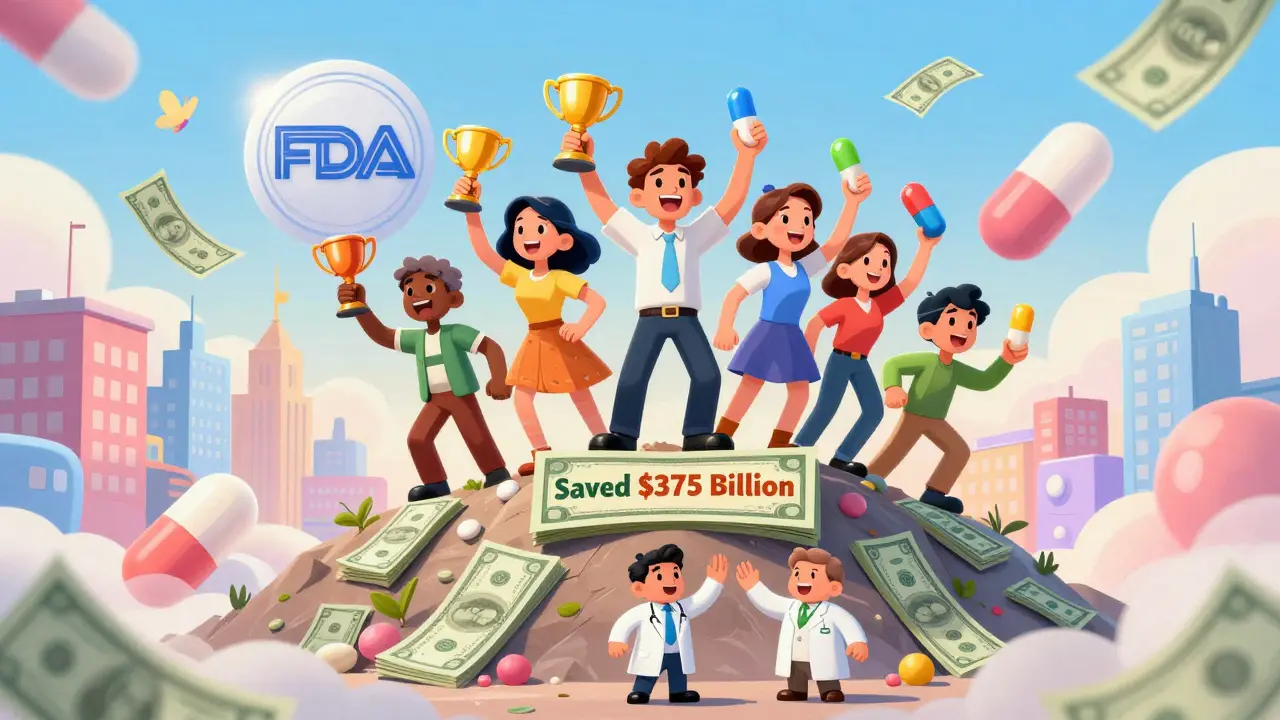
And it works. In the U.S., 90% of all prescriptions filled are for generics. Yet they make up only 23% of total drug spending. That’s $375 billion saved annually, according to IQVIA. Medicare Part D patients save over $500 a year on average just by switching to generics. That’s not a minor perk. That’s life-changing for people on fixed incomes.
Are there exceptions? Yes-but they’re rare.
There’s one group of drugs where even tiny differences matter: narrow therapeutic index (NTI) drugs. These are medications where the difference between an effective dose and a toxic one is very small. Think blood thinners like warfarin, thyroid meds like levothyroxine, and certain seizure drugs like phenytoin.
For these, the FDA requires extra scrutiny. Pharmacists can still substitute generics, but doctors often prefer to stick with one brand to avoid any potential fluctuation. Studies show that 96% of non-NTI drug substitutions work without issue. For NTI drugs, the success rate is still 92%-but doctors monitor patients more closely.
Here’s the key: if you’re on a NTI drug and you switch generics, your doctor doesn’t need to write a new prescription. But they might ask you to come in for a blood test to make sure your levels are stable. That’s not because generics are unsafe. It’s because precision matters in these cases.
And yes, there are stories-like the Epilepsy Foundation survey where 17% of patients reported breakthrough seizures after switching. But the FDA’s own analysis found most of those cases weren’t caused by bioequivalence failure. They were due to missed doses, stress, illness, or other factors. The medicine itself was still working as intended.
What do real people say?
Over 1.2 million reviews on Drugs.com show generics scoring 7.2 out of 10 for effectiveness. Brand-name drugs? 7.5. That’s not a gap-it’s a tie. Eighty-two percent of users say they feel no difference.
On Reddit’s r/pharmacy, over 4,000 people shared their experiences. Two-thirds reported zero issues. A quarter said they noticed minor side effects-like a different pill size or a slightly different taste. Only 10% were on NTI drugs and had concerns.
A Kaiser Family Foundation survey found that 78% of insured adults get generics as their first option. And 89% of them are happy with it. The biggest reason people avoid generics? Misinformation. Forty-three percent believe generics contain only 20-80% of the active ingredient. That’s false. FDA testing shows generics contain 99.2% of the labeled active ingredient on average.
Can pharmacists switch your drug without asking?
In 49 out of 50 U.S. states, yes. Pharmacists can substitute a generic unless the doctor writes "dispense as written" or "no substitution." Mississippi is the only state that requires the doctor to explicitly allow substitution. But even then, patients can ask for the generic at the same price if it’s approved.
And here’s something most people don’t know: in 28 states, you can ask for the brand-name drug-even if a generic is available-and pay the generic price. You just have to request it. Pharmacists are trained to explain this. But they only spend about 3.2 minutes per prescription doing it. Most people don’t ask.
What’s changing now?
The FDA is pushing to cut approval times for generics from 38 months to just 10 months by 2027. Why? Because there are over 1,200 complex generics stuck in the backlog-things like inhalers, eye drops, and topical creams that are harder to copy. The agency’s new plan targets 95% approval rates for priority generics by 2025.
Biosimilars-generic versions of complex biologic drugs like Humira or Enbrel-are also starting to take off. They’re not exact copies (because biologics are made from living cells), but they’re proven to work the same. By 2027, they could make up 15% of the market. That’s another $10 billion in savings expected.
The 2022 Consolidated Appropriations Act now requires Medicare Part D to automatically switch patients to generics unless medically inappropriate. That’s projected to save $156 billion over ten years.
Bottom line: Don’t fear the generic. Trust the science.
Generic drugs aren’t copies. They’re exact matches in everything that affects your health: how they work, how fast they act, how long they last. The differences are cosmetic, not clinical. The savings are massive. The safety record is strong.
If you’re on a routine medication-statins, blood pressure pills, antidepressants, diabetes drugs-there’s no reason not to use the generic. It’s the same medicine. Cheaper. Just as safe. Just as effective.
And if you’re on a narrow therapeutic index drug? Talk to your doctor. But don’t assume the generic won’t work. Most of the time, it does. And when it doesn’t, it’s not because the drug is inferior. It’s because your body needs extra attention-and that’s something your doctor can help with.
Next time you’re handed a generic prescription, don’t hesitate. You’re not getting a second-rate product. You’re getting the same medicine, at a fraction of the cost. And that’s not a myth. That’s the reality.
Are generic drugs as effective as brand-name drugs?
Yes. The FDA requires generic drugs to prove they deliver the same amount of active ingredient into your bloodstream at the same rate as the brand-name version. This is called bioequivalence. Over 90% of prescriptions in the U.S. are for generics, and studies show they work just as well for the vast majority of medications.
Why do generic drugs look different?
U.S. trademark laws require generic drugs to look different from brand-name versions. That means different colors, shapes, or markings. But the medicine inside-the active ingredient-is identical. The differences are only in inactive ingredients like dyes or fillers, which don’t affect how the drug works.
Can generic drugs cause more side effects?
Rarely. Most side effects are caused by the active ingredient, which is the same in both versions. If you notice new side effects after switching, it could be due to a different inactive ingredient-like a dye or filler you’re sensitive to. Talk to your pharmacist. They can often switch you to another generic version with a different formulation.
Are there any drugs where generics don’t work as well?
For most drugs, yes-they work the same. But for narrow therapeutic index (NTI) drugs like warfarin, levothyroxine, or phenytoin, even small changes in blood levels can matter. In these cases, doctors may prefer you stay on one version. But that’s not because generics are weaker-it’s because precision matters. Most patients still do fine with generics, but monitoring is tighter.
Why are generic drugs so much cheaper?
Brand-name companies spend billions on research, clinical trials, and marketing. Generic manufacturers don’t need to repeat those expensive studies. They only need to prove their version works the same way. That saves them millions, and those savings are passed on to you. On average, generics cost 85% less than brand-name drugs.
Can I ask for the brand-name drug even if a generic is available?
Yes. In 28 states, you can request the brand-name drug and pay the generic price if your doctor approves. You can also ask your pharmacist to check if your insurance will cover the brand at the generic rate. It’s worth asking-especially if you’ve had issues with generics before.
Do generics take longer to work?
No. The FDA requires generics to match the brand-name drug’s absorption rate. If the brand works in 30 minutes, so does the generic. Studies show no meaningful difference in how quickly the medicine enters your system.
Is the FDA’s approval process for generics less strict?
No. The FDA holds generics to the same standards as brand-name drugs for safety, strength, purity, and quality. The only difference is that generics don’t need to repeat large-scale clinical trials. Instead, they prove bioequivalence through precise lab tests. The FDA inspects manufacturing sites for both types of drugs equally.
What should you do next?
If you’re currently taking a brand-name drug and paying full price, ask your pharmacist: "Is there a generic available?" If there is, ask your doctor if it’s safe for you to switch. For most medications, the answer is yes.
If you’re on a chronic condition like high blood pressure, diabetes, or high cholesterol, switching to a generic could save you hundreds-or even thousands-of dollars a year. That’s money you can use for groceries, rent, or a doctor’s visit you’ve been putting off.
And if you’ve ever felt like generics are "second-best," remember: you’re not saving money by sacrificing quality. You’re saving money because the system works the way it should. The medicine is the same. The science is solid. The only thing that changed is the price tag.
 Health and Wellness
June Richards
February 2, 2026 AT 09:54Naomi Walsh
February 3, 2026 AT 00:59Nidhi Rajpara
February 3, 2026 AT 17:34Chris & Kara Cutler
February 4, 2026 AT 10:34Donna Macaranas
February 4, 2026 AT 18:05Rachel Liew
February 6, 2026 AT 01:11Jamie Allan Brown
February 6, 2026 AT 01:41Lisa Rodriguez
February 6, 2026 AT 08:29Nicki Aries
February 8, 2026 AT 03:13Ed Di Cristofaro
February 9, 2026 AT 14:52Lilliana Lowe
February 11, 2026 AT 04:58vivian papadatu
February 11, 2026 AT 23:31Deep Rank
February 12, 2026 AT 12:30