
Antidepressant Tapering Plan Calculator
Create Your Safe Tapering Plan
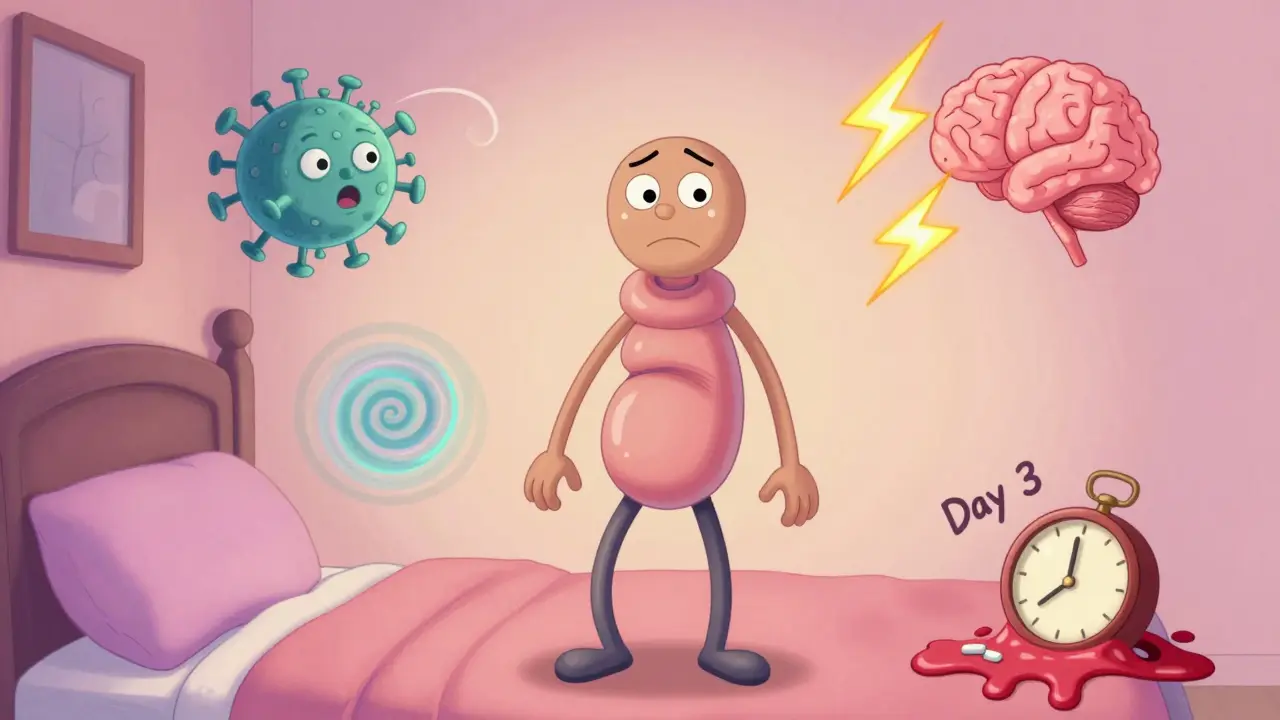
Stopping antidepressants isn’t as simple as just skipping a pill. For many people, the body doesn’t bounce back immediately - and that’s not weakness, it’s biology. Antidepressant discontinuation syndrome, sometimes called withdrawal, can hit hard and fast, even if you’ve only been on the medication for a few months. It’s not addiction. It’s not relapse. It’s your nervous system adjusting after being chemically supported for a while. And if you’re not prepared for it, you could end up in the ER thinking you’re having a stroke, a panic attack, or that your depression is coming back - when it’s actually your brain trying to recalibrate.
What Exactly Is Antidepressant Discontinuation Syndrome?
This isn’t a myth. It’s a real, well-documented physical reaction that happens when you stop or reduce an antidepressant too quickly after taking it for at least a month. The term was originally pushed by pharmaceutical companies to avoid the word “withdrawal,” which sounds like addiction. But experts now agree: this is a classical withdrawal syndrome, similar to what happens with benzodiazepines. Your brain adapted to the drug. When it’s gone, your neurotransmitters - especially serotonin and norepinephrine - are out of sync. That’s what causes the symptoms.
It doesn’t mean you’re dependent in the way someone is dependent on alcohol or opioids. You won’t crave the drug. You won’t take more to get high. But your body learned to function with it. And when you remove it abruptly, your system stumbles.
Common Symptoms: The FINISH Mnemonic
Doctors use a simple acronym to remember the most common signs: Flu-like, Insomnia, Nausea, Imbalance, Sensory disturbances, Hyperarousal. Let’s break that down with real-world examples.
- Flu-like symptoms: Fatigue (78% of cases), body aches, headaches, chills, diarrhea. One patient in Brisbane described it as “feeling like I’d been hit by a truck - but no fever.”
- Insomnia: Trouble falling asleep, waking up at 3 a.m. with your heart racing, or having vivid, disturbing dreams. Sixty-five percent of people report this.
- Nausea: Feeling sick to your stomach, sometimes vomiting. Nearly 60% of those who stop suddenly deal with this.
- Imbalance: Dizziness, vertigo, feeling like you’re on a boat even when standing still. Some people can’t walk straight.
- Sensory disturbances: “Brain zaps” - sudden, brief electric shock sensations in the head, often triggered by eye movement. Also tingling, numbness, or a feeling like your skin is crawling. Around 63% of people report these.
- Hyperarousal: Anxiety, panic, irritability, agitation, even rage. Some describe feeling like they’re “on fire inside.”
There are other less common but still reported symptoms: feeling like your head is wrapped in cotton wool, derealization (like the world isn’t real), trouble concentrating, and even suicidal thoughts - not because your depression returned, but because your brain is in chaos.
Which Antidepressants Cause the Worst Withdrawal?
Not all antidepressants are created equal when it comes to withdrawal. The key factor is half-life - how long the drug stays in your system.
Short half-life = higher risk. Medications like paroxetine (Paxil) and venlafaxine (Effexor) leave your body fast - within hours. That means your brain gets hit with a sudden drop. Up to 47% of venlafaxine users report severe withdrawal symptoms. Paroxetine is notorious for causing brain zaps and nausea.
Long half-life = smoother exit. Fluoxetine (Prozac) sticks around for days - sometimes up to six. That gives your brain time to adjust gradually. If you know you’ll want to stop someday, starting with fluoxetine can make the exit easier.
Other classes have their own risks:
- Tricyclic antidepressants (TCAs): Can cause tremors, stiff muscles, and movement problems that mimic Parkinson’s.
- MAOIs: The most dangerous to quit cold turkey. Can trigger severe agitation, psychosis, catatonia, or myoclonus (involuntary muscle jerks). These cases need emergency care.
Even switching brands or generics can trigger symptoms. One patient in Sydney switched from brand-name sertraline to a generic version and developed nausea and brain zaps - not because the active ingredient changed, but because the fillers and release rates were different. The Royal College of Psychiatrists warns: “Not all formulations are bioequivalent.”
How Long Do Symptoms Last?
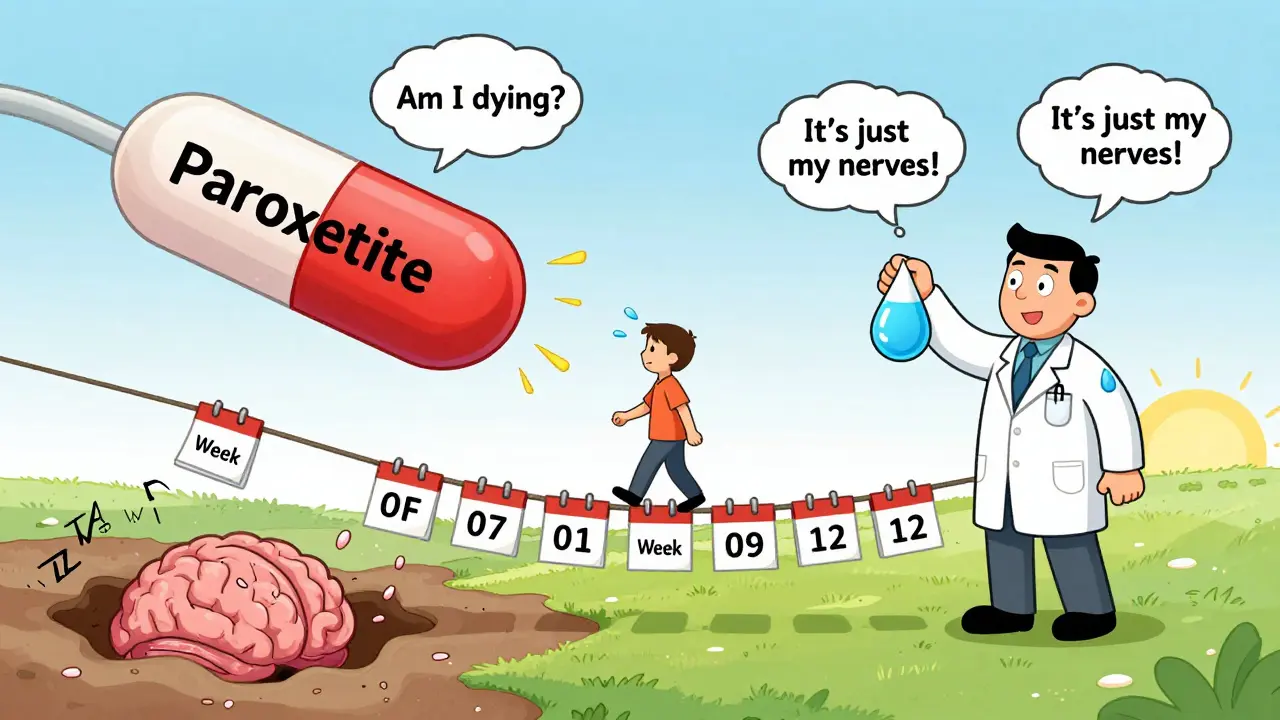
Most medical sources say symptoms last 1-2 weeks. But real-world experience tells a different story.
Yes, many people feel better in a few days. But data from the Surviving Antidepressants community - with over 15,000 members - shows 73% had symptoms lasting longer than two weeks. Nearly 30% reported symptoms beyond six months. A 2022 study in the Journal of Clinical Psychiatry found that almost 19% of people had symptoms lasting more than three months.
Protracted withdrawal isn’t rare. It’s underreported. Doctors often assume it’s relapse. Patients are told, “It’s all in your head.” But brain zaps don’t disappear because you think positively. Nausea doesn’t vanish with a pep talk.
How to Avoid or Minimize Withdrawal Symptoms
The best way to avoid this? Don’t stop suddenly. Ever.
Here’s what works:
- Taper slowly. The NIH and Royal College of Psychiatrists recommend a taper of 6-8 weeks for most antidepressants. For venlafaxine or paroxetine, go longer - 10-12 weeks. Cut your dose by 10-25% every 1-2 weeks. Don’t rush.
- Use a longer half-life drug if possible. If you’re planning to stop, ask your doctor if switching to fluoxetine first makes sense. Then taper off fluoxetine. It’s smoother.
- Don’t switch generics without supervision. If you’re on a brand-name drug and your pharmacy switches you to a generic, tell your doctor. You might need to adjust the taper.
- Track your symptoms. Keep a simple journal: “Day 5: dizziness, brain zaps when looking left.” This helps your doctor know if it’s withdrawal or something else.
- Don’t stop during pregnancy without a plan. Forty-one percent of pregnant women quit antidepressants on their own - often because they’re scared. But unplanned stops can trigger severe withdrawal. Work with a psychiatrist who specializes in perinatal mental health.
One patient in Brisbane tapered off sertraline over 14 weeks. She cut 10 mg every two weeks. She had mild nausea for a few days at the 50 mg mark - nothing worse. She didn’t have brain zaps. She didn’t feel like she was losing her mind. That’s the difference a slow taper makes.
What If Symptoms Already Started?
If you’ve already stopped and feel awful, don’t panic. You’re not broken. You’re not failing. You’re experiencing a known physiological reaction.
Here’s what to do:
- Contact your prescriber immediately. Tell them exactly what you’re feeling. Don’t say “I feel depressed.” Say “I have brain zaps, dizziness, and nausea since I stopped on Tuesday.”
- Reintroducing the original medication usually works fast. Most people feel better within 72 hours after restarting their dose. Symptoms don’t linger because you’re weak - they linger because you stopped too fast.
- Don’t try to “power through”. Rest. Hydrate. Avoid caffeine, alcohol, and stress. These make symptoms worse.
- Consider temporary symptom relief. Some doctors prescribe a short course of benzodiazepines for severe anxiety or insomnia during withdrawal. Others use low-dose fluoxetine to bridge the gap. This isn’t about addiction - it’s about giving your brain time to catch up.
Why Do Doctors Get This Wrong?
It’s not that they don’t care. It’s that they’re not trained for it.
A 2006 study by the American Academy of Family Physicians found that 38% of discontinuation syndrome cases were misdiagnosed - as anxiety, migraines, viral illness, or relapse. Patients were given new antidepressants, anti-anxiety meds, or even sent to the ER for suspected stroke.
Reddit threads like r/mentalhealth show 87% of people felt dismissed by their doctors. One man in Melbourne was told his “brain zaps” were just stress. He waited six months before finding a psychiatrist who knew what was happening.
The gap between research and practice is real. Most GPs don’t get training in psychopharmacology beyond basics. They see a patient with dizziness and nausea and think “flu.” They don’t ask, “When did you last take your antidepressant?”
What’s Changing in the Medical World?
Things are slowly shifting. The Royal College of Psychiatrists updated their guidelines in 2022 to include protracted withdrawal. ClinicalTrials.gov has two active studies (NCT04567890, NCT04812345) looking at biomarkers and optimal tapering schedules. Results are expected in late 2024.
More doctors are starting to ask: “How long have you been on this?” and “What’s your plan for stopping?” It’s not standard yet - but it’s growing.
And patients? They’re leading the change. Online communities like Surviving Antidepressants aren’t just forums - they’re archives of lived experience. They’re documenting what the textbooks don’t. They’re teaching doctors what they missed in med school.
Final Thought: You’re Not Alone, and This Isn’t Your Fault
Stopping antidepressants is one of the most misunderstood medical decisions out there. It’s not a sign of weakness. It’s not a failure. It’s a biological process - and like any biological process, it needs care, time, and respect.
If you’re thinking about stopping, talk to your doctor - not just to get approval, but to build a plan. If you’ve already stopped and feel awful, reach out. Your symptoms are real. They’re not in your head. They’re in your nervous system. And they can be managed.
There’s no shame in needing help to come off. There’s only shame in being told you’re imagining it - when you’re not.
Can antidepressant withdrawal be dangerous?
Yes, in rare cases. Stopping MAOIs abruptly can cause severe agitation, psychosis, or catatonia - these require emergency care. For most SSRIs and SNRIs, withdrawal isn’t life-threatening but can be extremely distressing. Severe dizziness can lead to falls. Intense anxiety or suicidal thoughts can emerge, even if your depression isn’t returning. Always tell your doctor if symptoms are severe or worsening.
How long should I taper off my antidepressant?
It depends on the drug and how long you’ve been on it. For most SSRIs, a 6-8 week taper is recommended. For venlafaxine or paroxetine, aim for 10-12 weeks. If you’ve been on the medication for over a year, extend the taper. Cutting by 10-25% every 1-2 weeks is a safe rule of thumb. Never reduce by more than 25% at once.
Is it safe to stop antidepressants during pregnancy?
It’s not unsafe - but it must be planned. Forty-one percent of pregnant women stop antidepressants without medical advice, often due to fear. But sudden withdrawal can trigger severe symptoms that affect both mother and baby. Work with a perinatal psychiatrist. Switching to fluoxetine before pregnancy may reduce withdrawal risk. Never stop cold turkey during pregnancy.
Can switching to a generic brand cause withdrawal symptoms?
Yes. Even if the active ingredient is the same, fillers, coatings, and release rates can differ between brands and generics. These changes can alter how quickly the drug enters your bloodstream. One patient in Sydney developed brain zaps after switching to a generic sertraline - symptoms resolved when she switched back. Always inform your doctor if your pharmacy changes your prescription.
Why do I feel worse after restarting my antidepressant?
You shouldn’t. If you restart your original antidepressant and symptoms get worse, it’s likely not withdrawal anymore. You may be experiencing a new reaction, a different condition, or an interaction. Tell your doctor immediately. It’s possible you need a different medication or dosage adjustment.
Do brain zaps mean permanent damage?
No. Brain zaps are a temporary neurological glitch caused by serotonin imbalance. They’re not seizures, not strokes, not signs of brain damage. They usually fade within days to weeks after restarting the medication or completing a slow taper. Many people report them disappearing completely after 2-4 weeks of stabilization.
Can I use supplements to ease withdrawal?
Some people report mild relief from omega-3s, magnesium, or B vitamins, but there’s no strong evidence they prevent or cure withdrawal. Don’t replace medical advice with supplements. What helps one person might interfere with another’s medication. Always check with your doctor before adding anything new.
How do I know if it’s withdrawal or my depression coming back?
Timing is everything. Withdrawal symptoms start within hours to days after stopping. Depression relapse usually takes weeks to develop. Withdrawal symptoms improve quickly (within 72 hours) if you restart the medication. Depression relapse doesn’t. Also, withdrawal often includes physical symptoms like brain zaps, dizziness, and nausea - which depression alone doesn’t cause.
 Health and Wellness
Marie Mee
December 17, 2025 AT 10:42they made us think we needed these pills then acted shocked when we got sick from quitting
they dont want you to know its withdrawal because then people would stop buying them
brain zaps? thats your soul screaming
Naomi Lopez
December 18, 2025 AT 11:43Nishant Desae
December 18, 2025 AT 12:05i went through this with sertraline and thought i was losing my mind
the brain zaps felt like someone was tapping my skull with a hammer
but after i restarted at 10% and tapered super slow over 16 weeks
they slowly faded
you dont have to suffer in silence
your body is not broken it is just adjusting
and that takes time and kindness not judgment
Meghan O'Shaughnessy
December 20, 2025 AT 03:22no one talks about it because doctors shrug and say 'take a vacation'
but the real problem is no one teaches you how to exit these drugs like you would exit a relationship
gradually
with space
with silence
and without shame
Kaylee Esdale
December 21, 2025 AT 09:24one day you feel fine next day you swear you got zapped by a toaster
no fever no flu just pure electric weirdness
and yeah the dizziness? like being on a boat in a hurricane while standing still
its not in your head its in your nerves
Anu radha
December 21, 2025 AT 19:00thank you for saying this out loud
Jigar shah
December 22, 2025 AT 17:44Joe Bartlett
December 22, 2025 AT 23:45then get blamed when we end up in A&E
my mate had brain zaps for months and they called it anxiety
typical
Salome Perez
December 24, 2025 AT 17:08Kent Peterson
December 26, 2025 AT 07:54Sam Clark
December 27, 2025 AT 06:44