
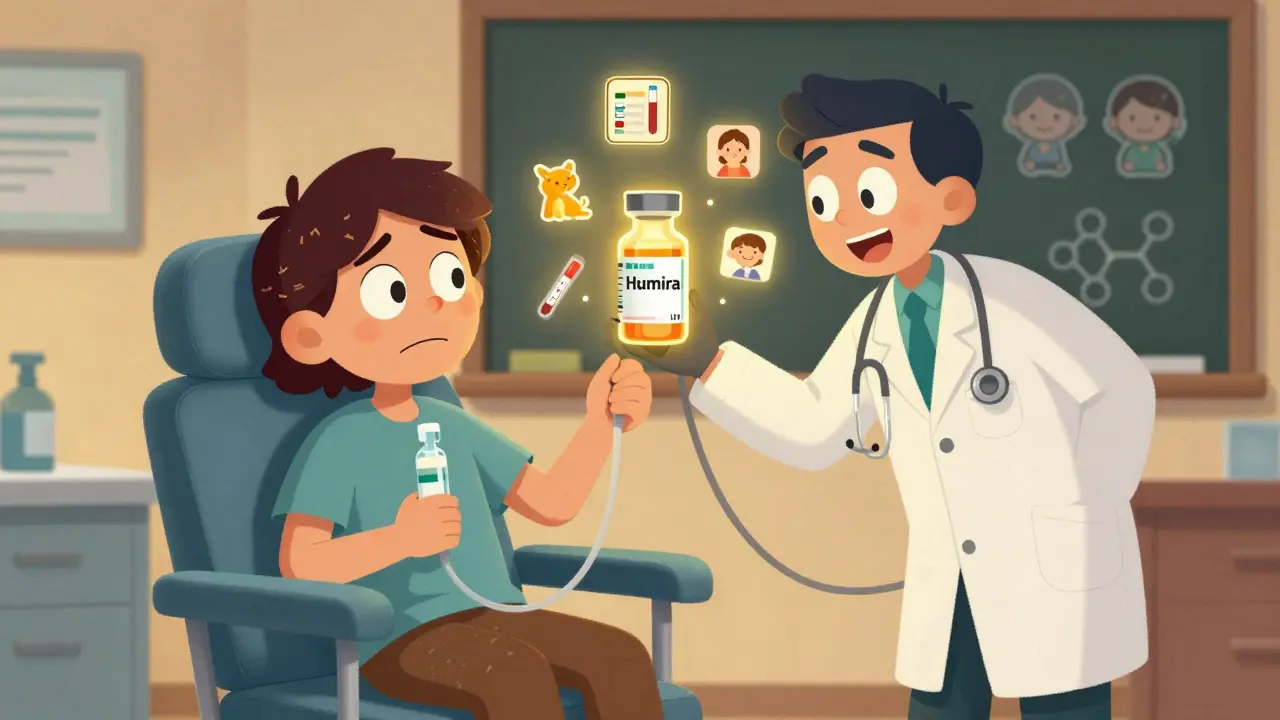
When your doctor suggests switching from Humira to a biosimilar, it’s natural to feel uneasy. You’ve been on the same medication for years. It works. You know how your body reacts to it. Now you’re being asked to try something new-something you’ve never heard of before. You’re not alone. Biosimilars are one of the biggest opportunities to cut healthcare costs without sacrificing care, yet most patients don’t trust them. And it’s not because they’re stubborn. It’s because they’ve been left in the dark.
What Exactly Is a Biosimilar?
A biosimilar is not a generic. That’s the first thing you need to understand. Generics are copies of simple chemical drugs-like ibuprofen or metformin. They’re made in labs using precise formulas. If you take a generic version of ibuprofen, it’s chemically identical to the brand name. No surprises. Biosimilars are different. They’re copies of biologic drugs-complex medicines made from living cells. Think of them like a handmade quilt. Even if two quilters use the same pattern and fabric, each quilt has tiny differences in stitching. That’s how biosimilars work. They’re not exact copies, but they’re so close that no meaningful difference shows up in how they work in your body. The FDA requires biosimilars to go through more than 10 years of testing: thousands of lab tests, animal studies, and clinical trials involving hundreds of patients. The goal? Prove there’s no difference in safety, effectiveness, or side effects compared to the original drug. That’s not something you can fake. The first FDA-approved biosimilar, Zarxio, came out in 2015. Since then, 74 have been approved as of April 2025.Why Are Patients So Hesitant?
Most patients don’t know what biosimilars are. A 2025 survey by the Evernorth Research Institute found only 31% of people with chronic conditions had even heard of them. Meanwhile, 64% of doctors had. That gap matters. When a doctor says, “We’re switching you to a biosimilar,” without explaining what it is, patients hear: “We’re giving you a cheaper version.” And in medicine, cheaper often feels like worse. Some patients have had bad experiences. One Reddit user, ChronicPainPatient87, shared how their doctor switched them to a biosimilar for Humira without warning. They had a flare-up. They didn’t know if it was the drug, stress, or bad luck-but they blamed the biosimilar. That fear sticks. A 2025 study in the Journal of Managed Care & Specialty Pharmacy found 79% of patients worried biosimilars wouldn’t work as well. Sixty-three percent feared new or worse side effects. And here’s the cruel twist: even though biosimilars save the system billions, patients rarely see those savings. For pegfilgrastim, biosimilars cut out-of-pocket costs by nearly half in the first cycle. But for many other drugs-like infliximab-patient costs stayed the same after biosimilars entered the market. Insurance companies and pharmacy benefit managers (PBMs) often don’t pass savings along. So patients pay the same, but they’re still scared.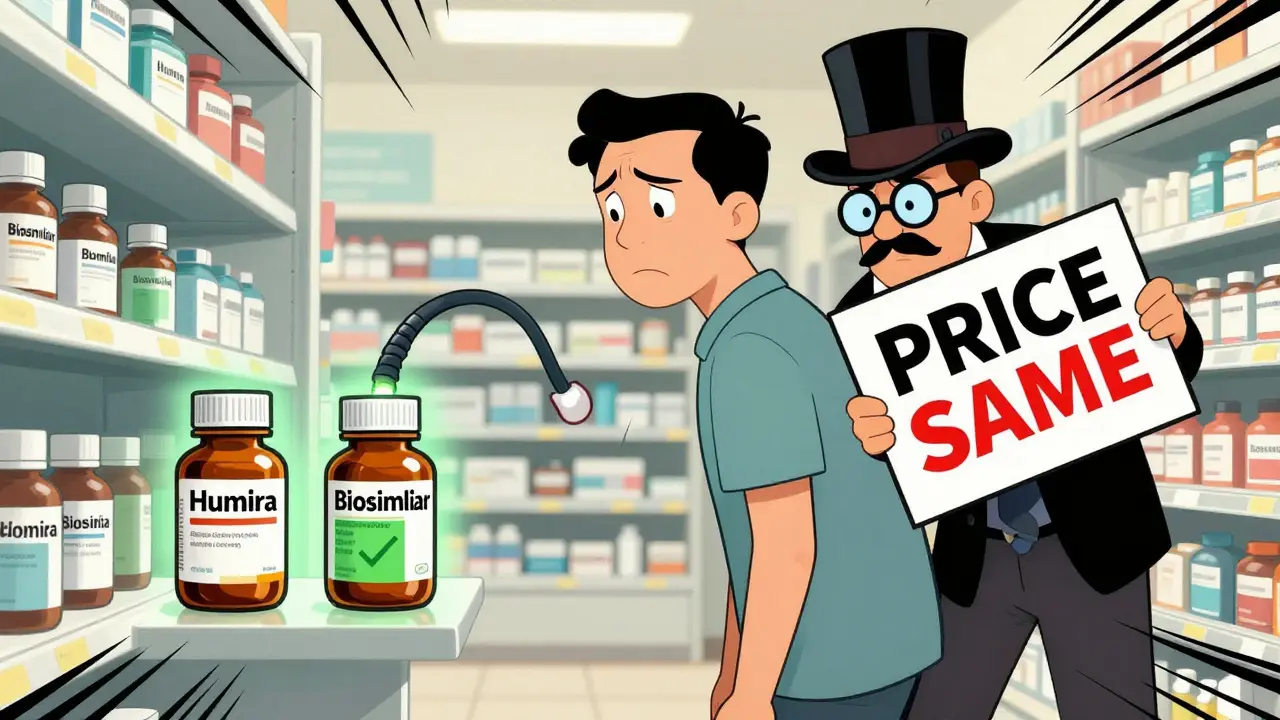
Biosimilars vs Generics: The Real Difference
It’s easy to think, “If generics are safe, why not biosimilars?” But the science doesn’t work the same way. Generics: Made from chemicals. Simple molecules. Cost $2-3 million to develop. Take 3-4 years. Nearly identical to the original. Biosimilars: Made from living cells. Complex proteins. Cost $100-250 million to develop. Take 8-10 years. Very similar-but not identical-at the molecular level. But here’s the key: those tiny differences don’t affect how the drug works in your body. Over 100,000 patients have been studied. No meaningful safety or effectiveness gaps. Think of it like two identical twins. They look almost the same. Same height, same voice, same DNA. But one has a scar on their left hand. Does that make them less reliable? No. The scar doesn’t change who they are. Biosimilars are like that twin. Minor differences exist, but they don’t change the outcome.Why Aren’t More People Using Them?
You’d think with 74 approved biosimilars and $56 billion in savings over the past decade, adoption would be soaring. But it’s not. For most biologics, biosimilar use is under 10%. That’s shocking. Why? Three big reasons:- Doctors don’t feel confident. Many physicians were never trained on biosimilars. They don’t know how to explain them. They fear complaints or flare-ups.
- Insurance rules are messy. PBMs often push patients toward biosimilars-but don’t lower co-pays. That makes patients feel tricked.
- Manufacturers fight back. Big pharma uses “pay-for-delay” deals to block biosimilars from entering the market for up to 18 months longer than they should.
 Health and Wellness
jefferson fernandes
January 14, 2026 AT 03:10I’ve been on Humira for 7 years. My doctor switched me to a biosimilar last year-no warning, no explanation. I had a flare-up. Was it the drug? Stress? Bad luck? I don’t know. But now I’m terrified to try anything else. And no one’s telling me the truth: if it works, why change it? The system’s just trying to cut costs, not help me.
Pankaj Singh
January 14, 2026 AT 22:04Let’s be real-biosimilars are just pharma’s loophole. You think the FDA tests them for 10 years? Please. They’re testing for ‘close enough.’ And guess who pays when it fails? The patient. The science is messy, the data is cherry-picked, and the savings? All going to insurers, not you. This isn’t progress-it’s exploitation dressed up as innovation.
Angel Molano
January 15, 2026 AT 02:43Stop crying. If it’s FDA-approved, it’s safe. You don’t get to demand brand-name drugs because you’re scared of change. Biosimilars save lives by making treatment affordable. Your fear is not a valid reason to block progress.
laura Drever
January 15, 2026 AT 14:34so biosimilars are like generics but more expensive and still kinda risky? cool. thanks for the info. i guess i’ll just keep paying 1200 a month for humira. lol
Randall Little
January 17, 2026 AT 12:17Wow. So we’re now equating biologics to handmade quilts? That’s adorable. And poetic. But also wildly inaccurate. A quilt’s stitching variations are visible. Biosimilar molecular differences are measured in picograms and statistically irrelevant. You’re anthropomorphizing pharmaceuticals. Cute. But dangerous. Let’s stick to data, not metaphors.
lucy cooke
January 18, 2026 AT 03:13It’s not about the science. It’s about the soul. You take a drug for years-it becomes part of your rhythm, your identity. You don’t just swap your heartbeat for a cheaper version. Biosimilars are the pharmaceutical equivalent of replacing your childhood teddy bear with a knockoff from Target. Sure, it looks the same. But it doesn’t hold the same comfort. The system doesn’t care about comfort. It only cares about balance sheets. And that’s why we’re losing something deeper than money-we’re losing trust in care itself.
Trevor Davis
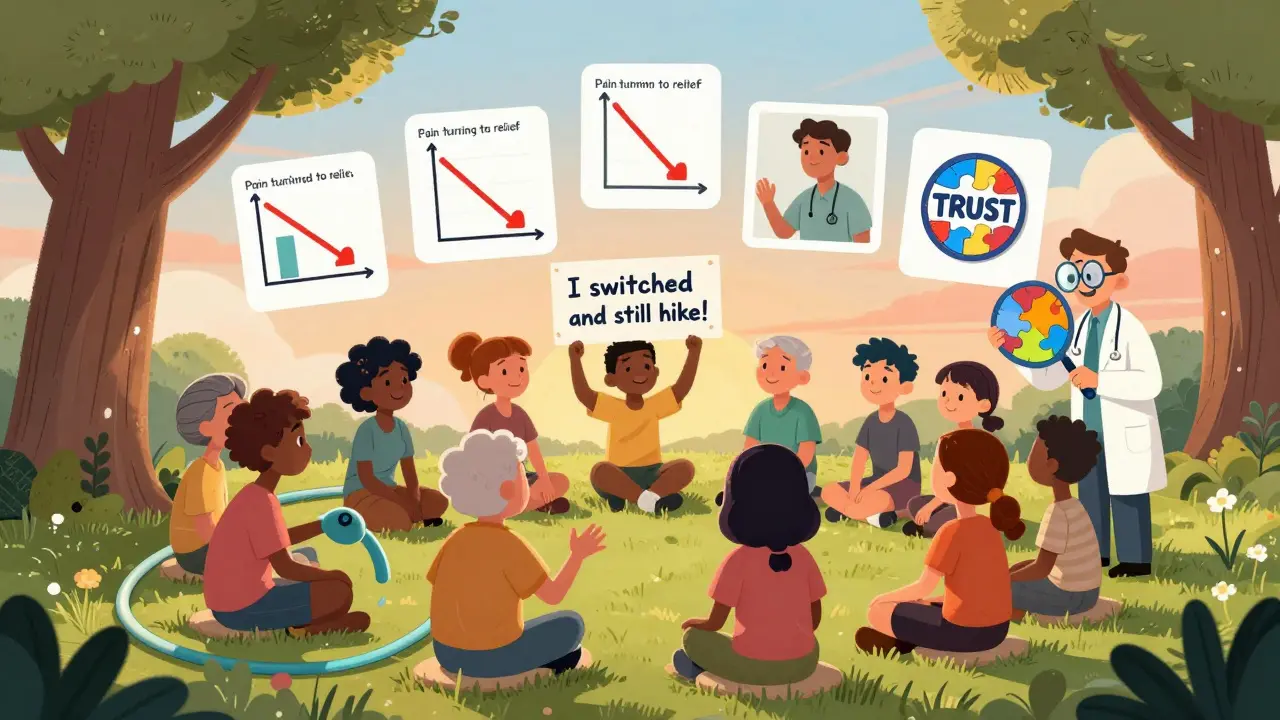
January 19, 2026 AT 12:00Hey, I get it. I switched to a biosimilar for my RA last year. Was nervous. But my doc sat down with me. Showed me the studies. Let me see my lab results before and after. My inflammation markers? Same. My pain? Same. My wallet? Lighter. I didn’t feel like a guinea pig. I felt like a partner. So yeah-it works. But only if your doctor actually talks to you. Not just hands you a script and says, ‘It’s cheaper now.’ That’s not care. That’s negligence.
John Tran
January 19, 2026 AT 23:12Okay, so let’s zoom out here, because this isn’t just about drugs-it’s about capitalism’s infiltration into the sacred space of healing. We’ve turned medicine into a market commodity, where the body becomes a cost center and trust becomes an afterthought. Biosimilars aren’t the problem-the problem is that we’ve forgotten that healing isn’t transactional. When a patient is handed a new pill with no context, no empathy, no human connection, of course they panic. It’s not irrational fear. It’s rational grief. We’re grieving the loss of being seen. And until we fix that, no amount of FDA approval or cost savings will matter. The real biosimilar we need? A biosimilar of compassion.
Robin Williams
January 21, 2026 AT 02:30Look, I’m not a doctor, but I’ve been on biologics for 12 years. I switched to a biosimilar after my doc showed me the data. No flare-ups. No surprises. And I saved $800 a month. That’s a vacation. That’s groceries. That’s not being poor. Don’t let fear stop you from saving your life AND your bank account. You got this.
Kimberly Mitchell
January 22, 2026 AT 09:50Insufficient regulatory harmonization across jurisdictions, coupled with the absence of transparent formulary alignment mechanisms, renders patient-centric outcomes suboptimal. The pharmacoeconomic models fail to account for real-world adherence dynamics, and the current PBM reimbursement structures create perverse incentives that disincentivize true cost pass-through. Until systemic reform occurs, biosimilar adoption will remain a symbolic gesture rather than a substantive intervention.