
Serotonin Interaction & Symptom Checker
Interaction Risk Evaluator
Select your current status to see the associated risk levels based on clinical data.
Symptom Identification Guide
Click on symptoms you are experiencing to categorize the severity.
Mild / Early Signs
Severe / Red Flags
Mixing a "natural" mood booster with a prescription antidepressant might seem like a logical way to feel better, but it can actually trigger a medical emergency. When you combine 5-HTP is a precursor molecule that directly increases the production of serotonin in the brain with SSRIs (Selective Serotonin Reuptake Inhibitors), you aren't just adding two positive effects together. You're potentially creating a "perfect storm" of chemical accumulation in your central nervous system.
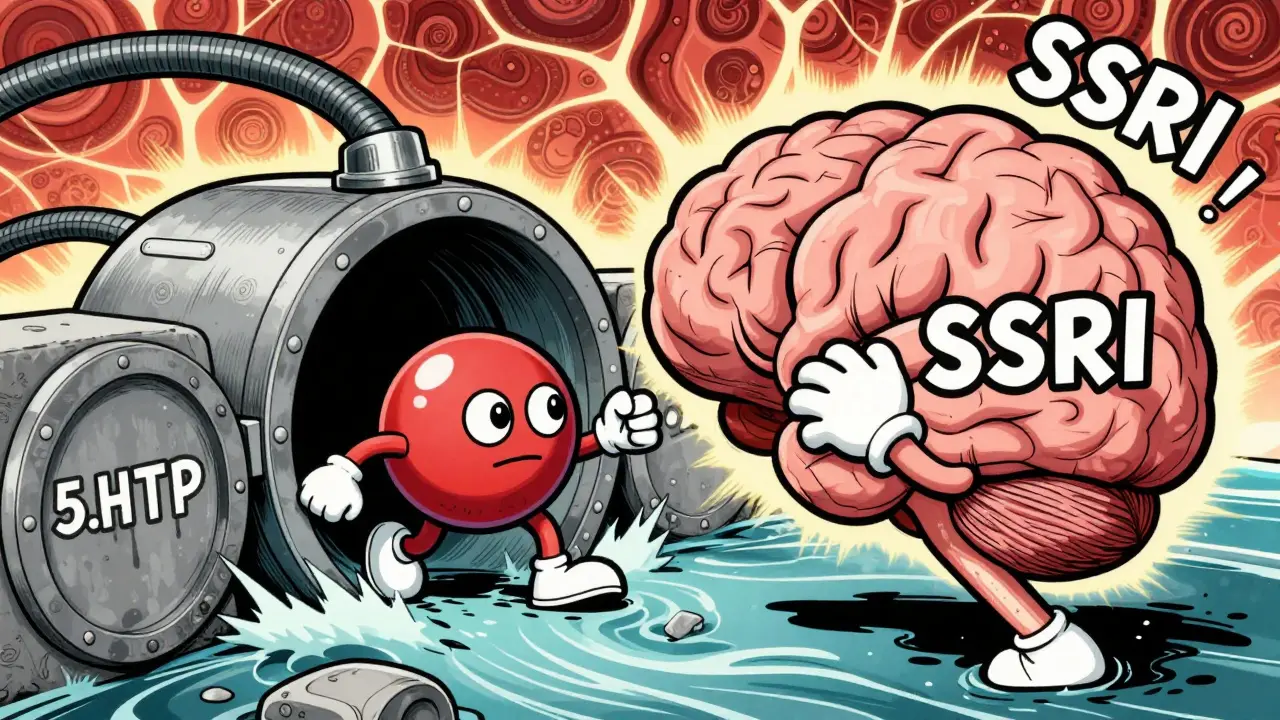
The core problem is that these two substances attack the serotonin system from opposite ends. SSRIs act like a dam, blocking the reabsorption of serotonin so more stays active in your synapses. 5-HTP acts like a floodgate, bypassing the body's natural rate-limiting enzymes to pump more serotonin into the system. When the dam is closed and the floodgates are open, serotonin levels can spike far beyond the normal range of 101-283 ng/mL, often exceeding 400 ng/mL. This leads to a toxic state known as Serotonin Syndrome, a condition that can range from uncomfortable shivering to fatal organ failure.
The Mechanics of the Interaction
To understand why this happens, we have to look at how your brain handles serotonin. Normally, the body uses an enzyme called tryptophan hydroxylase to control how much serotonin is made. 5-HTP (5-hydroxytryptophan) is an intermediate metabolite that sneaks past this enzyme. By taking it as a supplement, you're effectively telling your brain to produce serotonin without any "off switch."
Meanwhile, SSRIs-which include common medications like fluoxetine (Prozac) or sertraline (Zoloft)-prevent the brain from clearing out that serotonin. According to the Mayo Clinic, this dual mechanism significantly elevates the risk of toxicity. While taking an SSRI alone rarely causes this issue (with an incidence rate as low as 0.08 cases per 1,000 person-years), adding a precursor like 5-HTP changes the math entirely. In some cases, the risk becomes comparable to mixing SSRIs with MAOIs, one of the most dangerous combinations in psychiatry.
Recognizing the Warning Signs
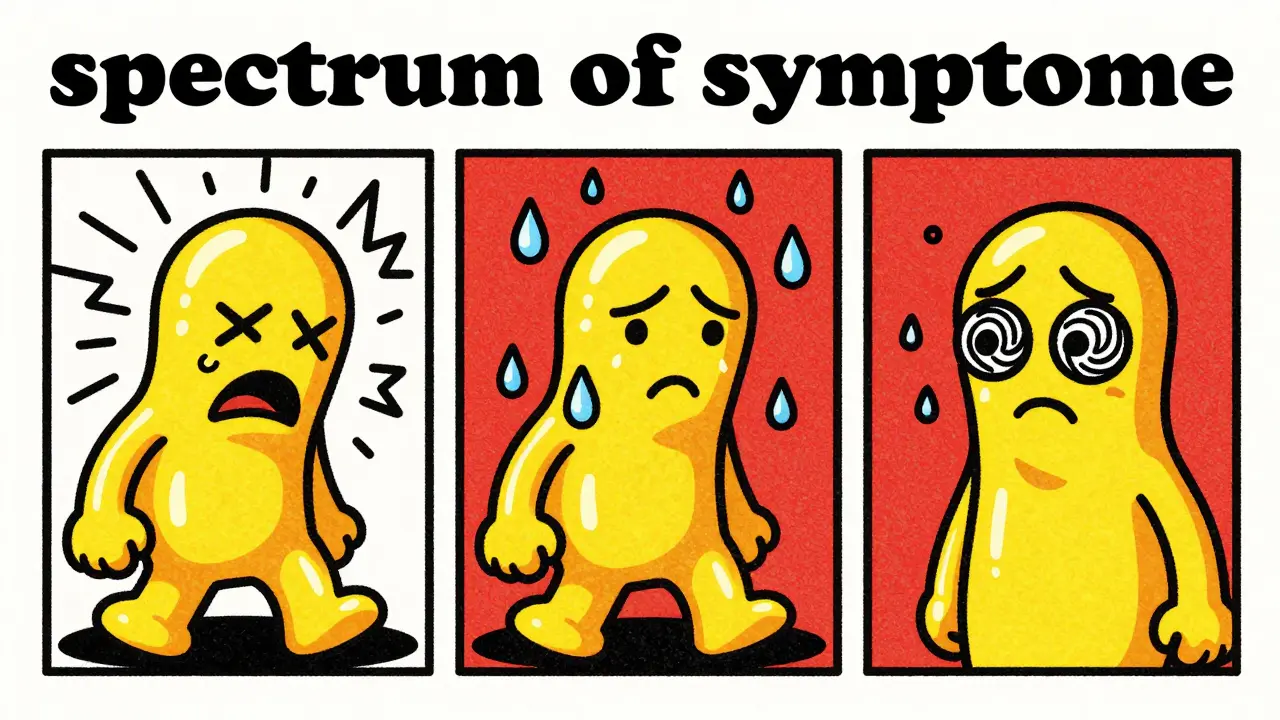
Serotonin syndrome doesn't always hit all at once. It usually manifests as a spectrum of symptoms. If you've recently started a supplement and feel "off," you need to know what to look for. Doctors often use the Hunter Criteria to diagnose this, as it's about 97% sensitive in catching cases.
Early or mild signs often look like a bad flu or a panic attack. You might experience:
- Uncontrollable shivering or tremors
- Diarrhea and nausea
- Excessive sweating (diaphoresis)
- Restlessness or anxiety
If the condition progresses to a severe stage, it becomes a life-threatening emergency. Watch for "red flag" symptoms like muscle rigidity, seizures, or a dangerously high fever (hyperthermia) exceeding 106°F (41.1°C). In severe hospital cases, laboratory tests often show a white blood cell count over 12,000/μL and elevated creatine kinase levels, signaling that muscle tissue is breaking down. Mortality rates for these severe cases can be as high as 12% if not treated immediately.
| Combination | Estimated Risk/Impact | Danger Level |
|---|---|---|
| SSRIs + 5-HTP | Substantial / High Volatility | Critical |
| SSRIs + MAOIs | ~16.4% risk of syndrome | Critical |
| SSRIs + Tramadol | ~4.6% risk | Moderate to High |
| SSRIs + St. John's Wort | ~2.3% risk | Moderate |
The Danger of "Natural" Labeling
One of the biggest risks isn't the chemistry itself, but the misconception that "natural equals safe." A Healthline survey found that 41% of supplement users believe natural products can't cause dangerous drug interactions. This is a deadly mistake. Unlike prescription meds, the 5-HTP market is loosely regulated. The Dietary Supplement Health and Education Act of 1994 allows these products to hit shelves without pre-market safety testing.
This lack of oversight leads to inconsistent dosing. Testing by ConsumerLab.com showed that 31% of 5-HTP supplements didn't match their labels, with some containing up to 128% of the stated dose. If you're already on an SSRI, an unexpected 30% jump in your 5-HTP dose could be the tipping point into toxicity. This unpredictability is why the American College of Medical Toxicology formally contraindicates the concurrent use of these two substances.
Safe Transition and Washout Periods
If you are thinking about switching from a prescription antidepressant to a supplement, you cannot simply swap one for the other overnight. Your brain needs time to reset its chemistry. The Mayo Clinic recommends a mandatory two-week washout period-meaning you stop the SSRI and wait 14 days before starting 5-HTP.
However, not all SSRIs are created equal. Some stay in your system much longer than others. For example, paroxetine has a longer half-life, and some experts suggest a washout period of three to four weeks for specific medications to ensure the drug is completely cleared from your tissues. Starting 5-HTP too early can lead to a delayed reaction of serotonin syndrome even after you've stopped taking the prescription pill.
What to Do in an Emergency
If you suspect you or someone else is experiencing serotonin syndrome, stop all serotonergic supplements and medications immediately and head to the emergency room. This is not a condition you can "sleep off."
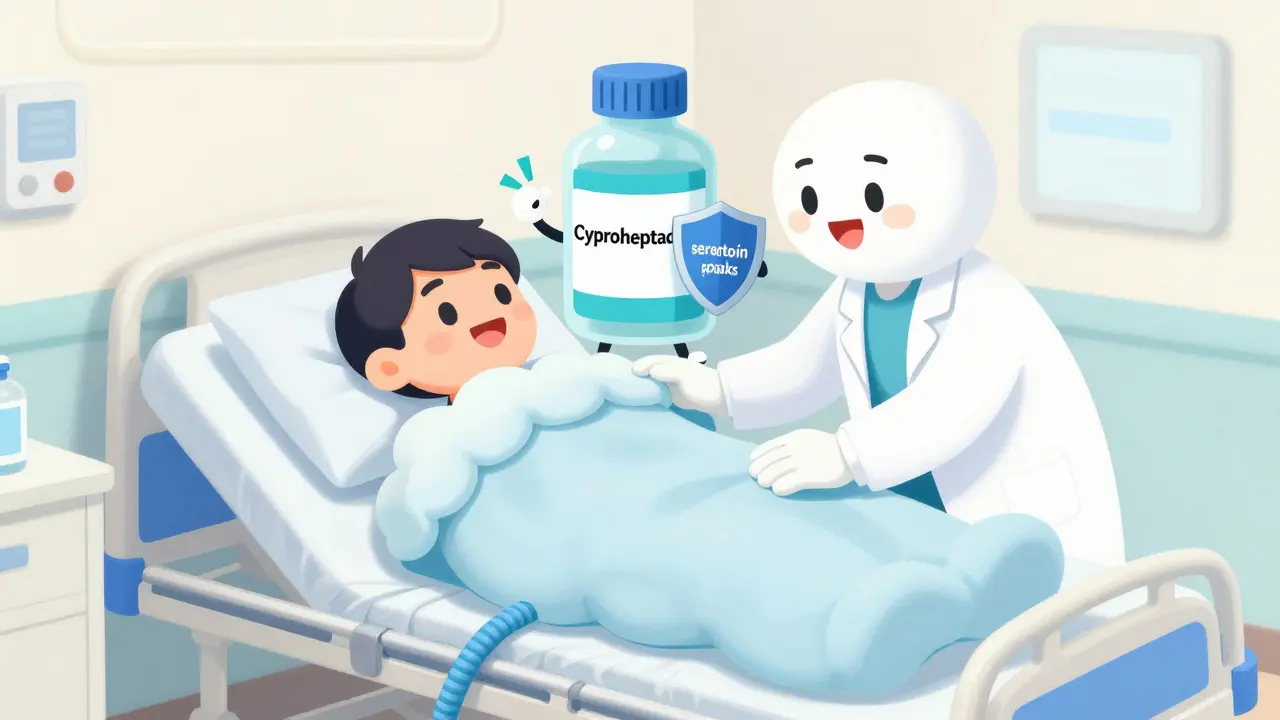
In a clinical setting, doctors typically treat the condition by removing the offending agents and using supportive care like intravenous fluids and cooling blankets for fever. In severe cases, the primary antidote is a drug called cyproheptadine, which blocks the 5-HT2A receptors in the brain to stop the neurotoxic effects of the serotonin overload.
Can I take a low dose of 5-HTP with my SSRI?
No. Even low doses can be unpredictable due to supplement dosing inconsistencies and the way SSRIs block reuptake. Most medical authorities, including the FDA, warn against this combination because the risk of serotonin accumulation outweighs any potential benefit.
Is 5-HTP the same as L-Tryptophan?
They are related but different. L-Tryptophan is an amino acid that the body must convert into 5-HTP using the enzyme tryptophan hydroxylase. Because 5-HTP is further along the chain, it bypasses that regulatory enzyme, making it more potent and potentially more dangerous when mixed with antidepressants.
How long does it take for serotonin syndrome to appear?
Symptoms usually appear very quickly, often within hours of taking a new medication or increasing a dose. In some cases, it can develop over a few days as the drug levels build up in the bloodstream.
Are there any safer natural alternatives for mood support while on SSRIs?
Many people look to supplements, but several common ones (like St. John's Wort) also interact with serotonin. You should always consult your prescribing physician before adding any supplement, as they can check for specific contraindications based on your medication's half-life and dosage.
Will 5-HTP help me taper off my SSRI?
While some forum users report using 5-HTP to ease the transition, this is not a clinically validated practice and carries a high risk of serotonin syndrome during the overlap period. Tapering should only be done under strict medical supervision with a gradual dose reduction plan.
 Health and Wellness
rupa das
April 12, 2026 AT 09:14idk why everyone is panicking over this the risk percentages in that table are tiny